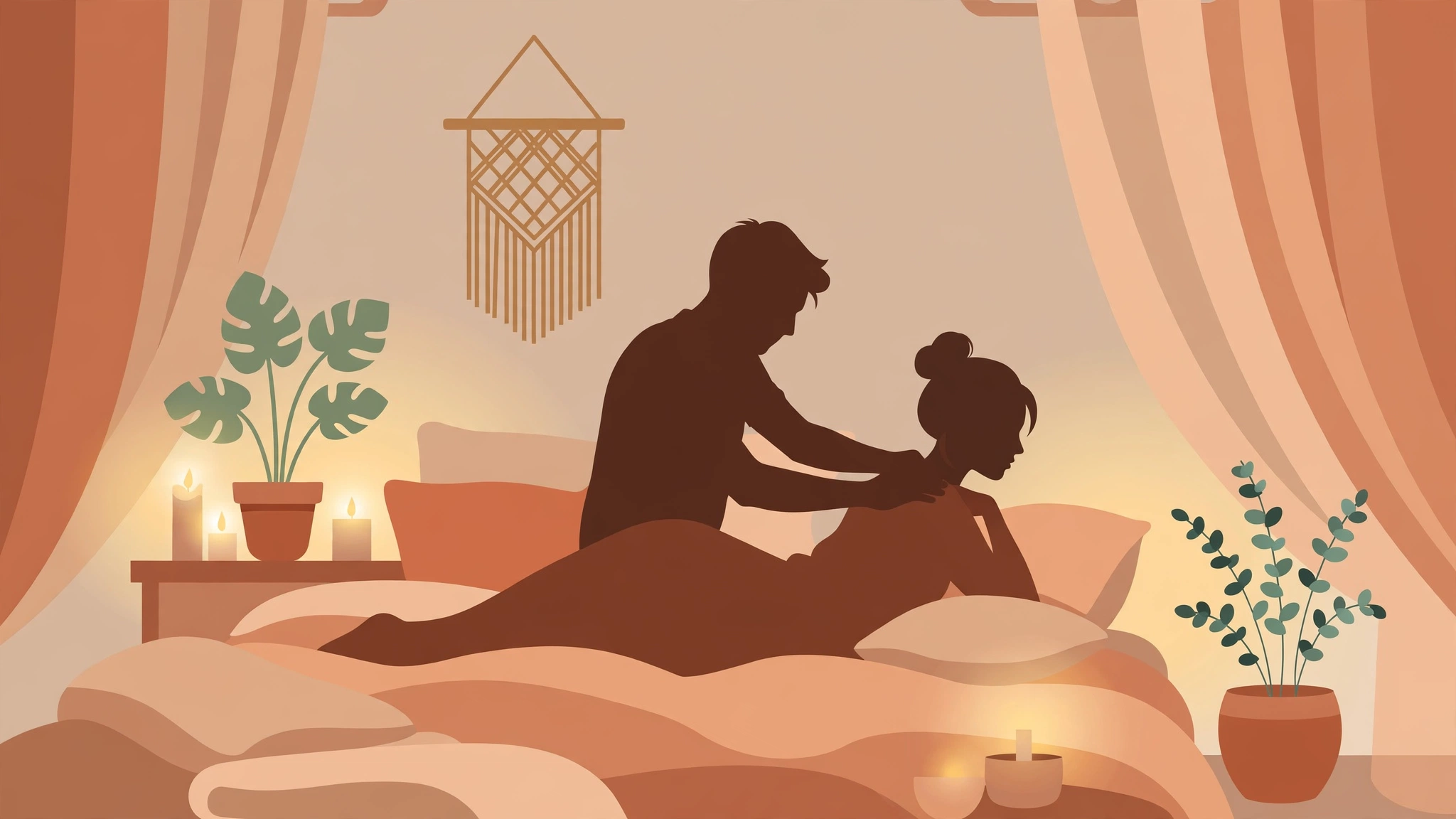
Sensual Massage Techniques for Couples: A Tasteful Guide
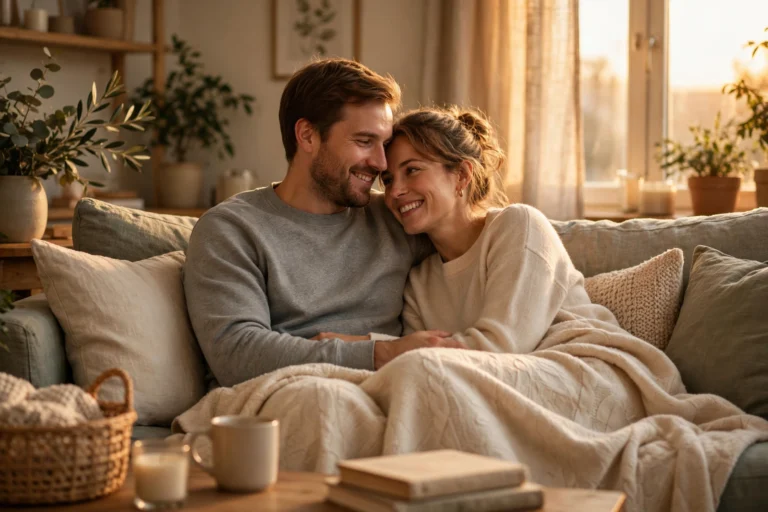
Learning sensual massage techniques couples can actually enjoy at home is one of the simplest ways to bring touch back into the center of a relationship. Many couples fall into a pattern where physical contact is either rushed — a quick kiss on the way out the door — or reserved strictly for sex. The space in between, slow and intentional touch with no agenda, quietly disappears. A sensual massage fills that gap: it is intimate without pressure, relaxing without expectation, and deeply connecting when done with care.
This guide walks you through everything from the science of why touch works, to the exact strokes and a timed 30-minute session plan, plus safety essentials that most other guides skip. No experience required — just your hands, some warm oil, and thirty unhurried minutes. These sensual massage techniques couples can practice at home are simple to learn, and their benefits build with every session.
What Is Sensual Massage, Exactly?
A sensual massage is a slow, attentive full-body massage shared between partners, focused on pleasure, relaxation, and emotional connection rather than clinical muscle treatment. It uses warm oil, unhurried strokes, and continuous contact to help both partners slow down and tune into each other.
It helps to distinguish it from two nearby concepts. A therapeutic massage targets pain and tension and is usually given by a trained professional. An erotic massage is explicitly sexual in intent. Sensual massage sits in the middle: it can be tender and romantic, it can build desire, and it can absolutely lead to intimacy — but it does not have to. Many couples find that agreeing up front that the massage has no required destination actually makes the experience more relaxing and, paradoxically, more connecting.
That is the guiding principle behind the sensual massage techniques couples enjoy most: slowness matters more than skill. You do not need professional hands — you need unhurried, attentive ones. If you are trying sensual massage techniques couples recommend for the first time, remember the goal is connection, not perfection.
The Science Behind Sensual Massage Techniques for Couples
Touch is not just emotionally comforting — it changes body chemistry. Research on massage therapy, summarized by the Mayo Clinic, suggests massage can reduce stress, ease pain and muscle tension, support relaxation, and even strengthen immune response. Several studies on partner-delivered massage have found that both the giver and receiver report lower anxiety and better mood after sessions.
Three mechanisms matter most for couples:
- Cortisol reduction: sustained, calm touch lowers levels of the stress hormone cortisol. Lower cortisol means a calmer nervous system, which makes emotional closeness easier.
- Oxytocin release: affectionate touch triggers oxytocin, sometimes called the bonding hormone, which is associated with trust and feelings of closeness between partners.
- Parasympathetic activation: slow rhythmic strokes signal safety to the nervous system, shifting the body from fight-or-flight into rest-and-connect mode. This is why rushed, jerky touch feels so different from slow, continuous contact.
In short, the sensual massage techniques couples use are effective partly because they work with the nervous system rather than against it. Patience is not just romantic advice — it is physiology. That is why the sensual massage techniques couples benefit from most all share one trait: unhurried, deliberate touch.
Setting the Scene: Preparation Matters
Competitors’ guides often jump straight to strokes, but preparation makes or breaks the experience. Plan for at least 30 uninterrupted minutes and gather these supplies:
- Massage oil — a natural carrier oil (more on choosing below); warm a small amount between your palms first, never pour cold oil directly on skin.
- Towels — lay one down to protect sheets and keep another handy for wiping hands.
- A firm surface — a firm mattress or a padded floor works better than a soft sagging bed, since it lets you apply real pressure.
- Extra pillows — for propping knees, chest, or head so your partner stays comfortable throughout.
- Warm room — if your partner is lightly dressed or uncovered, a chilly room will tense every muscle you are trying to relax.
- Phones silenced and doors locked — nothing breaks the mood like a notification.
Lighting and sound are personal: dim warm lighting or a few candles, and soft instrumental music without lyrics, work for most couples. Ask your partner what they prefer — that small act of consideration is part of the massage. Simple agreements like this are one of the easiest sensual massage techniques couples use to build trust before hands ever touch skin.
Finally, have a brief conversation about intention. One sentence is enough: “I would love to give you a slow relaxing massage — no expectations, just helping you unwind.” Naming the intention removes guesswork and lets the receiver actually relax instead of wondering where this is headed.
Choosing the Right Massage Oil — Safely
The oil does more than reduce friction; it sets the sensory tone. Good choices for couples include sweet almond oil, jojoba oil, grapeseed oil, and fractionated coconut oil — all glide well, absorb reasonably, and are gentle on skin.
Three safety rules that rarely appear in massage guides:
- Check for nut allergies. Sweet almond oil is a tree-nut product. If your partner has any nut allergy, choose grapeseed or jojoba instead.
- Patch test first. Dab a little oil on the inner forearm and wait 10 minutes. Redness or itching means pick a different oil.
- Oil and latex condoms do not mix. The CDC warns that oil-based lubricants — including massage oils — can weaken latex and cause condoms to break. If your massage might lead to sex with a latex condom, shower the oil off first and switch to a water-based lubricant, or keep massage oils away from latex entirely.
Avoid strongly fragranced oils, essential oils applied undiluted, and anything with menthol or “warming” chemicals unless you know your partner tolerates them — these can irritate sensitive skin. With a safe oil chosen, you are ready to practice the sensual massage techniques couples use to turn an ordinary evening into something memorable.

8 Sensual Massage Techniques Couples Can Master at Home
You do not need professional training. These are the core sensual massage techniques couples use to build an entire session. Practice each slowly; the pace matters as much as the motion.
1. Effleurage — Long Gliding Strokes
Your foundation stroke — and the first of the sensual massage techniques couples should practice until it feels automatic. Using flat palms, glide in long smooth movements from the lower back up to the shoulders, or from ankle to thigh. Keep continuous skin contact and gentle-to-moderate pressure. Use it to spread oil, warm up an area, open the session, and close it.
2. Petrissage — Kneading
Like kneading dough, but gently: lift, squeeze, and roll muscle tissue between your palms and fingers. Best on shoulders, thighs, calves, and the muscles along the lower back. This is your workhorse for releasing everyday tension.
3. Circular Friction
Small slow circles with fingertips or thumbs, moderate pressure, targeting knots and tight spots. Excellent along the shoulders, beside the spine (never directly on it), and the lower back.
4. Feather Touch
Barely-there strokes with just your fingertips — tracing patterns lightly across the skin. This creates a tingling anticipation that contrasts beautifully with deeper strokes. Use it during transitions between areas or as a finishing touch. If your partner is ticklish, swap feather touch for firmer palm pressure.
5. Palm Pressure
Place a flat palm on your partner’s body and press in steadily for several seconds, then release slowly. It feels grounding and safe — particularly good on the back, chest, and stomach. Communicating presence through weight rather than movement.
6. Thumb Slides
Press both thumbs side by side and slide them slowly along a muscle — up the calves, along the forearms, or beside the spine. Add a second pass slightly wider. This gives precise pressure in areas too narrow for full palms.
7. Hair and Scalp Attention
Often skipped, deeply appreciated. Slide your fingers through the hair and apply gentle circular pressure across the scalp with your fingertips, finishing with a slow stroke down the back of the neck. Stress lives in the scalp and jaw — this melts it.
8. Full-Body Warmth
With oil on your forearms or torso (if you are both comfortable), lean in and use your body weight for broad sweeping pressure along the back. This variation of touch — warmth and softness rather than fingers — feels profoundly intimate. Always check in before trying it: “Would it feel good if I used my forearms here?”
A good rhythm is to start every area with effleurage, move into petrissage or friction, and finish with feather touch or palm pressure before transitioning. Vary the pressure — too light for too long feels ticklish, too firm for too long feels clinical. Rotating through the sensual massage techniques couples rely on keeps each session feeling new.
A 30-Minute Session Plan, Step by Step
Most guides list techniques and leave you to assemble them. Here is a simple timed flow that layers the sensual massage techniques couples actually enjoy into one coherent session:
- Minutes 0–5 — Warm-up: Partner lying face down. Warm oil in your palms. Long effleurage strokes from shoulders to lower back and down to the feet. Slow breathing together. No agenda yet — just arriving.
- Minutes 5–12 — Deepening: Kneading (petrissage) on shoulders, upper back, and calves — the classic tension zones. Add thumb slides along the forearms and circular friction beside the spine. Ask once: “Is the pressure okay?”
- Minutes 12–20 — Wandering: Feather touch transitions. Work the hands (massage each finger, press the palms), the scalp, and the neck. This lighter phase builds anticipation and emotional closeness.
- Minutes 20–25 — Turn and soften: If your partner is comfortable, have them turn over. Gentle palm pressure and slow strokes on the chest, stomach (clockwise circles), arms, and legs. Lighter touch on the front of the body — it is more sensitive.
- Minutes 25–30 — Closing: Return to long effleurage strokes head to toe, gradually slowing until your hands simply rest on your partner. Sit quietly for a minute before moving.
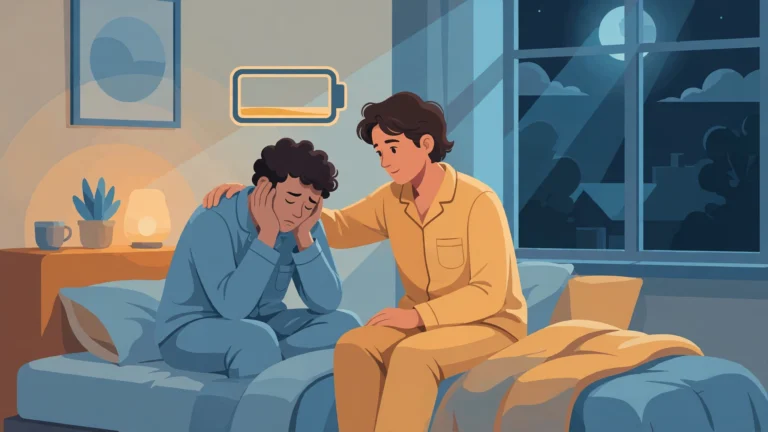
Aftercare matters. Offer water, keep the room warm, and resist the urge to immediately grab your phone or critique the session. A few quiet minutes of lying together — talking softly or not at all — lets the calm settle in. This is also the natural moment to simply enjoy each other, which is why many couples find these sensual massage techniques couples practice together deepen intimacy more reliably than grander romantic gestures. If stress has been draining your connection, our guide on how stress and anxiety affect intimacy explains the link in more depth.

Safety First: When to Skip or Adjust the Massage
Sensual massage is gentle, but it is still massage — and massage is not appropriate in every situation. The Mayo Clinic advises caution and checking with a healthcare professional before massage if any of the following apply:
- Recent injury, fracture, sprain, or surgery — wait until cleared by a doctor.
- A blood clot or history of deep vein thrombosis — never massage a leg that is swollen, warm, or painful.
- Skin infections, rashes, open wounds, or burns — avoid those areas entirely.
- Severe osteoporosis or a bleeding disorder, or use of blood-thinning medication.
- Pregnancy — some techniques and pressure points are not advised; talk to your doctor first.
- Fever or contagious illness — rest, don’t massage.
During the massage, severe pain is always a stop signal — a sensual massage should never hurt. And keep the mood honest: check in about comfort and boundaries, not just pressure. Couples working through deeper disconnection may also benefit from reading about how to rebuild intimacy in a long-term relationship alongside trying new touch rituals. When practiced thoughtfully, the sensual massage techniques couples share are gentle enough for almost everyone — but the contraindications above are worth respecting.
Common Mistakes That Ruin the Mood
- Rushing: watching the clock or treating the massage as a checklist is felt instantly. Slow down deliberately.
- Breaking contact: when you reach for more oil, keep one hand resting on your partner. Total loss of contact breaks the flow.
- Too much talking: check in briefly, but constant chatter pulls attention away from sensation. Let silence do its work.
- Same routine every time: vary the order, linger in new areas, alternate who gives and receives. Discovery keeps it alive.
- Skipping the receiver’s experience: if you are receiving, let yourself receive — don’t mentally plan your turn or perform pleasure. Just feel.
- Treating it like a performance: the sensual massage techniques couples love most are about presence, not perfection. Slow down and stay curious.
FAQs
What is the difference between a sensual massage and an erotic massage?
A sensual massage focuses on slow, intentional touch, relaxation, and emotional connection, with no required outcome. An erotic massage is explicitly sexual in intent. Sensual massage can build desire and sometimes leads to intimacy, but agreeing that it does not have to is what lets both partners fully relax.
What is the best oil for a sensual couples massage?
Sweet almond, jojoba, and grapeseed oils are popular because they glide smoothly and suit most skin. Avoid nut-based oils if your partner has a nut allergy, patch-test new oils on the forearm first, and never use massage oil with latex condoms — oil weakens latex and can cause breakage.
How do I give a sensual massage with no experience?
Start with warm oil and long, slow palm strokes along the back to help your partner relax. Add gentle kneading on the shoulders and calves, then lighter fingertip touches during transitions. Keep one hand in contact at all times, check in about pressure, and give yourself at least 20 to 30 minutes without rushing. Like all sensual massage techniques couples try for the first time, the first attempt may feel slightly awkward — that is normal, and it fades within minutes.
Should a sensual massage lead to sex?
Not necessarily — and agreeing on that beforehand removes pressure for both partners. Some couples use massage purely for relaxation and closeness; others let it naturally build into intimacy. Either outcome is valid. The key is naming the intention honestly before you begin, so nobody is guessing.
My partner is very ticklish. Can we still do this?
Yes — ticklishness usually comes from light, unpredictable touch. Use firmer, slower pressure with full palms instead of fingertips, keep your movements predictable, and ask your partner which areas to avoid. Many ticklish people love deeper kneading and palm pressure once feather-light touches are off the table. Firmer sensual massage techniques couples practice, like deep kneading and steady palm pressure, are usually the most enjoyable for ticklish partners.
How often should couples do a sensual massage?
There is no medical rule, but consistency beats duration — a relaxed 20-minute massage once a week does more for connection than an occasional hour-long production. Some couples build it into a weekly wind-down ritual. Let it be something you both look forward to, not a chore on a schedule.
Ready to bring touch back into your relationship? Make these sensual massage techniques couples love into a regular ritual: try the 30-minute session plan above this weekend, talk openly with your partner about what feels good, and explore more of our guides on rebuilding closeness. And if stress, pain, or a health condition makes massage difficult, talk to your doctor about safe adaptations — touch is for every couple, including yours. Start tonight: the sensual massage techniques couples treasure most begin with a single unhurried touch.
Medical disclaimer: This article is for educational purposes only and is not medical advice. Massage techniques described here are general wellness information, not a substitute for professional diagnosis or treatment. If you have a health condition, injury, or concern, consult a qualified healthcare professional before trying any massage techniques.