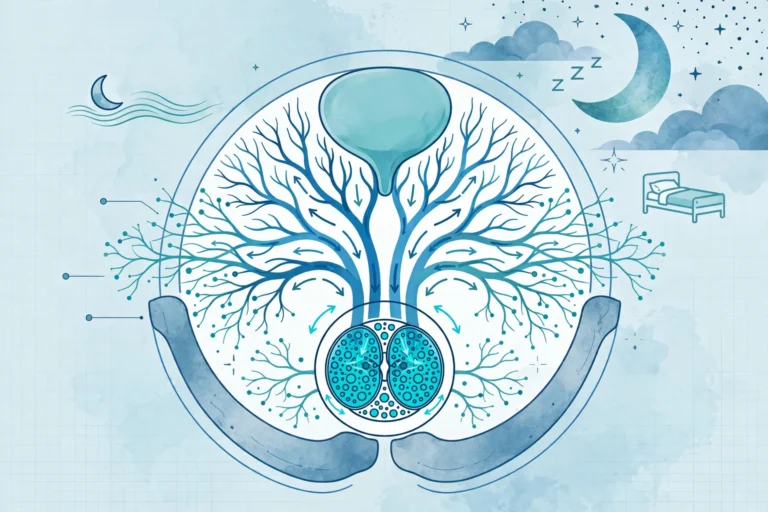
Frequent Urination at Night in Men: Causes and How to Sleep Through
If you're up twice a night shuffling to the bathroom, you're not just losing sleep — you're losing the deep, restorative kind. Frequent urination at night in men has a medical name, nocturia, and it's one of the most common (and most fixable) sleep wreckers after age 40. Up to 93% of men over 70 experience it, but it can start decades earlier.
Nocturia means waking one or more times nightly specifically because you need to urinate. One occasional trip is normal. Two or more, night after night, is worth investigating — not just for your bladder, but because the cause is sometimes a condition that needs treatment in its own right.
Frequent Urination at Night in Men: Why It Happens
Enlarged prostate (BPH)
The number one cause in men over 50. As the prostate grows, it squeezes the urethra, so the bladder can't empty fully. You go more often, the stream weakens, and the bladder wakes you at night with the "still not empty" signal. If nighttime trips come with a weak stream, dribbling, or urgency, the prostate is the prime suspect. Related prostate inflammation is covered in our guide to prostatitis symptoms and treatment.
Drinking habits
The simplest cause — and the easiest fix. Large evening fluid intake, especially in the 2–3 hours before bed, directly fills the bladder overnight. Alcohol and caffeine are double offenders: they're mild diuretics and bladder irritants. That "one last coffee" or nightcap is a classic nocturia trigger.
Diabetes
When blood sugar runs high, the kidneys flush out the excess glucose — and water follows it, producing large volumes of urine day and night. New or worsening nighttime urination, especially with increased thirst and fatigue, is a legitimate reason to get your blood sugar checked. For some men, it's the first noticeable symptom of diabetes.
Sleep apnea
This one surprises people. In obstructive sleep apnea, oxygen dips during the night prompt the heart to release a hormone (atrial natriuretic peptide) that tells the kidneys to make more urine. Studies suggest around half of sleep apnea patients experience nocturia — and treating the apnea often cuts the bathroom trips dramatically. Loud snoring plus daytime sleepiness plus nocturia is a textbook trio. See also our article on sleep apnea and erectile dysfunction for how the same condition affects men's health more broadly.
Medications
Diuretics ("water pills" for blood pressure) are the obvious one — taking them in the evening practically schedules a 2 a.m. wake-up. Some blood pressure drugs, antidepressants, and even over-the-counter cold remedies can increase nighttime output. Never adjust timing without your doctor's okay, but do ask whether a morning dose is possible.
Overactive bladder and aging
With age, the bladder holds less, its muscle becomes twitchier, and the body produces less vasopressin — the hormone that normally slows urine production overnight. The result: smaller capacity plus more urine equals more trips.
Heart and kidney issues
When the heart doesn't pump efficiently, fluid pools in the legs during the day and shifts back into circulation when you lie flat at night — the kidneys then convert it to urine. Swollen ankles plus nocturia deserves a cardiac check.
How to Stop Waking Up to Pee: Practical Fixes
Start with the lifestyle layer — it resolves or dramatically improves most mild-to-moderate cases:
- Front-load your fluids. Drink most of your water earlier in the day; taper off 2–3 hours before bed. Don't dehydrate yourself — just shift the timing.
- Cut evening caffeine and alcohol. Both irritate the bladder and increase output. An afternoon cutoff works for most men.
- Double-void before bed. Pee, wait a minute, stand up, sit back down, and pee again. It empties the bladder more completely.
- Elevate your legs in the evening. If your ankles swell during the day, an hour with feet up before bed helps the body process that fluid earlier.
- Review medication timing with your doctor — especially diuretics.
- Treat constipation. A full rectum presses on the bladder and worsens urgency; fiber and hydration help both.
- Lose excess weight. It eases pressure on the bladder and improves sleep apnea, a double win.
Try a 3-day bladder diary
Before your doctor's appointment, keep a simple log for three days: what time you drink, what you drink, when you urinate, and when you wake at night. Note caffeine, alcohol, and medications too. This diary is one of the most useful diagnostic tools in urology — patterns jump out immediately, like a late-evening tea habit or a diuretic taken at dinner, and it turns a vague complaint into a solvable problem.
When lifestyle isn't enough
If 2–3 weeks of these changes don't help, see your doctor. Depending on the cause, medical options include:
- BPH medications (alpha-blockers, 5-alpha-reductase inhibitors) that relax the prostate or shrink it
- Overactive bladder medications that calm bladder spasms
- Desmopressin, a synthetic version of the nighttime anti-diuretic hormone, for nocturnal polyuria in select patients
- CPAP or other apnea treatment, which often reduces nocturia as a side benefit
- Diabetes management — better glucose control directly reduces urine volume
When to See a Doctor Promptly
Book an appointment if you notice:
- Waking 2+ times nightly on most nights
- Blood in the urine, burning, or pain when urinating
- A weak stream, straining, or feeling you can't empty your bladder
- New nocturia with excessive thirst, weight loss, or fatigue (possible diabetes)
- Swollen legs, shortness of breath, or chest discomfort alongside it
- Nocturia that started suddenly after a medication change
Harvard Health's guide on why you keep waking up to use the bathroom is an excellent deeper read on the mechanisms involved.
The Sleep Cost Is Real
Don't dismiss nocturia as "just getting older." Fragmented sleep raises blood pressure, impairs concentration and mood, increases fall risk on those dark hallway trips, and strains relationships when both partners are woken. Treating the cause usually restores full nights — men consistently rank it among the most satisfying quality-of-life improvements they've made.
Practical Takeaways
- Nocturia (2+ nightly trips) is common but not something to just accept.
- Check the easy wins first: evening fluids, caffeine, alcohol, and medication timing.
- In men over 50, the prostate is the most likely culprit — get it evaluated.
- New nocturia with thirst and fatigue? Get blood sugar tested.
- Snoring + daytime sleepiness + nocturia points to sleep apnea — treatable and worth it.
Frequently Asked Questions
How many times per night is normal?
Zero to one trip is generally considered normal, especially as you age. Waking twice or more on most nights meets the clinical definition of nocturia and is worth addressing — both for the underlying cause and for your sleep quality.
Will drinking less water fix it?
Timing matters more than total amount. Most men shouldn't restrict daytime hydration — dehydration causes its own problems (headaches, constipation, kidney stones). Instead, drink freely during the day and taper off 2–3 hours before bedtime.
Is frequent nighttime urination a sign of prostate cancer?
Usually not — BPH (benign enlargement) is the far more common cause, and it's not cancerous. But urinary symptoms overlap, so new or worsening symptoms deserve a proper evaluation including PSA testing as your doctor recommends. Don't let fear of the answer delay the appointment.
Can Kegel exercises help with nocturia?
They can help when overactive bladder or weak pelvic floor muscles contribute — pelvic floor training improves bladder control in many men. They're not a fix for prostate enlargement or diabetes-driven urine overproduction, but they're free, safe, and worth adding to the routine.