
[Intimacy] BDSM Safety Guide for Beginners
This BDSM safety guide for beginners is written for couples and individuals who are curious about exploring power dynamics, bondage, and sensation play — and who want to do it in a way that protects both their bodies and their emotional wellbeing. Curiosity about BDSM (bondage, discipline, dominance, submission, sadism, and masochism) is common among adults, yet most of what people see in films or fiction skips the part that matters most: the careful negotiation, communication, and safety practices that experienced practitioners build into every scene.
Read in a clinical, educational spirit, this article covers everything the standard bdsm safety guides cover — consent frameworks, safe words, negotiation, safe and unsafe impact zones, bondage safety, and aftercare — plus several practical angles those guides usually miss: a step-by-step progression ladder from low-risk to higher-risk activities, a plain-language map of nerve and circulation danger zones on the body, toy-material and hygiene safety, and a red-flag versus green-flag checklist for evaluating a partner or educator. The goal is simple: one complete, trustworthy resource on BDSM safety for beginners.
What BDSM Is — and What It Is Not
BDSM is an umbrella term for a wide range of consensual adult practices built around intentional power exchange, restraint, sensation, and negotiated roles such as dominant, submissive, or switch. It is not inherently sexual: some people weave sex into their scenes, while others practice bondage or roleplay purely for emotional release, trust-building, or sensory enjoyment. What every legitimate form of BDSM shares is a foundation of explicit, enthusiastic, ongoing consent.
It is equally important to name what BDSM is not. It is not abuse, coercion, or non-consensual violence. It is not a justification for ignoring someone’s boundaries. Planned Parenthood’s guide to sexual consent puts the core principle well: consent must be freely given, reversible, informed, enthusiastic, and specific — and those conditions apply to kink scenes as much as to any other intimate activity. If consent cannot be freely given — because of intoxication, pressure, or unconsciousness — the activity should not happen at all.
Safety Frameworks: SSC, RACK, and the 4Cs
The kink community uses several shorthand frameworks to think about risk. Knowing them gives beginners a shared vocabulary for talking about safety:
- SSC — Safe, Sane, and Consensual: activities should minimize risk, be undertaken with a clear mind, and rest on enthusiastic consent.
- RACK — Risk-Aware Consensual Kink: acknowledges that some activities carry irreducible risk, and requires that all participants understand and accept that risk before proceeding.
- The 4Cs — Caring, Communication, Consent, and Caution: a newer formulation emphasizing that care and communication are continuous, not one-time events.
None of these is a medical standard, and none can make a risky activity risk-free. Their value is cultural: they remind participants to keep talking, keep checking, and keep treating their partner’s body and mind as something precious.
Before Anything Happens: The Negotiation Checklist
Experienced practitioners negotiate before a scene — a conversation, held outside of any intimate context, where everyone lays out what they want, what they don’t want, and how things will stop if needed. For beginners, a structured checklist is the most reliable way to cover everything. Walk through these items together, in a calm setting, before your first scene:
| Topic | What to discuss |
|---|---|
| Desires and boundaries | Which activities interest you, which are hard limits (never), and which are soft limits (maybe, under the right conditions) |
| Intensity | How light or intense you want things to be; agree that either person can reduce intensity at any time |
| Safe words and signals | An agreed stop word plus non-verbal backup signals (see below) |
| Health conditions | Anything relevant: joint problems, circulation issues, diabetes, breathing conditions, skin conditions, recent injuries or surgeries, epilepsy, and medications that affect sensation, balance, or healing |
| Emotional triggers | Topics, language, or scenarios that could cause distress — these are hard limits |
| Aftercare needs | What each person will want afterward: quiet time, cuddling, food, conversation |
| Roles and tools | Who takes which role and what toys or restraints will be involved |
Negotiation is not a one-time event. It should be repeated or at least briefly re-confirmed before every new scene, because bodies, moods, and limits change day to day.
BDSM Safety Guide: Safe Words, the Traffic-Light System, and Non-Verbal Signals
The most widely taught communication system in kink is the traffic-light system, because it is simple and understood across the community:
- Green — everything is good, continue.
- Yellow (or amber) — slow down, check in, reduce intensity. This is not failure; it is information.
- Red — stop everything immediately, no questions asked, no negotiation at that moment.
Safe words and signals have limits worth understanding. A person who is neurodivergent, shy, or deep in an intense headspace may struggle to articulate a word at the right moment. For that reason, agree on non-verbal backup signals for scenes where speaking may be difficult: three hand squeezes, dropping a held object, or a repeated tap-out gesture. And the active partner should regularly check in unprompted — “How are you feeling?” — rather than relying on the other person to speak up.
Crucially, do not play while under the influence of alcohol or drugs. Intoxication impairs judgment, dulls pain signals that would otherwise warn of injury, and undermines the very capacity for ongoing consent that safety frameworks require.
The Beginner’s Progression Ladder: Start Low, Build Slowly
One of the most common beginner mistakes is trying to recreate an advanced scene seen in pornography or fiction on the first attempt. A safer approach is to climb a progression ladder — master low-risk activities before trying anything more intense. Here is a practical ordering, from lowest to highest risk:
| Stage | Examples | What to learn first |
|---|---|---|
| 1 — Sensory and verbal | Blindfolds, feather ticklers, gentle power-based language, simple roleplay | Communication, checking in, reading your partner’s responses |
| 2 — Light bondage | Velcro cuffs, soft scarves, loosely tied cotton rope | Circulation checks, the two-finger rule, quick-release techniques |
| 3 — Light impact | Gentle spanking by hand, soft paddles, floggers with light pressure | Safe impact zones (thighs, buttocks), warming up, starting lighter than you think necessary |
| 4 — Structured rope work | Basic harnesses and limb ties | Nerve anatomy, safety shears, never leaving a restrained person alone |
| Defer until trained | Breath play, neck restraints, suspension, wax play, electrical play | In-person instruction from experienced educators only |
Stay at each stage until communication feels effortless and both partners can name what they liked, what they didn’t, and what they’d change. Speed is not the point; attunement is. For couples exploring physical intimacy more broadly, communication habits matter just as much as technique — see our guide on beginner-friendly toys for couples for another low-pressure entry point into new sensations.
Body Safety: Nerves, Circulation, and Where Never to Tie
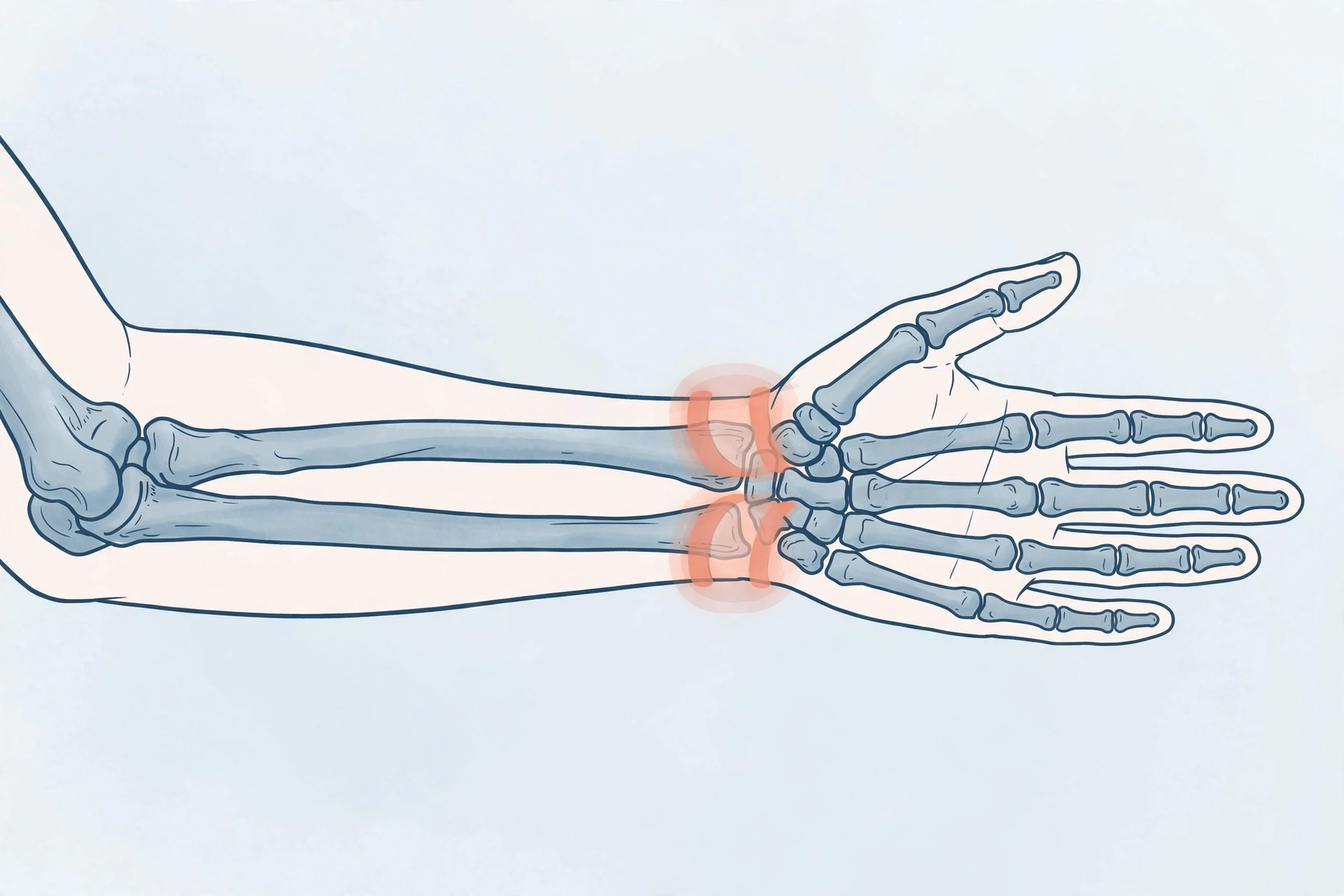
The single most important physical-safety lesson for BDSM beginners is this: nerves and blood vessels are vulnerable where they run close to the surface, and compressing them with rope or restraints can cause anything from temporary tingling to, in severe or prolonged cases, lasting nerve damage. The high-risk zones to avoid compressing are:
- The neck — never tie anything around the neck; major vessels and the airway sit dangerously close to the surface.
- The wrists — the radial and median nerves run just under the skin at the wrist; this is the most common site of beginner rope-nerve injuries.
- The armpits — the brachial plexus (the nerve bundle serving the arm) passes through here.
- The inner elbow and behind the knees — major nerves and vessels are exposed in these creases.
- Over joints generally — elbows, knees, and shoulders should not bear prolonged pressure.
Tie on fleshy, well-padded parts of the body instead: the upper thighs, the upper arms between the shoulder and elbow (away from the armpit), and the torso below the neck and above the abdomen. And use the community’s standard field checks continuously during any restraint:
- The two-finger rule: you should always be able to slip two fingers between any restraint and the skin.
- Check extremities regularly: fingers and toes should stay warm and their normal color. Coldness, discoloration, numbness, or tingling means release the restraint immediately.
- Time-box it: beginners should keep restraint sessions short (15–20 minutes is a reasonable starting point) and re-check frequently.
- Keep safety shears within arm’s reach: blunt-nosed bandage shears can cut through rope fast in an emergency. Never use a regular knife.
- Never leave a restrained person unattended — not for a moment.
If numbness, weakness, or discoloration does not resolve within a few minutes of releasing a restraint, seek medical care promptly rather than waiting to see whether it improves.

Bondage and Toy Safety: Materials, Hygiene, and Good Habits
Beyond technique, the tools themselves carry safety considerations that beginners often overlook:
- Choose quality restraints. Well-made cuffs distribute pressure evenly instead of digging in; improvised ties and thin cords can tighten unexpectedly and cut off circulation.
- Learn rope gradually. Cotton rope is soft and beginner-friendly for light decorative ties; natural fibers like jute or hemp are traditional but require conditioning and more skill. Practice knots on your own thigh or a chair leg before trying them on a partner.
- Never attempt suspension without expert, in-person training. Suspending body weight from rope requires knowledge of anatomy, rigging, and knots that cannot be learned from a blog post.
- Inspect every toy before use. Check for splinters, sharp edges, loose fasteners, or cracked surfaces. Damaged toys go in the bin.
- Use body-safe materials for insertables: medical-grade silicone, glass, and stainless steel are non-porous and easy to sanitize. Avoid porous or novelty materials of unknown composition for internal use.
- Clean and sanitize after every session, and use barriers such as condoms on shared toys between partners to reduce infection risk. Regular testing and mutual STI disclosure belong in every negotiation checklist alongside safe words and limits. For more detail on barrier techniques, see our article on safer anal sex and STI risks.
- Use a quality lubricant where friction is involved — it reduces skin irritation and tissue micro-tears. Read our body-safe lubricant guide to choose one that matches your toys’ materials.
Impact Play Basics: Safe Zones and Warning Signs
If you are curious about impact play such as spanking, the safety rules are straightforward but non-negotiable:
- Safe impact zones: the fleshy areas of the buttocks, thighs, and upper back (below the neck, above the waistband line). These have good muscle padding and no vital organs nearby.
- Never strike: the head, face, neck, spine, abdomen, kidneys, joints, or any area where you can feel bone close under the skin.
- Warm up and build gradually: start far lighter than you think is necessary. Intensity can always be increased; an injury cannot be undone.
- Watch for warning signs: broken skin, unusual swelling, or bruising that spreads or feels hot warrants stopping — and medical attention if it worsens.
Aftercare: The Scene Is Not Over When the Rope Comes Off
Aftercare is the emotional and physical care that follows a scene, and it is considered part of the scene itself by experienced practitioners — not an optional extra. Intense play floods the body with adrenaline and endorphins; when those wear off, both partners can experience an emotional or physical crash sometimes called sub drop or dom drop, which can arrive hours or even days later.
Aftercare looks different for everyone, but common elements include:
- Physical comfort: blankets, water, snacks, and checking any marks on the skin
- Emotional reassurance: cuddling, gentle touch, verbal affirmation
- Talking through the scene: what each person enjoyed and what they would change
- Releasing roles explicitly: stepping out of the dynamic and reconnecting as equals
- Checking in the next day, by message or in person, to see how each person feels
Negotiate aftercare needs before the scene, just like everything else. And note that drop can surprise even experienced people — ongoing check-ins after your first few scenes are a sign of maturity, not neediness. Our longer piece on aftercare for couples after sex covers the emotional mechanics of post-intimacy care in more depth.
STI Testing and Contraception: The Conversation That Comes First
BDSM safety is not only about the scene itself. Whenever intimate contact is involved, sexually transmitted infections are a relevant risk. Before beginning any intimate practice with a partner, have an honest conversation about STI status and recent testing, use condoms consistently where they apply, and consider vaccination against HPV and hepatitis B where you are eligible. Regular testing and mutual disclosure are the CDC’s core STI prevention recommendations, and they belong in your negotiation checklist alongside safe words and limits.
Red Flags and Green Flags: Evaluating a Partner or Educator
Most guides assume you are exploring with a trusted partner, but beginners sometimes meet new partners through apps or kink communities. A healthy kink partner or educator consistently shows green flags — and red flags should be treated as deal-breakers, not challenges to work through:
| Green flags | Red flags |
|---|---|
| Welcomes negotiation and initiates the conversation about limits themselves | Dismisses safe words as unnecessary or “ruining the mood” |
| Accepts “no” gracefully and never pressures you to expand limits | Tries to talk you out of a hard limit or uses guilt |
| Respects your red (stop) instantly, without argument or sulking | Gets angry, mocking, or distant when you call yellow or red |
| Has verifiable experience: community references, workshop attendance, a reputation in local or online communities | Claims expertise but cannot name any training or community connection |
| Insists on sober play and brings their own safety equipment | Suggests drinking or drugs “to relax you” before a scene |
| Checks in during play and follows through on aftercare | Disappears emotionally or physically after the scene |
Beginners benefit enormously from education before experimentation: community workshops, rope-safety classes, and kink-friendly sex educators exist in many cities, and moderated online communities can help you learn norms and vocabulary without any pressure to play. If you are single and want to learn, attending a social “munch” (a casual, non-play meetup) is a low-pressure way to ask questions.
Medical Disclaimer
This article is for educational purposes only and is not medical advice. It does not diagnose or treat any condition, and it cannot replace personalized guidance from a qualified clinician. BDSM practices carry real physical and psychological risks, including injury; if you have a medical condition, take medication, or are unsure whether an activity is safe for you, consult your healthcare provider first. If an injury occurs — numbness or weakness that does not resolve, significant bruising or swelling, broken skin, or signs of infection — seek medical care promptly.
Frequently Asked Questions
Is BDSM safe for beginners?
BDSM can be explored relatively safely by beginners when it is approached with consent, communication, education, and a start-slow philosophy. No intimate practice is risk-free: restraint can injure nerves and circulation, impact can bruise tissue, and intense scenes can provoke strong emotional reactions. Choosing low-risk activities first, learning the basics of body safety, and keeping sober, negotiated, well-communicated scenes are what separate safe exploration from reckless experimentation.
What should a beginner’s first scene include?
A good first scene is simple: a brief negotiation conversation, one low-risk activity such as a blindfold, light sensory play, or gentle power-based roleplay, an agreed safe-word system, and planned aftercare. Keep it short (under half an hour is plenty), stay sober, and debrief together afterward about what felt good and what didn’t.
What is the traffic-light safe word system?
Green means continue, yellow (or amber) means slow down and check in, and red means stop everything immediately with no questions asked. It is the most widely used communication system in the kink community because it is simple and widely understood. Agree on non-verbal backup signals too, for moments when speaking is difficult.
What activities should beginners avoid?
Beginners should avoid high-risk activities until they have proper education and experience: breath play and anything that restricts breathing, anything around the neck, rope suspension, wax play, electrical play, and heavy impact play. These carry risks — including asphyxiation, nerve damage, and serious injury — that beginner knowledge cannot adequately manage.
How do I choose a safe word?
Choose a word that would never come up naturally during a scene and cannot be confused with anything else — which is why a simple “stop” alone is often replaced with something unmistakable. Many couples combine a custom word with the traffic-light system for extra clarity. The important part is not the specific word but that everyone understands it means instant stop.
What is aftercare and why does it matter?
Aftercare is the physical and emotional care following a scene: water, warmth, cuddling, reassurance, conversation, and checking the skin. It matters because intense play triggers strong neurochemical and emotional responses, and the comedown — sometimes called sub drop or dom drop — can bring unexpected sadness, irritability, or exhaustion hours or days later. Good aftercare smooths that transition and strengthens trust between partners.
Do both partners need aftercare, or only the submissive partner?
Both. Dominant partners can experience their own version of drop — emotional flatness, guilt, or exhaustion after managing a scene — sometimes called dom drop. Aftercare is mutual: both people should get what they need, and both should check in on each other the next day.