Emotionally Focused Therapy (EFT) for Couples: How It Works
Most couples don’t fight about the dishes. They fight because one partner feels unheard and the other feels like nothing they do is enough — and the argument about the dishes is just the delivery system for those deeper fears. Emotionally focused therapy for couples was built for exactly this problem: it goes beneath the surface complaints and repairs the emotional bond underneath them.
Developed in the 1980s by Dr. Sue Johnson and Dr. Les Greenberg, EFT is one of the most researched approaches to couples therapy in existence. Meta-analyses consistently find that roughly 70 to 90 percent of couples show meaningful improvement — figures few other relationship therapies can match. But what actually happens in the therapy room? How long does it take, who is it right for, and how do you know whether it’s the right fit for your relationship? This guide walks through all of it, step by step.
What Is Emotionally Focused Therapy for Couples?
Emotionally focused therapy (EFT) for couples is a structured, short-term therapy — typically 8 to 20 sessions — that helps partners recognize and reshape the emotional patterns driving their conflicts. Unlike approaches that teach communication skills or conflict-management tactics, EFT treats emotion itself as the agent of change.
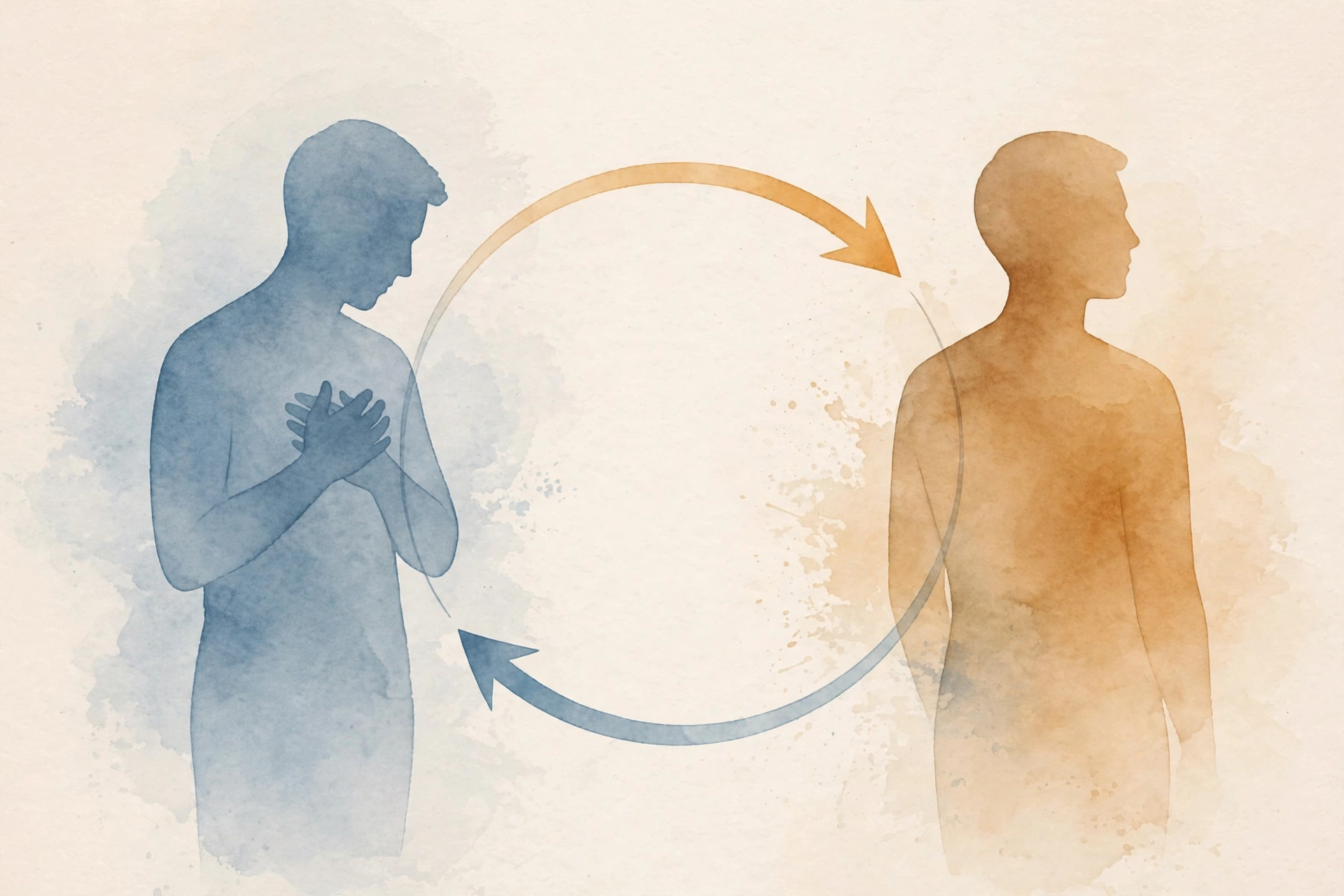
The core premise is simple: relationship distress is not really about poor communication. It’s about disconnection. When partners feel emotionally unsafe with each other — afraid of abandonment, rejection, or simply not mattering — they fall into self-protective patterns. One partner may pursue harder (criticizing, demanding, raising their voice), while the other withdraws (going silent, working late, emotionally checking out). Each person’s protective move triggers the other’s deepest fear, and the cycle spins faster.
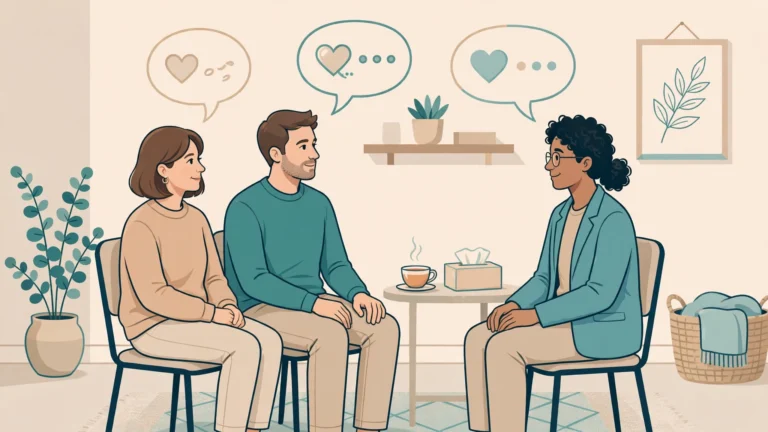
An EFT therapist helps both partners see this “dance” clearly, understand the vulnerable emotions underneath their reactions, and create new moments of genuine emotional contact — small experiences where each partner feels the other truly show up for them. Over time, those moments rebuild the secure bond that distress eroded.
The Science Behind It: Attachment Theory
EFT rests on attachment theory, the well-established psychological framework (originating with John Bowlby) describing how humans bond. Adults, like children, need a “secure base”: the felt sense that their partner is accessible, responsive, and emotionally engaged — especially when they are hurting, frightened, or uncertain.
When that security breaks down, people don’t just get annoyed; they experience a primal alarm. Research on adult attachment shows that partners who perceive their relationship as insecure show heightened stress responses, more negative interpretations of each other’s behavior, and poorer physiological recovery after conflict. EFT treats this as a feature, not a flaw: the intensity of your fights is evidence of how much the bond matters to you.
This framing is also what makes EFT non-blaming. Neither partner is the problem. The negative cycle is the problem — and both partners are caught in it. Understanding your own anxious attachment patterns and how they interact with your partner’s responses is often the first relief couples feel in therapy: finally, the chaos has a name.
The Three Stages of Emotionally Focused Therapy for Couples
EFT unfolds in three broad stages, each containing specific steps. Knowing the map helps you understand where you are in the process and what progress looks like.
Stage 1: De-escalation — Naming the Cycle
The first stage (usually sessions 1–4) is about slowing everything down and making the invisible visible. The therapist builds a safe alliance with both partners, gathers a relationship history, and helps you map your negative interaction cycle in detail.
A typical cycle might look like this: She raises her voice about feeling ignored → he goes quiet and leaves the room → she pursues him, feeling panicked → he feels criticized and withdraws further → she feels abandoned → he feels like a failure. Notice that both partners are trying to protect themselves, and both are getting hurt.
The therapist then reframes the problem: “You’re not fighting because you’re incompatible. You’re stuck in a pursue–withdraw dance where her criticism is actually a bid for closeness, and his distance is actually self-protection.” Couples consistently report that this reframe alone lowers the temperature — suddenly they’re on the same team, facing the cycle instead of facing off against each other.
Stage 2: Restructuring — Creating New Emotional Experiences
This is the heart of the work (sessions 5–15). With the cycle de-escalated, the therapist guides each partner to access the vulnerable primary emotions underneath their reactions — the fear of not being enough, the ache of feeling invisible — and to share them in a way the other can actually receive.
The mechanism is called a corrective emotional experience. When one partner says, “When you go silent, I feel terrified that I’ve lost you,” and the other responds with comfort instead of defensiveness, something shifts at a neurological level. The brain updates its prediction: this person can be turned to in pain, not just in calm. EFT researchers call the two pivotal moments “withdrawer re-engagement” and “blamer softening” — technical terms for the deeply human experience of finally being heard.
During this stage the therapist also coaches micro-responses: how to reflect, how to slow down when arousal spikes, and how to offer small gestures of repair that land as genuine rather than performative.
Stage 3: Consolidation — Making the Gains Stick
The final stage cements the new patterns. Couples revisit old hot-button topics — money, in-laws, household labor — from their new attachment stance and practice handling them differently. The therapist helps the couple build a brief relapse-prevention plan: what to do when old triggers resurface, how to call a time-out that feels like a pause rather than abandonment, and how to repair quickly when they slip. Follow-up research shows that gains made in EFT tend to hold months and years after treatment ends, precisely because couples leave with new emotional memories of safety, not just new skills.
The Nine Steps of EFT, in Plain Language
Clinicians describe EFT as nine steps grouped within the three stages. Here’s what each one actually means for you as a client:
- Alliance and assessment: You and your therapist get to know each other; the therapist maps your relationship history and the presenting problems.
- Identify the negative cycle: You name the recurring pattern — the pursue–withdraw, attack–defend, or criticize–shut-down loop that keeps replaying.
- Access the underlying emotions: Each partner connects with the vulnerable feelings (fear, shame, loneliness) driving their surface reactions.
- Reframe the problem: The cycle becomes the shared enemy. Your fights are recast as attachment panic, not character flaws.
- Express attachment needs: Each partner articulates what they actually need — reassurance, closeness, to feel chosen — in clear, vulnerable language.
- Promote acceptance: The listening partner is guided to truly receive these needs rather than argue with them.
- Structure new interactions: The therapist choreographs real-time conversations where vulnerability is met with comfort — the “change events” that rewire the bond.
- Integrate new solutions: You apply the new emotional responsiveness to old, stubborn problems and discover they resolve differently now.
- Consolidate and plan ahead: You review how far you’ve come, name your new story as a couple, and build a plan for staying connected.
Primary vs. Secondary Emotions: The Key Distinction
One of EFT’s most powerful ideas is that not all emotions are what they seem. Learning the difference changes how you hear your partner forever.
| Secondary (reactive) emotions | Primary (attachment) emotions |
|---|---|
| Anger, irritation, contempt | Fear of abandonment, feeling unlovable |
| Shutting down, stonewalling | Shame, feeling like a failure |
| Criticism, blame, sarcasm | Hurt, loneliness, grief |
| Jealousy, control | Fear of not mattering, insecurity |
Secondary emotions are the armor; primary emotions are what’s underneath. The complaint “You never listen to me!” is usually armor around the primary feeling “I’m afraid I don’t matter to you.” EFT works because comfort can only reach primary emotions — you can’t soothe someone’s anger, but you can soothe their fear. Once couples learn to speak from the primary emotion, conversations that used to detonate in minutes can end in closeness.
Core Techniques Your EFT Therapist Will Use
EFT is an experiential therapy — you’ll do real emotional work in the room, not just talk about it. These are the main interventions, and what they sound like:
Reflection
The therapist slows the conversation and mirrors back the vulnerable feeling beneath your words, in the present tense. For example: “When you said ‘whatever, do what you want,’ I heard a wave of sadness — like a part of you has stopped hoping he’ll turn toward you. Is that close?” Accurate reflection helps you access emotions you didn’t know you were carrying.
Reframing
The therapist offers a new, attachment-based interpretation of the conflict. “Her criticism is like a searchlight — she’s trying to find you, but it lands as blame. His withdrawal is how he protects himself from the fear that he’ll never get it right.” Reframes turn enemies into allies by making both partners’ behavior make emotional sense.
Enactments
The signature EFT move. The therapist structures a short, guided conversation between you and your partner — right there in the session. One partner might be asked to turn to the other and say, “I get scared when you go quiet, because I think I’ve lost you,” while the therapist coaches the other to respond with genuine comfort. These enactments create the corrective emotional experiences that are the engine of change. For deep ruptures like infidelity, therapists use a carefully paced attachment-injury repair protocol: the injured partner tells the full story of the wound, the other partner listens with real empathy and offers specific remorse, and together they build concrete repair steps. This structured approach is one reason EFT is considered effective even for serious betrayals, including financial infidelity and other broken-trust events.
What an EFT Session Actually Feels Like
Many couples arrive braced for a referee. Instead, the first thing most notice is the pace: an EFT therapist deliberately slows everything down. Where a typical argument races through ten topics in two minutes, the therapist will pause on a single sentence — “What just happened inside you when she said that?” — and stay there.
A mid-therapy session might go like this. The therapist turns to the withdrawing partner: “When she raises her voice, what happens in your body?” He says his chest tightens. “And if that tightness could speak?” A long pause. “It would say I’m going to mess this up again.” The therapist reflects it back gently, then turns to his partner: “When you hear that — that underneath his silence is the fear of failing you — what happens for you?” Her anger softens. “I had no idea. I thought he just didn’t care.” She turns to him directly: “I don’t need you to be perfect. I just need to know you’re still here.” That exchange — five minutes, no advice given — is the therapy.
Sessions are typically 50–75 minutes, weekly or biweekly. You may occasionally meet individually with the therapist (to deepen personal work), but the core of EFT is the two of you, together, having conversations you couldn’t have alone.
Who Benefits Most — and Who Should Look Elsewhere
EFT has strong evidence for couples facing:
- Chronic conflict and recurring arguments that never resolve
- Emotional distance, loneliness inside the relationship, or “roommate syndrome”
- Trust injuries, including infidelity and broken promises
- Major life transitions — new parenthood, illness, job loss, relocation, empty nest
- Partners who feel like they love each other but can’t reach each other
It’s also shown promise with couples coping with depression, anxiety, chronic illness, and infertility-related distress. That said, EFT is not appropriate for every situation. It is generally not recommended when there is ongoing physical aggression or intimate partner violence, active untreated substance dependence, or an affair that is still ongoing — in those cases, individual therapy, safety planning, or specialized treatment should come first. People who are deeply uncomfortable discussing emotions can still benefit, but should expect the process to feel challenging at first; a skilled therapist paces the work accordingly.
EFT vs. the Gottman Method: Which Fits Your Relationship?
These are the two most researched approaches to couples therapy, and they differ in meaningful ways. Neither is universally “better” — they suit different couples.
| Emotionally Focused Therapy | Gottman Method | |
|---|---|---|
| Core focus | Emotional bond and attachment security | Communication patterns and friendship systems |
| How change happens | Corrective emotional experiences in session | Skills practice, rituals, and structured exercises |
| Therapist role | Active guide through emotional process | Coach and assessor using structured interventions |
| Best for | Couples who feel emotionally disconnected | Couples wanting concrete tools and conflict skills |
| Typical length | 8–20 sessions | Often 12+ sessions |
If your main complaint is “we just don’t feel close anymore” or “I can’t get through to them,” EFT’s emotion-first approach often fits. If your main complaint is “we fight about everything and need better tools,” the structured skill-building of the Gottman Method may appeal more. Many therapists are trained in both and blend them — worth asking about in a consultation call.

What to Expect: Timeline, Cost, and Between-Session Work
Most couples complete EFT in 8 to 20 weekly or biweekly sessions, though high-distress couples or those repairing infidelity may need more. Fees vary widely by region and therapist credentials — expect rates comparable to other specialist psychotherapy, with many therapists offering superbills for out-of-network insurance reimbursement. Ask upfront about session length, cancellation policy, and whether booster sessions are available after the main course ends.
Between sessions, EFT therapists typically assign small, specific practices rather than heavy homework. Common ones include:
- A two-minute daily check-in: each partner names one feeling and one need, with no problem-solving allowed — just listening. Structured couples’ emotional check-ins keep the new responsiveness alive between sessions.
- Cycle-spotting: noticing in real time when the old dance starts (“we’re in it right now”) and pausing instead of escalating.
- Repair attempts: practicing the specific comforting responses you rehearsed in session, especially after a flare-up.
- Hold Me Tight conversations: many therapists recommend Sue Johnson’s book Hold Me Tight, which guides couples through seven bonding conversations that mirror the therapy process.
Progress isn’t always linear. Many couples feel worse briefly around the middle of Stage 1, when the cycle is fully exposed but the new patterns aren’t built yet. That dip is normal — and a good therapist will tell you so in advance.
How to Find a Qualified EFT Therapist
EFT has a formal training and certification system through the International Centre for Excellence in Emotionally Focused Therapy (ICEEFT). Look for therapists who have completed at least an EFT externship (the foundational four-day training); certified EFT therapists and supervisors have gone further. The ICEEFT therapist directory lets you search by location and specialty.
In a consultation call, ask: How much of your practice is couples work? What EFT training have you completed? How do you handle it if one of us shuts down in session? What does progress look like to you, and how will we know it’s working? Red flags include a therapist who takes sides, who focuses only on communication techniques without touching emotions, or who can’t describe the EFT model clearly. A good fit feels like being guided, not judged.
Online EFT is also an option: research suggests telehealth couples therapy can be effective, and it widens your pool of trained therapists considerably if none practice near you.
Common Myths About Emotionally Focused Therapy for Couples
- “It’s just talking about feelings for an hour.” EFT is structured and goal-directed, with defined stages, steps, and in-session change events. Emotion is the tool, not the topic.
- “You have to cry for it to work.” Tears sometimes come, but many powerful sessions involve quiet honesty, not drama. Vulnerability — not volume — is the active ingredient.
- “The therapist will tell us who’s wrong.” EFT is explicitly non-blaming. The cycle is the client; both partners are its hostages.
- “It’s only for couples on the brink of divorce.” EFT works for distressed couples, but also for stable couples who want a deeper bond, and for specific injuries like affairs or major betrayals.
- “Once therapy ends, we’ll slide right back.” The consolidation stage exists precisely to prevent this, and follow-up studies show gains generally endure.
- “EFT is the same as ‘tapping’ (Emotional Freedom Techniques).” A common confusion — they share initials but are completely different approaches. Emotionally focused therapy is an attachment-based couples therapy; the “tapping” technique is an unrelated stress-reduction method.
Frequently Asked Questions
How long does emotionally focused therapy for couples take?
A typical course is 8 to 20 weekly or biweekly sessions. Mildly distressed couples often finish toward the shorter end; couples repairing infidelity or coping with trauma may need longer. Your therapist should give you a clearer estimate after the assessment sessions.
What is the success rate of EFT for couples?
Research meta-analyses report that about 70–75% of couples recover from significant relationship distress by the end of EFT, and roughly 90% show meaningful improvement. It is consistently ranked among the most empirically supported couples therapies. Individual results vary with distress level, commitment, and therapist skill.
Does EFT work for infidelity?
Yes — EFT has a specific attachment-injury repair protocol designed for betrayals. The injured partner’s full experience is heard, the other partner offers genuine remorse and understanding, and the couple builds concrete repair steps. Studies on this protocol show greater relationship satisfaction and forgiveness when injuries are genuinely resolved. The affair must be over before this work can begin.
Can EFT help if only one partner is willing to engage emotionally?
EFT requires both partners in the room for the core work, since change happens through new interactions between you. If one partner is highly reluctant, a therapist may start with individual sessions to understand the reluctance — sometimes it masks fear rather than indifference. But sustained one-sided effort rarely produces the corrective experiences EFT depends on.
How is EFT different from regular couples counseling?
Many general approaches focus on communication skills, compromise, and problem-solving. EFT instead targets the emotional bond: it helps you understand the attachment fears driving your fights and creates new experiences of being comforted by your partner. Skills matter, but EFT holds that closeness must come first — techniques land differently when you feel securely bonded.
Is emotionally focused therapy covered by insurance?
It depends on your plan and provider. Many therapists are out-of-network but provide superbills you can submit for reimbursement, especially when a diagnosable condition (like depression or anxiety in one partner) is part of the clinical picture. Ask the therapist directly about fees, superbills, and sliding-scale options before committing.
Can EFT be done online?
Yes. Telehealth EFT follows the same stages and techniques, and research on online couples therapy supports its effectiveness. You’ll need a private space, a stable connection, and ideally a screen large enough to see each other’s faces — emotional attunement depends on reading expressions.
What should we do if we feel worse mid-therapy?
Tell your therapist immediately. A temporary dip is common when the negative cycle is fully exposed but new patterns aren’t yet built — especially in late Stage 1. A skilled EFT therapist will normalize this, slow the pace, and reinforce safety before pushing deeper. Feeling worse for a session or two is normal; feeling unsafe with your therapist is not, and is worth raising directly.
The Bottom Line
Emotionally focused therapy for couples works because it treats the real problem. Behind the recurring fights about money, chores, or in-laws is almost always the same quiet question: Are you there for me? EFT gives couples a structured path — de-escalating the destructive cycle, restructuring how vulnerability is shared and received, and consolidating a secure bond — to finally answer that question with a yes. With some of the strongest outcome research in the field and a clear, humane map of how change happens, it remains one of the most reliable ways for two people to find their way back to each other.
Disclaimer: This article is for educational purposes only and is not a substitute for professional therapy, counseling, or medical advice. If you are experiencing relationship distress, consider consulting a qualified licensed therapist. If you are in an unsafe situation involving abuse, please contact your local emergency services or a domestic-violence helpline rather than relying on couples therapy resources.