Social Media Jealousy: Protecting Your Relationship
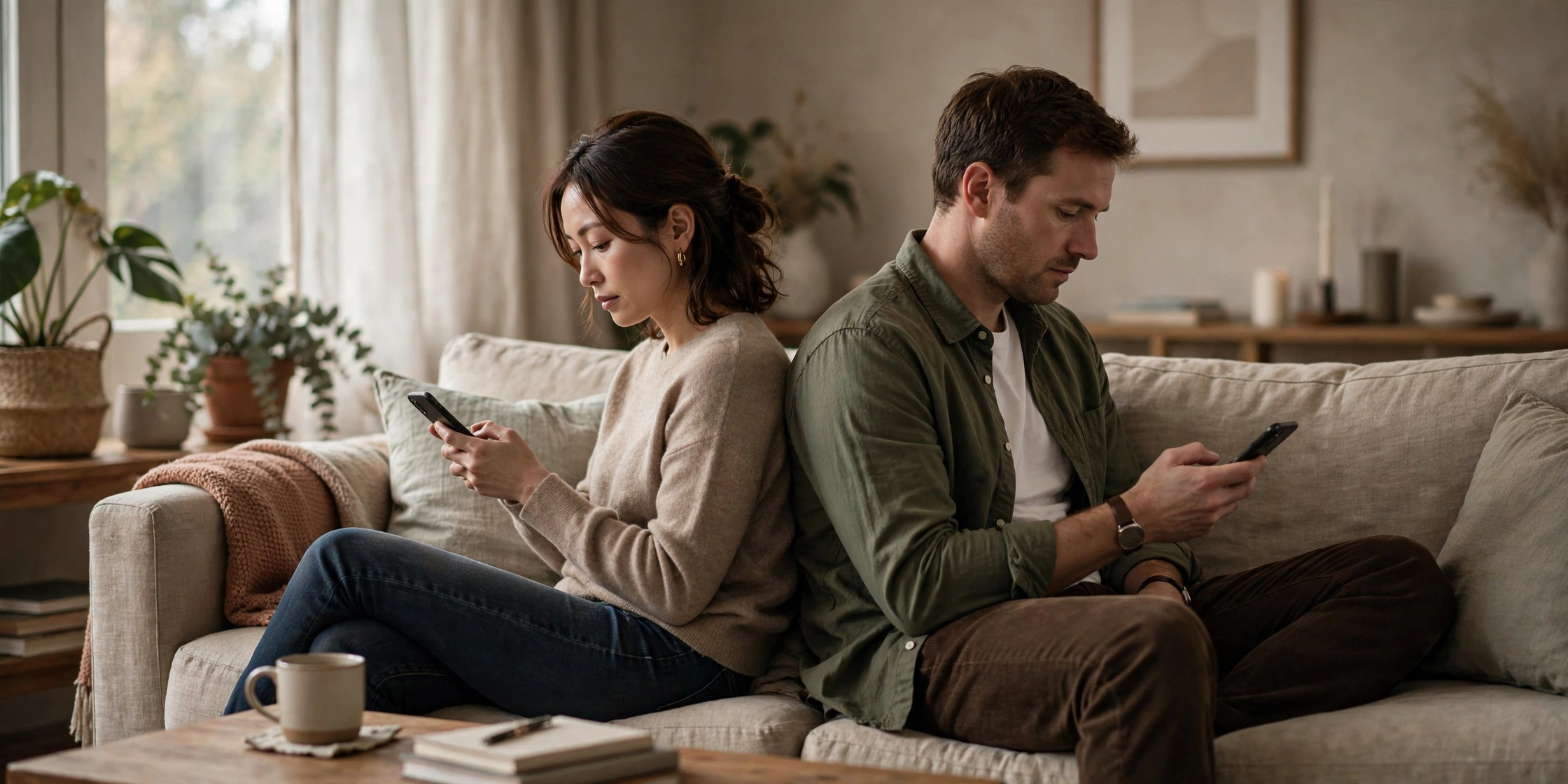
You see it on the screen before you even register the feeling: your partner just liked a photo posted by someone you have never met, or replied to a story from an old flame. Your stomach tightens. You tell yourself it means nothing — and then you check again an hour later. If this sounds familiar, you are experiencing social media jealousy in relationships, and you are far from alone. According to Pew Research Center, 23% of partnered adults say they have felt jealous or unsure about their relationship because of how their partner interacts with others online — a number that rises to 34% among adults aged 18 to 29.
Here is the important part: this feeling is not proof that you are insecure, controlling, or “crazy.” Researchers increasingly argue that social media platforms are designed to display social interactions in ways that invite monitoring and comparison. Jealousy here is a predictable response to the environment, not a character flaw. This guide covers what the science actually says about social media jealousy in relationships, the triggers most couples face, how to tell signal from noise — and six practical strategies that genuinely work. Understanding how social media jealousy relationships patterns develop is the first step toward addressing them.
What the Research Says About Social Media Jealousy Relationships
The data is more nuanced than most headlines suggest:
- It is common and cumulative. Pew’s finding that nearly 1 in 4 partnered adults feel social media-driven jealousy is not a one-time snapshot effect. Research tracking young adults over two years found that social media jealousy at a given time was negatively associated with relationship satisfaction one year later — the damage builds up rather than fading away.
- Attachment anxiety amplifies it. A 2021 study published in the Journal of Social and Personal Relationships found that “partner phubbing” (snubbing your partner for your phone) directly predicted romantic jealousy, and that attachment anxiety — the tendency to fear abandonment — made the sting significantly worse. If you already worry about being left, a partner’s online activity hits harder.
- Jealousy, not surveillance, does the damage. The same longitudinal research found something counterintuitive: the jealousy aroused by a partner’s online content predicted lower satisfaction later, while simply monitoring a partner’s posts and likes did not. The corrosive ingredient is not knowing what your partner posted — it is the painful interpretation your brain attaches to it.
- The online environment itself matters. Researchers have argued that social media jealousy may stem less from individual personality traits and more from the platform environment itself, which peppers users with out-of-context information: a like, a comment, a follow — each stripped of tone, timing, and intent. Platform design is a major driver of social media jealousy relationships tension.
- Strong emotional investment raises sensitivity. A study of 425 adults in Chile and Spain found that people who felt a stronger sense of emotional overlap with their partner — as though their identities had merged — reported higher levels of digital jealousy. The more invested you are, the more attuned you become to ambiguous online signals.
Why Social Media Is Engineered to Make You Jealous
Before social media, you simply could not see your partner’s every casual interaction with other people. Platforms have collapsed that privacy, and not for your benefit. These design choices explain why social media jealousy relationships issues are so widespread:
- Visibility by design. Likes, comments, follows, story views, and “active now” indicators exist to keep users engaged — a side effect is unprecedented visibility into your partner’s social world.
- Out-of-context signals. You see that your partner liked a photo, but not the thought behind it — a reflex tap, an old habit, or nothing at all. Your brain fills the vacuum with the worst-case story.
- The comparison machine. Your feed is full of curated highlight reels. Comparing your ordinary Tuesday to someone else’s staged perfection breeds inadequacy, and inadequacy breeds jealousy.
- The ex factor. No generation before this one had to watch former partners drift through their partner’s digital life — liking old photos, appearing in suggested friends. The ease of reconnecting with the past is one of the sharpest triggers couples report.
Cleveland Clinic psychologists note that social media is “a double-edged sword” — it can make you feel connected to the world while making you feel disconnected from yourself. Research they cite found that about 30 minutes of daily use can actually reduce anxiety and loneliness, while heavier use tends to produce the opposite effect. For couples, that line between connection and corrosion is exactly where jealousy lives. (Cleveland Clinic on social media and well-being)
The 7 Most Common Digital Triggers
Triggers vary by couple, but these seven come up again and again in research and counseling. Recognizing which social media jealousy relationships triggers affect your partnership makes them easier to address:
- Likes and comments on an ex’s posts. Even one heart-eyes emoji can detonate an evening. It signals attention going somewhere it used to go.
- Comments under attractive strangers’ photos. Flirtatious or admiring comments feel like public performances of desire aimed at someone else.
- Story views and replies. Watching stories — and replying — feels intimate because stories expire; it suggests deliberate, timely attention.
- New follows of attractive or flirtatious accounts. A follow is a choice to keep receiving someone’s content, which can read as sustained interest.
- “Active now” and read receipts. Seeing your partner online but not answering your message invites a specific, maddening question: who are they talking to instead?
- Hidden or ambiguous interactions. Deleted comments, “close friends” lists you are not on, or minimized DMs can feel like concealment — whether or not anything is hidden.
- Comparison with influencer couples. Watching other couples’ highlight reels can make your own relationship feel inadequate by contrast, redirecting dissatisfaction at your partner.
The Surveillance Spiral: Why Checking Makes It Worse
When jealousy flares, the instinct is to investigate: scroll through their likes, read their comments, check who viewed what. In the moment, checking feels like relief. In practice, it creates a self-perpetuating cycle: relief is temporary (finding nothing reassures for hours; finding something ambiguous raises suspicion), surveillance trains suspicion (you find more “evidence” because you are looking harder), and the checked partner feels suffocated and self-censors — which looks like concealment and fuels more checking. This loop sits at the heart of most social media jealousy relationships conflicts.
Remember the research finding above: it is the jealousy that erodes satisfaction over time, not the monitoring itself. But monitoring keeps the jealousy fed. Breaking the cycle means addressing the feeling, not upgrading the investigation.
Jealousy as Data vs. Noise: When to Trust the Feeling
Not all jealousy is irrational. Sometimes it is useful information. The skill is learning to tell the two apart — because most advice on this topic treats every twinge as either a red flag or a pathology, and neither is true. Try this framework:
It may be signal when:
- There is a pattern, not a single incident — repeated secretive behavior, consistent attention toward one person, growing emotional distance offline too.
- The behavior violates boundaries you both explicitly agreed on.
- Your partner gets defensive, dismissive, or dishonest when asked calmly — rather than confused but willing to talk.
- Your offline instincts match the online evidence: less affection, less presence, more guardedness in person.
It is probably noise when:
- It is a one-off interaction with no pattern — a single like, a polite comment, a reflexive follow-back.
- The “evidence” requires a long interpretive leap (they liked a photo → they are attracted → they would leave you).
- The feeling spikes when you are tired, stressed, hungover, or already anxious — and fades when you are rested.
- Your partner has a consistent, trustworthy track record and behaves the same online as off.
If it is signal, the answer is a serious conversation about trust and boundaries — and possibly couples counseling. If it is noise, the answer is the coping and boundary strategies below. If you are unsure, start with the conversation anyway: honest partners welcome clarity. Couples who learn to read social media jealousy relationships cues communicate better and fight less.
6 Practical Strategies That Actually Protect Your Relationship
1. Use the 90-minute pause protocol
When a trigger hits, do not confront, text an accusation, or start investigating. Wait 90 minutes. Jealousy is an adrenaline response; it peaks and recedes like a wave. If the issue still matters afterward, talk about it. If it has dissolved, you just saved yourself a fight. The pause protocol is one of the simplest tools for defusing social media jealousy relationships flare-ups.
2. Run the evidence test
Write down, literally: what happened (facts only), the story your brain is telling, and three alternative explanations. Example: Fact — “He liked his coworker’s photo.” Alternatives — “He likes everyone’s work photos,” “It was a reflex scroll-tap,” “He is being friendly.” This forces your brain to compete with its own worst-case script — the core technique therapists use for jealousy.
3. Build an explicit digital boundary agreement
Most couples rely on unspoken assumptions about what is acceptable online — and research shows these implicit rules are a major source of conflict. Sit down together, calmly, and negotiate specifics: likes on exes’ photos? Commenting? DMs? There is no universally correct answer; there is only what both of you genuinely agree to. Write it down. Revisit it yearly. Written agreements defuse social media jealousy relationships disagreements before they start.
4. Hold a weekly 15-minute digital check-in
Once a week, ask each other two questions: “Anything online this week that bothered you?” and “Anything I did that made you feel secure?” Normalizing the conversation keeps small irritations from calcifying into resentment, and the second question actively builds trust.
5. Create phone-free rituals
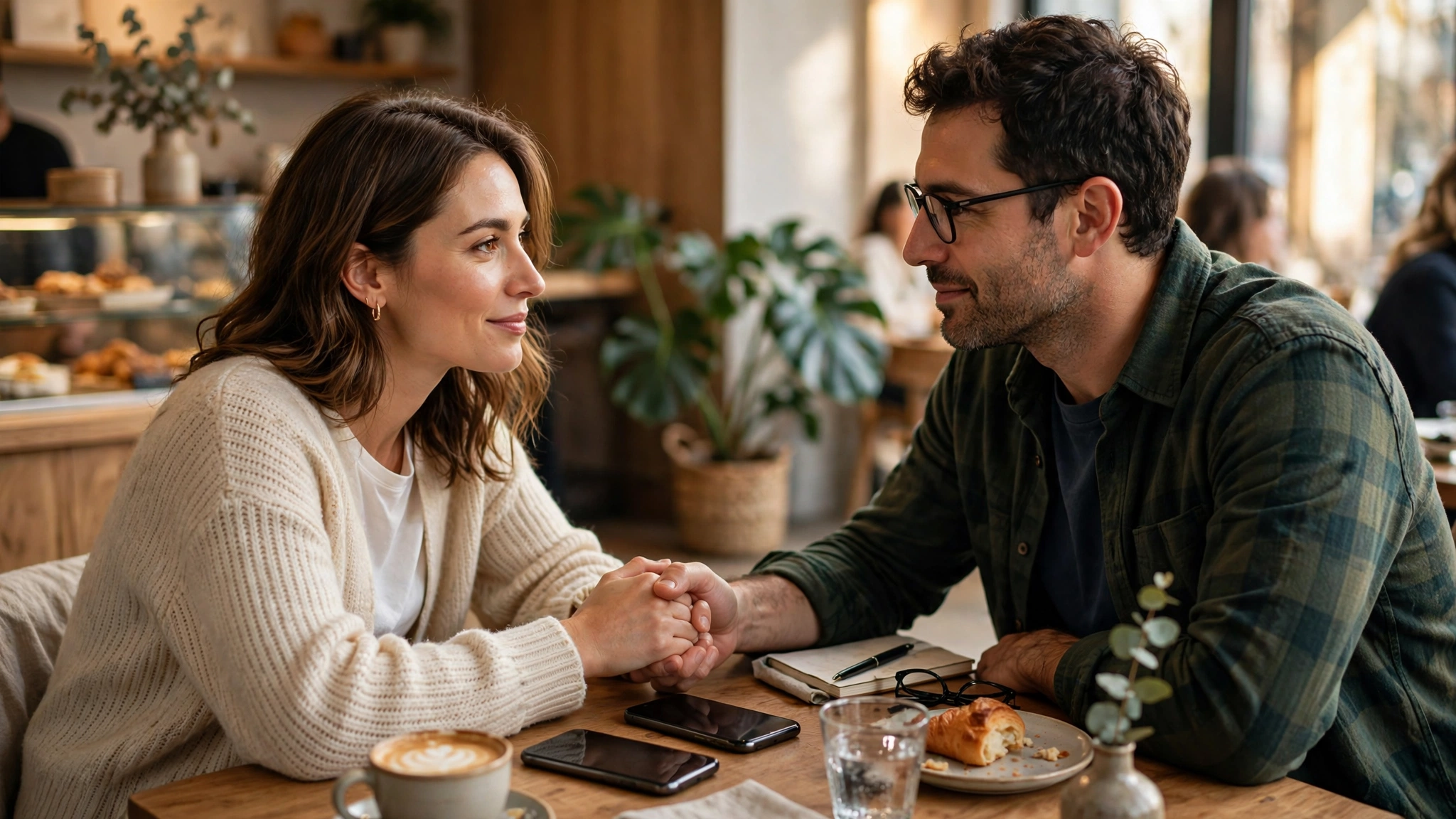
Decide on protected spaces: no phones at meals, no phones in the bedroom for the first and last 30 minutes of the day, phones face-down on date nights. These rituals are not about control — they are about presence. A partner fully attending to you is the single most powerful jealousy antidote, because jealousy thrives on feeling second to a screen. Presence is the antidote to most social media jealousy relationships insecurity.
6. Treat your own feed as part of the problem
Your jealousy is not only about your partner’s behavior — it is also about what your feed feeds you. Mute or unfollow accounts that consistently make you feel inadequate or suspicious. Turn off non-essential notifications so you are not yanked into the app by every ping. Cleveland Clinic psychologists point out that even small reductions in screen time help you stay more present and improve relationship quality — and that heavy social media use is linked to exactly the anxiety and disconnection jealousy needs to grow. (Cleveland Clinic on social media’s influence and comparison) Reducing exposure is one of the fastest ways to calm social media jealousy relationships anxiety.

Conversation Scripts That Do Not Start a Fight
The difference between a productive talk and a blowup is usually the first sentence. Accusations (“You are always flirting online”) trigger defensiveness; “I” statements open doors. Keep these in your back pocket. The right words can de-escalate most social media jealousy relationships arguments:
- Naming the trigger calmly: “When I saw the comments under her photos, I felt a wave of jealousy. I know it may mean nothing — I wanted to tell you rather than stew on it.”
- Asking for context, not confessing: “Help me understand — what is your friendship with him like? I am asking because I want to feel settled, not because I am accusing you.”
- Requesting a boundary, not issuing an ultimatum: “It would help me feel more secure if we agreed not to DM people we have never met in person. Would that feel reasonable to you?”
- Owning your part: “I realize I have been checking your likes when I am anxious. That is my pattern to fix, and I wanted you to know I am working on it.”
Notice what these share: they describe feelings, assume good faith, and invite collaboration. If talks like these consistently fail — if your partner mocks, deflects, or refuses to discuss boundaries — that is information worth taking seriously. For more on constructive disagreements, see our guide on conflict resolution for couples.
When Jealousy Points to Something Deeper
Sometimes social media is not the real problem — it is the screen onto which an older wound is projected. When social media jealousy relationships feelings persist despite reassurance, it is time to look deeper:
- Attachment wounds. If you grew up with inconsistent caregiving or were betrayed in a past relationship, your nervous system may treat a liked photo as a survival threat. This is conditioning, not weakness — and attachment-focused therapy can rewire it.
- Low self-worth. If you doubt you are enough, any rival — real or imagined — feels like confirmation. Jealousy often improves more from building your own life (friendships, goals, self-compassion) than from policing your partner’s.
- A genuinely eroding relationship. Jealousy is also how jealousy damages intimacy over time: constant suspicion kills tenderness. If the trust is truly broken — through infidelity or sustained deception — the path forward is honest reckoning, not better coping. Our guide to rebuilding intimacy after infidelity covers that terrain.
When to Seek Professional Help
Self-help strategies have limits. Consider couples counseling or individual therapy if:
- Jealousy-driven arguments happen weekly or more and never resolve.
- You cannot stop checking your partner’s accounts despite wanting to.
- Jealousy is spreading into controlling behavior: demanding passwords, dictating who your partner may follow, isolating them from friends.
- You experience persistent anxiety, sleeplessness, or intrusive thoughts about infidelity.
- Either partner feels afraid — of the other’s reactions, or of the relationship itself.
A therapist is not a referee who declares who is right. Good counseling teaches both partners to regulate the underlying anxiety and negotiate boundaries both can live with. A counselor can also help untangle entrenched social media jealousy relationships patterns.
Frequently Asked Questions
Is social media jealousy normal in relationships?
Yes — roughly 1 in 4 partnered adults have felt jealous because of a partner’s online interactions, rising to about 1 in 3 among younger adults. A pang of jealousy does not mean you are insecure or your relationship is broken. It becomes a problem when it is frequent, intense, and leads to controlling behavior or constant conflict. These numbers confirm that social media jealousy relationships challenges are a normal, treatable part of modern dating.
Is it okay to check my partner’s social media?
Occasional curiosity is human, but routine surveillance is counterproductive. Research suggests the monitoring itself is less damaging than the jealousy it feeds — yet checking keeps that jealousy alive by training your brain to treat your partner’s online life as a crime scene. If you cannot stop checking, address the underlying anxiety (ideally with a therapist) rather than checking more thoroughly.
Should couples share passwords to build trust?
Most therapists advise against it. Password-sharing treats the symptom (suspicion) while undermining the cure (genuine trust), and creates a dynamic where privacy equals guilt. Trust is built through consistent honest behavior — not inbox access. Agree on behavioral boundaries instead of surveillance rights.
My partner says I am “too jealous” and dismisses my feelings. What should I do?
Being dismissed is itself a relationship problem. Try a calm conversation using “I” statements about specific behaviors, and ask for concrete boundaries rather than reassurance alone. If your partner consistently mocks, deflects, or refuses to discuss it, consider couples counseling.
Can social media jealousy actually end a relationship?
It can seriously damage one. Longitudinal research found that social media jealousy predicted lower relationship satisfaction a year later, with cumulative effects. The jealousy-to-surveillance cycle — suspicion, checking, conflict, defensiveness — can erode trust and intimacy beyond repair if unchecked. Couples who address it early, with explicit boundaries and honest conversation, usually recover well. Untreated social media jealousy relationships cycles are among the most corrosive patterns couples face.
How do I stop feeling jealous of my partner’s ex online?
Start by reducing exposure: mute or hide the ex’s content rather than monitoring it. Then interrogate the story your brain is telling — is there an actual pattern of inappropriate contact, or is it one-sided scrolling on your part? If the contact is genuinely inappropriate, address it as a boundary issue, not a jealousy issue. This reframe resolves many social media jealousy relationships spirals.
What are healthy social media boundaries for couples?
There is no universal list — healthy boundaries are the ones both partners explicitly agree on and both honor. Common agreements: no flirtatious DMs with strangers, no secretive interactions with exes, no posting about the relationship without checking first, and daily phone-free time together. The key word is explicit: couples who negotiate rules openly report far less technology-related conflict. Clear rules are the foundation of healthy social media jealousy relationships habits.
This article is for educational purposes only and is not medical advice. If social media jealousy is causing significant distress, anxiety, or conflict in your relationship, consider speaking with a licensed mental health professional or couples counselor. Persistent social media jealousy relationships distress is a valid reason to seek help sooner rather than later.