PSA Test Explained: What Your Results Mean
If your doctor has ordered a PSA blood test — or you have asked for one — you probably want to know what the result actually means. This PSA test explained guide walks you through the numbers in plain, clinical terms: what PSA is, which levels doctors consider normal at each age, why a high reading does not automatically mean cancer, and what usually happens next. When the PSA test is explained clearly, the result becomes far less frightening. It is written for men, their partners, and clinicians who need a clear shared reference.
What Is PSA and What Does the Test Measure?
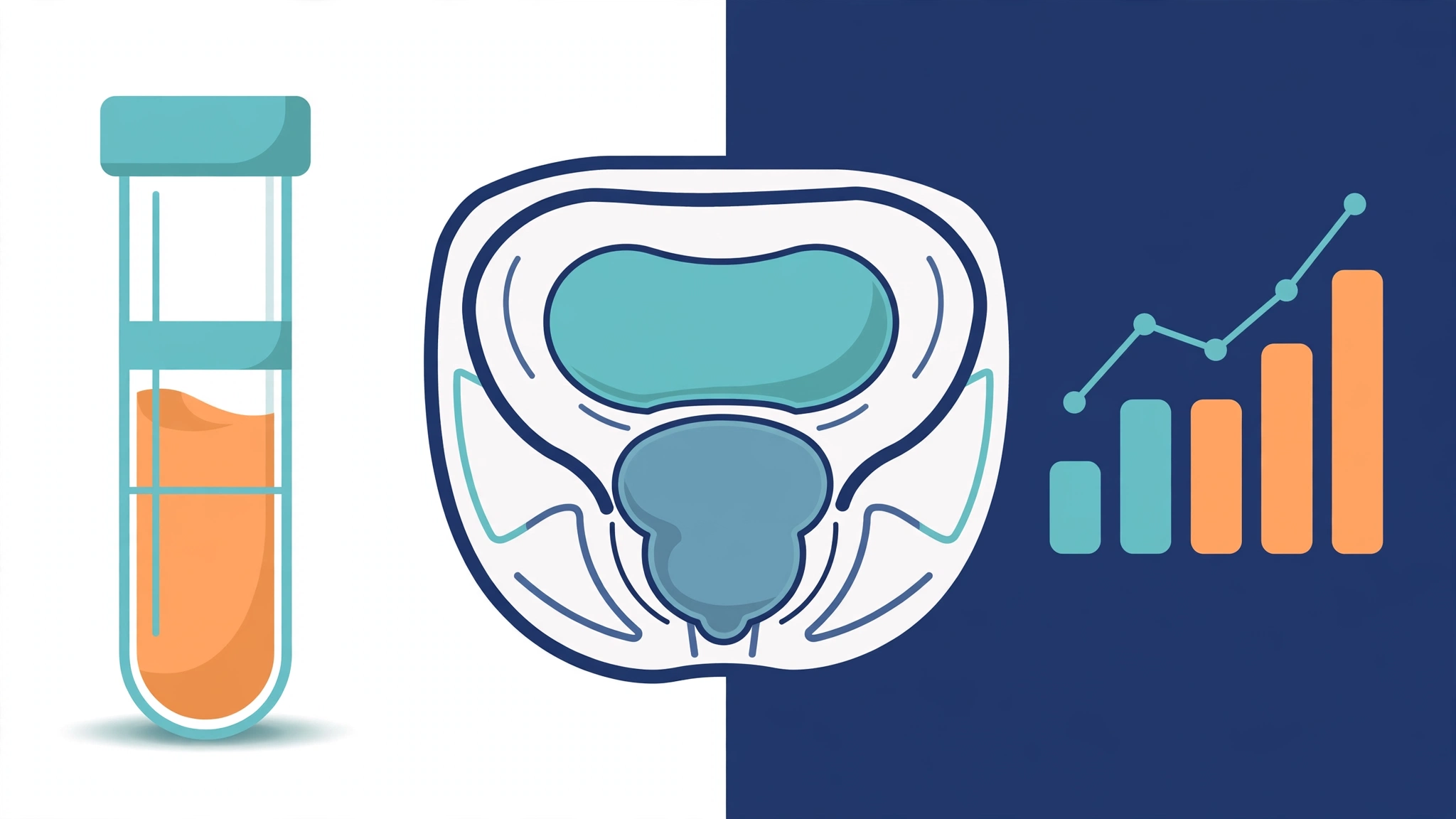
PSA stands for prostate-specific antigen, a protein made by cells of the prostate gland. Most PSA stays in semen, where it helps keep sperm motile, but small amounts leak into the bloodstream. A PSA test is a simple blood draw that measures how much of this protein is circulating, reported in nanograms per millilitre (ng/mL). Understanding this number is the starting point of the PSA test explained in this guide.
Doctors order PSA tests mainly for two reasons. The first is screening: checking for possible prostate cancer before symptoms appear, when treatment is most likely to work. The second is monitoring: men already diagnosed with prostate cancer have PSA measured regularly to see how treatment is working and to catch any return of the disease early.
The critical point, emphasized by the National Cancer Institute and by Prostate Cancer UK, is that PSA is prostate-specific, not cancer-specific. A raised PSA is a signal that something may need attention — it is not a diagnosis of cancer.
PSA Test Explained: How to Read Your Results
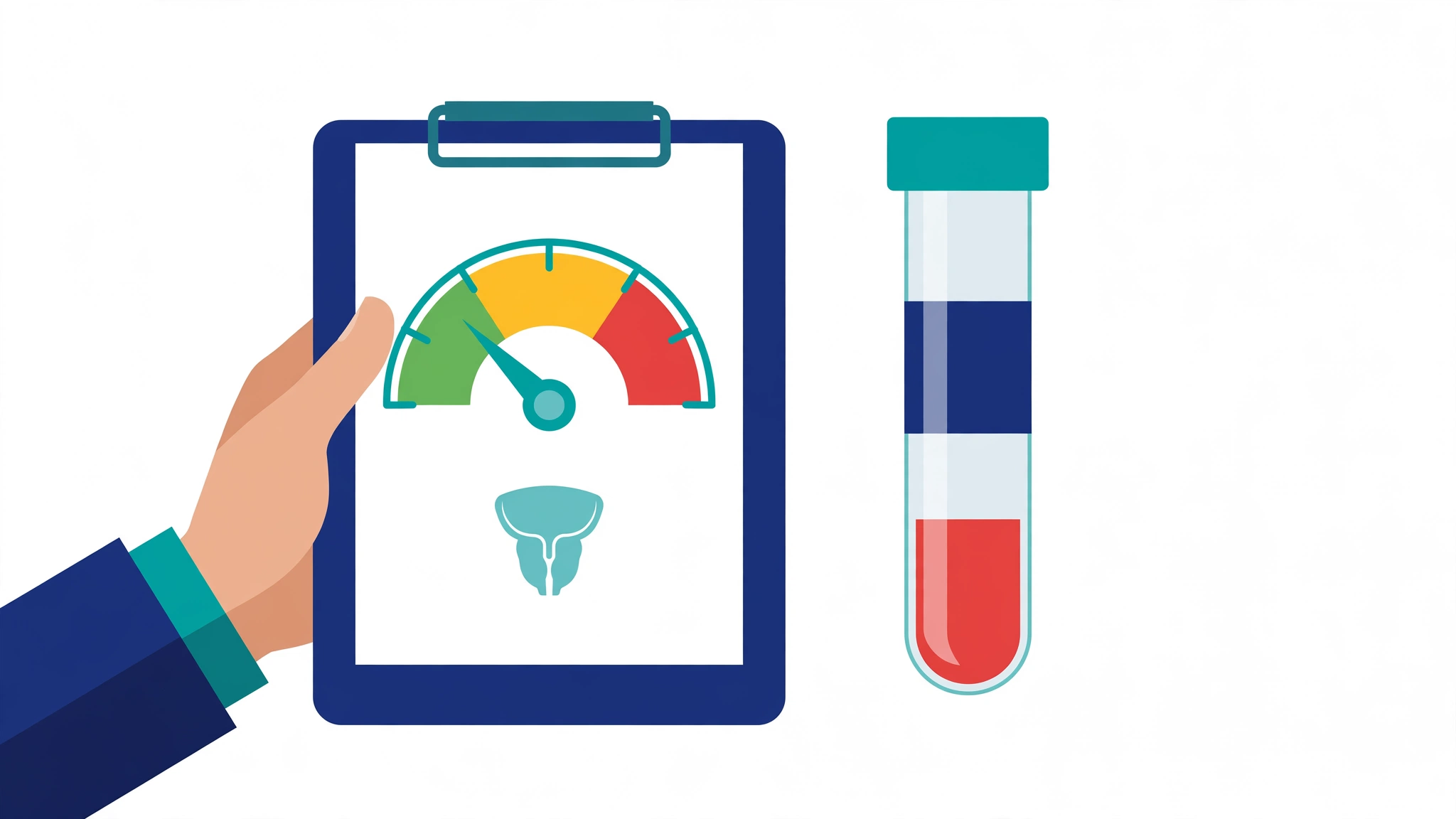
The PSA test explained simply starts with the number on your lab report. Because prostate cancer risk rises with the number, doctors often describe PSA as a continuum rather than a pass-or-fail test. Any PSA test explained properly stresses that these cutoffs are guides, not guarantees. Widely used reference points are:
- Below 4 ng/mL: generally considered normal for most men, though this is not a guarantee of being cancer-free.
- 4 to 10 ng/mL: the “grey zone.” Roughly one in four men with a PSA in this range has prostate cancer on further testing; the other three in four do not.
- Above 10 ng/mL: high, and the chance of finding prostate cancer rises to more than one in two. Further investigation becomes more urgent.
Normal also depends on age, because the prostate grows with age and releases more PSA. Age-adjusted upper limits that many urologists use are:
- Age 40–49: up to 2.5 ng/mL
- Age 50–59: up to 3.5 ng/mL
- Age 60–69: up to 4.5 ng/mL
- Age 70–79: up to 6.5 ng/mL
These age-adjusted ranges are a useful part of the PSA test explained, but they never replace clinical judgment. Context matters too. Ethnicity, prostate size, and family history all shape interpretation — for example, Black men and men with a close relative diagnosed with prostate cancer tend to be assessed at lower thresholds. Your doctor interprets the PSA test explained alongside your age, examination findings, symptoms, medications, and previous results.
What Can Raise PSA Besides Cancer?
Most elevated PSA readings turn out to have benign explanations. Around three out of four men with a raised PSA do not have prostate cancer. That single statistic is worth remembering whenever the PSA test explained here feels worrying. Common non-cancerous causes include:
- Benign prostatic hyperplasia (BPH): age-related prostate enlargement, the most common cause of a high PSA in older men.
- Prostatitis: inflammation or infection of the prostate, which can cause dramatic temporary PSA spikes.
- Urinary tract infection (UTI): a UTI can push PSA up; doctors usually advise waiting several weeks after treatment before retesting.
- Recent ejaculation: PSA can stay elevated for 24–48 hours afterwards.
- Recent prostate procedures: a digital rectal exam, prostate biopsy, catheterisation, or vigorous cycling can temporarily raise the level.
- Age itself: PSA drifts upward naturally as the prostate grows.
Some medications push PSA in the other direction. Every PSA test explained for accuracy should also mention what pushes the number down, not just up. Finasteride and dutasteride, commonly prescribed for prostate enlargement and hair loss, can roughly halve PSA levels — so always tell your doctor what you are taking, because a “normal” result on these drugs can be falsely reassuring. This is one reason prostate and sexual-health conversations overlap: treatments that affect one often affect the other, as discussed in our guide on the common causes of low libido worth ruling out first.
Why the Trend Matters More Than One Number
Here is something most quick explanations of the PSA test explained leave out: a single PSA value is far less informative than the pattern of your PSA over time. Two men can both have a PSA of 5 ng/mL, yet the one whose level jumped from 2 to 5 in a year is in a very different situation from the one who has been stable at 5 for years.
Doctors use two related measures:
- PSA velocity: how fast PSA is rising. A rise of more than about 0.75 ng/mL per year is often treated as a red flag, even if each individual reading sits below the usual cutoff.
- PSA doubling time: how long it takes the level to double. A short doubling time is more concerning than a slow, gradual climb.
This trend-based reading is the part of the PSA test explained that most surprises men — and it is the part your doctor relies on most. For the same reason, many urologists recommend establishing a baseline PSA in your mid-40s. A baseline reading gives every future result something to be compared against and helps identify fast risers years earlier. This forward-looking use of the PSA test explained gives early warning long before symptoms appear. Men with a family history of prostate cancer, or who are of African descent, are typically advised to discuss starting this conversation with their doctor around age 40–45.
Free PSA, PSA Density, and Newer Tests
When a total PSA lands in the grey zone of 4–10 ng/mL, doctors rarely stop there. They refine the picture with:
- Free PSA percentage: PSA circulates either bound to proteins or “free.” Prostate cancer tends to produce more bound PSA, so men with cancer have a lower free-PSA fraction. A free-PSA percentage above 25% generally suggests lower risk, while below 10% suggests higher risk.
- PSA density: your total PSA divided by prostate volume (measured on MRI or ultrasound). A high PSA from a very large prostate is less worrying than the same PSA from a small one — density captures that distinction.
- Newer biomarker tests: the Prostate Health Index (PHI) combines total, free, and a PSA subtype called [-2]proPSA into one score, and the 4Kscore test measures four prostate-related proteins. Both are used in some clinics to help decide who really needs a biopsy. Ask your urologist whether either is available in your area.
These refinements are a major reason modern care is moving away from “high PSA equals automatic biopsy” toward a layered, personalised assessment. That layered approach is exactly what a modern PSA test explained should describe.
When Should Men Get a PSA Test?
Guidelines differ slightly between countries, but most major medical bodies converge on shared decision-making:
- Average risk: men around 50 should discuss PSA screening with their doctor, weighing benefits (early detection) against risks (unnecessary worry, biopsies, and treatment of slow-growing cancers that may never cause harm).
- Higher risk: men with a father or brother diagnosed with prostate cancer, men of African descent, and men with BRCA gene changes should start the conversation earlier — typically around 40–45.
- General health: screening is usually recommended only for men healthy enough to benefit, often described as having a life expectancy of at least ten years.
If you already have urinary symptoms — difficulty starting, a weak stream, frequent night-time urination, or blood in urine or semen — see a doctor regardless of age. These symptoms usually come from benign enlargement or infection, not cancer, but they warrant evaluation, and a PSA test is often part of it. This shared decision-making conversation is where the PSA test explained meets real life.
Preparing for an Accurate PSA Test
Small, everyday factors can distort a PSA reading, so doctors usually advise the following before the blood draw:
- Avoid ejaculation for 48 hours before the test.
- Skip vigorous exercise and cycling or horseback riding for 24–48 hours.
- Do not have the test immediately after a prostate exam, biopsy, or catheterisation — ask your doctor how long to wait (often weeks after a biopsy).
- Treat urinary tract infections first, then wait until the infection has cleared before testing.
- Tell your doctor about every medication, especially prostate drugs such as finasteride or dutasteride.
No fasting is required. It is just a routine blood sample taken from the arm. Following these steps means the PSA test explained to you afterwards reflects your true baseline.

What Happens After a High PSA Result?
A raised PSA usually starts a careful, step-by-step process — not an immediate biopsy. What doctors commonly do next:
- Repeat the test: a single raised reading is often rechecked in a few weeks to rule out temporary fluctuations. Roughly one in five borderline results settles on repeat testing.
- Review causes: your doctor checks for infection, recent ejaculation, medications, and urinary symptoms that could explain the number.
- Refine with biomarkers: free-PSA percentage, PSA density, or a newer test such as PHI may be ordered.
- Multiparametric MRI: modern guidelines increasingly recommend a prostate MRI before any biopsy. MRI can spot suspicious areas to target — and can let some men safely avoid biopsy altogether.
- Biopsy, if needed: only when the combined evidence points strongly toward cancer does the urologist recommend a prostate biopsy, which is done under local anaesthetic and carries small risks of pain, bleeding, or infection.
Questions worth asking your doctor at this stage: What was my PSA trend over the past few years? Is my free-PSA percentage reassuring? Would an MRI come before a biopsy in my case? What are the risks of active surveillance if a low-risk cancer is found? Understanding these steps is the practical heart of the PSA test explained. If you have low-risk, slow-growing cancer, doctors may recommend active surveillance — monitoring closely rather than treating immediately — because many such cancers never cause harm.
PSA After Treatment: What Monitoring Looks Like
The PSA test explained for monitoring is different from screening. After prostate removal surgery, PSA should fall to near-undetectable levels and stay there — a later rise, called biochemical recurrence, can be the earliest sign that cancer cells remain. After radiotherapy, PSA falls slowly to a low point (nadir) over months or years; a sustained climb from that nadir prompts investigation.
Men on active surveillance for low-risk cancer typically have PSA checked every few months, along with periodic MRI and repeat biopsies. In all these cases, it is the pattern — stable, falling, or rising — that guides decisions, reinforcing why every PSA result is worth keeping on record.
For Couples: Talking Through PSA Results Together
Prostate testing affects both partners. A high PSA can trigger anxiety, and investigations and treatments can raise concerns about urinary and sexual function — topics couples sometimes find hard to raise. Clinicians recommend that partners attend the follow-up appointment together when possible, so both hear the same explanation and can ask questions. Having the PSA test explained to both partners together reduces fear and leads to better decisions.
Partners can help practically: tracking PSA results and dates, noticing urinary changes, and supporting decisions about screening and treatment. If treatment is recommended, ask the doctor openly about expected effects on urinary control and intimacy, what recovery looks like, and what support is available — urologists discuss these routinely and clinically, and honest conversation leads to better decisions. For broader context on how medical treatments can affect desire and intimacy, see our guide to low libido causes and more resources at heterosexual.pro.
FAQs
What is a normal PSA level by age?
There is no single “normal” PSA. Commonly used age-adjusted upper limits are 2.5 ng/mL (40–49), 3.5 (50–59), 4.5 (60–69), and 6.5 (70–79), with 4 ng/mL used as a general reference. Your doctor interprets the result in the context of your age, family history, ethnicity, prostate size, and previous readings — always discuss it with them.
Can you have prostate cancer with a normal PSA?
Yes. Studies found about 15% of men with PSA below 4 ng/mL had prostate cancer on biopsy, including a small minority with fast-growing tumours. Doctors never rely on PSA alone: symptoms, examination, family history, PSA trends, and imaging all contribute. A normal result is reassuring but not an absolute guarantee — report new urinary symptoms promptly.
What causes a high PSA besides cancer?
The most common causes are benign: an enlarged prostate (BPH), prostatitis, a urinary tract infection, recent ejaculation (within 48 hours), vigorous cycling, a recent prostate exam or biopsy, and ageing. About three in four men with a raised PSA do not have prostate cancer. Doctors usually rule out these causes — often by repeating the test — before further investigation.
How should I prepare for a PSA test?
Avoid ejaculation for 48 hours beforehand, skip vigorous exercise and cycling for 24–48 hours, and do not test right after a prostate exam, biopsy, or catheterisation. Treat any urinary infection first and let it clear. Tell your doctor about all medications, especially finasteride and dutasteride, which lower PSA. No fasting is needed — it is a routine blood draw.
How often should I have a PSA test?
It depends on your risk and previous results. Many experts suggest every one to three years for screened men, more often if your PSA is borderline, rising, or you have a family history. Men on active surveillance for low-risk cancer are tested every few months. If a result seems falsely raised, doctors often repeat it in four to six weeks.
Does a high PSA always mean I need a biopsy?
No. Modern practice starts with a repeat test, free-PSA or other biomarker checks, and a multiparametric MRI to look for suspicious areas. Many urologists now use MRI first and only biopsy targeted tissue, avoiding many unnecessary biopsies. That staged, evidence-based pathway is the PSA test explained at its most reassuring. A biopsy is recommended only when the combined evidence — PSA level and trend, age, examination, and imaging — points toward cancer.
We hope this PSA test explained has answered your questions. If you are due for screening or have just received a result you do not understand, the next step is a conversation with your doctor — bring your previous results, your medication list, and your questions. For more evidence-based guides on men’s health, explore the related articles on heterosexual.pro.
Medical disclaimer: This article is for educational purposes only and is not medical advice. PSA interpretation is complex and depends on your individual health history. Always consult a qualified healthcare professional about your test results, symptoms, and treatment options.