
Nipple Discharge: What’s Normal and When to Get Checked
Understanding Nipple Discharge
Noticing fluid coming from your nipple when you are not pregnant or breastfeeding can be unsettling, but it is one of the more common breast symptoms women bring to their doctors. Understanding nipple discharge causes is the first step toward knowing when the situation is likely benign and when it deserves prompt medical attention. In most cases, discharge has a harmless explanation, yet a small percentage of cases are linked to conditions that need timely treatment — which is why every new instance should be discussed with a healthcare professional.
Nipple discharge is fluid that comes out of one or both nipples, either on its own or only when the nipple is squeezed. It can be milky white, clear, yellow, green, brown, or blood-tinged, and its texture can range from thin and watery to thick and sticky. Each breast contains around 15 to 20 milk ducts, and fluid can leak from one duct or several at a time. As a broad pattern, discharge that involves both breasts and appears milky is more likely related to hormones, medications, or stimulation, while spontaneous, persistent, or blood-stained discharge from a single breast carries a higher chance of a duct-level problem needing imaging.
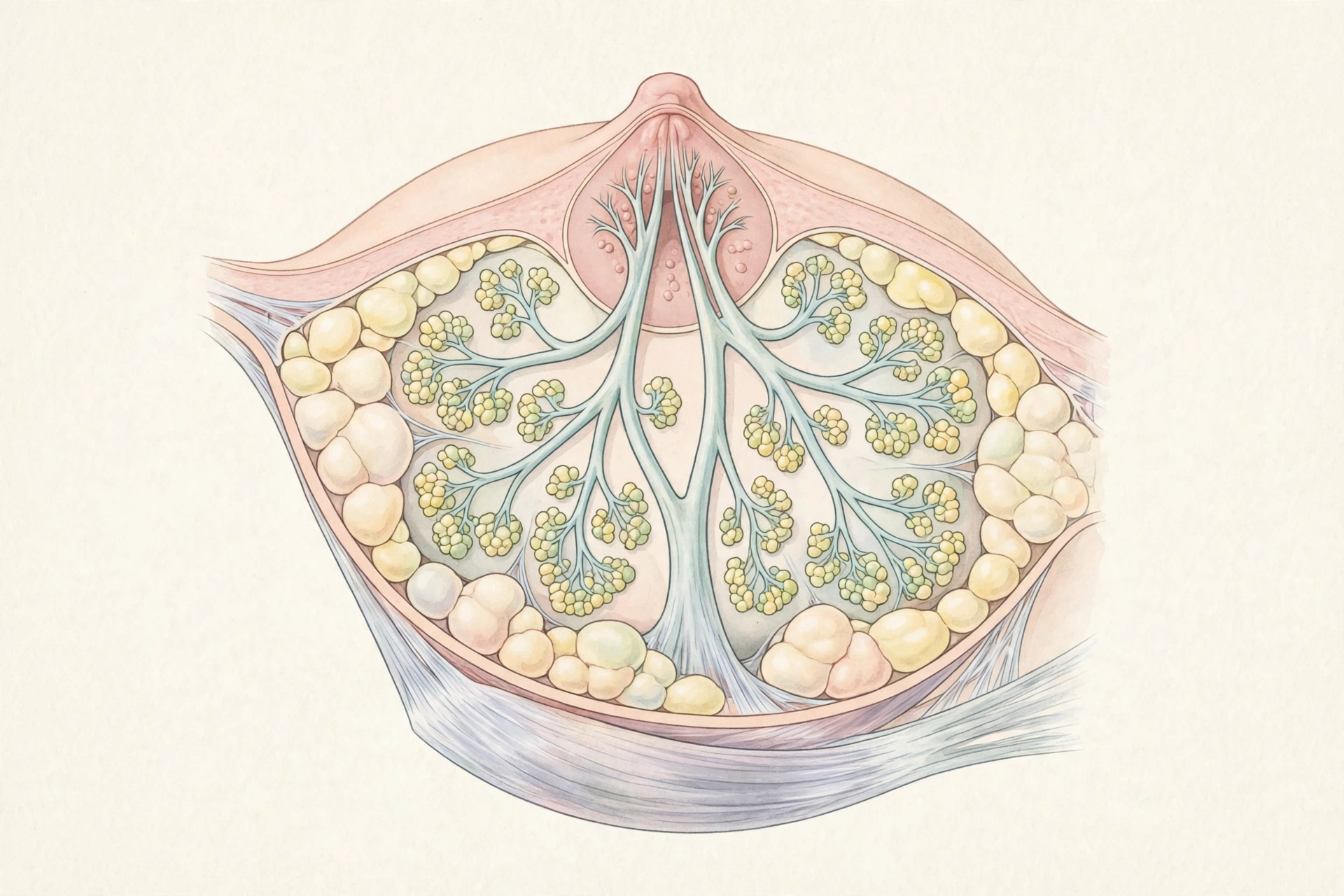
What Nipple Discharge Looks Like and What the Color May Mean
The appearance of the fluid can offer early clues about the underlying nipple discharge causes, though it never replaces a medical workup. Here is what clinicians generally associate with different types of discharge:
- Milky white: The most common type. Often related to prolactin levels, medications, thyroid conditions, or continued milk production after breastfeeding ends.
- Clear and watery: Often linked to stimulation, squeezing, or hormonal fluctuations. If it is spontaneous, persistent, and comes from one breast only, it warrants evaluation.
- Yellow or green: Frequently associated with fibrocystic changes or dilated ducts, especially around and after menopause. Green discharge can also point to cysts within the breast tissue.
- Brown or cheese-like: Commonly linked to mammary duct ectasia, a benign condition in which a milk duct beneath the nipple widens and its walls thicken.
- Pink, red, or bloody: Most often caused by an intraductal papilloma — a small benign growth inside a milk duct — but it is the color that doctors take most seriously because it can, less commonly, be associated with cancer.
- Pus-like or foul-smelling: Usually signals an infection or abscess and is typically accompanied by pain, redness, warmth, or fever.
Color alone does not determine the cause — a benign papilloma can cause alarming-looking bloody discharge, while some serious conditions can produce unremarkable-looking fluid. When evaluating nipple discharge causes, doctors weigh the full picture: color, which breast, whether it is spontaneous, and any accompanying symptoms.
Common Nipple Discharge Causes
The causes of nipple discharge fall into several broad groups. Most people will find their situation fits into one of these categories.
Hormonal causes
Hormones control the milk-producing machinery of the breast, so any shift can trigger fluid production. Pregnancy and breastfeeding are the most obvious and normal triggers — leaking can begin in early pregnancy and continue for up to two years after nursing stops. Beyond that, fluctuations across the menstrual cycle, the approach of menopause, and conditions that raise prolactin (the milk-producing hormone) can all cause discharge. An underactive thyroid gland can raise prolactin indirectly, and a benign pituitary growth called a prolactinoma can do the same, often with irregular or absent periods as an accompanying symptom. Hormonal birth control can also shift the hormonal balance enough to produce discharge in some women.
Duct-related benign conditions
Several non-cancerous conditions of the milk ducts themselves are classic causes. An intraductal papilloma is a small wart-like growth inside a duct, usually in women between 30 and 50, and it is the most frequent reason for bloody discharge from a single duct. Mammary duct ectasia occurs when a duct beneath the nipple widens and thickens, often near menopause, producing thick, sticky, sometimes multicolored discharge and occasional nipple tenderness or inversion. Fibrocystic changes — lumpy, rope-like breast tissue that many women experience — can produce discharge alongside cyclical breast tenderness.
Infections and inflammation
Mastitis and breast abscesses, most common during breastfeeding but possible at other times, can cause yellowish, green, or pus-like discharge, usually with pain, redness, warmth, and sometimes fever. A related condition, periductal mastitis, involves inflammation of the ducts beneath the nipple and can produce recurring discharge, particularly in women who smoke. Even eczema of the nipple skin can produce a weeping, crusty discharge if it becomes irritated or secondarily infected.
Stimulation, injury, and pressure
The breast is sensitive to repeated mechanical stimulation. Vigorous exercise with chafing clothing, frequent squeezing or checking of the nipple, and injury or trauma to the chest can all provoke discharge. Notably, repeatedly squeezing the nipple to check whether discharge is still present can keep the symptom going on its own — one reason clinicians advise leaving the breast alone once you have noticed the symptom and are awaiting evaluation.
Cancer-related causes
Breast cancer is an uncommon cause of nipple discharge, but it is the reason this symptom should never be ignored. Discharge is the presenting symptom in only a small minority of breast cancers, and it is more concerning when it is spontaneous, persistent, bloody or clear, from one breast only, and especially when accompanied by a lump, nipple inversion, or skin changes. Ductal carcinoma in situ (DCIS), an early-stage cancer confined to the milk ducts, and Paget’s disease of the breast, a rare cancer involving the nipple skin, are the forms most likely to produce discharge. Because discharge rarely means cancer but sometimes does, doctors evaluate every case with this possibility in mind without alarming patients unnecessarily.
Medications and Substances That Can Cause Nipple Discharge
Among the most frequently overlooked nipple discharge causes is the content of your medicine cabinet. Many prescription and over-the-counter drugs raise prolactin levels or otherwise stimulate breast tissue, and medication-related discharge typically affects both breasts with a milky appearance. Drug classes commonly implicated include:
- Antipsychotics — among the most frequent medication causes, because many of them block dopamine, the brain chemical that normally holds prolactin in check.
- Certain antidepressants — particularly some older tricyclic antidepressants and, less often, other mood medications.
- Blood pressure medications — including some calcium channel blockers such as verapamil and methyldopa.
- Anti-nausea drugs — such as metoclopramide and some related agents.
- Opioid pain medications — chronic use can suppress the hormonal signals that restrain prolactin.
- Hormonal contraceptives and hormone therapy — estrogen-containing products can stimulate breast tissue directly. If you are reviewing your options, learning how different hormonal birth control options compare can be useful background for a discussion with your doctor.
- Certain herbal products — anise, fennel, and fenugreek have mild estrogen-like activity and have been reported to trigger discharge.
Recreational substances including cannabis and, less commonly, cocaine have also been linked to elevated prolactin. If you recently started a new medication and then noticed milky discharge from both breasts, bring a complete list of everything you take — including supplements — to your appointment. Do not stop a prescribed medication on your own because of discharge; your clinician can determine whether the drug is likely responsible and whether an alternative exists.
Nipple Discharge in Men: Why It Is Treated Differently
Nipple discharge in men is uncommon, and the possible nipple discharge causes are investigated with a lower threshold than in women. Male breast tissue can respond to the same prolactin-raising medications and pituitary conditions described above, and gynecomastia (enlarged male breast tissue) can occasionally be accompanied by discharge. However, when discharge does occur in a man — particularly bloody discharge from one side — breast cancer, though rare in men, is a more prominent consideration than it is in women with the same symptom. Data suggest that in men diagnosed with DCIS, nipple discharge is the most common presenting symptom. The guidance is simple: any man who notices nipple discharge should see a doctor promptly rather than adopting a wait-and-see approach.
Newborns can also have a brief milky discharge — sometimes called “witch’s milk” — caused by maternal hormones that crossed the placenta. This typically resolves on its own within the first weeks of life; a pediatrician should simply be informed at the next visit.
How Long After Breastfeeding Is Discharge Normal?
One of the most frequent questions clinicians hear is how long milk can keep leaking after nursing ends — longer than most people expect. It is common for small amounts of milky fluid to persist for up to a year after weaning, and some women notice occasional discharge for two years or more, usually from both breasts and tapering gradually. The distinction that matters is trajectory: slowly decreasing discharge is reassuring, while increasing, newly spontaneous, color-changing, or newly one-sided discharge deserves re-evaluation. This gradual tapering is typical of weaning-related nipple discharge causes, which resolve as milk production winds down. During this window, avoid pumping or squeezing “just to check,” since stimulation itself sustains milk production and prolongs the timeline.

Warning Signs: When Nipple Discharge Needs Prompt Evaluation
Seek medical attention soon — and request an earlier appointment rather than waiting for a routine visit — if you notice any of the following:
- Discharge from only one breast, especially if spontaneous and ongoing.
- Bloody, pink, or clear watery discharge.
- Discharge that appears to come from a single duct (a single pinpoint opening rather than several).
- A lump, thickening, or swelling in the breast or under the arm.
- Nipple changes: new inversion, dimpling, scaling, crusting, or color change.
- Breast skin changes: redness, dimpling resembling orange peel, rash, or sores.
- Pain, fever, or warmth in the breast, which may signal infection.
- Any discharge in a man, or in a child beyond the newborn period.
Conversely, milky discharge from both breasts that appears only when the nipple is squeezed, occurs around your period, or follows a clear trigger such as a new medication or recent breastfeeding is less likely to be urgent — but it still merits a mention at your next appointment so it can be documented and monitored.
How Your Doctor Evaluates Nipple Discharge
Knowing what to expect can make the appointment far less stressful. Your clinician will work through the possible nipple discharge causes in a logical order — history, examination, blood tests, and imaging.
The history and physical examination
Your clinician will ask when the discharge started, whether it affects one breast or both, whether it comes out on its own or only with pressure, what it looks like, and what medications and supplements you take. Expect questions about your menstrual history, pregnancies, recent breastfeeding, and any breast trauma. The physical exam includes a careful breast examination for lumps and an attempt to identify which duct the fluid comes from, which helps guide imaging decisions.
Blood tests
Common initial tests include a pregnancy test, a prolactin level, and a thyroid-stimulating hormone (TSH) level to screen for underactive thyroid. These three tests alone identify the cause in a meaningful share of cases, particularly milky bilateral discharge.
Imaging — and why age matters
The choice of imaging is generally guided by age. For women under 30, breast ultrasound is usually the first imaging test, because younger breast tissue is denser and mammograms are less informative in this group. For women 30 and older, a diagnostic mammogram is typically ordered first, often followed by a targeted ultrasound of the area behind the nipple. If a specific duct appears to be the source, your doctor may recommend a ductogram — an X-ray study in which contrast material is introduced into the duct to outline it — or an MRI for a more detailed view. If imaging finds a suspicious area, a biopsy (removal of a small tissue sample for laboratory analysis) provides the definitive answer.
A simple tracking checklist before your visit
Bringing organized notes makes the visit more productive. For a week or two beforehand, record: which breast is affected, whether the discharge appears spontaneously or only with pressure, its color and approximate amount, whether it seems to come from one spot or several, when it started and whether it is changing, any new medications or supplements, and any accompanying symptoms such as pain, lumps, or skin changes.
How Nipple Discharge Is Treated
Treatment always targets the underlying nipple discharge causes rather than the discharge itself. Hormonal causes may be managed by addressing the thyroid condition, adjusting a medication under medical supervision, or treating a pituitary condition with medication that lowers prolactin. Benign duct growths such as papillomas are often removed surgically once diagnosed, which both resolves the symptom and provides tissue for confirmation. Duct ectasia frequently needs no treatment unless the discharge is bothersome or recurrent infection develops. Infections are treated with antibiotics, and abscesses may require drainage. Discharge related to pregnancy, breastfeeding, or normal hormonal fluctuation often needs nothing more than observation — plus the advice to stop squeezing or stimulating the nipple so the symptom can settle.
Frequently Asked Questions
Here are answers to the most frequently asked questions about nipple discharge causes.
Is nipple discharge always a sign of breast cancer?
No. The majority of nipple discharge cases are caused by benign conditions — hormonal shifts, medications, benign duct growths, or stimulation. Cancer is an uncommon cause, but because it is a possible one, any new, spontaneous, one-sided, or bloody discharge should be evaluated by a healthcare professional rather than dismissed.
Can stress cause nipple discharge?
Stress alone is not a direct, common cause, but severe or prolonged stress can disrupt the menstrual cycle and alter prolactin and other hormone levels, which may contribute to discharge in sensitive individuals. More often, what feels like a stress-related symptom turns out to have a hormonal or medication-related explanation, which is why a proper evaluation is worthwhile.
Should I squeeze my nipple to check if the discharge is still there?
It is best not to. Repeated squeezing can irritate the ducts, sustain milk production, and make the discharge continue longer than it otherwise would. It can also make the clinical picture harder to interpret. Note your symptoms from a distance — or from stains on clothing — and leave the breast undisturbed until you have been evaluated.
Can birth control pills cause nipple discharge?
Yes, in some women. Estrogen-containing contraceptives can stimulate breast tissue and, less commonly, raise prolactin enough to produce milky discharge. If discharge began shortly after starting or changing a contraceptive, tell your prescriber. Do not stop your birth control without medical advice; your clinician can assess whether the timing fits and discuss alternatives if needed.
Is nipple discharge normal during menopause?
Discharge around menopause is relatively common and often relates to duct ectasia or hormonal fluctuation — topics frequently covered alongside hormone therapy during menopause. However, because the risk of breast conditions rises with age, new discharge after menopause should always be evaluated, especially if it is one-sided, spontaneous, or blood-tinged.
What does it mean if discharge comes from only one breast?
When the likely nipple discharge causes are localized to a single duct — such as a papilloma, duct ectasia, or, less commonly, a cancerous change — rather than a body-wide hormonal cause, the discharge usually affects only one breast. One-sided discharge is one of the features doctors weigh most heavily when deciding how urgently to image the breast.
When should I go to urgent care instead of waiting for an appointment?
Seek same-day or urgent care if discharge is accompanied by signs of infection (fever, significant breast pain, redness, warmth, swelling), if there is rapidly enlarging swelling or a new large lump, or if bloody discharge begins suddenly and does not stop. For non-urgent but concerning features — spontaneous one-sided or bloody discharge without other symptoms — request the earliest available appointment rather than waiting months.
Further reading: the Mayo Clinic’s overview of nipple discharge causes and a clinical review of benign breast concerns including nipple discharge from the Cleveland Clinic Journal of Medicine offer additional detail from authoritative medical sources.
Medical disclaimer: This article is for educational purposes only and is not medical advice. It cannot replace an evaluation by a qualified healthcare professional. If you notice nipple discharge or any other breast change, please consult your doctor or another licensed clinician for personalized guidance.