Lichen Sclerosus: Symptoms, Diagnosis, and Long-Term Care
Finding the right lichen sclerosus treatment can feel like a relief — finally, a name for the persistent itching, soreness, or skin changes you may have been told were “just irritation” for months or years. Lichen sclerosus is a chronic inflammatory skin condition that most commonly affects the vulva and the skin around the anus, though it can appear anywhere on the body. It is not contagious, it is not an STI, and it is not caused by poor hygiene.
While there is no permanent cure, modern lichen sclerosus treatment controls symptoms effectively for the vast majority of women and — just as importantly — protects the delicate vulvar skin from long-term scarring and architectural change. This complete lichen sclerosus treatment guide covers symptoms, diagnosis, treatment options, and the long-term care routines clinicians recommend.
What Is Lichen Sclerosus? Symptoms to Recognize
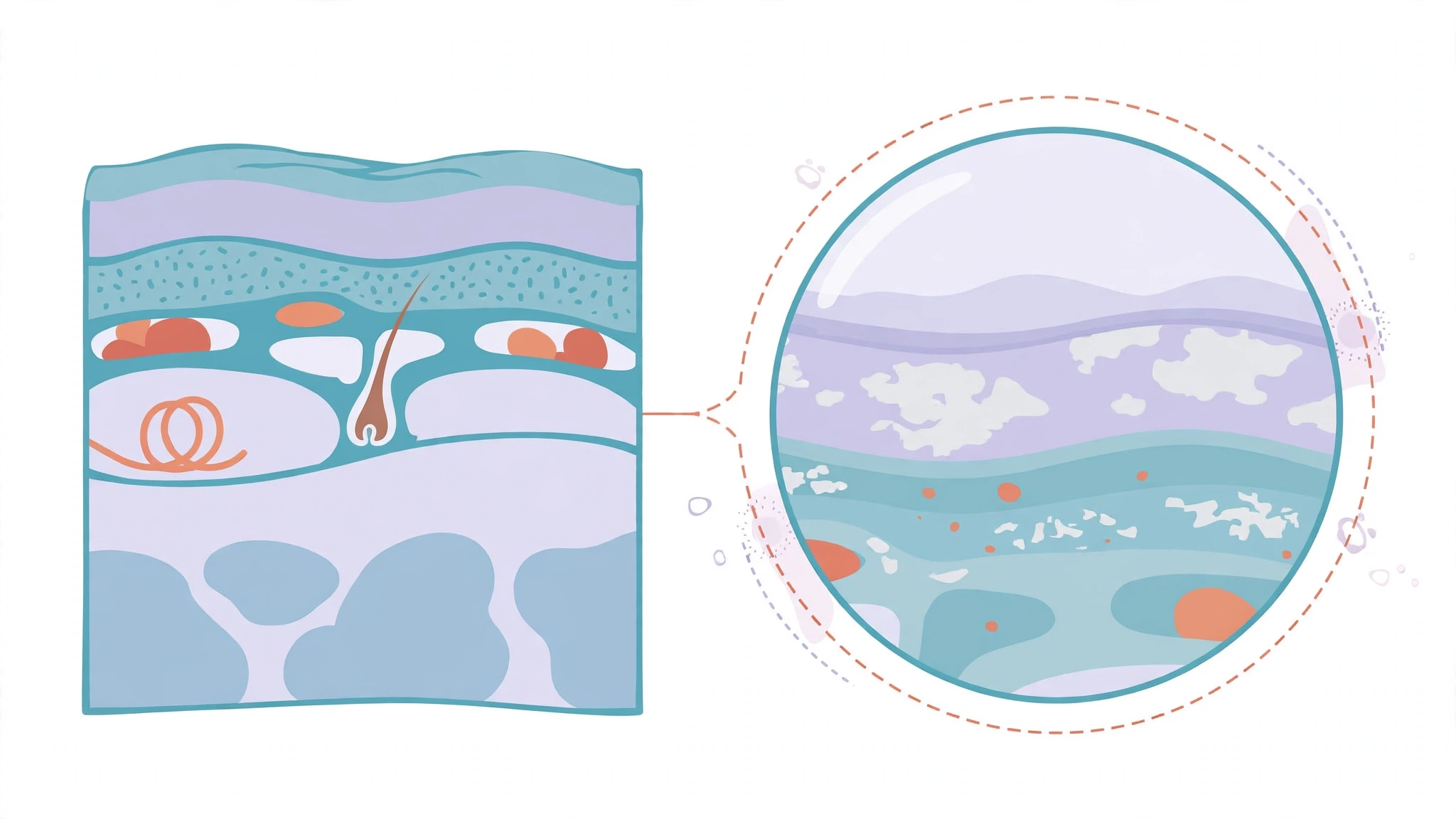
Lichen sclerosus is a long-term inflammatory condition in which the immune system appears to attack the skin of the vulva (and sometimes the perianal skin), causing it to become thin, fragile, and pale. Postmenopausal women are affected most often, but the condition can appear at any age — including in prepubertal girls and in women in their 30s and 40s.
Common symptoms include:
- Intense vulvar itching (pruritus), often worse at night, that does not respond to over-the-counter antifungal or anti-itch creams
- Pale, white, or shiny patches of skin on the vulva — sometimes described as looking like crinkled cigarette paper or parchment
- Thin, fragile skin that cracks, bruises, or bleeds easily with minimal friction
- Soreness, burning, or stinging, especially during urination or after contact with soap and fragranced products
- Pain or tightness during intercourse (dyspareunia), sometimes with small tears that bleed and then heal slowly
- Skin changes around the anus — the classic pattern forms a figure-of-eight around the vulva and anus
Some women notice no itching at all and discover the condition only when a clinician spots the characteristic skin changes during an exam. Others live with the itching for years before getting an accurate diagnosis — lichen sclerosus is frequently misdiagnosed as recurrent thrush or contact irritation first. If you have been treating “yeast infections” repeatedly without relief, a careful examination of the skin itself is the important next step. For a deeper look at related vulvar pain conditions, see our guide to vulvodynia symptoms and treatment.
How Doctors Diagnose Lichen Sclerosus
Diagnosis begins with a history — when symptoms started, what helps or worsens them, prior treatments, and any autoimmune history — followed by an examination of the vulvar and perianal skin for the characteristic white plaques, thinning, loss of normal landmarks, fissures, or bruising.
In many cases, experienced clinicians can diagnose lichen sclerosus visually. A small skin biopsy is recommended when the diagnosis is uncertain, when the skin has thickened or unusual areas, or when the condition is not responding to treatment — a non-improving area needs a fresh look to confirm the diagnosis and rule out other problems. A biopsy is a quick office procedure done under local anesthesia.
Differential diagnosis matters because several conditions mimic lichen sclerosus:
| Condition | Key differences | How it’s confirmed |
| Lichen sclerosus | Pale white thin patches, fragility, scarring; intense itching | Visual exam; biopsy if uncertain |
| Lichen planus | Purple-red flat-topped bumps, often inside the vagina as well as on the vulva | Biopsy |
| Recurrent yeast infection | Thick white discharge, redness, responds to antifungals | Swab or culture |
| Eczema / contact dermatitis | Red, weepy patches linked to irritants; no characteristic whitening or scarring | History; patch testing if needed |
| Vulvodynia | Persistent burning or pain with normal-appearing skin | Diagnosis of exclusion after exam |
Lichen Sclerosus Treatment: What Doctors Recommend First
The standard first-line lichen sclerosus treatment is a high-potency topical corticosteroid ointment — most commonly clobetasol — applied to the affected skin. This surprises many patients: strong steroids are usually avoided on delicate skin, but decades of research, including large long-term cohort studies, show that supervised use on vulvar skin is safe and is the most effective way to calm inflammation, stop the itching, restore the skin’s texture, and prevent scarring. Treatment works in two phases:
- Induction phase (roughly 1–3 months): Regular applications — often daily at first, then tapering — bring inflammation fully under control. Many women notice itching easing within the first few weeks.
- Maintenance phase (long-term): Once the skin looks and feels normal, most women continue the medication a few times per week indefinitely — this is what keeps symptoms away and prevents scarring.
Concerned about long-term steroid use on such sensitive skin? It is a completely reasonable question — and one to discuss openly with your doctor. Large follow-up studies have shown that the risks of properly supervised topical therapy are far smaller than the risks of leaving chronic inflammation untreated, which include permanent scarring, loss of vulvar architecture, and a higher chance of precancerous change.

Beyond medication, daily lichen sclerosus treatment routines include supportive skin care that makes a real difference:
- Emollients and barrier protection: A fragrance-free moisturizer or plain barrier ointment (such as petroleum jelly) applied regularly protects fragile skin and reduces friction.
- Gentle hygiene: Wash with water or a soap substitute, never douche, and avoid scented pads, wipes, sprays, and laundry products near the vulva.
- Breathable clothing: Cotton underwear and loose clothing reduce heat, moisture, and irritation.
- Prompt attention to cracks: If a fissure does not heal, contact your clinician rather than waiting.
Phototherapy (narrowband UVB) is another option doctors use for some patients, particularly when topical therapy alone is not enough. It is administered in a medical setting over multiple sessions and works by calming the local immune response in the skin. Detailed clinical guidance on lichen sclerosus treatment options is available from the Cleveland Clinic and Mayo Clinic.
When First-Line Lichen Sclerosus Treatment Is Not Enough
Most women improve substantially on ultrapotent topical steroids. But some do not — and persistent symptoms deserve a systematic reassessment rather than silent endurance. If you are not improving after about 12 weeks of correct lichen sclerosus treatment, clinicians typically walk through this sequence:
- Check application technique: Under-application is a common, fixable reason for failure — your doctor can review your exact routine.
- Rule out a secondary problem: A superimposed infection, contact irritation, or a coexisting condition such as vulvodynia can keep symptoms alive while the lichen sclerosus itself is controlled.
- Consider steroid-sparing alternatives: Prescription topical calcineurin inhibitors such as tacrolimus can calm inflammation for women who cannot tolerate steroids.
- Repeat biopsy of non-responding areas: Any area that does not improve with proper treatment should be sampled again to confirm the diagnosis.
- Referral to a vulvar specialist: A dermatologist or gynecologist with dedicated vulvar-disease expertise can offer options such as systemic medications for rare severe cases, plus emerging approaches like targeted JAK-inhibitor therapies currently under study.
Marketed “laser rejuvenation” devices have limited evidence for lichen sclerosus; discuss pros and cons with a specialist before considering them. The proven core of lichen sclerosus treatment remains consistent topical therapy plus regular monitoring.
Lichen Sclerosus Beyond the Vulva: The Extragenital Form Most Guides Skip
Here is something most patient guides barely mention: lichen sclerosus is not always genital. In a minority of patients, pale, slightly wrinkled ivory-colored patches appear on the shoulders, upper back, chest, neck, or breasts. These extragenital patches are flat, usually painless, and often noticed incidentally. They do not carry the same scarring or cancer risk as vulvar disease, which is why they are frequently managed with simple observation or mild topical treatment rather than ultrapotent steroids.
Why does this matter for your care? Finding these patches elsewhere on your body can actually help confirm the diagnosis when the vulvar picture is subtle. If you notice new pale patches on the shoulders, chest, or back, mention them at your follow-up — they are part of the same condition and worth documenting as part of your overall lichen sclerosus treatment.
Lichen Sclerosus in Girls and During Pregnancy
Another angle competitors routinely underplay is that lichen sclerosus has two age peaks: prepubertal girls and postmenopausal women. In young girls, it often presents with itching, soreness, and pale patches; pain with bowel movements can occur when the perianal skin is involved. Reassuringly, many childhood cases improve significantly around puberty as hormone levels shift, though follow-up into adolescence is still recommended.
If you have lichen sclerosus and become pregnant, the condition itself does not affect fertility, and lichen sclerosus treatment can generally continue under your obstetrician’s guidance. Practical points to plan with your doctor:
- Keep inflammation controlled before delivery: Well-managed skin tears less easily during vaginal birth.
- Delivery mode: Lichen sclerosus alone is not a reason for cesarean delivery, though scarring or narrowing may factor into planning.
- Postpartum review: Hormonal shifts after birth can trigger flares, so schedule a check-in in the months following delivery.
- Menopause timing: The drop in estrogen at menopause frequently coincides with symptom onset or worsening, which is why many women are diagnosed in their 50s and 60s. If painful intercourse after menopause is part of your story, our article on painful intercourse after menopause covers the broader picture.
Protecting Your Intimate Life: Sex, Emotions, and Relationships
Can you have sex with lichen sclerosus? Yes — with the right preparation. Intercourse during an active flare risks tearing and pain, so most clinicians advise treating the inflammation first and resuming when the skin is calm. When you do resume, generous water- or silicone-based lubricant minimizes friction on fragile skin, gentler positions with the receiving partner controlling depth and pace reduce the risk of tearing, and applying your barrier ointment beforehand protects the skin. Stop if it hurts: pain is a signal, not something to push through.

Pain that persists even when the skin looks controlled may involve pelvic floor muscle tension — the body’s protective response to anticipating pain. Pelvic floor physical therapy helps many women break this cycle; ask your doctor for a referral if penetration remains difficult.
The emotional weight deserves attention too. Chronic vulvar conditions can erode confidence, body image, and desire — and strain partner communication. These feelings are normal and common. Being honest with your partner about the condition (it is not contagious and not an STI) often relieves more anxiety than silence does. If low mood or relationship tension persist, counseling — individually or as a couple — is a legitimate part of care. Our questions guide for talking to your OB-GYN about sexual health can help you prepare for these conversations.
Your Long-Term Monitoring Routine
Lichen sclerosus is a lifelong condition, but with consistent care most women keep it in quiet remission. The long-term plan has two parts: scheduled medical follow-up (generally every 6 to 12 months once stable) and self-monitoring between visits. Keeping these appointments matters even when you feel fine — inflammation can smolder silently, and at these visits your doctor confirms the treatment is working and inspects for any changes needing biopsy.
Self-monitoring — what to watch for: About once a month, take a few minutes (a hand mirror helps) to check for anything new. Contact your clinician promptly about:
- A sore, ulcer, or crack that does not heal within a few weeks
- A new lump, bump, or wart-like growth
- An area of thickening, hardening, or raised white tissue
- Persistent bleeding unrelated to intercourse
- Any skin change that looks or feels clearly different from your usual pattern
Why the vigilance? Long-standing lichen sclerosus carries a small but real increased risk of vulvar squamous cell carcinoma — estimates range from under 1% to around 5% over a lifetime. The reassuring part, emphasized by specialist societies, is that keeping the disease in remission with consistent lichen sclerosus treatment appears to lower that risk. Self-checks plus regular exams are how changes get caught early, when they are most treatable.
Keep a simple log between visits: note flare triggers, how quickly your lichen sclerosus treatment settled things, and questions for your next appointment.
FAQs
Can lichen sclerosus be cured?
No, there is currently no permanent cure for lichen sclerosus. It is highly manageable, however: with consistent treatment — typically maintenance topical therapy plus good skin care — most women achieve long remission with minimal or no symptoms, much like eczema or rosacea.
Is lichen sclerosus an STI or contagious?
Neither. Lichen sclerosus is not sexually transmitted and cannot be passed to a partner through any kind of contact. It is an inflammatory skin condition with likely autoimmune and hormonal roots. You do not need to have your partner examined, and it is not caused by sexual activity or poor hygiene.
Will I need to use steroid medication forever?
Most women need some form of long-term maintenance — often the ointment just two or three times a week — after the initial treatment phase brings things under control. Stopping completely frequently leads to recurrence. Long-term studies show that supervised lichen sclerosus treatment maintenance on vulvar skin is safe, and the risks of untreated disease outweigh medication concerns.
Can I still have sex if I have lichen sclerosus?
Yes. It is best to wait until active inflammation and tearing have settled with treatment, then resume gently using plenty of lubricant and positions that limit friction. Persistent pain despite good skin control may signal pelvic floor muscle tension, which pelvic floor physical therapy can address — ask your doctor for a referral.
Can lichen sclerosus turn into cancer?
Long-standing vulvar lichen sclerosus carries a small increased risk of vulvar squamous cell carcinoma, estimated between under 1% and about 5% over a lifetime. Consistent treatment that keeps the disease in remission appears to lower this risk. Regular 6–12 month check-ups plus monthly self-checks for non-healing sores, lumps, or thickened areas are the standard safety net.
Does lichen sclerosus affect fertility or pregnancy?
Fertility is not affected by lichen sclerosus. Pregnancy and vaginal delivery are generally safe; the main goal is keeping inflammation well controlled beforehand so fragile skin is at its strongest. Topical treatment can usually continue during pregnancy under your obstetrician’s guidance, and a postpartum review is wise since hormonal shifts can trigger flares.
If vulvar itching, soreness, or skin changes have been dismissed as “just irritation” for too long, talk to your doctor or ask for a referral to a clinician experienced in vulvar health. Effective lichen sclerosus treatment exists, early care prevents scarring, and with a steady long-term routine most women get their symptoms — and their confidence — firmly back under control.
Medical disclaimer: This article is for educational purposes only and does not constitute medical advice. Lichen sclerosus is a medical condition that requires professional diagnosis and individualized treatment. Do not start, stop, or change any medication based on this article alone. Consult a qualified healthcare professional — such as your gynecologist, dermatologist, or primary care clinician — for guidance tailored to your situation.