Safe and Comfortable Sex Positions During Pregnancy
Finding safe sex positions during pregnancy can feel like relearning something you knew by heart. Positions that were effortless months ago may now press on your belly, strain your back, or leave you breathless. The good news, confirmed by the American College of Obstetricians and Gynecologists (ACOG), is that sex is safe in most healthy pregnancies through the third trimester, unless your doctor advises otherwise. The key is adapting intimacy to your changing body, not giving it up.
This guide covers 10 comfortable safe sex positions during pregnancy organized by trimester, the comfort mechanics that make each one better, warning signs to discuss with your doctor, and honest answers to the questions most couples are too shy to ask.
Is Sex During Pregnancy Actually Safe? Fact vs. Fear
Your baby is well protected: amniotic fluid cushions movement, strong uterine muscles absorb pressure, and a mucus plug seals the cervix. Penetration cannot reach the baby. Medical sources agree on the essentials:
- Sex does not cause miscarriage in a healthy pregnancy. Most early losses stem from chromosomal or developmental issues, not sex.
- Orgasms do not trigger preterm labor in a low-risk pregnancy. They may cause mild cramps or Braxton Hicks contractions that fade with rest.
- Light spotting or cramping after sex is common, since the cervix is more sensitive in pregnancy. Heavy bleeding or severe, persistent cramping always warrants calling your ob-gyn.
- You can keep having sex until your water breaks, assuming no complications. A doctor-prescribed pelvic rest overrides any guide, including this one.
ACOG’s patient FAQ on sex during pregnancy confirms most sexual activity is safe in healthy pregnancies, and WebMD’s positions guide agrees that comfort is the main criterion. These facts are the foundation for choosing safe sex positions during pregnancy with confidence.
Why Safe Sex Positions During Pregnancy Matter More as Your Body Changes
Understanding why some arrangements feel better helps you improvise your own safe sex positions during pregnancy:
- Growing belly: anything pressing your partner’s weight onto your abdomen becomes uncomfortable and eventually impractical.
- The back-lying limit: after roughly week 20, lying flat on your back can compress the vena cava, causing dizziness. Prop yourself at an angle or switch to side-lying positions.
- Heightened pelvic blood flow: more natural lubrication and sensitivity — but also tenderness with deeper contact, so control over depth matters.
- Pelvic girdle and round ligament pain: sharp twinges in the pelvis or groin appear in mid-to-late pregnancy; positions that keep legs supported and avoid wide spreading reduce strain.
- Fatigue and breathlessness: let the bed, chair, or pillows do the supporting.
- Shifting desire: libido often dips in the first trimester, rebounds in the second, and eases again late in the third. All normal.
A Trimester-by-Trimester Guide to Comfortable Intimacy
Choosing safe sex positions during pregnancy gets easier when you match the position to what your body is dealing with right now.
First Trimester (Weeks 1–13)
Physically, most positions still work, but nausea, breast tenderness, and exhaustion may shrink your appetite for sex. Keep things gentle and pressure-free — no need to change positions yet. If breast contact is tender, ask your partner to focus elsewhere.
Second Trimester (Weeks 14–27)
Often the most comfortable stretch: nausea fades, energy returns, and increased blood flow can heighten sensation. The bump is manageable. Woman-on-top positions shine here — you control depth and pace — and side-lying setups keep things relaxed. After week 20, limit lying flat on your back.
Third Trimester (Weeks 28–40)
The belly is substantial and fatigue returns, so comfort decides everything. Side-lying and rear-entry positions dominate: the bed supports the bump and nothing rests on it. Orgasms may trigger mild tightening afterward; unless contractions turn regular or painful, that is just your body practicing.
10 Safe Sex Positions During Pregnancy Couples Actually Enjoy
Each is described in practical, non-graphic terms focused on belly room, weight distribution, and control.
| Position | Best trimester(s) | Why it works |
|---|---|---|
| Spooning | 2nd & 3rd | Bed fully supports the bump; partner’s weight stays off you |
| Side-by-side facing | All | Eye contact, intimacy, and gentle, shallow contact |
| Woman on top (seated) | 1st & 2nd | You control depth, angle, and pace completely |
| Reverse cowgirl | 1st & 2nd | Belly stays free; you set the rhythm facing away |
| Supported hands-and-knees | 2nd & 3rd | No belly pressure; elbows down protect the back |
| Seated face-to-face | 2nd & 3rd | Upright, intimate, plenty of belly room |
| Edge of the bed | 1st & 2nd | Propped at an angle; partner stands, you relax |
| Modified missionary | 1st (propped later) | Familiar closeness with pillow support under the back |
| Scissors | 2nd & 3rd | Side-lying with legs intertwined; very gentle |
| Standing rear embrace | 1st & 2nd | No belly pressure; works in tight spaces |
1. Spooning (Side-Lying Rear Entry)
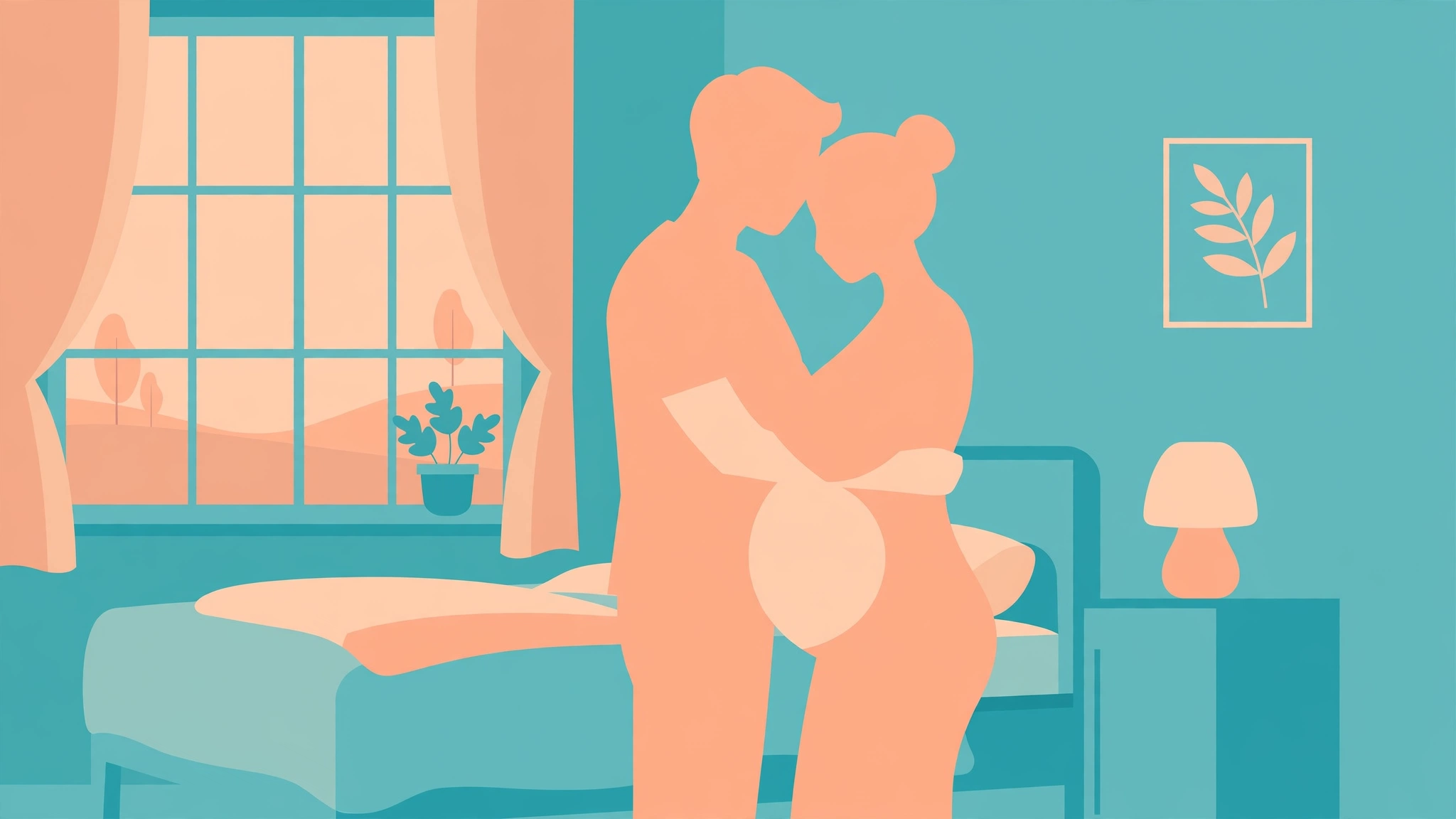
Lie on your side with your partner behind you, both facing the same direction — the position most couples land on by the third trimester. The mattress carries the bump’s full weight, your partner’s weight never touches your abdomen, and a pillow between the knees eases hip and pelvic discomfort.
2. Side-by-Side Facing Each Other
Both lie on your sides, face to face, angled slightly rather than stacked directly. Slower and more intimate, with contact staying shallow — welcome late in pregnancy when sensitivity is high. Prop your head on a firm pillow.
3. Woman on Top (Seated Control)
Sit or kneel astride your partner while they lie back: you decide depth, angle, and rhythm, and nothing presses on your belly. Best in the first two trimesters before balance becomes tricky; later, use the headboard for stability.
4. Reverse Cowgirl (Facing Away)
The same seated control, but facing away. The changed angle can relieve deep contact, and the belly stays free. Rest your hands on your partner’s knees and keep movements unhurried.

5. Supported Hands-and-Knees
Kneel on your elbows rather than your hands — firm pillows under the forearms work well — while your partner kneels behind. Gravity keeps all pressure off the bump, the supported upper body protects an aching back, and many women stay comfortable with this into the final weeks.
6. Seated Face-to-Face
Your partner sits on a sturdy chair or bed edge while you sit on their lap facing them. Upright, affectionate, and naturally spacious for the belly — a favorite when couples miss emotional connection.
7. Edge of the Bed (Partner Standing)
Lie near the bed’s edge, propped on pillows so you are tilted rather than flat, while your partner stands. They do the work while you stay relaxed, and the tilt avoids the back-lying blood-flow issue of late pregnancy.
8. Modified Missionary (Pillow-Propped)
Classic missionary is safe in the first trimester, when the bump is small and your partner’s weight is not an issue. The growing bump and your partner’s weight make it impractical later. The fix: slide a firm pillow under your hips and upper back so you are angled upward, and have your partner support their weight on their arms rather than resting on you.
9. Scissors (Side-Lying at an Angle)
Lie on your side while your partner lies at an angle to you, legs intertwined in a scissor shape. Contact is gentle and shallow, body weight stays off the belly, and the unhurried pace suits low-energy days.
10. Standing Rear Embrace
Both standing, your partner behind you, you leaning slightly forward onto a countertop or sturdy chair for balance. It avoids abdominal pressure completely and suits the first two trimesters. Skip it late in pregnancy once your center of gravity shifts.
Comfort Mechanics: The Pillow, Lubricant, and Pacing Tricks That Change Everything
The secret behind safe sex positions during pregnancy that feel good is rarely the position — it is the support around it:
- Build a pillow fortress. A body pillow supports the bump and aligns the spine in side-lying positions; a firm pillow under the hips converts back-lying into safe angled positions; one between the knees relieves pelvic pressure.
- Keep water-based lubricant nearby. Despite extra natural lubrication, some women experience dryness — a simple water-based lubricant removes friction from the equation.
- Control depth and pace. If deep contact causes cramping or discomfort, slow down, shorten the movement, or switch to external stimulation.
- Protect joints. Pregnancy loosens ligaments, leaving wrists, knees, and the lower back vulnerable. Elbows-down variations, blankets under knees, and upright positions reduce strain.
- Communicate in real time. A simple “a little slower” keeps things comfortable; needs can change mid-session as the bump shifts.
- Respect pelvic girdle pain. Keep knees together when moving between positions, avoid standing on one leg, and favor supported side-lying arrangements. Mention persistent pelvic pain to your midwife.
- Pause when breathless. Sit upright and breathe normally. The goal is closeness, not a workout.
If you are exploring new arrangements together for the first time, our broader guide to comfortable positions for beginners uses the same communication-first approach for any stage of life.
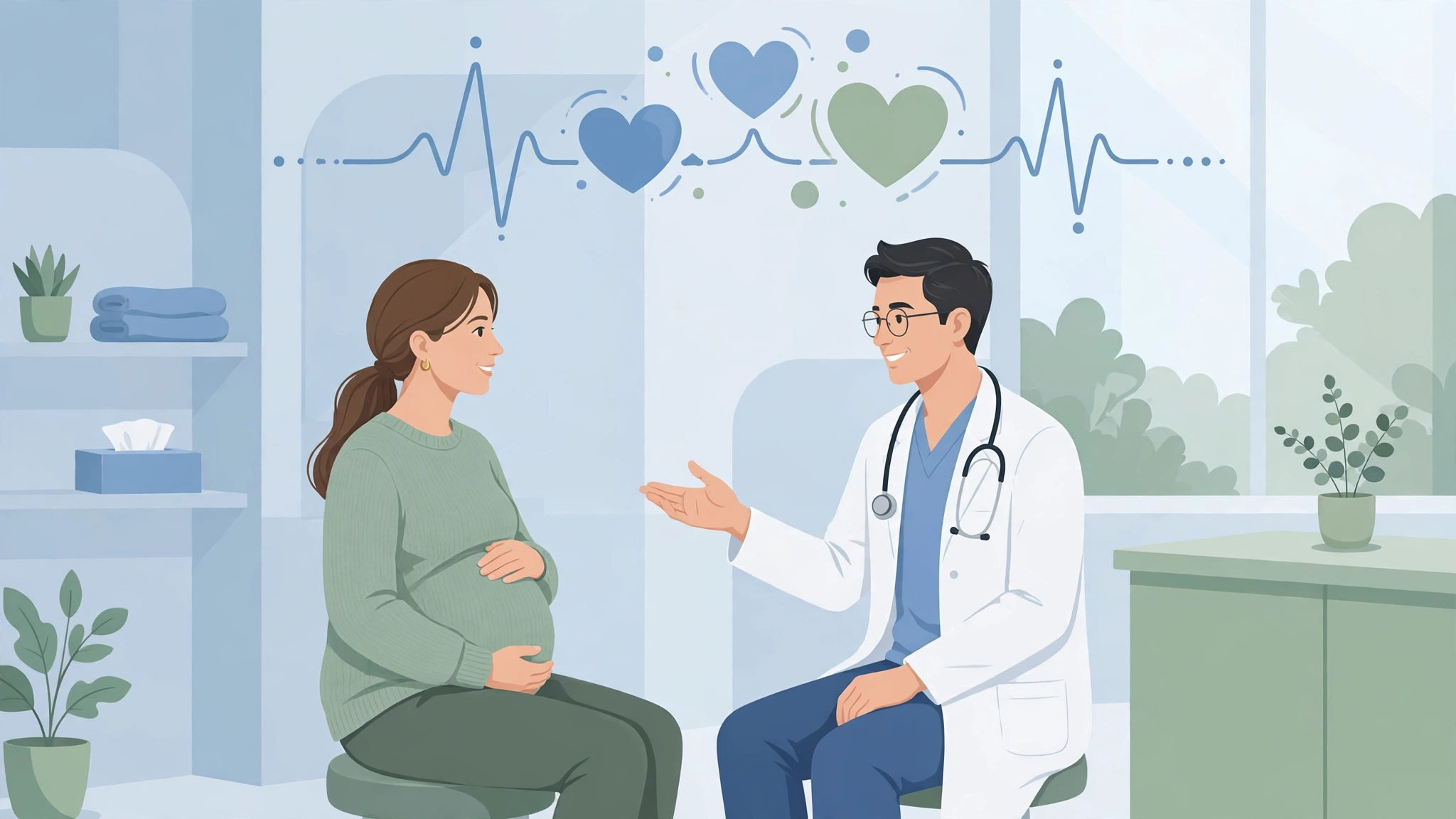
When Safe Sex Positions During Pregnancy Are Not Enough: Red Flags for Your Doctor
For most couples, the sections above are the whole story. But certain conditions mean sex should be paused or avoided — sometimes for the rest of the pregnancy. This is a “talk to your doctor” list, not a self-diagnosis tool:
| Situation | What it means for intimacy |
|---|---|
| Placenta previa (placenta covering the cervix) | Usually off-limits until the placenta moves or after delivery; contact near the cervix can cause bleeding. |
| Unexplained vaginal bleeding | Pause penetration and get evaluated by your doctor or midwife before resuming. |
| Water broken or leaking amniotic fluid | Avoid vaginal penetration entirely; the protective barrier is gone and infection risk rises. |
| Signs of preterm labor (regular contractions, pelvic pressure, fluid leaking) | Stop and seek medical advice promptly; your doctor may recommend pelvic rest. |
| History of preterm birth, miscarriage, or cervical insufficiency | Your doctor may advise avoiding sex later in pregnancy even if you feel fine. |
| Carrying multiples with complications | Ask your ob-gyn; uncomplicated twin pregnancies are often fine, but complications change the guidance. |
| Severe, persistent cramping or heavy bleeding after sex | Call your ob-gyn the same day; mild cramps and light spotting are common, but severe symptoms are not. |
A doctor’s pelvic rest order typically means avoiding anything inserted vaginally — intercourse, fingers, and toys — while kissing, massage, and cuddling remain welcome. Confirm the specifics with your own provider.
Desire, Anxiety, and Staying Connected When Sex Feels Complicated
Desire often follows a wave: dipping in the nausea-heavy first trimester, rebounding in the second, easing again late in the third. If your libido has quietly vanished, our guide to the common causes of low libido worth ruling out first explains the hormonal and lifestyle factors at play.
Partner anxiety is just as common. Many partners fear hurting the baby or causing labor; sharing what you have learned — the amniotic protection, ACOG’s reassurance, the red-flag list — often dissolves that fear. Frame it as teamwork: solving a comfort puzzle together, not performing.
Penetration is only one form of intimacy. When intercourse does not appeal, many couples enjoy:
- Oral sex, considered safe in pregnancy with one firm rule: a partner should never blow air into the vagina, due to a rare but serious risk of air embolism. Avoid it with an active cold sore, especially in the third trimester.
- Mutual masturbation and external stimulation, which sidestep belly pressure entirely.
- Massage, warm baths together, and extended cuddling, which release oxytocin, the bonding hormone behind that connected feeling.
- Simply talking about what you miss and what feels different — emotional intimacy often deepens precisely because physical intimacy requires more creativity.
There is no scorecard. Some couples stay active through all forty weeks; others press pause and reconnect afterward. Both are healthy when the decision is mutual and informed.
FAQs
Can having sex during pregnancy harm the baby?
No. In a healthy pregnancy, the baby is cushioned by amniotic fluid, protected by the strong uterine muscles, and sealed off by the mucus plug in the cervix. Penetration cannot reach the baby, and normal sexual activity does not injure the fetus. ACOG confirms most sexual activity is safe for women having healthy pregnancies.
Will an orgasm during pregnancy cause labor?
In a low-risk pregnancy, no. Orgasms can cause mild, brief uterine cramps or Braxton Hicks contractions — your body’s harmless practice contractions — which fade with rest. They do not trigger true labor unless your body is already ready. If contractions become regular, painful, or frequent, contact your ob-gyn promptly.
Is missionary safe during pregnancy?
Yes in the first trimester, when the bump is small and your partner’s weight is not an issue. From about week 20, lying flat on your back for long periods can compress a major vein and cause dizziness, so most couples switch to a pillow-propped modification or move to side-lying positions like spooning instead.
What is the best sex position in the third trimester?
Of all safe sex positions during pregnancy, side-lying spooning is the most popular late-pregnancy choice: the bed supports the bump, your partner’s weight stays off your abdomen, and you can easily pause or adjust. Supported hands-and-knees and seated face-to-face are close seconds for comfort and closeness.
Is oral sex safe during pregnancy?
Yes, oral sex is generally considered safe during pregnancy. The one strict rule: your partner should never blow air into the vagina, because of a rare but serious risk of air embolism. Also avoid oral sex if your partner has an active oral herpes outbreak, particularly in the third trimester, to protect the baby.
When should I avoid sex during pregnancy?
Talk to your doctor first if you have placenta previa, unexplained vaginal bleeding, leaking amniotic fluid or a broken water, signs of preterm labor, cervical insufficiency, or a history of preterm birth — or if you are carrying multiples with complications. Your doctor may recommend pelvic rest, meaning no vaginal penetration while other closeness continues.
Exploring safe sex positions during pregnancy together is an exercise in communication: checking in, adjusting, and choosing comfort over habit. Start with the trimester guidance above, lean on pillows and patience, and keep your ob-gyn in the loop about anything that worries you. For more doctor-informed guidance, explore the related guides here on heterosexual.pro.
Medical disclaimer: This article is for educational purposes only and is not medical advice. Every pregnancy is different, and general information cannot replace personalized guidance. Always consult a qualified healthcare professional, such as your ob-gyn or midwife, about what is safe for your specific pregnancy, and seek prompt medical attention for bleeding, severe pain, fluid leakage, or signs of preterm labor.