Is It Normal to Lose Attraction in a Long Relationship?
If you are searching for losing attraction long relationship advice because the spark in your partnership feels like it is fading, you are far from alone — and it does not automatically mean your relationship is over. Psychologists consistently describe attraction as something that rises and falls over years of partnership, much like a living system that needs attention rather than a permanent state that either exists or is gone forever. Understanding why it fades is the first step toward deciding what to do about it.
This guide takes a clinical, evidence-informed look at losing attraction to partner: what is normal, what is medical, what is psychological, and what therapists recommend to rebuild it — plus a framework for deciding when to seek help.
Why Losing Attraction to Partner Is Normal
Before anything else, one fact deserves emphasis: the decline of white-hot early attraction is not a malfunction. It is biology. Anthropologist Helen Fisher’s research on romantic love identifies three overlapping brain systems — lust, romantic attraction, and attachment — and they are designed to hand off to one another over time, not to burn at full intensity forever.
Your brain chemistry literally changes
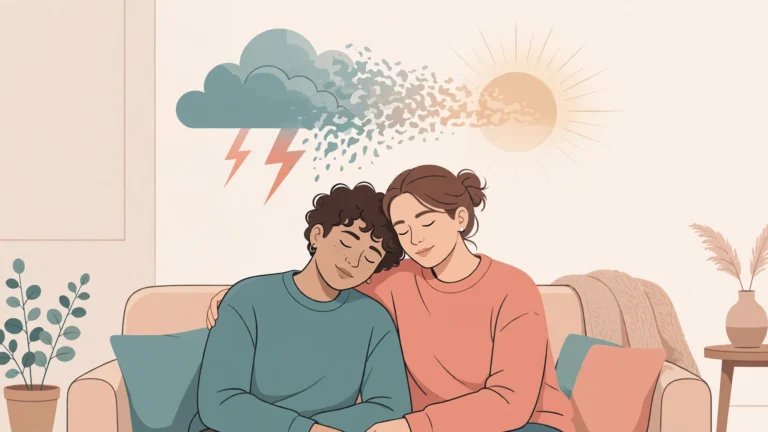
In the first 18 to 36 months of a relationship, attraction runs on high levels of dopamine and norepinephrine — the neurochemicals of reward, novelty, and excitement. This is the “limerence” phase: racing heart, intrusive thoughts, intense craving. But no brain sustains that neurochemical state indefinitely. As attachment bonds deepen, oxytocin and vasopressin take over, prioritizing calm, security, and pair-bonding over excitement. Losing attraction in a long relationship often means feeling this handoff — not that love is dead, but that it has changed chemical languages.
Novelty fades; habituation is real
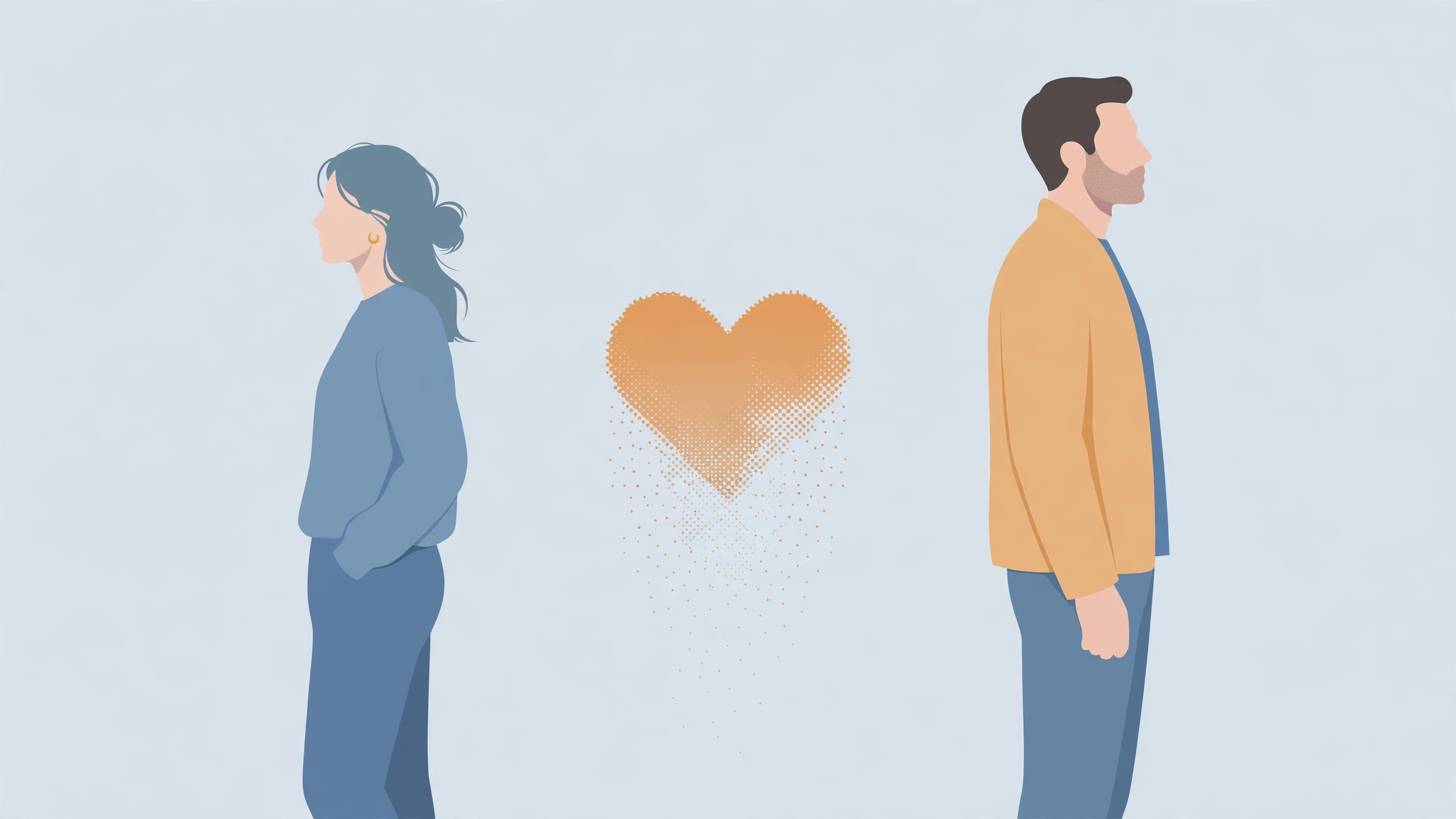
Psychologists call it habituation: the more familiar a stimulus becomes, the less intensely the brain responds to it. Predictability is wonderful for security and terrible for erotic charge. Researchers describe this as the tension between love, which seeks safety, and desire, which needs distance, mystery, and surprise. Total merging quietly removes the small space that desire runs on. This is the dynamic behind most losing attraction long relationship concerns: love seeking safety while desire needs surprise.
Attraction, Desire, and Arousal Are Not the Same Thing
Much of the distress around losing attraction to partner comes from confusing three separate processes. Therapists distinguish them carefully, because each has different causes and different solutions:
| Process | What it means | Example |
|---|---|---|
| Attraction | The pull toward your partner — finding them appealing, interesting, desirable | Still admiring how they look or who they are, even if you rarely initiate sex |
| Desire | The motivation to seek sexual or romantic contact | Feeling the urge to kiss, flirt, or be intimate — or noticing its absence |
| Arousal | The body’s physical response to stimulation | Responding physically once touch or closeness begins, regardless of prior urge |
Many people who say they are “losing attraction” in a long relationship actually have intact attraction but low desire — often the responsive kind, where motivation arrives after closeness begins rather than before it. Others have low arousal with fine desire, which can signal a medical issue. Naming which one has changed is the single most useful diagnostic step you can take before attempting any fix. Many readers searching losing attraction long relationship guidance discover that this naming step alone brings immediate relief.
The 8 Most Common Reasons Attraction Fades in Long-Term Couples
Losing attraction to partner concerns are almost never caused by one dramatic event. In couples therapy, the same small causes come up repeatedly, usually several at once:
| Cause | What it looks like | What helps |
|---|---|---|
| Routine replaced novelty | Identical weekends, identical evenings, nothing new to discover | Scheduled novelty — a new activity together every two weeks |
| Touch became transactional | The only physical contact left is touch that leads to sex | Non-sexual affection with no expectation attached |
| Unnamed resentment | Irritation about chores, money, or the mental load that never gets voiced | Direct, contempt-free complaints raised early |
| Desire mismatch misread as rejection | One partner wants sex more often; the other reads it as pressure | Learning responsive vs. spontaneous desire models |
| Life-stage exhaustion | New parenthood, caregiving, shift work — no unhurried time or energy left | Protecting even short windows of couple time; addressing sleep |
| Merged identity | Speaking as “we” constantly; no separate friends, interests, or growth | Rebuilding individual lives and bringing something back to share |
| Self-neglect | One or both partners stop investing in health, appearance, or vitality | Exercise, sleep, and self-care framed as relationship care |
| Digital distraction | Screens fill the last waking hour that couples once used to talk and touch | Phone-free bedroom or a daily tech-free window |
When Doubt Itself Is the Problem: Relationship OCD
Here is an angle most losing attraction long relationship articles never mention: sometimes the fade is not the core problem — the rumination about the fade is. Clinical psychologists describe a pattern sometimes called relationship obsessive-compulsive disorder (ROCD): intrusive, looping doubts about whether you still love your partner, whether you picked the right person, whether the attraction is “real enough.”
The trap works like this: a normal, momentary dip in attraction triggers a frightening thought (“what if I don’t love them anymore?”), which triggers anxiety, which triggers compulsive checking — mentally scanning your feelings, comparing your partner to others, testing your body’s response. That constant monitoring creates the very emotional flatness it fears.
Therapists who treat this pattern recommend the same tools used for other obsessive thought cycles: noticing the doubt without engaging it, resisting the urge to “check” your feelings, and evaluating the relationship by values and behavior over months — not by the intensity of this Tuesday’s butterflies. If intrusive relationship doubts are consuming an hour or more of your day, that is a strong reason to see a therapist individually, even before couples work begins.
When the Cause Is Medical, Not Relational
Months of honest conversation will not fix a thyroid problem. A meaningful share of losing attraction long relationship cases is physiological, and doctors treat ruling out medical causes as a standard step. The Mayo Clinic and the NHS list overlapping medical contributors to low desire:
| Medical factor | Why it matters | What to ask your doctor |
|---|---|---|
| SSRIs and other antidepressants | Reduced desire and delayed arousal are among the most common side effects | “Could my medication be affecting my sex drive, and are there alternatives?” |
| Hormonal contraception | The pill, patch, or implant can lower desire in some people | “Is my contraception a possible factor, and what are my options?” |
| Thyroid disorders | An underactive thyroid drains energy and dampens desire | “Can we check my thyroid function as part of a workup?” |
| Perimenopause and menopause | Falling estrogen affects desire, vaginal comfort, and arousal | “Are my symptoms consistent with perimenopause, and what treatments exist?” |
| Low testosterone (men) | Gradually declining levels can reduce desire and energy | “Is hormone testing appropriate for my symptoms?” |
| Chronic conditions | Diabetes, heart disease, chronic pain, and depression all suppress desire | “Could my condition or its treatment be part of the picture?” |
If your losing attraction long relationship concerns started suddenly alongside a new medication, a major hormonal shift, persistent fatigue, or pain during sex, book a medical evaluation before assuming the relationship is the problem. A good clinician will screen hormones, review medications, and assess sleep and mood in the same visit. For a deeper walkthrough of the medical side, see our guide to low libido and the common causes worth ruling out first.
Losing Attraction to Partner: 7 Proven Ways to Rebuild It
Patterns of losing attraction to partner are reversible far more often than couples expect — through accumulated small changes, not grand gestures. Here is what couples therapists recommend:
- Separate touch from sex, on purpose. Agree on a period where affection is welcome and sex is off the table. This lets the lower-desire partner accept a hug without bracing for a negotiation, and it lets the higher-desire partner give affection without it being read as pressure. Affectionate contact almost always rises within weeks.
- Answer the small bids. Gottman Institute research identifies “bids for connection” — a comment about the news, a hand on the shoulder, a photo held up for you to look at — as the strongest predictor of relationship stability. Put the phone down and turn toward them. Emotional safety returns before desire does, typically within two to four weeks.
- Reintroduce novelty deliberately. Novelty is the raw material of desire. Try one genuinely new shared experience every two weeks: a class, a hike somewhere unfamiliar, cooking a cuisine you have never attempted, a weekend trip to a town you have never visited. The brain cannot distinguish “exciting activity” from “exciting partner” as cleanly as you might think.
- Rebuild separate lives, slightly. Partners need something to bring back and report on. A hobby, a sport, or a friendship group of your own restores the separateness that lets you see each other as interesting individuals again rather than as extensions of yourselves. Desire needs a little distance to run on.
- Talk about intimacy outside the bedroom. Have the conversation fully clothed, in daylight, in a neutral room. Say what you feel and what you want, about one thing at a time, without the words “always” and “never.” Nobody negotiates well while feeling rejected in the dark after a failed attempt.
- Raise complaints without contempt. Gottman’s research is unambiguous: contempt — eye-rolling, mockery, disgust — is the single strongest predictor of relationship breakdown, and it kills desire faster than any other pattern. Complaints about specific behavior are survivable; character attacks are not.
- Schedule intimacy, and extend the runway. Spontaneity is a luxury of early relationships with free time. Planning a window protects intimacy from work, children, and exhaustion — and anticipation does real work. For partners with responsive desire, motivation often begins several minutes into physical contact, so lengthening the warm-up is not a preference; it is how their arousal system is built.
Couples often discover during this process that they simply experience desire at different rates — which is itself normal. If that resonates, read our guide to mismatched libidos in marriage for strategies built specifically for that pattern.
Should You Stay or Go? A Clinician’s Decision Framework
Losing attraction to partner sometimes marks the beginning of the end — and therapists have a structured way of helping couples tell the difference. Consider both columns honestly:
Green flags: attraction is likely rebuildable
- You still like and respect your partner as a person, even if desire is low.
- The fade tracked a clear cause: a baby, a medication, burnout, a dry spell that became habit.
- You feel warmth, fondness, or grief about the loss — not relief or disgust.
- Both of you are willing to make changes, even small ones.
- Conflict, when it happens, stays about behavior rather than character.
Red flags: the fade may be protective wisdom
- You feel contempt, cruelty, or disgust toward your partner — not just low desire.
- There is emotional manipulation, repeated betrayal, or ongoing disrespect.
- Your needs are consistently ignored even after clear, calm communication.
- You feel profound relief, not sadness, at the thought of the relationship ending.
- One partner refuses to discuss the issue at all, or refuses any professional help.
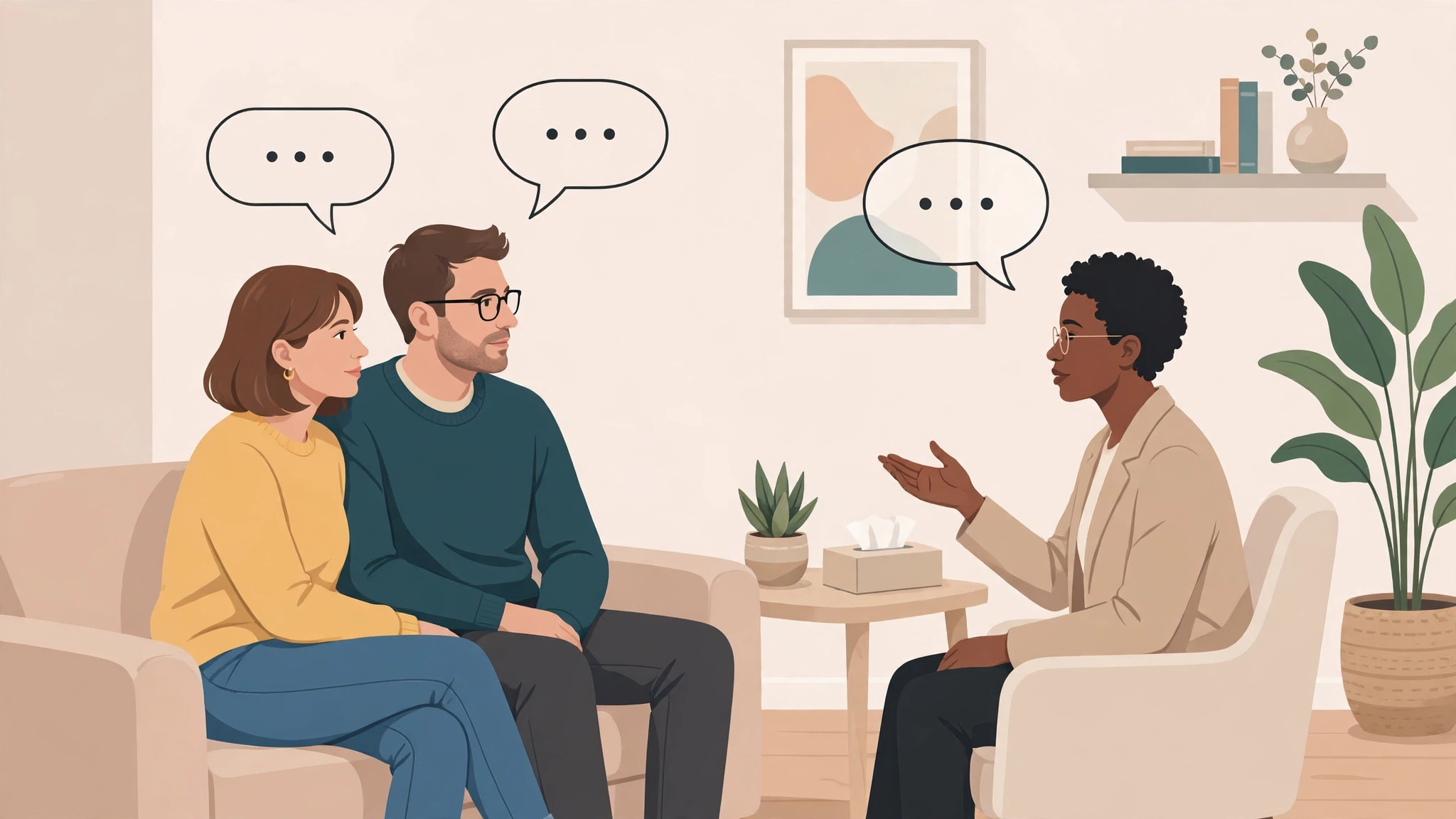
Two to three months of genuine effort with no movement is the standard clinical threshold for seeking professional help — and most couples wait years longer than they should. See a couples therapist if conversations reliably turn into fights; see a doctor first if sex is physically painful or the fade coincided with a medical change. For the physical side specifically, look for a certified sex therapist (AASECT in the US, COSRT in the UK); for the emotional side, therapists trained in the Gottman Method or Emotionally Focused Therapy (EFT) are the evidence-based choices.
FAQs
Is it normal to lose attraction after having a baby?
Yes, and losing attraction to partner after a baby is among the most common triggers. Hormonal shifts, breastfeeding, broken sleep, body-image changes, and newborn exhaustion all suppress desire. For most couples, attraction returns as sleep and hormones stabilize, usually within the first year. If it persists beyond a year or causes real distress, talk to your doctor.
Can lost attraction come back after years of feeling nothing?
Yes — if emotional safety, novelty, and connection are rebuilt. It is slower than after a short drift, but therapists regularly see couples restart after multi-year dry spells. A longer gap usually needs more structure, often sensate-focus exercises and professional guidance. What matters is not how long the gap lasted but whether both partners change small things consistently.
Why did I suddenly lose attraction to my partner?
Sudden loss of attraction usually follows a specific trigger: a betrayal, a hurtful incident, a new medication, a hormonal shift, or an amplified “ick” moment. Less commonly, it signals an intrusive thought cycle (relationship OCD) where monitoring your feelings creates the numbness. Track what changed in the weeks before the shift — the answer is usually there. If you found this page by searching losing attraction long relationship after a sudden change, that tracking step is where to start.
Is losing attraction a reason to break up?
Not by itself. Losing attraction to partner is rarely a reason to end things on its own. Attraction fluctuates in nearly all long-term relationships. It becomes a reason to consider leaving when it is paired with contempt, ongoing disrespect, refusal to work on the relationship, or your own consistent relief at the thought of ending it. A therapist can help tell a fixable drift from a finished bond.
How long does it take to rebuild attraction?
There is no fixed timeline, but clinical experience gives rough markers: emotional shifts often appear within two to four weeks of consistent small changes, while physical desire commonly takes two to three months. Progress is uneven — a bad week is not evidence that nothing is working. Give any new pattern at least six weeks before judging it. Patience with the process is part of every successful losing attraction long relationship recovery.
What if only one of us wants to fix it?
One-sided effort is the hardest version of this problem. Attraction rebuilds best when both partners are engaged, and solo effort often leads to burnout. Still, individual therapy can help you clarify what you want and improve how you communicate. Even a solo start to losing attraction long relationship recovery can shift the dynamic — sometimes one partner’s sustained change is enough to re-engage the other.
Take the first step tonight. Put the phone down when your partner speaks, offer affection with no strings attached, and agree to talk about intimacy in daylight this week. If a medical cause might be involved, book that doctor’s appointment; if conversations keep stalling, book a therapist. A losing attraction long relationship experience is a signal, not a verdict — and signals are meant to be acted on.
Medical disclaimer: This article is for educational purposes only and is not medical advice. Attraction and desire changes can have medical, psychological, and relational causes that require professional evaluation. Do not start, stop, or change any medication based on this article. If you are concerned about your sexual health, consult a qualified healthcare professional or a licensed therapist.