Questions to Ask Your Doctor About Erection Problems
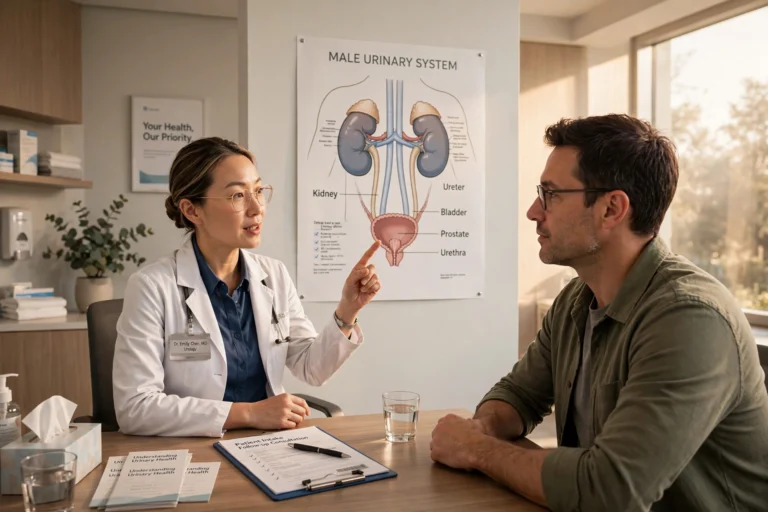
Walking into a clinic to talk about erection problems takes courage — and preparation makes the visit far more productive. If you bring the right erection problems doctor questions to your appointment, you will leave with a clearer picture of what is causing the issue, which tests you need, and what treatment paths make sense for you. Most men, however, arrive with no plan and forget half of what they wanted to ask.
This guide gives you a complete, practical set of questions to ask your doctor about erection problems, organized by topic so you can pick the ones that matter most to you. It also covers what your doctor is likely to ask you, how to prepare, and a few erection problems doctor questions most men never think to raise — including one about your heart that could genuinely matter for your long-term health.
Why These Erection Problems Doctor Questions Matter
Occasional difficulty with erections is common and usually not a cause for concern — fatigue, stress, alcohol, or a newly started medication can all play a role. But when the problem becomes frequent or persistent, it is known medically as erectile dysfunction, and in most cases there is a physical cause worth investigating. Doctors hear this concern regularly and take it seriously, so there is no need to feel awkward.
There are three strong reasons to prepare specific erection problems doctor questions before you go. First, the problem is usually treatable, and treatment choices range from lifestyle changes to prescription options your doctor can explain. Second, erection problems can be an early sign of conditions such as high blood pressure, hardening of the arteries, or diabetes — so the appointment doubles as a general health check. Third, asking structured questions helps your doctor narrow down the cause faster, which means fewer repeat visits and a treatment plan that fits your life.
Before Your Visit: How to Prepare for the Appointment
Good questions start with good preparation. In the two weeks before your appointment, keep a simple private diary of your symptoms. Note how often the problem occurs, whether it happens during partnered intimacy or on your own, whether morning erections are present, and anything that seems to make it better or worse. This diary is one of the most useful things you can bring — it turns a vague worry into concrete information your doctor can work with.
It also helps to look up a tool called the SHIM questionnaire (Sexual Health Inventory for Men, also known as the IIEF-5). It is a short, five-question validated scale that many doctors use to grade the severity of erection problems. Filling it out at home and bringing your score gives your doctor a standardized starting point and helps track whether treatment is working later on.
Finally, write down a complete list of every medication you take, including over-the-counter drugs, vitamins, herbal remedies, and supplements — many common prescriptions for blood pressure, mood, and prostate issues can affect erections. Note your smoking, alcohol, and recreational drug habits honestly, and jot down any major stresses or changes at home or work. Your doctor needs this context to give accurate advice.
The Essential List: Erection Problems Doctor Questions to Ask
Here is the core set of erection problems doctor questions, grouped by theme. You do not need to ask all of them — star the ones that matter to you and bring the list along. Doctors appreciate engaged patients, and a prepared list means you will not forget anything important once the conversation starts.
Questions About the Cause
- Do you think my erection problems have a physical cause, a psychological cause, or a mix of both?
- Are my symptoms likely to be temporary or long-term?
- Is it likely that stress, anxiety, or depression is contributing to the problem?
- Could this be an early sign of a heart or circulation problem? Should I be screened for cardiovascular disease?
Questions About Medications and Lifestyle
- Could any of my current medications or supplements be contributing to my erection problems?
- Are there lifestyle changes — such as quitting smoking, exercising, or reducing alcohol — that would help before or alongside treatment?
- Should I have my testosterone, blood sugar, and cholesterol checked?
Questions About Treatment Options
- What treatment options do you recommend for me, and what are the pros and cons of each?
- Would an oral medication be a reasonable starting point, and are there health conditions that would make it unsafe for me?
- If the first treatment does not work, what is the next step?
- How will we know the treatment is working, and when should I report back?
- Do I need to see a specialist, such as a urologist or a counselor?
The medication-safety questions deserve emphasis. Some men cannot safely take certain ED medications — for example, men who take nitrate drugs for chest pain must avoid a common class of ED medication because the combination can cause a dangerous drop in blood pressure. Asking about interactions directly keeps you safe, especially if you take heart medication.

What Your Doctor Will Ask You: Be Ready With Honest Answers
The conversation runs both ways. Your doctor will ask personal questions to pinpoint the cause — answer them fully and honestly, because the details genuinely guide treatment. The table below shows the most common questions and why each one matters.
If any of these questions feel uncomfortable, remember that your doctor asks them every day. A good response to open the conversation is simply: “I think I may have an erection problem, and I would like to talk about it.” If your doctor seems uneasy discussing sexual health, it is perfectly reasonable to ask for a referral to a urologist.
The Heart Question Most Men Never Ask
Here is a gap in nearly every list of erection problems doctor questions — and it may be the most important one. Erection problems and heart disease share the same underlying risk factors: damaged or narrowed blood vessels. Because the arteries involved in erections are smaller than the coronary arteries, erection problems can appear before other heart symptoms. The Mayo Clinic notes that problems getting or keeping an erection can be both a sign of an underlying health condition that needs treatment and a risk factor for heart disease (Mayo Clinic: Erectile dysfunction — Symptoms and causes).
That is why one of the smartest erection problems doctor questions you can ask is: “Given my erection problems, should I be screened for heart disease?” Your doctor may check your blood pressure, order cholesterol and blood sugar tests, and review your cardiovascular risk. Framing the appointment this way also makes it easier to bring up — you are not just asking about intimacy, you are asking about your heart. For couples reading this together, it is worth knowing: supporting a partner’s doctor visit about erection problems is also supporting his heart health.
Questions for Couples: Bringing Your Partner Into the Conversation
Erection problems affect both partners, yet most question lists treat the visit as a solo mission. Consider asking your partner to come along — they can fill in details you forget, and the doctor can address the relationship side of the issue directly. Useful couple-focused erection problems doctor questions include:
- Would it help to talk through this together with my partner, either with you or with a counselor?
- How can my partner support me while we work through treatment, without adding pressure?
- Are there intimacy approaches we can use that take the focus off performance while treatment takes effect?
- If stress or anxiety is part of the picture, would couples counseling or sex therapy be worth considering?
If your partner has their own sexual concerns — such as pain or low desire — mention that too. Doctors can address both sides of a couple’s intimacy, and sometimes what looks like an erection problem is partly a communication gap. Our guide to the common causes of low libido worth ruling out first covers the desire side of the equation and pairs well with this appointment checklist.

After the First Visit: Erection Problems Doctor Questions for Follow-Up
The first appointment is the beginning of a process, not the end of it. Before you leave, agree on what happens next. Ask your doctor: “How long should I try this treatment before we review it?” and “What counts as a sign it is not working?” Knowing the timeline — typically a few weeks to a couple of months for most first-line approaches — prevents you from quietly giving up too early or waiting too long on something ineffective.
Also ask what to do if side effects appear, whether you should schedule a follow-up visit or simply call, and at what point a referral to a specialist makes sense. If blood tests were ordered, confirm how and when you will receive the results. Keep a short note of your agreed plan on your phone, and bring your SHIM score back to the follow-up so your doctor can compare it with your baseline. Steady tracking is how a vague concern becomes a managed health issue.
FAQs
Is it normal to have erection problems sometimes?
Yes. Occasional difficulty is common and can be caused by fatigue, stress, alcohol, or illness. Doctors generally become concerned when the problem happens frequently or persists over weeks or months, because that pattern may signal an underlying physical cause worth investigating.
At what point should I see a doctor about erection problems?
See your doctor if the problem is ongoing, is affecting your confidence or relationship, or comes with other symptoms such as reduced desire or problems with ejaculation. Also book a visit promptly if you have diabetes, heart disease, or another condition linked to erection problems.
Will my doctor need to do a physical exam?
Usually, yes — a basic physical exam is standard. It may include checking your blood pressure, examining the genital area, and sometimes checking pulses in your legs to assess circulation. Blood tests for diabetes, cholesterol, and hormone levels are also commonly ordered.
Could my medication be causing my erection problems?
Possibly. Many common prescriptions — including certain blood pressure drugs, antidepressants, and prostate medications — can affect erections. Bring a complete list of everything you take, including supplements, and ask your doctor whether any of them could be contributing before changing anything yourself.
Should I bring my partner to the appointment?
It can genuinely help. Your partner can add details you forget and hear the doctor’s advice firsthand, which makes the treatment plan a shared effort. Many doctors welcome a partner’s presence, and it opens the door to discussing relationship factors openly.
Are erection problems a sign of heart disease?
They can be. Erection problems and heart disease share risk factors like high blood pressure, high cholesterol, and diabetes. Because of this overlap, doctors often use an erection-problem visit as a reason to screen for cardiovascular risk — so ask about heart screening at your appointment.
Medical disclaimer: This article is for educational purposes only and is not medical advice. It does not provide a diagnosis, and it does not replace the judgment of a qualified healthcare professional. Do not start, stop, or change any medication based on this article — always consult your doctor or another qualified clinician about your own health concerns.
If you are preparing for a visit, save this list of erection problems doctor questions and bring it with you — the best appointment is the one you walk into prepared. For more guidance on related concerns, explore our guide to the common causes of low libido, and talk to your doctor about any sexual health question that is on your mind. Starting the conversation is the hardest step, and you have already taken it by reading this far.