Condoms and Pleasure: Making Safer Sex Better
Condoms have an image problem. Ask around, and plenty of people will tell you that condoms and sexual pleasure don’t mix — that safer sex is, by definition, less satisfying sex. But the evidence tells a more interesting story: in a large nationally representative study, American adults rated sex as highly arousing and pleasurable regardless of whether a condom was used. The real difference isn’t the condom itself. It’s whether you’re using the right one, in the right way, with the right approach.
This guide walks through what research says about condoms and sexual pleasure, the practical choices that make the biggest difference — fit, material, and lubrication — and the communication habits that turn protection from an interruption into part of the experience.
What the Research Says About Condoms and Sexual Pleasure
The strongest data comes from the Kinsey Institute at Indiana University. In the Women’s Well-Being and Sexuality Study, published in the journal Sexual Health, researchers found a fascinating split: women who used condoms were more likely to say the method reduced the pleasure of the moment — yet women who used condoms plus hormonal contraception reported the highest overall sexual satisfaction of any group. The researchers called this “eroticizing safety”: feeling fully protected against pregnancy and STIs can raise satisfaction beyond the moment itself.
A separate analysis of the 2009 National Survey of Sexual Health and Behavior, published in The Journal of Sexual Medicine, found that men and women consistently rated sex as highly arousing and pleasurable with few differences based on condom or lubricant use. Men reported no significant difference in the ease of maintaining erections with or without condoms.
The takeaway: the perception that condoms ruin sex is far stronger than the evidence — and the research on condoms and sexual pleasure keeps confirming it. What actually predicts a bad experience with a condom is usually something fixable — most often, the fit.
Fit Matters More Than Anything Else
If there is one factor that dominates the condoms and sexual pleasure equation, it is size and fit. A study published in Sexually Transmitted Infections surveyed 436 men about the condom they had most recently used. Just under 45 percent said it had fit badly — and those men were roughly twice as likely to report that the poorly fitting condom made orgasm difficult, interfered with maintaining an erection, and curbed pleasure for both partners. They were also 2.5 times as likely to experience breakage or slippage and five times as likely to report irritation.
A too-tight condom reduces sensation and can cause discomfort. A too-loose condom dulls sensation, risks slipping, and creates a distracting sense of insecurity during sex. Neither feels good.
Finding your fit:
- Measure before you buy. Wrap a soft measuring tape or string around the shaft at its widest point when erect. Most standard condoms suit a girth of about 4.5–5.1 inches (11.4–13 cm). Snug-fit and large-fit lines exist on both sides of that range.
- Ignore the labels. Marketing terms like “magnum” are not standardized. Compare the nominal width printed on the box (in millimeters) to your measurement instead.
- Test more than one brand. Shape varies — some condoms are straight-sided, others are contoured or flared. The same nominal width can feel very different across brands.
- Comfort is safety. A well-fitting condom stays in place, which protects against breakage and slippage as well as feeling better.
If a condom ever does break or slip, see our guide on what to do in the first 72 hours after a condom breaks.
Choosing a Condom Type That Suits You
Once fit is sorted, the type of condom you choose is the next biggest lever for condoms and sexual pleasure. Different features are designed with different priorities in mind:
- Ultra-thin condoms use less latex (or thinner polyisoprene) to transmit more heat and sensation. They meet the same manufacturing standards as standard condoms, but thinner material is somewhat less forgiving of rough handling, so technique matters more.
- Textured (ribbed or dotted) condoms are designed to add stimulation for the receiving partner. Columbia University’s Go Ask Alice health service notes that textured condoms may stimulate nerve endings and heighten pleasure for people with vulvas — though whether they do depends heavily on personal preference.
- Lubricated condoms come pre-coated to reduce friction. They are a good default, but pre-applied lubricant wears off — adding your own is almost always better (more on that below).
- Warming or tingling condoms contain mild stimulating compounds. Some people enjoy the sensation; others find it irritating. Try one before committing to a full box.
- Flavored condoms are designed for oral sex. They should not be used for vaginal sex, since the sugars and additives can raise the risk of yeast infection.
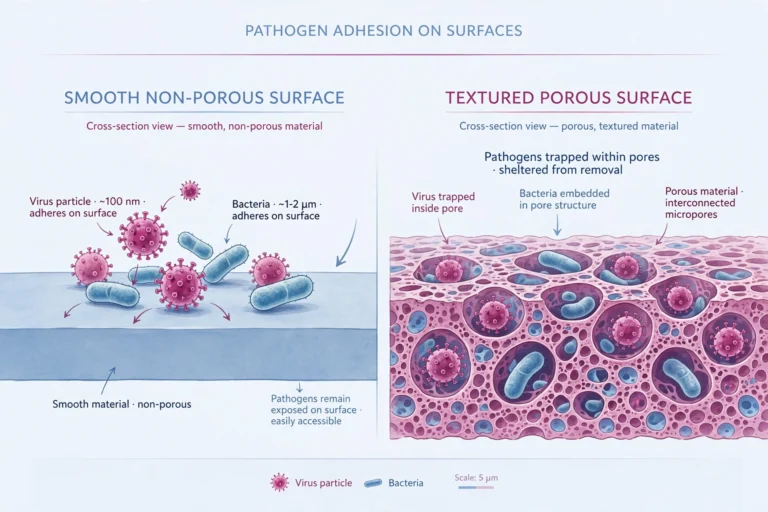
Materials matter too. Standard latex offers excellent elasticity and protection. If you or your partner has a latex sensitivity, polyisoprene condoms feel very close to latex without the allergen, and polyurethane condoms are thinner and transmit heat well, though they are less elastic and slightly more prone to slipping. Lambskin condoms prevent pregnancy but do not protect against STIs, because their natural pores are too large to block viruses — they should never be relied on for disease prevention.
Taking time to find the right type is one of the easiest ways to improve condoms and sexual pleasure, because the best condom is the one you barely notice.

Lubrication: The Single Biggest Upgrade
Of all the things you can change tonight, adding extra lubricant is the one most likely to transform the experience — which is why the link between condoms and sexual pleasure starts with lube. Friction is the enemy of pleasure with condoms: it causes irritation, reduces glide, and makes the condom feel like a barrier rather than disappearing into the background. A generous amount of the right lubricant fixes all three.
Matching lubricant to condom material is essential:
- Water-based lubricants are compatible with every condom material and are the safest default choice. They can dry out over time, so reapplying is normal.
- Silicone-based lubricants are also safe with latex, polyisoprene, and polyurethane condoms, and they last much longer than water-based options. A little goes a long way.
- Oil-based products — including coconut oil, olive oil, petroleum jelly, and many massage oils — must never be used with latex or polyisoprene condoms. Oils degrade latex within minutes, dramatically raising the risk of breakage. They are only acceptable with polyurethane condoms, and even then, dedicated lubricants are the better choice.
Apply lubricant both inside the tip of the condom (a drop before rolling it on increases sensation for the wearer) and generously on the outside. For a detailed comparison of products, see our body-safe lubricant guide.
Make Application Part of the Experience
The most common complaint about condoms is not sensation — it is the interruption. Stopping everything, fumbling with a wrapper, and breaking the mood can feel awkward. When condoms and sexual pleasure feel like opposites, the application interruption is usually the real culprit. The fix is to stop treating application as an interruption and start treating it as part of intimacy.
Practical habits that help:
- Keep condoms within reach. Having them in a nightstand drawer rather than in another room removes the momentum-killing search.
- Practice the mechanics sober. Most fumbling comes from inexperience. Opening a wrapper cleanly, checking the roll direction, and rolling one on smoothly are simple skills that get easier with a little practice alone.
- Involve your partner. Having a partner put the condom on — with eye contact, touch, and unhurried attention — can turn a chore into foreplay. Just be careful that nails or teeth don’t nick the latex.
- Don’t wait too long. Apply the condom as soon as there is an erection rather than at the last possible moment. The longer the pause between arousal and application, the more the moment cools.
- Talk about it earlier. Mentioning condoms during a calm moment — not in the heat of things — removes the negotiation pressure entirely.
Put together, these habits remove the biggest psychological barrier to condoms and sexual pleasure: the feeling that protection interrupts the moment.
The Psychology of Protection: Peace of Mind Is Arousing
One of the most overlooked findings in condom research is psychological. Anxiety is one of the strongest inhibitors of arousal: worry about pregnancy or STIs keeps the brain in threat-detection mode, which directly suppresses the relaxation and focus that pleasure requires. A condom, used correctly, removes that threat.
Researchers have a name for this — “eroticizing safety.” When protection is handled confidently and without fuss, the knowledge that both partners are safe can actually deepen the experience rather than detract from it. This is consistent with the Kinsey finding that dual-method users (condoms plus hormonal contraception) reported the highest overall sexual satisfaction: the more completely protected people felt, the more satisfied they were.
In other words, condoms and sexual pleasure are not opposites. For many people, the condom is the thing that makes relaxation — and therefore pleasure — possible.
Consider Internal Condoms Too
Most conversations about condoms and pleasure focus on external (male) condoms, but internal condoms — worn inside the vagina or anus — are an underused alternative that some couples strongly prefer. Because they are inserted up to eight hours before sex, they eliminate the application interruption entirely. They also don’t constrict the penis, which some wearers find more comfortable, and the outer ring can provide additional stimulation for the receiving partner.
Internal condoms are made of nitrile, so they are a built-in option for anyone with a latex sensitivity, and they are compatible with water- and silicone-based lubricants. They require a little practice to insert correctly, but many couples find the spontaneity they allow more than makes up for the learning curve. For anyone who has struggled with the standard options, internal condoms can be a genuine upgrade to condoms and sexual pleasure.
Common Mistakes That Ruin the Experience
Small errors can turn a perfectly good condom into a bad experience — and in some cases, an unsafe one. Avoid these:
- Storing condoms in wallets or hot cars. Heat, friction, and pressure degrade latex over time. Store them in a cool, dry drawer instead.
- Using expired condoms. Old latex is brittle latex. Check the date on every wrapper.
- Putting the condom on inside-out. If you unroll it the wrong way and flip it, pre-ejaculate on the outside can transfer. Use a fresh one.
- Not leaving room at the tip. Pinch the reservoir tip while rolling the condom on to leave space for semen — without it, pressure builds and breakage risk rises.
- Skipping lubricant. The factory coating is a starting point, not enough for most sessions.
- Using two condoms at once. Doubling up increases friction between the layers and makes breakage more likely, not less.
- Removing it before sex is over. The study on poorly fitting condoms found that men with bad fits were twice as likely to remove the condom early — which eliminates both protection and peace of mind.
Talking About Condoms Without Killing the Mood
For many people, the hardest part isn’t the condom — it’s the conversation. Bringing it up can feel unromantic or imply distrust. Reframing helps: asking for condom use is a statement of care, for your partner and yourself. A simple, direct approach works best: “I want us both to feel relaxed, so let’s use one.” If a partner resists, that is useful information about the relationship, not just the moment. Open communication is part of the condoms and sexual pleasure equation: consistent condom use is far easier when both partners treat it as the default rather than a negotiation. For guidance on navigating sensitive disclosures with a partner, see our article on dating with an STI and how to disclose.
Frequently Asked Questions
Do condoms really reduce sexual pleasure?
Research on condoms and sexual pleasure suggests the effect is much smaller than popular belief holds. In a nationally representative study, men and women rated sex as highly arousing and pleasurable whether or not condoms were used. Most reported pleasure problems trace back to fixable issues — especially poor fit — rather than condoms in general.
What type of condom feels the most natural?
There is no universal answer, but ultra-thin latex or polyisoprene condoms in the correct size, combined with extra water- or silicone-based lubricant, come closest to a natural feel for most people. Trying a few types is the only reliable way to find your preference.
Can I use coconut oil or other oils with condoms?
Not with latex or polyisoprene condoms. Oils break down latex quickly and greatly increase the risk of tearing. Use water-based or silicone-based lubricants with these condoms instead.
Do textured condoms actually increase pleasure?
They are designed to, and some people report noticeably more stimulation — particularly receiving partners. Others notice little difference. It is a matter of personal preference, and trying a small pack is the best way to find out. Note that Columbia University’s Go Ask Alice health service explains the evidence behind these claims in detail.
How can I stop a condom from ruining the mood?
Keep condoms within arm’s reach, practice application so it becomes quick and smooth, and involve your partner in putting it on. Discussing condom use before the moment — not during it — removes most of the awkwardness.
Are internal condoms as effective as external condoms?
Yes, when used correctly. Internal condoms are about 95 percent effective against pregnancy with perfect use (compared with 98 percent for external condoms) and protect against STIs as well. Their main advantage is that they can be inserted well before sex, preserving spontaneity.
What should I do if condoms keep breaking?
Repeated breakage almost always points to a fixable cause: wrong size, oil-based lubricant with latex, expired condoms, rough handling, or insufficient lubrication. Work through the checklist in this article, and talk to a pharmacist or clinician if problems continue. A summary of the research on condom use and sexual quality offers useful background on how common these issues are.
Ultimately, condoms and sexual pleasure are not just compatible — they reinforce each other. The couples who enjoy safer sex most are the ones who treat protection as part of pleasure, not its opposite.
This article is for educational purposes only and is not medical advice. Condoms reduce but do not eliminate the risk of pregnancy and sexually transmitted infections. If you have concerns about your sexual health, contraception, or STI testing, speak with a qualified healthcare professional.