pregnant on period?
One of the most persistent myths in reproductive health is that your period is a guaranteed “safe” time to have sex without getting pregnant. Many people grow up believing that bleeding means no pregnancy is possible. So pregnant on period? The short answer is yes, it is possible — though for most people with typical cycles, the odds are low.
Understanding why requires understanding one key fact: pregnancy risk does not depend on the bleeding itself. It depends on when you ovulate relative to the bleeding, combined with how long sperm can survive inside the reproductive tract. Because both of those vary from person to person and month to month, “I was on my period” is never reliable protection against pregnancy. This article explains the cycle math, the real scenarios where it happens, the actual day-by-day odds, and what to do if you’ve had unprotected sex during your period.
pregnant on period? The Straight Answer
Yes, you can get pregnant on your period. It is uncommon, but it happens — and the reason comes down to two biological facts that rarely get explained clearly:
Many people search for pregnant on period when they want clear, evidence-based answers.
- Sperm can survive inside the female reproductive tract for up to 5 days after sex, waiting for an egg to be released.
- Ovulation does not always follow the textbook schedule. It can arrive earlier than expected, especially in shorter or irregular cycles.
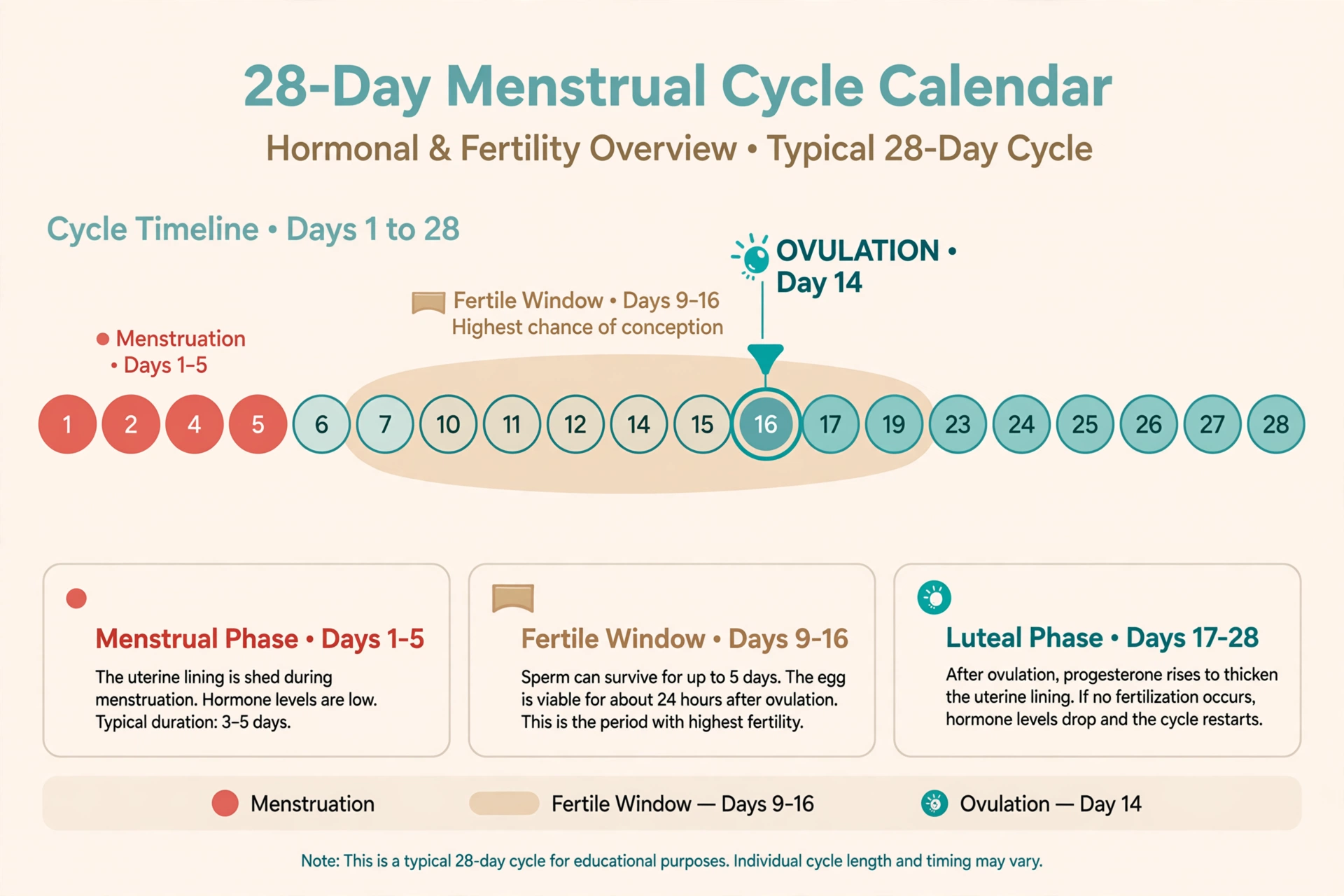
For someone with a consistent 28-day cycle and a 3–5 day period, ovulation happens around day 14 — far enough from the bleeding days that pregnancy from period sex is very unlikely. But cycle lengths vary widely. Anywhere from 21 to 35 days is considered normal, and a large 2020 study of period-tracking app data found that only about 16% of people actually have a 28-day cycle. When your cycle is shorter, ovulation creeps closer to your period — and that is where the risk appears.
Here is the cycle math for different cycle lengths. “Day 1” is the first day of bleeding, and ovulation typically occurs about 14 days before the next period starts:
Understanding pregnant on period helps you make informed decisions about your health.
| Cycle length | Typical ovulation day | Fertile window begins | Overlap with bleeding? |
|---|---|---|---|
| 21 days | Day 7 | Day 2 | Yes — window overlaps a 5-day period |
| 24 days | Day 10 | Day 5 | Yes — overlaps late period days |
| 28 days | Day 14 | Day 9 | No, unless bleeding lasts 7+ days |
| 35 days | Day 21 | Day 16 | No |
Notice what happens with a 21-day cycle: the fertile window opens on day 2 — while bleeding may still be happening. That is the core mechanism. It is not that pregnancy “during menstruation” is common; it is that sex during bleeding can leave viable sperm behind when ovulation is only a few days away.
Understanding Your Menstrual Cycle and Ovulation
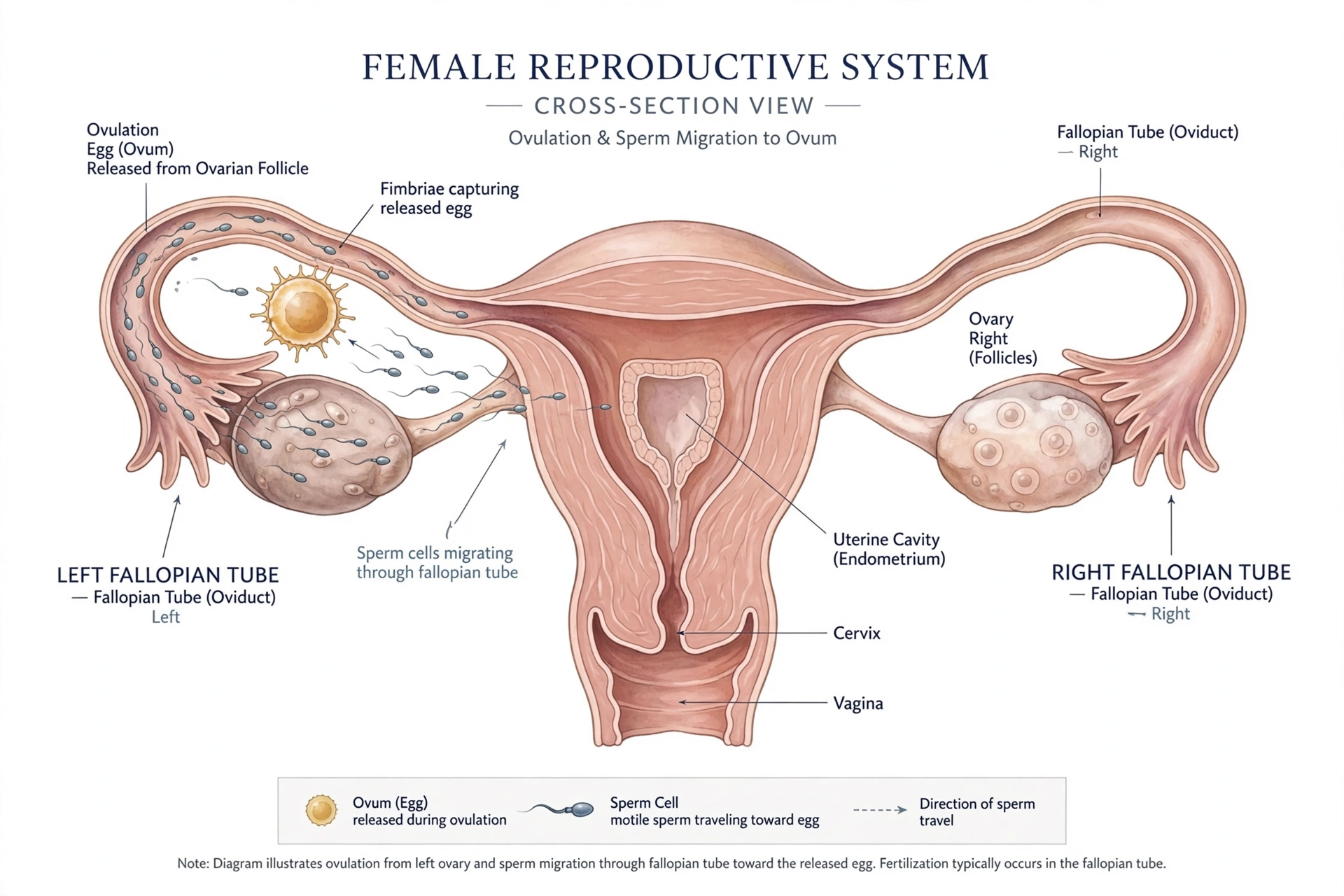
The menstrual cycle has three main phases, and each plays a role in conception timing:
Doctors recommend learning about pregnant on period from trusted medical sources.
The follicular phase (day 1 to ovulation)
This phase begins on the first day of your period. Hormonal signals from the brain stimulate an egg to mature in the ovary while the uterine lining rebuilds. Its length varies the most — it is the main reason cycles differ between people and between months.
Ovulation
A surge of luteinizing hormone (LH) triggers the release of a mature egg from the ovary. The egg travels into the fallopian tube, where it survives for only 12 to 24 hours. This is the only time fertilization can occur — but because sperm can already be waiting, sex in the days before ovulation can also cause pregnancy.
The luteal phase (ovulation to next period)
After ovulation, the body prepares the uterine lining for a possible pregnancy. This phase is remarkably consistent — about 14 days for most people. If the egg is not fertilized, hormone levels drop and the lining sheds: your next period begins, and the cycle restarts.
The practical takeaway: the fertile window is the 5 days before ovulation plus ovulation day itself (about 6 days total). Sex anywhere in that window can lead to pregnancy. And because ovulation is timed backwards from your next period (about 14 days before it), you only know exactly when it happened in hindsight — which is why forward-predicting it from your last period is unreliable.
How the Timing Actually Works: Three Scenarios
Here are the three real-world situations in which people conceive around their period:
Scenario 1: A short cycle
With a 21-day cycle and a 5-day period, ovulation lands around day 7 and the fertile window starts around day 2. Sex on day 4 or 5 of bleeding can deposit sperm that survive until ovulation on day 7. This is the highest-risk pattern, and it is entirely a matter of arithmetic — nothing unusual about the body, just a short cycle.
Scenario 2: A long period
Even with a textbook 28-day cycle, bleeding that lasts 7 or more days changes the picture. Sex on day 7 or 8 places sperm inside the tract two or three days before the fertile window opens around day 9. Sperm survival bridges the gap. Long periods are common in the first years after menarche and during perimenopause.
Scenario 3: Unpredictable ovulation
Stress, travel across time zones, illness, significant weight change, coming off hormonal contraception, breastfeeding, and perimenopause can all shift ovulation earlier (or later) in a given cycle. Clinicians emphasize that even people with usually regular cycles cannot count on textbook timing every month. As one Mayo Clinic physician quoted in Mayo Clinic Press puts it, cycle variation means “you just never know.”
What Are the Chances, Day by Day?
Research on conception probability by cycle day gives a clear picture of how risk rises after bleeding ends. The approximate probability of conceiving from a single act of unprotected sex on each cycle day, based on published population data, looks like this:
| Cycle day | Approximate chance of conception |
|---|---|
| Days 1–5 (typical bleeding days) | Near 0% |
| Day 6 | ~1% |
| Day 7 | ~2% |
| Day 8 | ~3% |
| Day 9 | ~6% |
| Day 10 | ~10% |
| Day 11 | ~13% |
| Day 12 | ~18% |
| Day 13 | ~21% |
| Day 14 | ~20% |
| Day 15 | ~10% |
| Day 16+ | ~4%, falling fast |
Two important caveats. First, these are population averages: your individual risk on any given day depends on your own cycle length and ovulation timing, which the averages do not know. Second, the table assumes one act of sex per day; repeated unprotected sex across several days raises cumulative risk. The bottom line holds: days 1–5 carry minimal risk, but the chance climbs steeply from about day 7 onward — exactly when people with short cycles or long periods may still be bleeding.
When Bleeding Isn’t Actually Your Period
Some “period pregnancies” turn out to involve bleeding that was never a period at all. This distinction matters:
- Ovulation spotting: some people bleed lightly around mid-cycle when the egg is released. Because it is vaginal bleeding, it is easily mistaken for an early or light period — but it happens at the most fertile moment of the cycle. Sex during ovulation spotting carries some of the highest conception risk.
- Breakthrough bleeding on hormonal contraception: missed pills, a new contraceptive method, or emergency contraception itself can cause bleeding between periods. This bleeding does not mean the method is working or that ovulation is suppressed — it often means the opposite.
- Perimenopausal irregularity: during the transition to menopause, cycles shorten, lengthen, and skip unpredictably. Bleeding patterns no longer map to ovulation in any reliable way, yet pregnancy remains possible until menopause is confirmed (12 consecutive months without a period).
If you experience bleeding between periods regularly, mention it to your clinician. Intermenstrual bleeding has many benign causes, but it also warrants medical evaluation to rule out anything that needs treatment — and it makes cycle-based pregnancy assumptions even less reliable.
Emergency Contraception: Your Options and Timing
If you had unprotected sex during your period and do not want to become pregnant, do not rely on the timing alone — act. Emergency contraception works best the sooner it is used, and several options exist:
- Copper IUD: the most effective emergency contraceptive when inserted by a clinician within 5 days of unprotected sex. It can then remain in place as ongoing long-term contraception.
- Ulipristal acetate: a prescription emergency contraceptive pill effective up to 5 days after unprotected sex, and generally considered more effective than levonorgestrel, particularly in the later part of that window.
- Levonorgestrel: an over-the-counter emergency contraceptive pill that works best when taken as soon as possible after unprotected sex. Its effectiveness decreases with time and may be reduced at higher body weights — a pharmacist or clinician can advise on the best option for you.
Emergency contraception prevents or delays ovulation; it does not end an established pregnancy. If you are unsure which option fits your situation — for example after a contraceptive failure — see our guide on what to do if a condom breaks, and compare ongoing methods in our birth control options comparison so you have reliable protection going forward.
Period Sex, STIs, and Practical Safety
Pregnancy is only one consideration. Sex during menstruation carries its own safety notes:
- STI risk does not pause during your period. Blood can carry certain infections, and the cervix opens slightly during menstruation, which may increase susceptibility to some infections. Condoms protect against both pregnancy and STIs.
- Bacterial vaginosis: menstrual blood temporarily raises vaginal pH, which some research links to a higher chance of bacterial vaginosis after period sex, particularly without condoms.
- Cramp relief is real but separate from risk: orgasm can ease menstrual cramps for some people — we cover the evidence in our article on whether sex relieves period cramps — but it has no bearing on pregnancy risk.
The American Pregnancy Association notes that while conception is less likely during the earlier days of a period, the chances increase in the later days — and that the days right before your period are the lowest-risk of all, since ovulation has already passed and the egg is no longer viable.
Tracking Your Cycle More Accurately
If you want to understand your own pattern better — whether to conceive or to avoid pregnancy — these methods help, with clear limits:
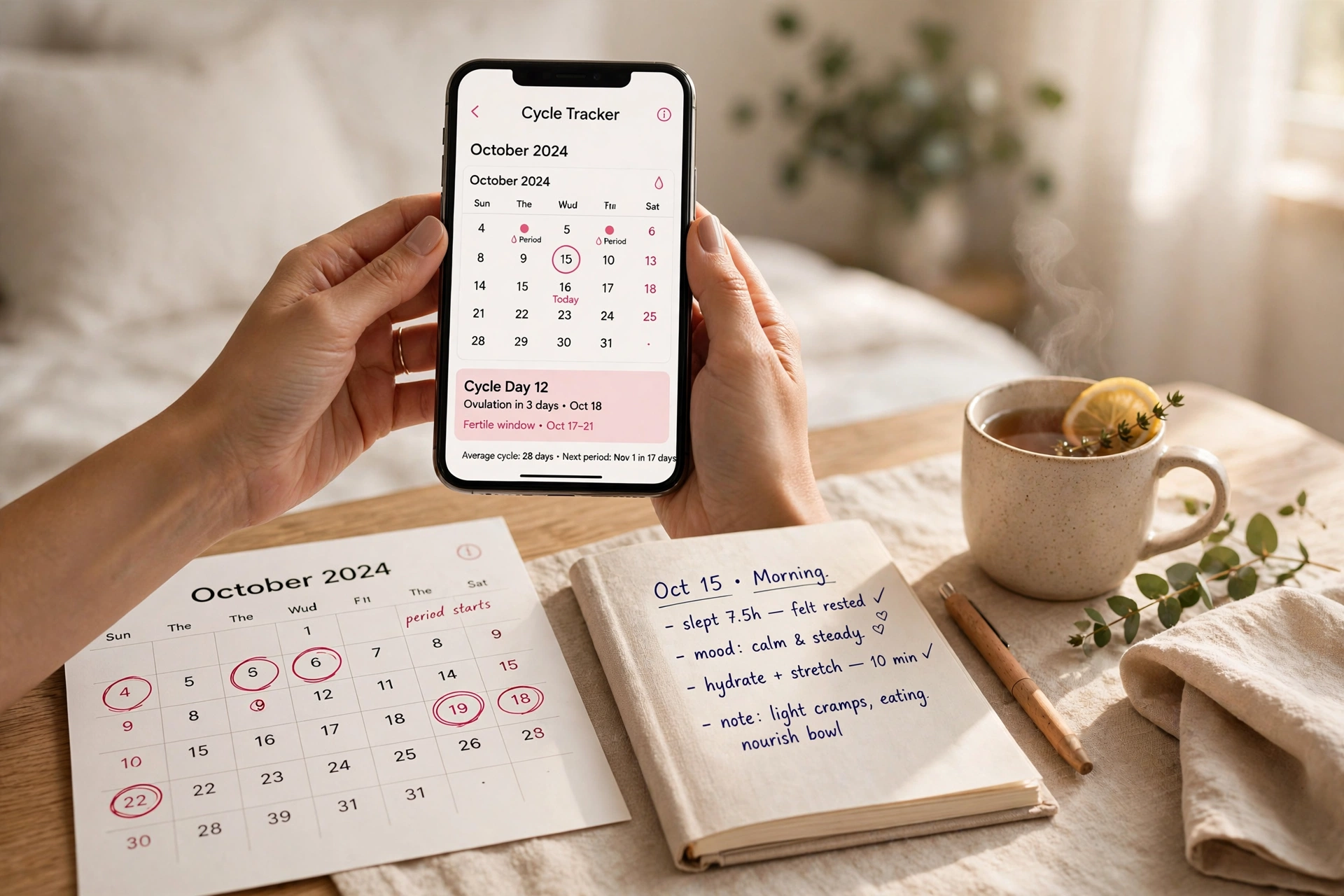
- Calendar tracking: logging period start dates for several months reveals your personal cycle-length range. But it predicts ovulation by assuming it falls 14 days before your next period — an assumption the Flo study data shows fails for most people.
- Basal body temperature (BBT): a small temperature rise after ovulation confirms it happened — useful for confirming your pattern retrospectively, not for predicting it in advance.
- LH ovulation predictor strips: detect the hormone surge that precedes ovulation by 24–36 hours, giving a genuinely useful advance signal.
- Cervical mucus observation: clear, stretchy mucus indicates approaching ovulation.
Important: fertility-awareness tracking is not reliable contraception on its own, especially for avoiding pregnancy. If pregnancy is not wanted, use a proven contraceptive method every time, regardless of cycle day.
What to Do Next
Your next step depends on your goal. Trying to conceive? The days right after your period are not the prime window unless your cycles are short — focus instead on the 5 days before expected ovulation, and consider LH strips to pinpoint it. Avoiding pregnancy? Use contraception consistently; never treat bleeding days as safe.
If you had unprotected sex during your period and your next period is late, take a home pregnancy test. hCG — the hormone tests detect — becomes measurable roughly 10–14 days after ovulation, so testing on the first day of your missed period gives the most reliable result. Testing too early can produce a false negative; if the result is negative but your period still has not arrived a week later, test again or see your clinician.
Frequently Asked Questions
Can you get pregnant on the first day of your period?
It is extremely unlikely. On day 1, ovulation is typically two weeks away, far beyond the 5-day survival window of sperm. Documented conceptions from day-1 sex are vanishingly rare and generally involve highly unusual cycle patterns.
Can you get pregnant on the last day of your period?
The risk is higher than on day 1 and becomes meaningful for people with short cycles or long bleeding. If your period ends on day 6 or 7 and you ovulate on day 10 or 11, sperm from the last day of bleeding can survive to meet the egg.
Can you get pregnant right after your period ends?
Yes. In a typical 28-day cycle, the fertile window opens around day 9 — just a few days after a 5-day period ends. Each day after bleeding stops, the chance of conception rises.
Can you get pregnant right before your period?
Extremely unlikely. By the days before your period, ovulation has already occurred and the egg survives only 12–24 hours. The days just before menstruation are the lowest-risk days of the cycle — though “lowest risk” is still not zero risk if your cycle was irregular that month.
Does having sex on your period act as birth control?
No. Timing alone is not contraception. If you do not want to become pregnant, use a reliable contraceptive method every time you have sex, regardless of where you are in your cycle.
Can emergency contraception work after sex during my period?
Yes. Emergency contraception works by delaying or preventing ovulation, so it is effective regardless of when in your cycle the unprotected sex occurred — as long as it is used within its effective window (up to 5 days for the copper IUD and ulipristal acetate; sooner is better for levonorgestrel). Speak to a clinician or pharmacist promptly.
How soon should I take a pregnancy test after unprotected period sex?
Wait until the first day of your expected next period for the most accurate result. Home tests detect hCG, which only reaches detectable levels about 10–14 days after ovulation. Testing earlier risks a false negative.
Is period blood a natural spermicide?
No — this is a myth. Menstrual blood does not kill sperm or prevent fertilization. Sperm can survive in the reproductive tract for up to 5 days regardless of bleeding.
Medical disclaimer: This article is for educational purposes only and is not medical advice. It does not diagnose any condition or replace professional guidance. If you have questions about your menstrual cycle, fertility, contraception, or a possible pregnancy, please consult a qualified clinician.