Chancroid: Symptoms, Treatment, and Prevention
Anyone searching for chancroid symptoms treatment information usually has the same two questions: “What does this infection look like?” and “Can it be cured?” The short answers are reassuring in one way and serious in another. Chancroid is a bacterial sexually transmitted infection (STI) that causes painful genital ulcers, and it is curable with antibiotics — but left untreated it can cause lasting tissue damage, and its open sores make it easier to acquire or transmit HIV. This chancroid symptoms treatment guide walks through how to recognize it, how clinicians diagnose it, what treatment involves, and how to prevent it and protect partners.
What Is Chancroid?
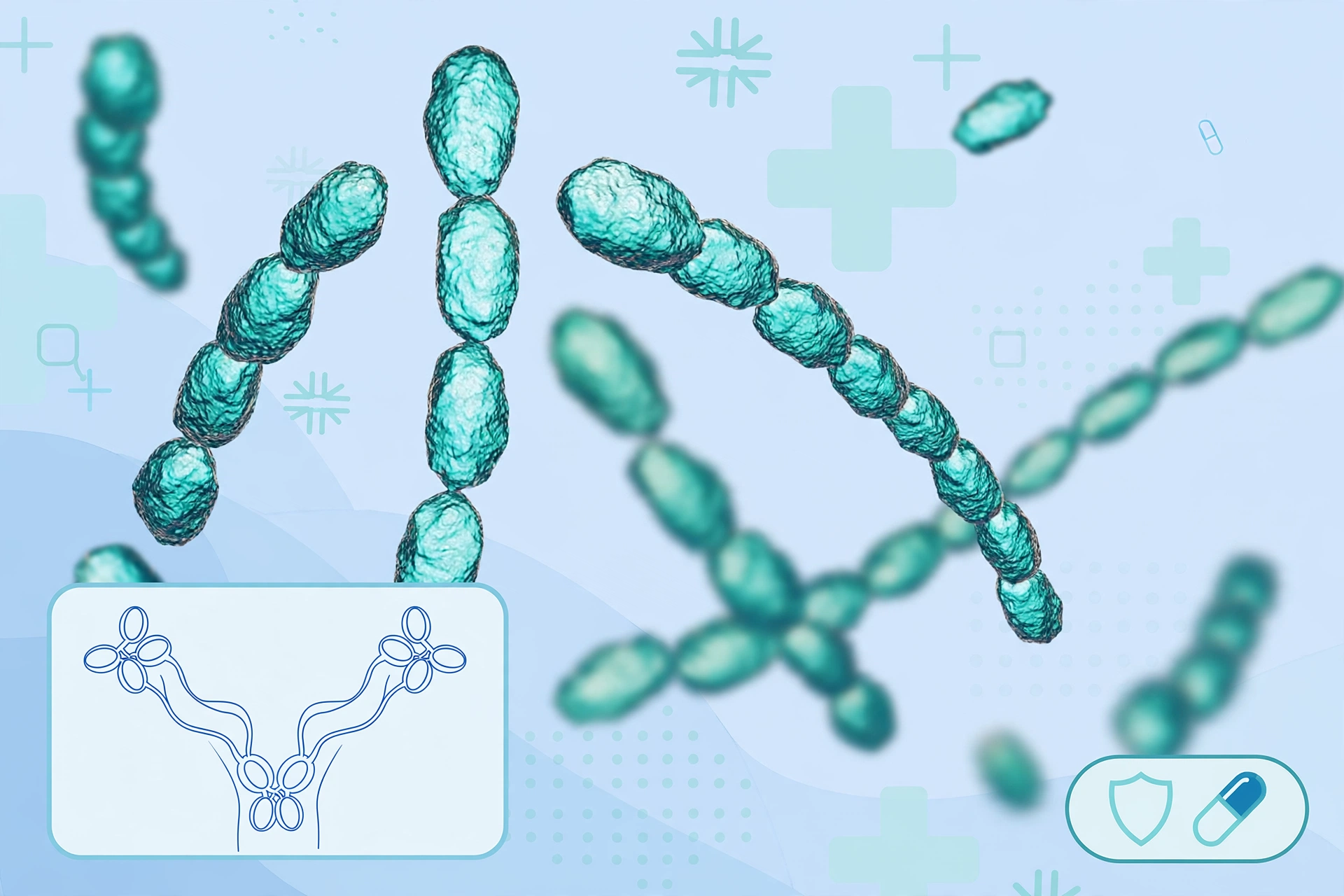
Chancroid is an STI caused by a bacterium called Haemophilus ducreyi. The infection attacks tissue in the genital area, producing one or more open sores known as “soft chancres.” These ulcers are typically painful, soft to the touch, and highly infectious — the fluid they release can pass the bacteria to a partner during vaginal, anal, or oral sex, and even through skin-to-skin contact with the sore.
Chancroid is now rare in high-income countries. In the United States it tends to appear only in small, contained outbreaks, and several states have gone years without a single reported case. It remains more common in parts of Africa, Asia, and the Caribbean, so travel to those regions — especially with new sexual partners — is the most common way travelers from low-prevalence countries encounter it. Because it is uncommon where most readers of this article live, chancroid is also one of the most misdiagnosed genital ulcer conditions: its sores can look like syphilis or genital herpes at first glance, which is exactly why a clinician’s evaluation matters. Anyone comparing chancroid symptoms treatment information online should rely on clinical sources and professional evaluation rather than photos alone.
Chancroid Symptoms: What to Watch For
Chancroid symptoms typically begin 4 to 10 days after exposure (some sources describe the range as 1 day to 2 weeks). The first sign is a small, tender red bump on the genitals. Within about a day, that bump breaks open into an ulcer. Public health resources such as NYC Health’s chancroid guide describe the same progression: tender bumps that grow, become painful, and can bleed. Learning to recognize these chancroid symptoms means treatment can begin before complications develop.
The ulcer itself has a recognizable set of features:
- Size: usually 1 to 2 centimeters across, though ulcers can range from a few millimeters to about 5 centimeters.
- Texture: soft and friable — it bleeds easily if touched or scraped. This “soft” quality is why it is called a soft chancre, in contrast to the firm sore of syphilis.
- Edges: ragged, irregular, or “undermined” borders rather than smooth ones.
- Base: covered with a gray or yellowish-gray material, sometimes with a foul-smelling discharge.
- Pain: the ulcers are typically painful, which is one of the main features distinguishing chancroid from primary syphilis.
Symptoms in Men
About half of infected men develop a single ulcer. Common locations include the foreskin, the groove behind the head of the penis, the shaft, the head, the opening of the urethra, and the scrotum. Uncircumcised men may develop ulcers hidden under the foreskin, which can delay notice and slow healing. Early recognition of these chancroid symptoms means treatment can start before lymph node complications develop.
Symptoms in Women
Women frequently develop four or more ulcers rather than one, often with milder outward symptoms — which means the infection can be easier to miss. Typical sites include the outer lips of the vulva, the inner lips, the perineal area, the inner thighs, and occasionally inside the vaginal or anal area. So-called “kissing ulcers” can form where two surfaces of the labia touch. The most commonly reported symptoms in women are pain during urination and pain during intercourse, and ulcers may cause a burning sensation during bowel movements.
Swollen Lymph Nodes (Buboes)
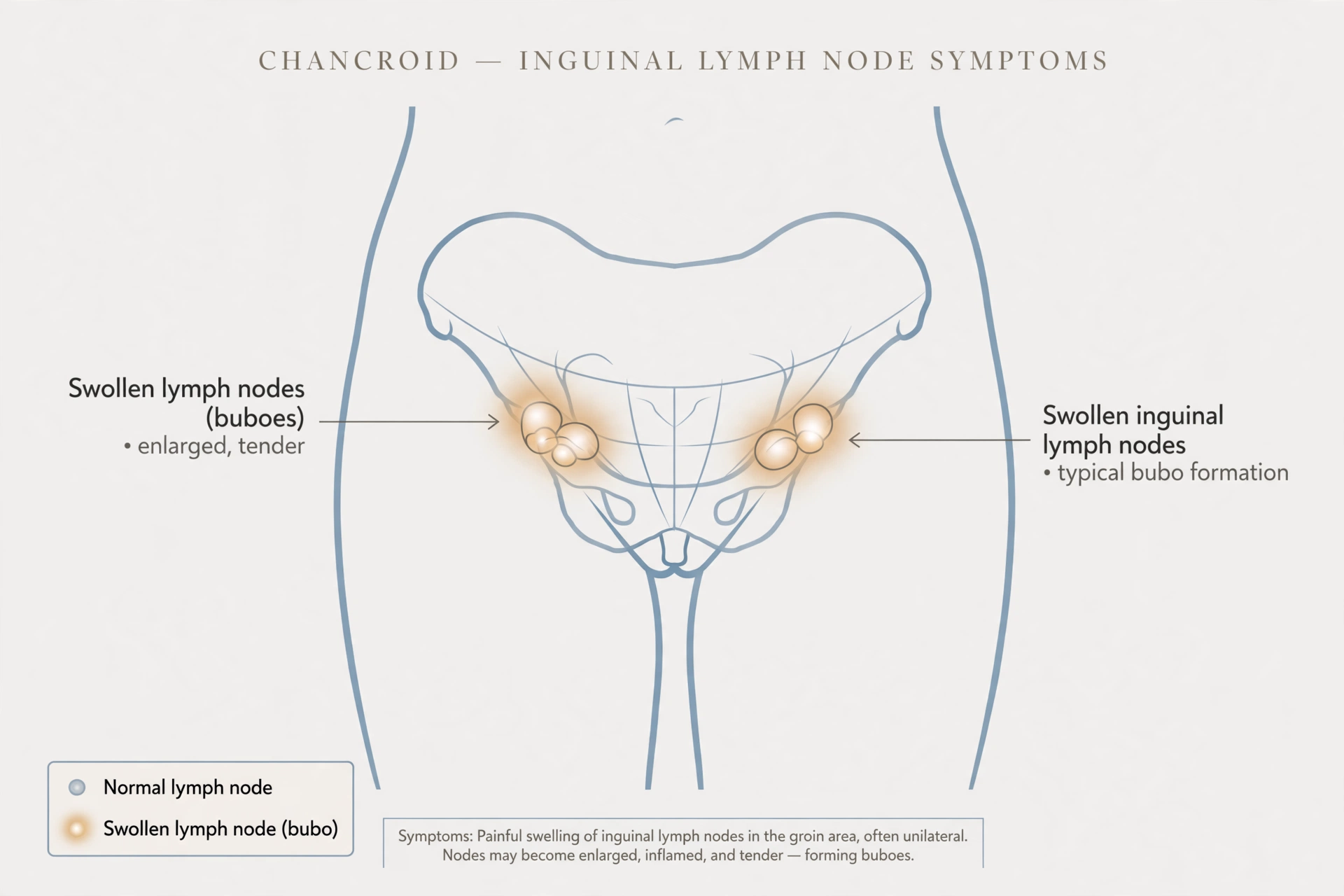
Roughly one-third to one-half of people with chancroid develop painful, swollen lymph nodes in the groin (inguinal lymphadenopathy). In about half of those cases, the nodes swell further into tender, pus-filled lumps called buboes that can rupture through the skin and drain. The combination of a painful genital ulcer with tender, swollen groin nodes is considered highly suggestive of chancroid by clinicians.
Other symptoms anyone can experience include pain during urination, pain or bleeding during sex, and pain or bleeding with a bowel movement, depending on where the ulcers are located. Recording these chancroid symptoms accurately helps your clinician choose the right treatment quickly.
What Causes Chancroid and Who Is at Risk
Chancroid is caused solely by Haemophilus ducreyi, a fastidious bacterium — meaning it is difficult to grow in a laboratory — that enters the body through tiny breaks in the skin during sexual contact. It is not spread by toilets, towels, bedding, or casual touch. The infectious fluid comes from the ulcer itself, so any sexual activity that brings a partner into contact with the sore can transmit it.
Risk factors identified by public health agencies include:
- Unprotected vaginal, anal, or oral sex with an infected partner
- Multiple or new sexual partners
- Contact with sex workers in regions where chancroid is more prevalent
- Travel to or residence in parts of Africa, Asia, or the Caribbean where the infection is endemic
- Drug or alcohol use associated with higher-risk sexual practices
- Being an uncircumcised man (associated with higher susceptibility in outbreak settings)
One epidemiological pattern worth knowing: chancroid has declined sharply in many countries over the past two decades, partly because the single-dose antibiotic regimens used to treat it also suppress the infection at a population level. Its rarity in places like the US and Western Europe is good news — but it also means many clinicians have never seen a case, which is another reason a thorough STI workup (rather than a visual guess) is the right approach. Recognizing chancroid symptoms early and starting treatment promptly remains the best way to avoid lasting damage.
How Doctors Diagnose Chancroid
Diagnosis starts with a physical examination of the ulcers and the groin lymph nodes, plus a sexual history. Because the sores resemble other infections, clinicians confirm chancroid largely by ruling the lookalikes out. The CDC’s clinical criteria for chancroid describe a probable case as: one or more painful genital ulcers with a typical appearance, no evidence of syphilis infection (by direct examination of the ulcer or by blood testing for syphilis performed at least a week after the ulcers appeared), and either an ulcer appearance not typical of herpes or a negative herpes test from the ulcer. An accurate diagnosis is the foundation of effective chancroid symptoms treatment, because syphilis and herpes require completely different medications.
Tests a clinician may use include:
- Swab of the ulcer: fluid from the sore can be cultured on special media or tested with a molecular (PCR-type) test to detect H. ducreyi DNA. Culture is technically demanding and not widely available; some laboratories use their own validated molecular tests.
- Blood tests: there is no blood test for chancroid itself, but blood work is routinely done to check for syphilis and HIV, since genital ulcers increase the relevance of both.
- Herpes testing: a swab test for herpes simplex virus from the ulcer helps exclude genital herpes, the most common cause of painful genital sores.
If you are diagnosed with chancroid, expect to be tested for other STIs at the same time — chlamydia, gonorrhea, syphilis, and HIV screening are standard, because co-infections are common and the same encounter that transmitted chancroid could have transmitted others. Completing the recommended tests is what makes chancroid symptoms treatment precise rather than guesswork.
Chancroid Symptoms Treatment: How Doctors Cure It
The central fact of chancroid symptoms treatment is encouraging: chancroid is curable. Antibiotics eliminate H. ducreyi, the ulcers begin to improve within days, and most heal completely within one to two weeks. Large ulcers can take longer — sometimes more than two weeks — and swollen lymph nodes resolve more slowly than the sores themselves.
Clinical guidelines list four antibiotics commonly used against chancroid: azithromycin, ceftriaxone, ciprofloxacin, and erythromycin. Single-dose regimens are generally preferred because they remove the adherence problem entirely — the patient is treated before leaving the clinic. Multi-day courses are alternatives a clinician may choose based on the patient’s situation, local resistance patterns, pregnancy, or allergies. Because intermediate resistance to some of these drugs has been reported in various parts of the world, guidelines emphasize that the choice of antibiotic is the clinician’s decision, not something to self-select. Never treat a suspected STI with leftover antibiotics: the wrong drug or an incomplete course can mask symptoms while the infection persists.
Beyond the prescription itself, proper chancroid symptoms treatment includes several steps that competitors’ summaries often gloss over:
- Follow-up examination: guidelines recommend re-examination 3 to 7 days after starting therapy. Ulcers that are responding usually improve symptomatically within about 3 days and visibly within about 7 days. If there is no improvement, the clinician reconsiders — the diagnosis may be wrong, another STI may be present, the patient may have HIV (which slows healing), the medication may not have been taken as directed, or the bacterial strain may be resistant.
- Bubo care: large, painful, fluctuant lymph nodes may need needle aspiration or surgical drainage to relieve pain and prevent spontaneous rupture. This can leave light scarring at the site.
- Partner treatment: all sexual partners from the 10 days before symptoms began should be examined and treated, even if they have no symptoms. This is non-negotiable: untreated partners re-infect, and the cycle continues.
- Abstinence during healing: avoid all sexual contact until treatment is complete and every ulcer has fully healed. People remain infectious until the original lesion and any draining lymph node have healed.
- HIV testing: patients are tested for HIV at diagnosis, and those at ongoing risk may be offered repeat testing or preventive options.
Finishing the full course matters even when the sores start looking better after a few days. Stopping early is one of the main ways treatment fails and scarring results. Skipping doses undermines chancroid symptoms treatment and invites scarring or reinfection.
Soft Chancre vs Hard Chancre: Chancroid Compared to Syphilis and Herpes
Because genital ulcers all look alarming, a comparison helps explain why clinicians test rather than guess. This differential diagnosis is the piece most short articles skip.
| Feature | Chancroid (soft chancre) | Primary syphilis (hard chancre) | Genital herpes |
|---|---|---|---|
| Cause | Haemophilus ducreyi bacterium | Treponema pallidum bacterium | Herpes simplex virus 1 or 2 |
| Pain | Usually painful | Usually painless | Painful, often burning |
| Ulcer texture | Soft, bleeds easily | Firm, rubbery | Shallow, multiple small blisters that ulcerate |
| Edges | Ragged, undermined | Smooth, well-defined | Irregular, often clustered |
| Base | Gray-yellow coating | Clean | Red base |
| Lymph nodes | Painful, swollen; may form draining buboes | Firm, painless swelling | Tender swelling possible |
| Number of sores | Often single in men; often multiple in women | Usually single | Usually multiple, recurrent outbreaks |
| Blood test | No blood test exists | Yes (serology) | Yes (type-specific serology) |
Two other ulcerative STIs belong in the differential: granuloma inguinale (donovanosis), which causes beefy-red, relatively painless ulcers, and lymphogranuloma venereum (LGV), a chlamydia variant whose small initial sore is often followed by prominent buboes. And syphilis, which moves through distinct stages beginning with its painless hard chancre, is the single most important condition to exclude — both because it is far more common and because its treatment is entirely different. That is why accurate diagnosis must precede any chancroid symptoms treatment plan.
Complications If Chancroid Goes Untreated
Chancroid is not fatal, but neglect has consequences. Persistent ulcers can last for weeks or months, and the infection can burrow deeper — which is why chancroid symptoms warrant prompt treatment:
- Scarring and tissue damage: healed ulcers may leave permanent scars; in uncircumcised men, scarring under the foreskin can cause phimosis (a foreskin that cannot retract).
- Ruptured buboes: about half of patients with swollen groin nodes progress to draining abscesses that rupture through the skin, risking secondary bacterial infection and deep tissue destruction.
- Fistulas: in advanced untreated cases, draining buboes can create abnormal tracts (fistulas) between the groin tissues, the rectum, or the urinary tract.
- Urethral and rectal damage: ulcers near the urethral opening or anus can scar those structures.
- Increased STI vulnerability: every open sore is an entry point for other infections, most notably HIV.
Early antibiotic treatment prevents essentially all of these outcomes, which is why prompt evaluation of any genital sore is the single most impactful step. Completing the full chancroid symptoms treatment course is what keeps these complications from developing.
Chancroid and HIV: An Important Link
Chancroid deserves special attention because of its relationship with HIV. The mechanism is straightforward: open genital ulcers break the skin barrier that normally keeps viruses out, and the inflammation around the ulcer recruits exactly the immune cells (including CD4 cells) that HIV targets. Studies from outbreak settings have found high rates of HIV among chancroid patients worldwide. The implication runs in both directions — having chancroid makes it easier to acquire HIV, and the sores make it easier to transmit HIV to a partner. This is why HIV testing is a standard part of chancroid care, and why treating chancroid promptly is also an HIV prevention measure. People living with HIV who contract chancroid also tend to heal more slowly and may need closer follow-up. For them, finishing chancroid symptoms treatment and keeping follow-up appointments is especially important.
How to Prevent Chancroid
Prevention follows the same principles as for other STIs, with one chancroid-specific emphasis: because transmission requires contact with the sore, anything that keeps ulcers covered or avoids them reduces risk.
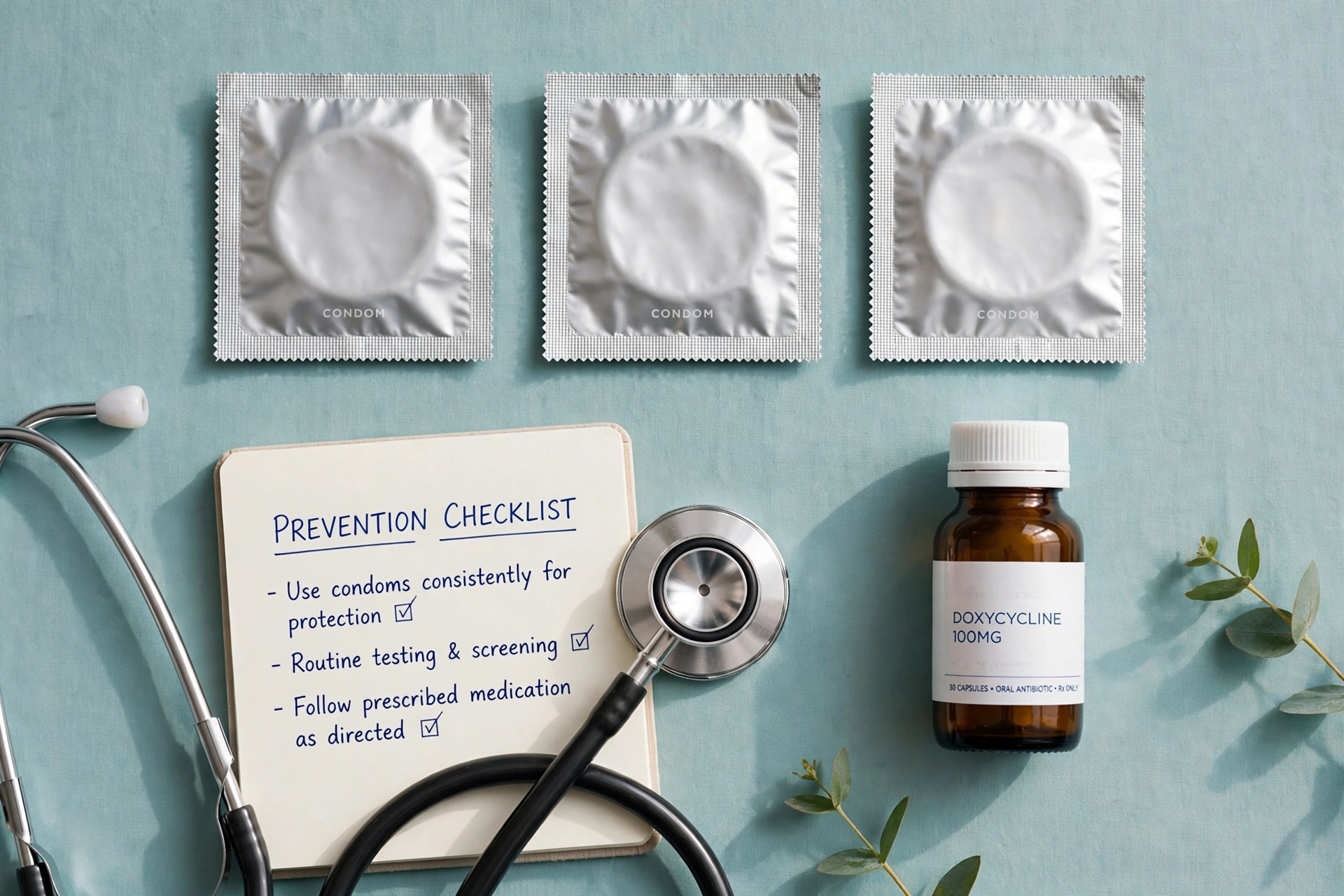
- Use condoms consistently and correctly for vaginal, anal, and oral sex. Condoms and dental dams reduce transmission when they cover the sores — but a sore outside the covered area can still transmit, so barriers lower risk rather than eliminating it.
- Limit the number of sexual partners and know that risk rises with each additional partner.
- Do not have sexual contact with anyone who has visible genital ulcers, sores, swelling, or redness — yours or theirs.
- Talk about testing before new sexual relationships. If telling a partner about an STI feels daunting, these tips for telling a partner about an STI can help frame a calm, honest conversation.
- Get screened regularly if you have new or multiple partners, and seek same-week evaluation for any new genital sore rather than waiting to see if it resolves.
- There is no vaccine for chancroid, so behavioral prevention and prompt treatment are the entire strategy.
One more point that surprises people: having had chancroid once does not make you immune. Reinfection is entirely possible with a new exposure, which is why partner treatment and prevention habits matter after recovery just as much as before. And if prevention fails, remember that chancroid symptoms treatment is straightforward and highly effective when started promptly.
Recovering: When Is Sex Safe Again?
Recovery has a clear finish line: all ulcers fully healed and any groin swelling resolved, with the follow-up visit confirming progress. Until then, abstain from sexual activity — including with a regular partner who has also been treated — because partially healed lesions can still transmit the infection. Once healing is complete, there is no lingering contagiousness; chancroid does not hide in the body and reactivate the way herpes does. For broader guidance on resuming intimacy after any infection, see when it is safe to have sex again after an STI. If ulcers have not visibly improved within a week of starting treatment, go back to the clinician rather than waiting — that follow-up exists precisely to catch the cases that need a second look. Completing chancroid symptoms treatment and attending that follow-up visit are what confirm you have truly recovered.
When to See a Doctor
Seek prompt medical evaluation if you notice any of the following:
If you are already receiving chancroid symptoms treatment, return to your clinician if a sore has not improved within a week of starting the medication.
- Any new sore, bump, or ulcer on the genitals, especially if painful
- Painful swelling in the groin
- A genital sore that bleeds easily or produces discharge
- Pain during urination or intercourse that is new or unexplained
- A sore that has not improved within a week of starting prescribed treatment
- A known exposure: a partner tells you they have chancroid or any genital ulcer condition
Seek urgent care if a groin swelling becomes severely painful, rapidly enlarges, shows spreading redness, or is accompanied by fever — these can signal an abscess that needs drainage.
Frequently Asked Questions
Is chancroid curable?
Yes. Chancroid is a bacterial infection, and antibiotics cure it. Most ulcers begin improving within days of starting treatment and heal completely within one to two weeks. The key is getting diagnosed properly, taking the medication exactly as prescribed, and having partners treated at the same time so reinfection does not occur. Following the full chancroid symptoms treatment plan your clinician prescribes gives the best outcome.
How long does chancroid last without treatment?
Without antibiotics, chancroid ulcers can persist for weeks or even months, and groin lymph node swelling can progress to ruptured, draining abscesses. The infection does not reliably clear on its own, and waiting increases the risk of scarring and other complications. Prompt treatment shortens the illness to days-to-weeks of healing. Starting chancroid symptoms treatment early is the fastest route to recovery.
Can you get chancroid from oral sex?
Yes. Chancroid spreads through vaginal, anal, and oral sex whenever a partner comes into contact with the infectious ulcer or its fluid. Barrier methods such as condoms and dental dams reduce the risk when they cover the sore.
What is the difference between a soft chancre and a hard chancre?
A soft chancre is the painful, soft-edged ulcer of chancroid that bleeds easily and has ragged borders. A hard chancre is the firm, rubbery, usually painless ulcer of primary syphilis with smooth edges and a clean base. The pain-versus-painless distinction is the quickest clinical clue, but laboratory testing is needed to be certain.
Can chancroid come back after treatment?
The infection itself does not relapse once cured — but there is no lasting immunity, so you can be reinfected through a new exposure. Most “recurrences” are actually reinfections from an untreated partner, which is why every partner from the 10 days before symptoms began needs treatment too.
Is there a blood test for chancroid?
No. Unlike syphilis or HIV, chancroid cannot be diagnosed with a blood test. Diagnosis relies on examining the ulcers, checking the groin lymph nodes, swabbing the sore for laboratory testing, and ruling out syphilis and herpes with their respective tests.
Can chancroid affect pregnancy?
Chancroid is not known to harm the baby, but pregnant patients should still inform their clinician about the pregnancy when seeking treatment, because antibiotic choice may be adjusted. As with any STI in pregnancy, prompt treatment protects both parent and child.
Medical Disclaimer
This article is for educational purposes only and is not medical advice. It cannot diagnose any condition or replace evaluation by a qualified clinician. If you have genital sores, groin swelling, or other symptoms described here, please seek care from a healthcare professional or sexual health clinic promptly. Do not start, stop, or change any medication based on this article — treatment decisions, including which antibiotic to use, must be made by your clinician based on your individual situation.