Situational Erectile Dysfunction: Fine Alone, Not With a Partner
If you can get a perfectly good erection when you are alone but struggle the moment a partner is involved, you are dealing with one of the most common — and most misunderstood — patterns in men’s sexual health. Situational ED causes are very different from the vascular or hormonal problems behind persistent ED, and understanding that difference is the first step toward fixing the problem. Erectile difficulty that appears only in certain situations is overwhelmingly driven by psychological, relational, and contextual factors rather than by anything “broken” in the body.
This distinction matters more than most men realize. A man who still wakes with morning erections and functions normally during solo arousal has passed one of the most meaningful screening tests a doctor can ask about: the plumbing works. In this guide, we walk through the situational ED causes doctors actually see, the simple self-tests clinicians use, and the evidence-based steps that help men and their partners work through it. We will also explain which situational ED causes are the easiest to reverse and which ones deserve professional support.
What Is Situational ED?
Situational ED describes difficulty getting or keeping an erection that shows up only in certain contexts — most famously, during partnered sex — while erections remain normal at other times, such as during solo arousal or upon waking. Doctors contrast this with persistent erectile dysfunction, which happens consistently regardless of the situation and is more often tied to cardiovascular disease, diabetes, hormonal problems, or nerve damage.
The pattern itself is diagnostic. Clinicians consider it one of the strongest clues that psychological or relational factors, rather than organic disease, are driving the problem. That is genuinely good news: situational patterns respond well to behavioral, psychological, and relational approaches, and they carry a very different health significance than ED that appears every time, everywhere. Learning the situational ED causes behind your own pattern is what turns a frightening experience into a solvable one.
Situational vs. Persistent ED: Key Differences
| Feature | Situational ED | Persistent ED |
|---|---|---|
| When it happens | Only with a partner or in specific situations | Consistently, in most or all situations |
| Morning erections | Usually present and normal | Often reduced or absent |
| Solo arousal | Usually normal | Often affected |
| Typical causes | Anxiety, stress, relationship factors, conditioning | Vascular disease, diabetes, hormones, nerve damage, medications |
| Usual treatment path | Therapy, behavioral strategies, couples work | Medical evaluation, lifestyle change, medication |
| Onset | Often sudden, tied to an event or period of stress | Often gradual, worsening over months or years |
The 7 Most Common Situational ED Causes
Researchers and clinicians group the situational ED causes into seven overlapping areas. Most men are dealing with two or three at once, which is why fixing just one rarely solves the whole problem.
1. Performance Anxiety
Performance anxiety is the single most frequently cited of all situational ED causes, especially in men under 50. The fear of not performing — worry about getting hard, staying hard, or “lasting long enough” — is the classic trigger, and it is especially common with a new partner, after a previous failed attempt, or when you feel you have something to prove. Anxiety releases adrenaline, and adrenaline actively works against erections: it constricts blood vessels and accelerates the outflow of blood from the penis, creating what looks like a physical problem but is really a situational one. It is one of the most treatable situational ED causes, precisely because the mechanism is reversible anxiety, not damaged tissue.
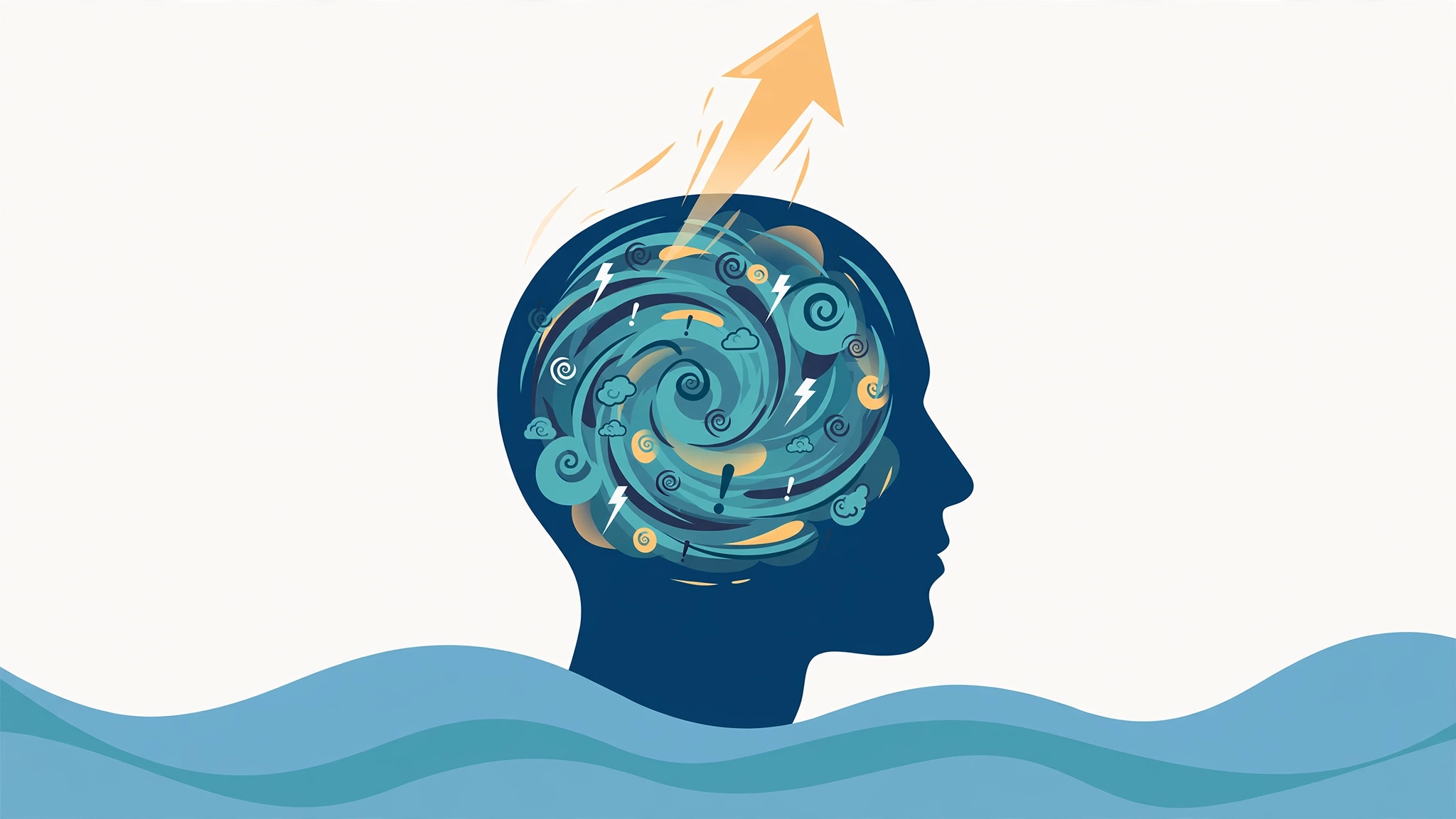
2. The Anxiety–Adrenaline Failure Spiral
One bad experience creates anticipatory anxiety about the next one, which raises adrenaline, which makes the next erection less likely, which deepens the anxiety. Because this cycle is self-reinforcing, it can persist for months even after the original trigger (a stressful week, too much alcohol, a moment of distraction) has long passed. Breaking the loop usually requires addressing the anxiety pattern itself, not chasing erections directly. Of all the situational ED causes, this self-reinforcing loop is the reason one bad night can turn into months of difficulty.
3. Spectatoring: Watching Yourself Instead of Feeling
One of the lesser-known situational ED causes has a name coined by pioneering sex researchers Masters and Johnson: spectatoring. It means mentally stepping outside yourself during sex to observe and judge your own performance — “Am I hard enough? Is this going well?” — instead of staying absorbed in sensation. Arousal requires attention focused on erotic cues; spectatoring redirects that attention inward to self-evaluation, and the erection fades. This explains the “fine alone” puzzle: alone, there is nobody to perform for, so the spectator stays quiet. Sensate focus exercises — retraining attention toward touch rather than outcomes — were developed specifically to break this pattern.
4. Relationship Dynamics and Communication Gaps
Unresolved conflict, poor communication, mismatched desire, or pressure one partner places on the other can all show up as situational ED. Some men notice the pattern is partner-specific: fine with one partner, difficult with another — often the one where more is emotionally at stake, or where past negative experiences have created unconscious associations. Because the issue lives in the interaction, not in one person’s body, couples-focused approaches tend to work faster than solo efforts. Open, non-blaming conversation about expectations and pressure is one of the most underused and most effective interventions. Because situational ED causes rooted in a relationship respond poorly to solo fixes, involving your partner early usually speeds recovery.
5. Arousal Conditioning: Different Cues, Different Response
Your brain learns what turns you on, and it learns it from repetition. If most of your arousal has been built around one specific set of cues — for example, private, fast, visually-driven stimulation — your body may simply not respond to a different set of cues: a real partner, slower pacing, less predictable stimulation. Clinicians call this an arousal conditioning mismatch, and it is one of the situational ED causes most often missed by generic advice. Couples intimacy exercises designed around mutual, unhurried touch are built on exactly this principle.
6. Fatigue, Alcohol, Medications, and Lifestyle
Not every cause is emotional. Fatigue is one of the most common situational triggers — trying to have sex when exhausted, especially late at night, reliably suppresses arousal. Excessive alcohol is another classic culprit: a drink or two may ease nerves, but heavier drinking depresses the nervous system and directly impairs erectile response. Certain medications — including some blood pressure drugs, antidepressants (especially SSRIs), sleep aids, antihistamines, and prostate medications — can cause short-term erectile difficulty as a side effect. Smoking and poor sleep also degrade both circulation and stress resilience.
If your difficulty lines up with late nights, heavy drinking, or a new prescription, that correlation is worth discussing with your doctor. These situational ED causes are among the simplest to test: change the variable for a few weeks and watch what happens.
7. Cultural Pressure and Masculinity Myths
Social expectations about masculinity — that a man should always be ready, always hard, always in control — turn normal variability into a crisis. Many men hold unconscious performance standards absorbed from unrealistic media portrayals, and the gap between expectation and reality fuels the anxiety loop described above. Cultural stigma also keeps men from talking about the problem: surveys have found that only a minority of men with erectile difficulties seek medical advice, allowing a highly treatable pattern to harden into a long-term avoidance of intimacy. Recognizing that occasional difficulty is normal is itself therapeutic.
The Morning-Erection Self-Test Doctors Use
Here is something most general health articles on situational ED causes fail to mention, yet it is one of the first things a urologist asks about: Do you still get morning erections?
Men typically experience several erections per night during REM sleep, completely outside conscious control. These nocturnal erections are a built-in diagnostic test. If they occur normally, the blood vessels, nerves, and hormonal machinery of erection are working — which points away from organic disease and toward situational or psychological causes. Doctors sometimes confirm this with overnight monitoring, but your own observation of consistent morning erections is already meaningful information to bring to an appointment.
The practical takeaway: keep a simple private log for two weeks — note whether you wake with an erection, whether solo arousal is normal, and exactly which situations are difficult. That record gives a doctor more diagnostic value than almost any test, and it often reassures the man himself that the issue is situational rather than medical.
When Situational ED Still Deserves a Medical Checkup
A situational ED pattern does not mean you should never see a doctor. Clinicians recommend a medical evaluation to rule out contributing physical factors — especially if you are over 40, if the pattern is gradually spreading to more situations, or if you have risk factors such as diabetes, high blood pressure, high cholesterol, or heart disease. Erectile dysfunction can be an early warning sign of cardiovascular problems, and doctors view that possibility seriously enough to check even when the pattern looks psychological.
Book an appointment promptly if you notice any of these red flags:
- Morning erections have stopped or become rare alongside the partnered difficulty
- The problem is spreading — solo arousal is now affected too
- Onset was gradual and has steadily worsened over months
- You have chest pain, shortness of breath, or other cardiovascular symptoms
- The difficulty began around the time you started a new medication
- You are experiencing low mood, loss of interest in things you used to enjoy, or persistent anxiety
A routine evaluation typically includes a health history, blood pressure check, and blood tests for blood sugar, cholesterol, and testosterone. Normal results with a classic situational pattern are actually reassuring: they confirm that behavioral and psychological strategies are the right path.
What Doctors Recommend for Situational ED
Treatment follows the pattern: situational ED calls for situational solutions. Here is what clinicians and sex therapists typically recommend, in roughly the order they try them. Each one targets the situational ED causes described above rather than masking them.
Talk About It — With Your Partner and a Professional
Naming the pattern removes much of its power. Telling your partner “this happens when I feel pressure, and it doesn’t reflect how I feel about you” prevents the hurt and misunderstanding that worsen the cycle. Couples counseling or psychosexual therapy is frequently the single most effective intervention for partner-specific situational ED, because it addresses communication, expectations, and pressure directly. Cognitive-behavioral therapy (CBT) is also well-supported for breaking the anticipatory anxiety loop.
Sensate Focus Exercises
Sensate focus is the core behavioral technique developed by Masters and Johnson and still used by sex therapists today. Couples take turns giving and receiving non-goal-oriented touch — explicitly banning intercourse and performance at first — to retrain attention on sensation instead of outcomes. Over several weeks, the exercises progress gradually, rebuilding the arousal response while spectatoring and performance pressure are removed from the equation. It is simple, it requires no equipment, and it directly targets causes 2, 3, and 4 above.
Mindfulness and Stress Management
Mindfulness-based approaches teach staying present during intimacy rather than projecting forward to feared outcomes. Regular exercise, consistent sleep, and reduced alcohol intake amplify these effects by improving both vascular function and stress resilience.
Medication as a Short-Term Bridge
Doctors sometimes prescribe phosphodiesterase inhibitors (such as sildenafil or tadalafil) as a temporary measure — not because the plumbing is broken, but because a few reliable experiences can break the anxiety spiral and restore confidence. Clinicians emphasize that medication treats the symptom, not the situational causes, and works best alongside therapy or behavioral strategies. Never adjust medications, including blood pressure drugs or antidepressants, without medical guidance — and if a recent prescription coincides with your symptoms, raise that with your prescriber.
FAQs
Why can I get hard alone but not with my partner?
This is the hallmark of situational ED, and it almost always points to psychological or contextual causes rather than a physical problem. Alone, there is no performance pressure, no audience, and no spectatoring — so the nervous system stays in the relaxed state that allows erections. Morning erections and normal solo function are strong signs the underlying mechanism is healthy.
Is situational erectile dysfunction normal?
Occasional situational ED is extremely common and not usually a medical concern on its own. Up to 20% of sexual encounters can involve some erectile inconsistency and still fall within the normal range, according to commonly cited clinical guidance. It becomes worth evaluating when the pattern is frequent, persistent over weeks or months, or spreading beyond the original situation — or when it causes significant distress or relationship strain.
Can stress and anxiety really cause ED even in young men?
Yes — in men under 50, psychological factors and situational ED are the most common causes of erection difficulty, far outweighing physical causes. Stress hormones and adrenaline directly oppose the parasympathetic relaxation an erection requires. Research and clinical experience both show that younger men, especially with new partners or after one failed experience, are particularly vulnerable to the performance-anxiety spiral.
How do I know if my ED is physical or psychological?
The pattern is the best clue: difficulty only in specific situations, with normal morning erections and normal solo arousal, points toward the psychological situational ED causes described above. A gradual worsening that affects all situations, combined with fading morning erections, points more toward physical causes. Only a doctor can make the call with confidence.
Should I try ED medication for a situational problem?
Many doctors do prescribe it as a short-term confidence bridge, and it can help break the anxiety cycle. But it treats the symptom, not the situational causes, so it works best combined with therapy, sensate focus exercises, or lifestyle changes. Discuss it with your doctor rather than self-medicating, especially if you take other prescriptions or have heart conditions. Long-term reliance without addressing the underlying pattern is discouraged by clinicians.
How can my partner help without making it worse?
The most helpful things a partner can do are removing performance pressure, avoiding criticism or comparison, and participating in solutions like sensate focus exercises or couples counseling. Open, non-blaming conversation matters enormously — many men report that simply telling their partner about the pattern reduces its frequency. For ideas on structured exercises to try together, see our couples intimacy exercises guide, and note that alcohol’s effect on sexual performance is another situational factor worth reviewing together.
Medical disclaimer: This article is for educational purposes only and is not medical advice. It does not diagnose any condition or recommend any treatment for you personally. Erectile difficulties can sometimes signal underlying health conditions, so if you are concerned — especially if symptoms are persistent, worsening, or spreading beyond specific situations — please consult a qualified healthcare professional such as your doctor or a urologist. Do not start, stop, or change any medication without medical guidance.
Sources consulted include the Mayo Clinic’s overview of erectile dysfunction and the Cleveland Clinic’s guide to erectile dysfunction, which cover the distinction between psychological and physical causes and when to seek care.