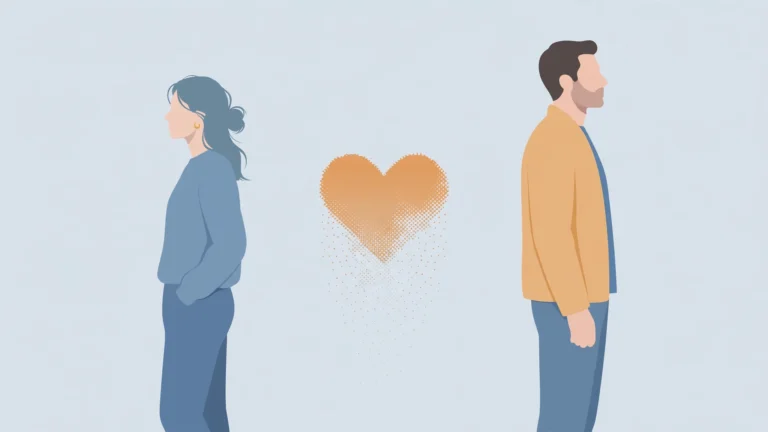
Trust Issues in a New Relationship: How to Heal and Open Up
Trust Issues in a New Relationship: How to Heal and Open Up
They are kind. They text back. They have done nothing wrong — and yet your stomach tightens every time their phone lights up. You are not reacting to them. You are reacting to everyone who came before them.
Trust issues in relationships are one of the cruelest leftovers of old heartbreak: the person who hurt you is gone, but your nervous system never got the memo. The good news? Trust can be rebuilt — not by finding a "perfect" partner, but by learning to tell the difference between an old wound and a present danger. Here's how to heal and open up again, at a pace that respects both your heart and your history.
Why Trust Issues in Relationships Trigger You Even With a Good Partner
Your brain is a prediction machine. After betrayal — cheating, lying, gaslighting, or a slow erosion of honesty — it builds a simple rule: closeness equals danger. That rule kept you safe once. Now it misfires, scanning a trustworthy new partner for threats that are not there.
Psychologists call this projection: past pain gets pasted onto present people. It does not mean you are broken or dramatic. It means your trust system is doing its job a little too enthusiastically. The goal is not to switch it off — it is to recalibrate it.
7 Steps to Heal and Open Up
1. Name the wound before it names you
Before every spiral, ask one quiet question: "Am I reacting to what is happening right now, or to what happened before?" When your partner is late and your mind jumps to betrayal, naming the trigger — "This is my old story, not this person" — loosens its grip immediately.
2. Tell your new partner — without trauma-dumping
Your partner cannot support a healing they do not know about. Share the headline, not the whole novel: "I was betrayed in my last relationship, so I can be slow to trust. It has nothing to do with you, and I'm working on it." This one conversation prevents months of misunderstanding.
3. Build a graded vulnerability ladder
Trust does not require a leap — it needs small steps. Share something slightly personal, notice how they respond, then go one rung deeper. Kept promises, remembered details, gentle honesty: each one is a brick. Over weeks, the bricks become a foundation you can actually stand on.
4. Collect evidence like a scientist, not a detective
There is a difference between healthy observation and surveillance. Instead of checking their phone, start a private mental file of trust-positive evidence: they did what they said, they were honest when it was awkward, they showed up. Your brain is currently biased toward suspicion — deliberately noticing the good retrains it.
5. Ask for reassurance the healthy way
Needing reassurance is not weakness; demanding it through accusations is what corrodes connection. Swap "You're obviously hiding something" for "My trust stuff is flaring up — could you help me reality-check this?" Direct requests invite closeness. Tests and traps invite distance.
6. Agree on transparency, not surveillance
Healthy couples build small trust rituals: sharing calendars, giving a heads-up about plan changes, being open about friendships. The key word is agreement — these are comfort measures you design together, not rules imposed out of fear. Transparency offered freely builds trust; transparency demanded breeds resentment.
7. Give it time — and get help if you are stuck
Healing is not linear. Some weeks you will feel open and light; others, an old trigger will knock you flat. That is normal. But if months pass and you still cannot relax into the relationship, a therapist can help you separate past trauma from present reality far faster than white-knuckling it alone.
Daily Trust-Building Micro-Habits
Big healing happens through tiny repetitions. Try these small daily practices:
- One honest share per day. Tell your partner one real thing — a worry, a hope, a small truth. Vulnerability is a muscle; daily reps build it.
- The two-minute check-in. Each evening, ask: "How connected did we feel today, one to ten?" It catches small drifts before they become distance.
- Name the trigger in real time. When a wave of suspicion hits, say it out loud: "My old alarm is ringing — no evidence, just nerves." Speaking it shrinks it.
- End the day with one appreciation. Tell them something specific they did that felt safe or kind. What gets noticed gets repeated.
These micro-habits do what willpower cannot: they give your nervous system hundreds of small proofs, over months, that this relationship is different.
For the Partner of Someone With Trust Issues
Loving someone who is healing requires a special kind of patience — and it is not your job to earn trust that was broken by someone else. What you can do:
- Be boringly consistent. Reliability is the medicine. Say what you mean, mean what you say, every single day.
- Don't take triggers personally. Their flinch is about history, not about you. A calm "I'm here, we're okay" goes further than defensiveness.
- Keep your own boundaries. You can be compassionate without becoming their emotional regulator. If their healing demands start controlling your life, that is a conversation — possibly with a couples counselor.
Our guide to building trust in marriage covers the daily habits that make trust grow in any committed relationship, and if past betrayal involved blurred lines, what counts as cheating can help you and your partner get on the same page about boundaries.
Green Flags That Say "This Person Is Safe"
While you heal, keep an eye out for the signs that trust is warranted:
- They apologize without excuses when they mess up
- They are honest about small uncomfortable things, not just big ones
- Their words and actions match over time
- They respect your pace instead of rushing your healing
- They tell you hard truths kindly rather than comfortable lies
A Final Thought
Having trust issues does not make you damaged goods. It makes you someone who loved bravely, got hurt, and is brave enough to try again. The fact that you are reading this instead of shutting your heart down says everything about your courage. Heal at your own pace — and let the right person meet you there.
The Cleveland Clinic's psychologists note that rebuilding trust can take months or even years, and that healing is never linear — their guide to understanding trust issues is an excellent clinical companion to the steps above.
Frequently Asked Questions
How long does it take to get over trust issues in a new relationship?
There is no fixed timeline — it depends on the depth of the original wound and how consistently safe the new relationship feels. Many people notice real improvement within 3–6 months of a steady, trustworthy partnership. Deep betrayal trauma can take a year or more, and therapy can shorten that significantly.
Should I tell my new partner about my trust issues?
Yes — briefly and early. A simple, honest disclosure prevents them from misreading your triggers as disinterest or accusation. Keep it short, own it as your work to do, and avoid unloading every detail of the past relationship in the first month.
Is it my trust issues, or is my partner actually untrustworthy?
Ask: is there concrete evidence, or only fear? A pattern of lies, secrecy, or broken promises is evidence — trust your eyes. Anxiety with zero evidence, especially when your partner is consistently honest, is likely the old wound talking. When in doubt, a therapist offers the neutral perspective friends can't.
Can trust issues ruin a good relationship?
They can strain one — constant suspicion exhausts even the most patient partner. But awareness changes everything. Couples who name the pattern, agree on trust-building rituals, and give it time often come out stronger than couples who never had to do the work.