Snoring, Separate Beds, and Staying Close
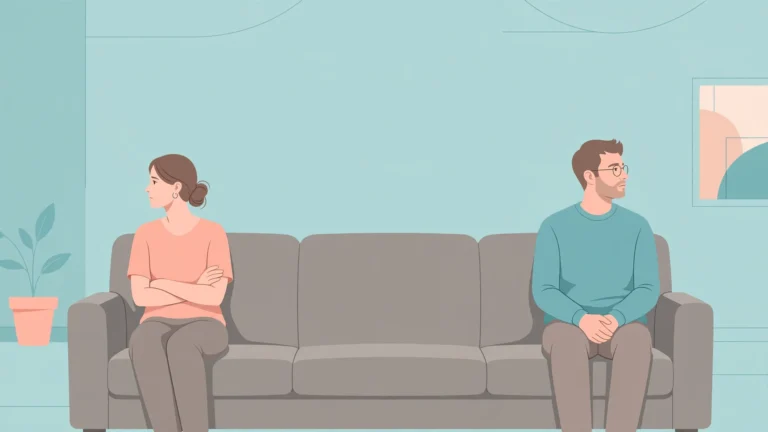
One partner’s snoring has been keeping the other awake for years. The tired partner eventually retreats to the guest room — and both of them sleep better than they have in a decade. Then comes the quiet worry: what happens to us now? The idea that separate bedrooms and intimacy cannot coexist is one of the most stubborn myths in relationships. In reality, roughly one in four couples already sleep apart, and many say the decision improved their relationship rather than damaged it.
The research backs them up: it is not where you sleep that determines closeness — it is how rested you are and how intentional you remain about connection. This guide to separate bedrooms and intimacy walks through what the evidence actually says, the sleep science linking rest to desire, when snoring deserves a doctor’s attention, and the concrete rituals that keep couples who sleep apart feeling like partners, not roommates.
Separate Bedrooms and Intimacy: What the Research Says
Most articles on this topic stop at “communication is key.” The actual evidence goes further, and it is more reassuring than most couples expect. A 2017 poll from the National Sleep Foundation found that nearly one in four couples sleep in separate beds or rooms, and a 2023 survey by the American Academy of Sleep Medicine reported that one-third of adults sleep apart from their partner at least occasionally to accommodate a partner’s sleep habits.
Research on couples’ sleep points to a consistent pattern: people who share a bed experience measurably more sleep disturbances than people who sleep alone — one analysis suggests around 30 percent more — and when one partner’s poor sleep starts generating resentment, conflict rises and relationship quality falls. Conversely, couples whose sleep is in sync report greater relationship satisfaction, less conflict, and more sexual activity.
The through-line is simple: good sleep supports healthy relationships, and poor sleep erodes them, regardless of where the sleeping happens. When couples understand that separate bedrooms and intimacy are not opposites, the decision stops feeling like a failure and starts feeling like a strategy. As according to Harvard Health’s review of the research on couples who sleep apart, Harvard Medical School psychologist Dr. Sharon Bober notes, getting restful sleep is essential for good health and a good sex life — and sometimes sleeping in separate rooms lets both partners sleep better, wake up with more energy and better mood, and consequently feel more desire. Well-rested people are kinder, more patient, and more interested in each other.
Why Couples Split Up the Bedroom: The Real Reasons
Snoring is the most common reason couples sleep apart, and it is not a minor annoyance — up to half of sleep disturbances in shared beds are linked to a partner who snores. But the list of genuine reasons is longer than most people admit:
- Snoring and noisy breathing, sometimes loud enough to be heard through walls.
- Different sleep schedules — the night owl’s reading light and the early riser’s 5 a.m. alarm.
- Restless movement, including restless leg syndrome, tossing and turning, or cover-stealing.
- Different temperature needs — one partner roasts while the other freezes.
- Different mattress preferences, where one person’s ideal firmness is the other’s back pain.
- Health conditions such as sleep apnea requiring a CPAP machine, menopause-related night sweats, or chronic pain that makes being jostled miserable.
- Pets, babies, or shift work that force one partner onto a different rhythm.
Most of these are logistical problems, not relationship problems. Framing the decision as “we are solving a sleep problem together” rather than “we are growing apart” makes an enormous difference in how the change feels. If you are unsure how sleep affects your sex drive in the first place, it is worth understanding the biology before blaming the relationship.
The Sleep–Desire Connection You Might Be Missing
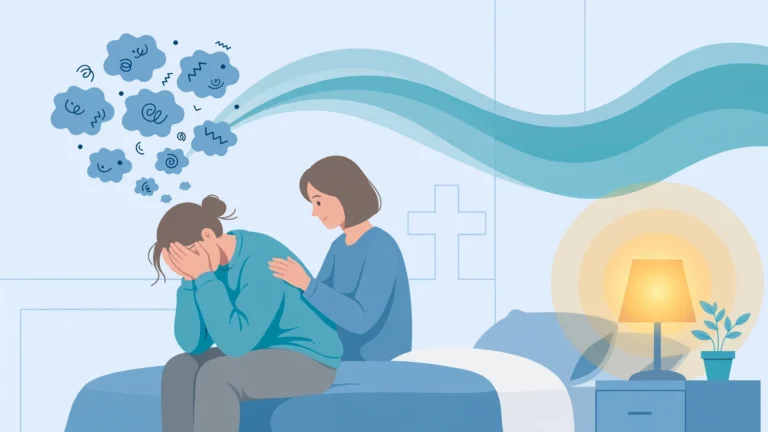
Here is the part of the conversation that rarely gets covered: chronic sleep deprivation directly suppresses the biology of desire. When you are exhausted, your body is not being romantic; it is being protective.
Studies have found that insufficient sleep lowers testosterone in otherwise healthy young men within about a week — and testosterone plays a meaningful role in libido for both sexes. Research on women has shown that longer, higher-quality sleep is associated with greater sexual desire and arousal the following day. Add in elevated cortisol (the stress hormone that rises with sleep loss), flattened dopamine, and worse emotional regulation, and “too tired” stops being an excuse and becomes a physiological fact. Two chronically sleep-deprived people are not just irritable — they are chemically less inclined toward intimacy.
This is why separate bedrooms can paradoxically improve a couple’s sex life: partners who finally sleep well regain the energy, mood, and hormonal baseline that desire depends on. Several couples report that intimacy became more intentional and satisfying after the change, rather than fading away. If exhaustion has been the barrier for a long time, our guide on when fatigue is the reason you never feel like it can help you untangle sleep problems from other causes of low desire.
Before You Split: Treat the Snore, Not Just the Bedroom
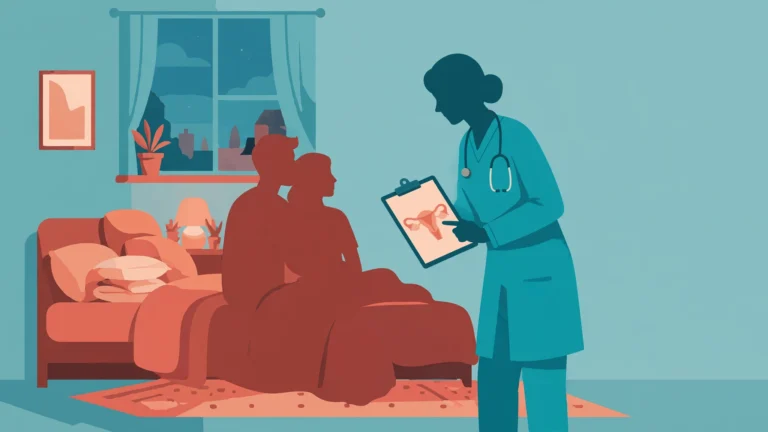
Sleeping apart is a legitimate solution — but it should not be the first and only response to loud snoring, because habitual snoring can signal a medical condition that deserves attention on its own. Obstructive sleep apnea, in which breathing repeatedly pauses during sleep, raises the risk of high blood pressure, heart disease, stroke, and daytime accidents. Separating bedrooms without investigating the snoring means the medical risk travels with the snorer to the new room.
Consider a medical evaluation if snoring is accompanied by any of the following: pauses in breathing witnessed by a partner, gasping or choking during sleep, excessive daytime sleepiness, morning headaches, difficulty concentrating, or high blood pressure that is hard to control. A primary-care doctor can refer for a sleep study, which may lead to treatments ranging from positional therapy and nasal breathing approaches to oral appliances or CPAP. Many couples try interim compromises first — earplugs, white-noise machines, or the snoring partner shifting to a side-sleeping position — and these are reasonable short-term steps. But if the pattern persists for months, a clinical evaluation protects the snorer’s health, which ultimately protects the couple.

7 Rituals That Help Separate Bedrooms and Intimacy Coexist
Sleeping apart removes two built-in bonding windows — falling asleep together and waking up together. The couples who thrive with separate bedrooms and intimacy are the ones who deliberately replace those windows. These strategies draw on guidance from sleep and relationship clinicians — including clinical psychologists who counsel couples on sleeping apart:
1. Protect a shared “snuggle time” before sleep
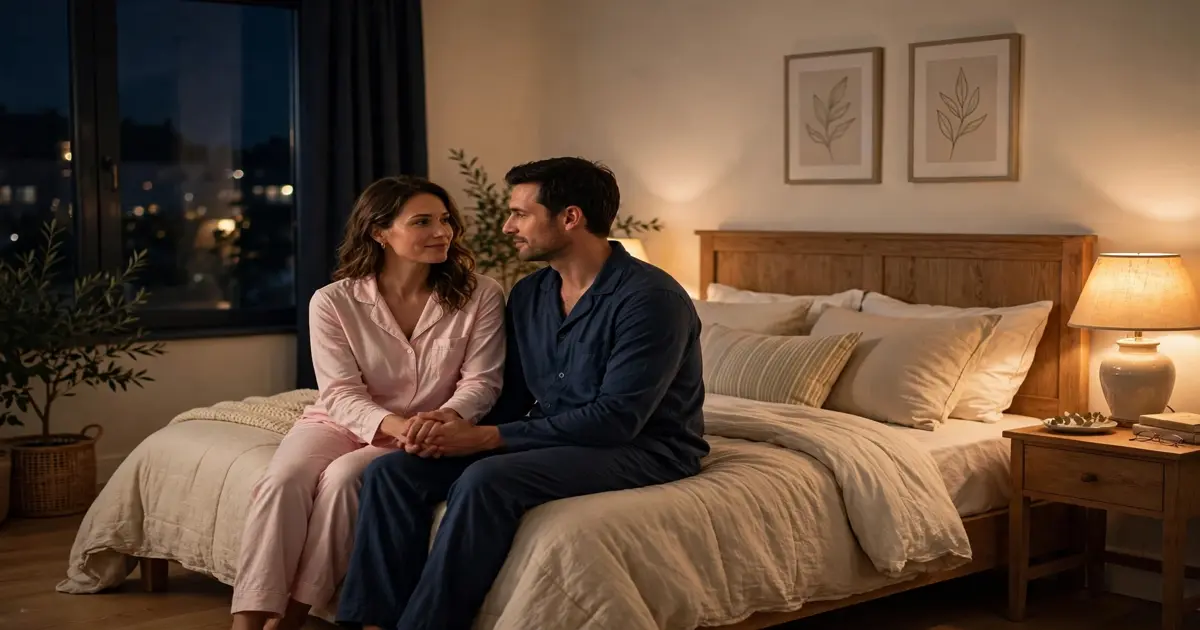
Spend 15–30 minutes together in one bed before lights-out: talk, cuddle, read side by side, or simply be physically close. Then one partner moves to their own room for sleep. This keeps the bed associated with closeness rather than logistics.
2. Create a morning connection ritual
Do the reverse at dawn: climb into one bed with coffee or tea and start the day together for ten minutes before the household wakes up. Couples consistently cite this as the easiest ritual to keep.
3. Schedule intimacy — and treat anticipation as a feature, not a failure
When you no longer share a bed, spontaneous nighttime intimacy happens less often. Planning a regular date night with intimacy attached can actually increase desire: anticipation builds erotic tension in a way that routine never did. Tie it to a real evening out or a cooked-at-home date rather than a clinical appointment.
4. Keep non-sexual touch abundant during the day
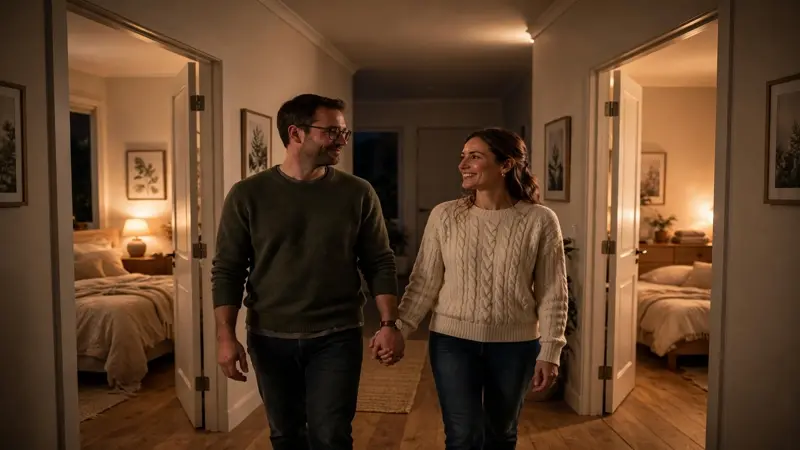
Hand-holding, brief hugs, a hand on the back in the kitchen — physical affection outside the bedroom signals that the separate sleeping is about sleep, not distance. Many couples find that touch hunger, not sex frequency, is the real casualty of sleeping apart, and this is the direct fix.
5. Try daytime naps together
An occasional shared nap — even 20 minutes — preserves the feeling of drifting off in each other’s company without sacrificing a full night’s rest.
6. Make both rooms genuinely comfortable
Nothing says “exile” like a guest room with a lumpy futon. Invest in making both sleeping spaces real, comfortable bedrooms: decent mattresses, bedding each person likes, proper lighting. Both partners should feel the arrangement serves them equally.
7. Check in regularly about the arrangement itself
Once a month, ask: Is this still working for both of us? Do we feel connected? A sleep arrangement that quietly breeds loneliness needs adjusting — the goal is rest plus closeness, never rest at the cost of closeness.
When Separate Bedrooms Are a Warning Sign
Honesty matters here: sometimes sleeping apart is not about snoring at all. Psychologists caution that separate beds can occasionally function as an excuse to create emotional distance — a way to avoid a partner, dodge conflict, or quietly disengage from the relationship. The difference between a healthy approach to separate bedrooms and intimacy and a red flag is usually obvious if you look for it:
- One partner decided unilaterally and the other feels hurt or shut out.
- The move coincided with unresolved conflict, infidelity, or emotional withdrawal.
- Daytime affection, conversation, and shared time have also declined.
- The arrangement feels permanent and non-negotiable, with no discussion.
- Sex has stopped entirely, and neither partner is motivated to address it.
If several of these are true, the bedroom question is downstream of a relationship question — and that deserves its own attention. Couples in this situation often benefit from working with a sex therapist or a couples counselor, who can help distinguish a logistics problem from an attachment problem and rebuild the emotional bridge either way.
How to Raise the Topic Without Hurting Your Partner
The conversation is often harder than the sleeping arrangement itself. Being asked to leave the shared bedroom can feel like rejection, even when it is purely practical. A few communication principles help couples discuss separate bedrooms and intimacy without bruising the relationship:
- Frame it as a team decision about health, not a verdict on the relationship: “I want us both to sleep well because I want us to be happy and close.”
- Propose a trial, not a decree: “Let’s try it for two weeks and see how we both feel” keeps the door open and lowers the stakes.
- Name what you will keep: explicitly promise the rituals — the evening cuddle time, the morning coffee — so the change reads as “plus connection,” not “minus partner.”
- Let the rejected-feeling partner choose their room setup: giving them the nicer bedding or the room they prefer signals care, not dismissal.
- Acknowledge the awkwardness honestly: admitting “I know this feels strange, and I’m a little sad about it too” validates what both of you may be feeling.
Making It Work in Small Spaces
Not every home has a spare bedroom, and children, roommates, or budget constraints are real. Couples adapt: a quality sleeper sofa or a well-set-up daybed in a home office, a partitioned section of a large bedroom with a divider or curtain, or alternating who gets the primary bedroom on a schedule. What matters is that both spaces are treated as legitimate bedrooms — clean, private, and comfortable — not that one is a punishment corner. If children ask, a simple, honest answer works: “Mom and Dad sleep better in different rooms, and being well-rested makes us nicer.” Kids take their cues from your tone; if you treat it as normal, so will they.
These adaptations prove that separate bedrooms and intimacy can thrive in any floor plan.
Frequently Asked Questions
Is sleeping in separate bedrooms bad for a marriage?
Not inherently. Research and clinician guidance suggest that when the reason is sleep quality and both partners agree, separate bedrooms and intimacy can coexist — and the arrangement can improve mood, reduce conflict, and even support a better sex life. It becomes harmful mainly when it is used to avoid a partner or when the couple stops investing in connection.
Will separate bedrooms kill our sex life?
They can reduce spontaneous nighttime intimacy, but many couples report that separate bedrooms and intimacy coexist just fine — their sex life stays the same or improves because they are better rested and more intentional. Scheduling regular intimate time — and treating the anticipation as part of the pleasure — is the most reliable way to protect it.
How common are separate bedrooms among couples?
Very common. The National Sleep Foundation’s polling found nearly one in four couples sleep in separate beds or rooms, and a 2023 American Academy of Sleep Medicine survey found one-third of adults sleep apart from their partner at least occasionally. The trend is growing as awareness of sleep’s importance increases.
Should we try anything before sleeping in separate rooms?
Yes — especially if snoring is the cause. Try earplugs or a white-noise machine, have the snorer sleep on their side, and get persistent loud snoring medically evaluated for sleep apnea. Adjusting temperature, mattress firmness, or schedules can also resolve the issue without separating.
How do we stay emotionally close if we don’t share a bed?
Separate bedrooms and intimacy stay connected through deliberate rituals: evening snuggle time before one partner leaves, a morning coffee or cuddle routine, abundant daytime physical affection, occasional naps together, and a regular check-in about how the arrangement feels. Intimacy is maintained by deliberate connection, not by sharing a mattress.
What if my partner wants separate bedrooms and I feel rejected?
Your feelings are valid and common — talk about them directly rather than agreeing resentfully. Ask for a trial period, request specific rituals that preserve closeness, and revisit the decision together. If the feeling of rejection persists, a couples counselor can help you both navigate it.
When should separate bedrooms be a reason to seek counseling?
If the move followed unresolved conflict or infidelity, if daytime affection has also faded, if sex has stopped entirely, or if one partner feels shut out and the other refuses to discuss it — the sleeping arrangement is likely a symptom, and professional support can help address the underlying issue.
This article is for educational purposes only and is not medical advice. Snoring can be a sign of sleep apnea or other health conditions — speak with a qualified healthcare professional about persistent snoring, breathing pauses during sleep, or excessive daytime sleepiness. If you are experiencing relationship distress, consider speaking with a licensed couples counselor or therapist.