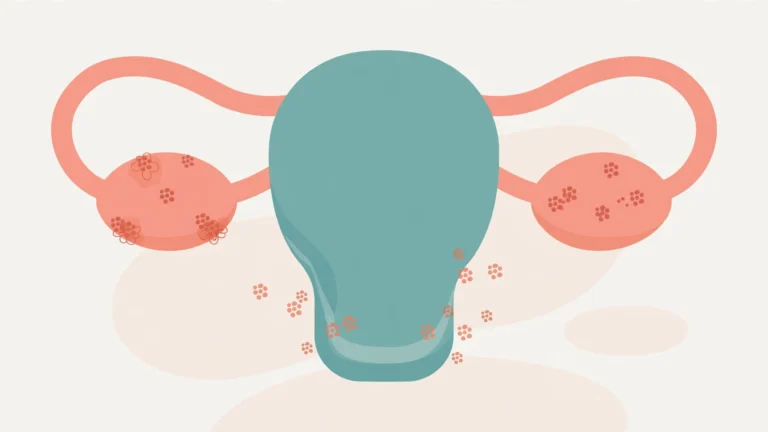
Infertility’s Toll on Your Sex Life: Coping Together
When you and your partner first started trying for a baby, sex was probably the easy part — maybe even the fun part. Then the months passed without a positive test, the ovulation kits multiplied, and intimacy quietly changed into something else: a schedule, a chore, a monthly reminder of what has not happened. If that sounds familiar, you are far from alone. Navigating infertility and sex at the same time is one of the most under-discussed consequences of trying to conceive, yet research shows it is nearly universal. A Stanford study found that 40% of women dealing with infertility reported sexual problems that caused them emotional distress, versus 25% of women in the general population. A systematic review put the numbers higher still: 43% to 90% of women and 48% to 58% of men in infertile couples report some form of sexual dysfunction.
This is not a failure of your relationship, and it is not a sign that you have stopped loving each other. It is what happens when the most private, spontaneous part of a partnership collides with the most stressful, clinical process many couples ever face. This guide covers how infertility damages intimacy, why partners grieve differently, and concrete strategies couples use to cope together and reconnect.

Infertility and Sex: What’s Really Happening
Most people assume the problem is simply “less sex.” The reality is more layered. When infertility and sex become linked, it does not just reduce frequency; it changes the meaning of sex and the emotions attached to it.
1. Scheduled sex kills spontaneity
Once a fertility specialist says “have intercourse on these days,” the bedroom calendar starts running your love life. One partner watches a test strip turn positive and issues the summons: ovulation is happening, come home now. Therapists hear the same complaint over and over — sex on demand feels like performance, not pleasure. Men in particular describe feeling reduced to a “sperm machine,” while women describe the pressure of knowing their partner is performing under a deadline. Desire cannot survive when arousal comes with an audience and a pass/fail outcome.
2. Sex becomes a reminder of failure
In the early months of trying, intimacy carried hope. After a year of negative tests, it carries something heavier: a monthly demonstration of what your body cannot do. Research on the infertility impact on sex life found that as infertility duration grows, so does sexual dysfunction: after eight or more years, the odds of arousal problems, pain during sex, and low satisfaction all rise significantly. The message lands hardest when one partner is identified as “the cause.” Roughly a third of infertility involves male factors, and the shame attached to a semen analysis result can be crushing. Infertility strikes at how many people see their own femininity or masculinity, and those feelings follow you into the bedroom.
3. Treatment medicalizes the most private act
Ultrasound wands, blood draws, injections, timed abstinence periods, doctors telling you when you may and may not have sex — fertility treatment turns reproduction into a group project involving physicians, nurses, and lab technicians. The intimacy of conception is suddenly shared with a clinic. Some women feel re-traumatized by the invasive nature of treatment; others simply disconnect from their bodies to get through it. But the body is not a light switch — shutting down sensation during appointments can mean shutting down sexual feeling at home, too. Hormone medications add weight gain, bloating, and mood swings that leave many people feeling disconnected from their own bodies.
4. The monthly grief cycle
This is the pattern almost no one warns you about. Every cycle becomes a mini emotional arc: hope during the fertile window, anxious waiting during the two-week wait, then a crash when menstruation starts — which reads, month after month, as a small bereavement. Partners ride this cycle on offset schedules. One may be devastated by the negative test while the other is already problem-solving the next cycle. That mismatch is not a lack of caring; it is two different grief timelines colliding. Over time, couples start bracing for the crash rather than hoping for success. That cycle is the engine of the infertility impact on sex life: desire — which needs safety and ease — cannot grow in a state of perpetual vigilance.
Why You and Your Partner Grieve Differently
One of the most destabilizing parts of infertility is discovering that the person you chose to face life with processes this crisis differently than you do. Studies consistently show that women tend to experience more intense physical and psychological distress around infertility, while men often report less stress and more confidence — not because they care less, but because they cope by containing emotion and focusing on solutions. When the infertility impact on sex life meets these two different coping styles, each partner can end up feeling profoundly alone — in the same bed.
That difference plays out in bed and out of it:
- The processor vs. the fixer. One partner wants to talk about every feeling; the other wants to research clinics and optimize the next cycle. Each reads the other’s style as wrong — indifference on one side, wallowing on the other.
- Blame and resentment. When tests point to one partner as the cause, the dynamic shifts. The “cause” partner may carry guilt and withdraw; the other may feel anger they cannot voice because it seems cruel. Unspoken resentment is desire’s worst enemy.
- Different timelines for acceptance. One partner may reach a place of considering child-free life or adoption while the other is still all-in on treatment. That gap can feel like betrayal, when it is really just grief moving at different speeds.
- Sex as comfort vs. sex as trigger. Some people seek physical closeness when they are sad; others need distance. When one partner wants to connect through sex and the other finds it a painful reminder, rejection feels personal even when it is not.
Naming these differences — out loud, without judgment — is the first coping step. The goal is not to grieve identically. It is to stop interpreting different coping styles as a lack of love. Naming them is also how couples begin to repair the infertility impact on sex life together.
Coping Together: A Practical Intimacy Reset
Rebuilding intimacy after the infertility impact on sex life is not about forcing desire. It is about deliberately separating your sexual relationship from your fertility project. Here is a staged approach couples’ therapists recommend.
Step 1: Make the bedroom a sanctuary
Remove the instruments of the fertility project from your bedroom: ovulation tests, temperature charts, injection supplies, fertility books, appointment paperwork. Agree on a boundary — no fertility talk after 9 p.m., and none in bed. The bedroom becomes the one place where your bodies are allowed to simply be bodies again, not equipment.
Step 2: Have sex outside the fertile window
This is the single most repeated piece of expert advice, and it works for a reason. Intimacy that cannot possibly result in pregnancy carries no performance pressure and no monthly scorecard. It is sex for connection and pleasure — the original reasons you were having it. Many couples report that once they reintroduced non-fertile-window sex, desire started returning even during the fertile window, because the association with pressure weakened. For many couples, this is the turning point in reversing the infertility impact on sex life.

Step 3: Broaden what counts as intimacy
When intercourse feels loaded, take it off the table for a while — with an explicit agreement, not a silent drift. Replace it with touch that has no destination: long hugs, back massages, baths together, slow dancing in the kitchen. Sex therapists call the structured version of this “sensate focus,” and it is one of the best-evidenced tools for rebuilding physical connection. Explore these non-penetrative ways to stay close — closeness does not require intercourse to be real, and pressure-free touch often rekindles desire on its own. It is one of the most recommended responses to the infertility impact on sex life.
Step 4: Schedule pleasure, not just fertility
It sounds paradoxical, but scheduling non-goal-oriented intimacy works. A standing date night, a weekend getaway, a couple’s massage — the point is protected time where connection is the only agenda. Leave the ovulation conversation at home. Pretend you are dating again: new places, a little playfulness. Novelty is one of the strongest desire triggers there is, and it has nothing to do with fertility. It also quietly counters the infertility impact on sex life by rebuilding positive associations with touch.
Step 5: Talk about the sex, not just the fertility
Couples discuss hormone levels in detail but go silent about what is happening in bed. That silence lets shame grow. Instead, hold a regular ten-minute check-in outside the bedroom where each person says what feels good, what feels hard, and what they need. And when your desire levels don’t match, name it as a symptom of how infertility and sex interact under pressure, not a verdict on the relationship. The mismatch is often temporary; it eases when the pressure eases.
Communication Scripts That Actually Help
General advice to “communicate better” is useless in the middle of a crisis. What helps are actual words — scripts you can borrow when the real conversation feels impossible:
- When you need closeness but not sex: “I want to be close to you tonight, but my body isn’t ready for more. Can we just hold each other?” This separates affection from rejection.
- When scheduled sex feels awful: “I hate that this feels like a task. I don’t want our intimacy to be a job. Can we laugh about how unsexy this is and try again tomorrow?” Humor deflates pressure — if both of you are in on it.
- When blame is in the air: “The test results don’t change how I see you. This is our problem, not your fault, and I’m on your team.” Say it even if you think they know. Especially then.
- When grief timelines collide: “I’m still in the sad part of this month, and I know you’ve moved to planning mode. Both are okay. Can you sit with me in the sad part for a little while?”
- When one of you wants to keep going and the other wants to pause: “Can we agree to finish this cycle, then take a month where we don’t track anything and just be us?” A planned pause is not giving up; it is maintenance.
Notice what these scripts have in common: they make the invisible visible, they refuse blame, and they treat the couple as a unit against the problem. For deeper patterns — chronic conflict, withdrawal, blame cycles — a guide to questions to ask a couples therapist can help you find the right professional support.
Should You Take a Break From Trying?
Almost no fertility clinic suggests this, but many couples’ therapists do: a deliberate, time-limited break from trying to conceive — a “fertility sabbatical.” A month or two with no tracking, no testing, no scheduled sex. Just your relationship.
This is not the same as giving up. The break can restore the link between sex and pleasure instead of sex and failure, give both partners’ nervous systems a chance to exit the chronic stress state that suppresses desire, and reveal what the relationship feels like without the fertility project — couples often rediscover that they genuinely like each other. Chronic stress does not cause infertility, but burnout causes people to quit treatment early or communicate poorly with their medical team. A planned pause can also begin to undo the infertility impact on sex life by returning intimacy to pleasure rather than performance.
Set the terms in advance: how long the break lasts and what you will do if one of you panics mid-break. A break with an agreed endpoint is a plan; a break without one is avoidance.
When to Get Professional Support
There is a point where love and good intentions are not enough, and reaching it is not a failure. Consider professional help if any of the following are true:
- Sex has stopped entirely for months and neither of you knows how to restart the conversation.
- One or both of you has persistent low desire, erectile difficulties, or pain during sex that may need medical evaluation — fertility medications and hormonal shifts can have real physiological effects on sexual function.
- Blame, resentment, or contempt (mockery, disgust) has entered the relationship — contempt is the strongest predictor of relationship breakdown in the research literature.
- Depression or anxiety symptoms are present — persistent sadness, panic, inability to sleep. Infertility roughly doubles the risk of depressive symptoms in women, and partners suffer too.
- You cannot agree on next steps — continue treatment, pursue adoption, or stop — and the disagreement is becoming the relationship.
Look for a therapist with specific experience in infertility and sex, including the infertility impact on sex life — ideally someone certified in sex therapy or a psychologist attached to a fertility clinic. Many fertility centers now have counselors on staff because the emotional toll is so well documented. Support groups run by infertility patient organizations also normalize what you are feeling; hearing another couple describe your exact situation is powerfully de-shaming.
For a medical overview of what infertility involves and when to seek evaluation, Mayo Clinic’s infertility overview is a reliable starting point.
Frequently Asked Questions
Is it normal for infertility to ruin your sex life?
Yes — and “ruin” is the word many couples use. The majority of couples experiencing infertility report reduced desire, less frequent sex, or sexual difficulties. A Stanford study found 40% of infertile women had sexual problems causing distress, and systematic reviews report dysfunction rates of 43–90% in women and 48–58% in men. When infertility and sex get tangled up, struggling is a normal response to an abnormal situation, not a sign your relationship is broken.
How do we stop scheduled sex from feeling like a chore?
Three things help most: keep having sex outside the fertile window so intimacy is not always goal-directed; add novelty and playfulness to scheduled days (different rooms, humor, romance rather than logistics); and talk openly about how unsexy it feels, so the pressure is shared rather than silently endured. Couples who do this consistently find the infertility impact on sex life starts to fade.
My partner has lost all interest in sex since we started fertility treatment. What should I do?
Do not interpret it as lost interest in you. Hormonal medications, grief, shame, and exhaustion all suppress desire. Start with a non-pressuring conversation outside the bedroom and focus on non-sexual physical closeness. If low desire persists for months or comes with depression symptoms, encourage a medical check-up — some fertility drugs and related conditions directly affect libido.
Should we take a break from trying to conceive to save our relationship?
A planned, time-limited break is a legitimate strategy many therapists recommend. A month or two without tracking or scheduled sex can restore the pleasure-connection link and reduce burnout. Agree on the duration and the resuming plan in advance. If one partner strongly opposes a break, that disagreement itself is worth discussing with a counselor.
How do we handle it when one of us is “the cause” of the infertility?
First, language matters: there is no “cause person” in a partnership — there is a medical finding, and it belongs to the team. The partner with the finding often needs explicit reassurance that they are not seen as defective; the other partner needs permission to grieve without it being read as blame. If guilt or resentment is calcifying, a few sessions with an infertility-experienced therapist can prevent a medical fact from becoming a relationship wound.
Can infertility actually strengthen a relationship?
Surprisingly, yes — for some couples. Therapists note that infertility is often the first major crisis a couple faces together, and how partners reach for each other during it sets the tone for future hardships. Couples who share their most vulnerable feelings about inadequacy and fear, rather than hiding them, frequently report a deeper emotional bond — proof that even the infertility impact on sex life can become a bridge rather than a barrier.
When should we see a therapist about our sex life during infertility?
Sooner than you think. Couples who seek support early in treatment consistently fare better than those who wait until the relationship is in crisis. Consider it when infertility and sex have become persistently distressing, when blame or withdrawal patterns are forming, or simply when you want guidance navigating an experience that strains even strong partnerships.
This article is for educational purposes only and is not medical advice. Infertility and sexual health concerns deserve individualized care — please consult a qualified healthcare provider or licensed therapist about your specific situation.