AI-Powered Text Analysis for Couples: How It Works
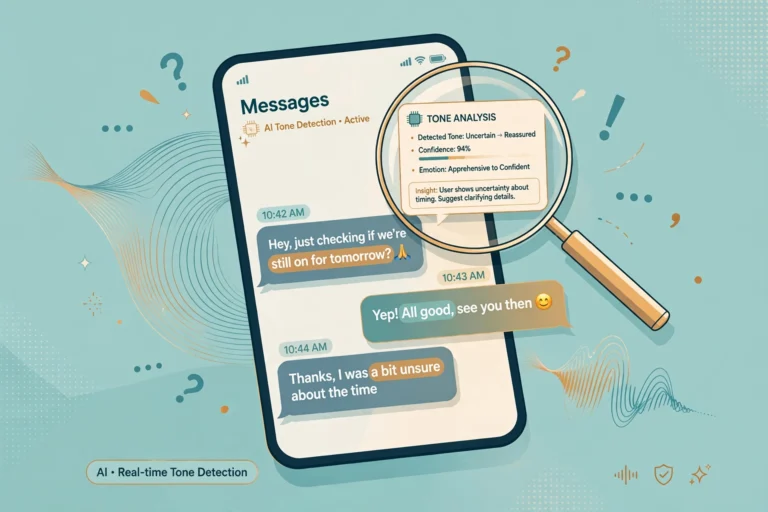
You and your partner are not arguing about the dishes. You are arguing about how you are arguing about the dishes — the clipped replies, the read-and-ignored messages, the “fine” that did not mean fine. What if a neutral observer could read a week of your texts and point to the exact moment the tone turned? That is what ai text analysis claims to do.
Before you hand your private chats to an algorithm, it helps to understand, in plain language, what is actually happening under the hood: what these tools measure, how they reach their conclusions, what they reliably catch, and where they quietly guess.
What ai text analysis Actually Is
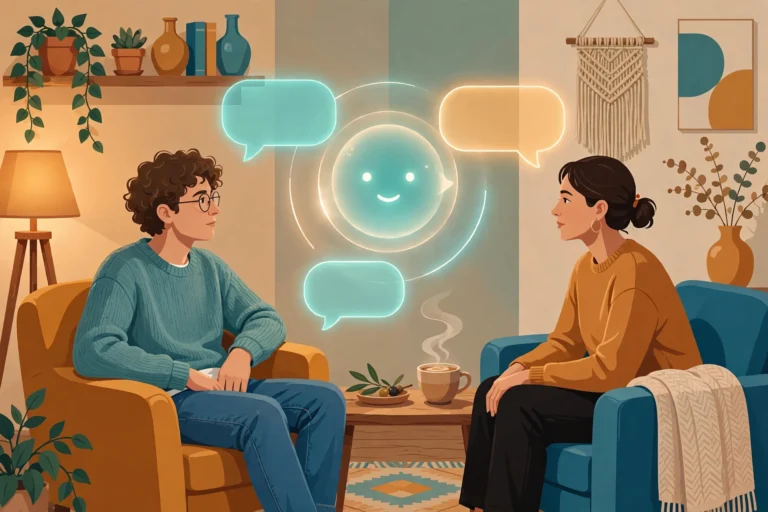
AI text analysis for couples communication is the use of natural language processing (NLP) models to read conversations between romantic partners and surface patterns neither partner may notice on their own. The “AI” here is not a therapist and not a judge. It is a pattern detector: software trained on millions of examples of language to recognize tone, emotion, and recurring conversational habits, then summarize those findings in a format a couple can act on.
Most tools fall into one of three shapes. Retrospective analyzers ingest an exported chat log — a week or a month of messages — and return a report: sentiment trends, most-used phrases, reply-time patterns, and flagged conflict cycles. Live coaches sit beside the conversation and offer real-time nudges, such as suggesting a softer rewrite of a harsh message before it is sent. Guided platforms combine analysis with structured exercises drawn from established therapy frameworks, turning the findings into practice sessions. For a broader tour of the ecosystem these tools sit in, see our guide to AI conflict resolution tools for couples.
The key thing competitors rarely explain — and the point of this article — is the mechanism. A sentiment score is not magic, and a “communication health score” is not a medical reading. Both are computed outputs of a pipeline you can understand step by step. Once you understand it, you can use these tools with clear eyes: knowing what they are good at, and what they should never be trusted to decide.
How the Analysis Pipeline Works, Step by Step
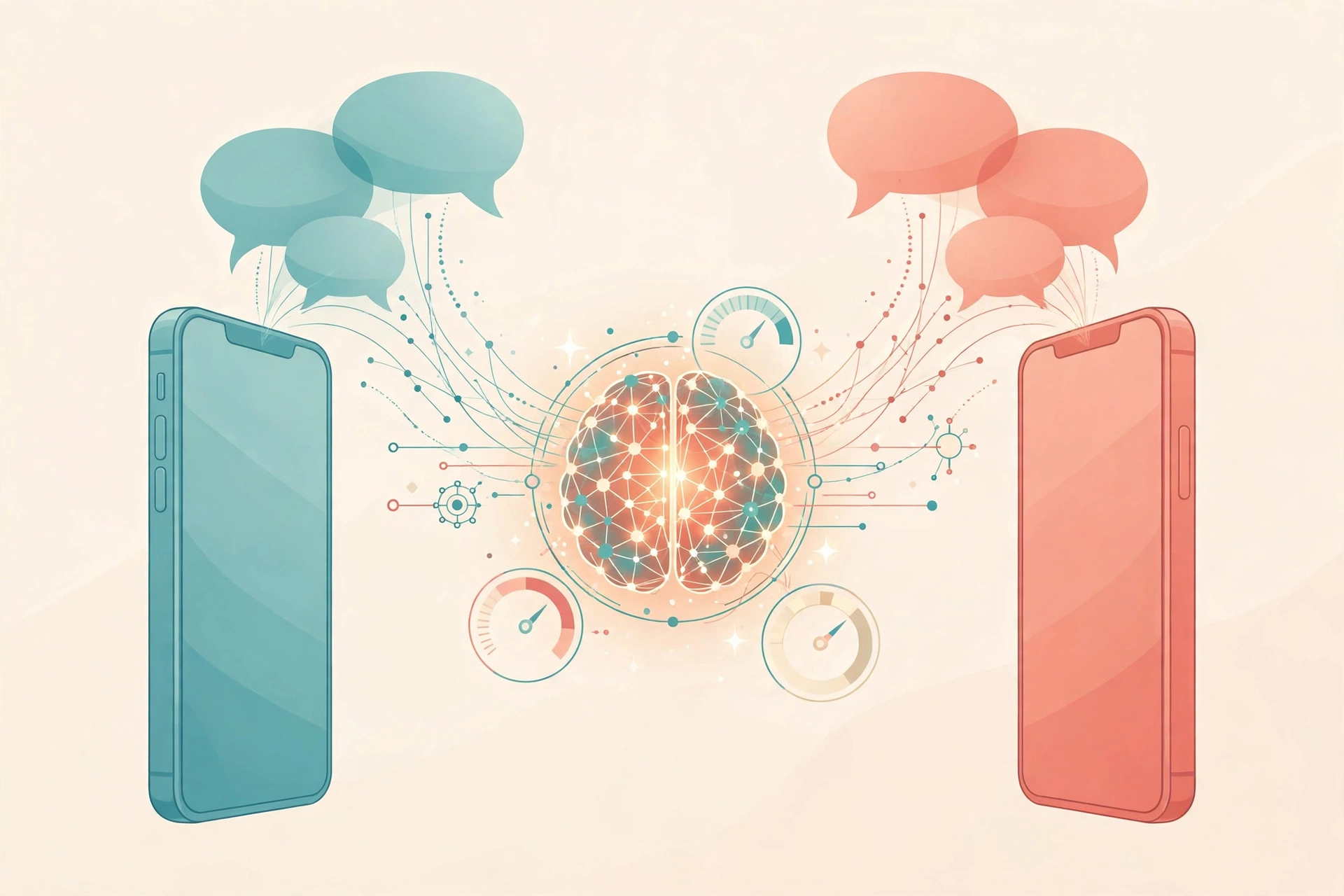
Underneath the glossy dashboards, nearly every ai text analysis tool for couples runs the same five-stage pipeline. Here is what happens to your messages at each stage.
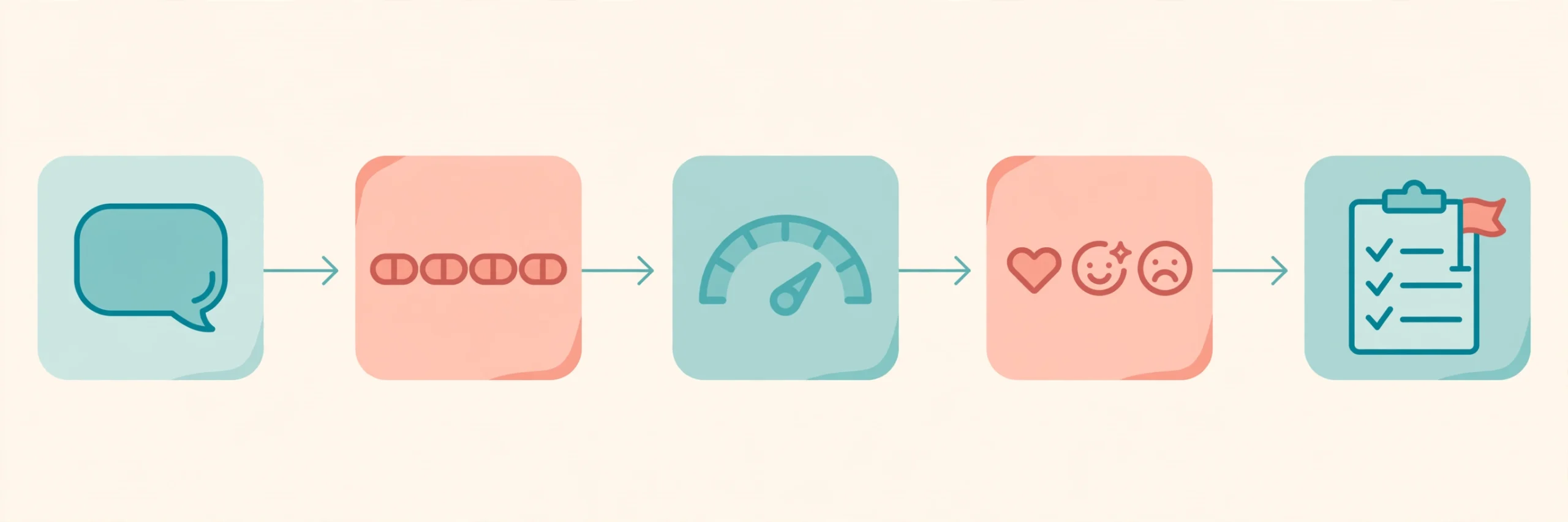
Stage 1: Capture and Preprocessing
The tool first collects the raw conversation — either by paste, file upload, or API integration — and cleans it up. Messages are split by sender and ordered in time. Timestamps are normalized so the system can measure reply latency, burst patterns (twenty messages in two minutes), and quiet periods. Emojis are preserved because they carry emotional signal; system artifacts like “Message deleted” are stripped out. Good tools anonymize or tokenize personal identifiers at this stage; cheap ones do not — a privacy red flag worth checking before uploading anything.
Stage 2: Linguistic Feature Extraction
Each message is broken into its smallest meaningful parts — tokens — and scanned for measurable features. The model counts word choice, sentence length, punctuation density, and capitalization (a three-word reply followed by a period carries a different signal than the same three words with an exclamation mark). It maps words to known emotional vocabularies: words like “always,” “never,” and “whatever” are established markers of absolutist, dismissive framing, while “I feel” and “help me understand” map to softer, collaborative framing. Modern models do not just count words; transformer-based NLP reads context, so “That’s just great” next to a complaint is scored very differently than “That’s just great!” next to good news.
Stage 3: Sentiment and Emotion Scoring
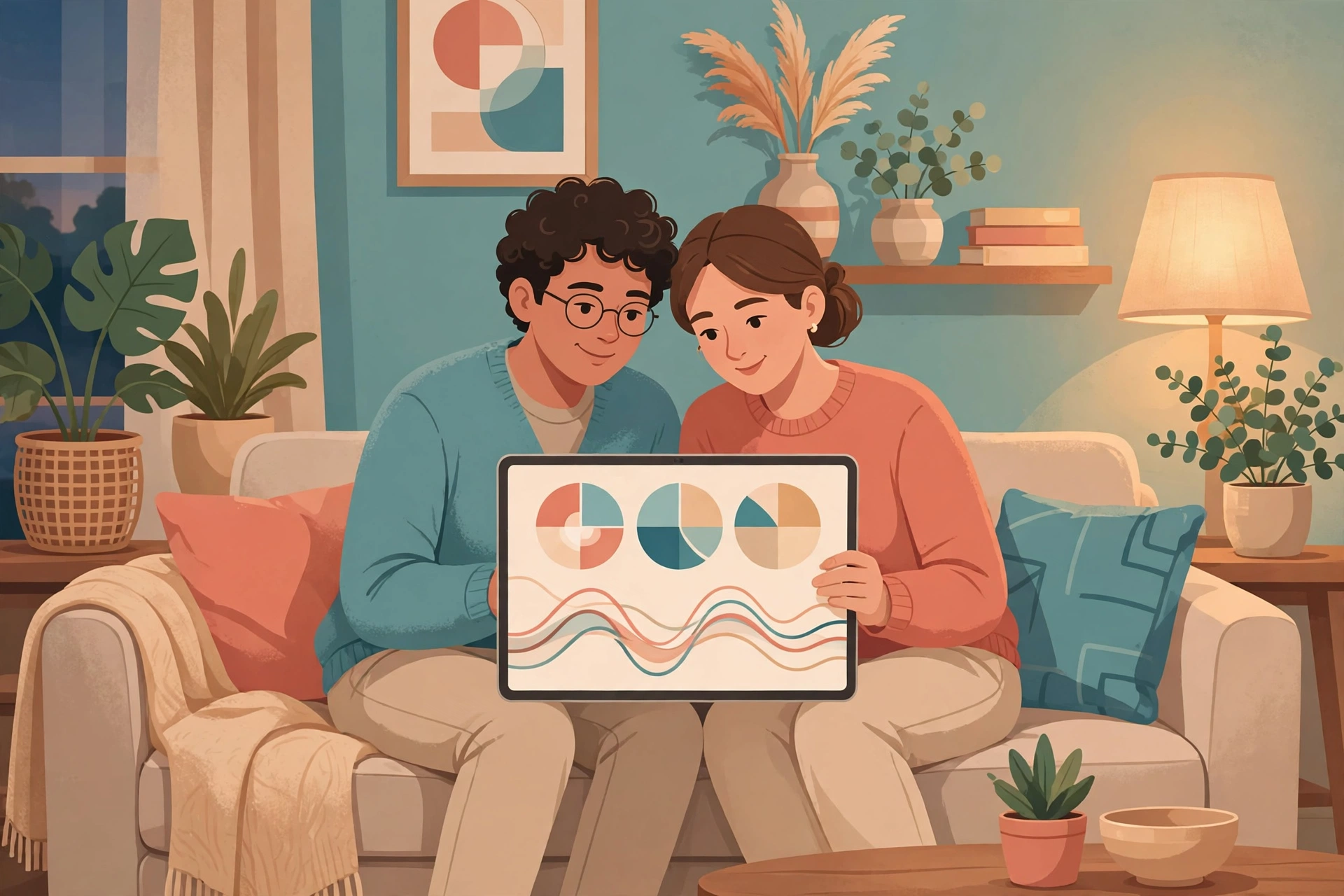
Every message gets a sentiment score — typically positive, neutral, or negative, plus an intensity value — and an emotion classification such as frustration, affection, sadness, anxiety, or contempt. The best systems score each partner separately, because the diagnostic value is in the asymmetry: one partner trending warm while the other trends cold is the signature of a pursue–withdraw dynamic. Scores are also aggregated over time, producing the familiar sentiment-over-weeks curves you see in marketing screenshots.
Stage 4: Pattern Detection Across the Conversation
This is where couples tools diverge from generic sentiment analyzers. The model looks for clinically meaningful sequences across many messages: escalation cycles (neutral → sharp → sharp → silence), repair attempts (“I’m sorry, can we start over?”), and the presence of destructive patterns. The most respected frameworks are borrowed from the Gottman Method, whose researchers spent decades cataloging which communication habits predict relationship distress — criticism, contempt, defensiveness, and stonewalling. Some tools explicitly label these Four Horsemen patterns in your text threads; others use proprietary labels for the same behaviors. Reply-time analysis sits here too: lengthening response times combined with negative sentiment is a reliable early indicator of emotional withdrawal.
Stage 5: The Report and Recommendations
Finally, the tool translates raw statistics into human-readable output: a health score, trend charts, flagged exchanges, and suggested actions. Quality varies enormously here. The strongest tools tie each recommendation back to the specific messages that triggered it (“In 6 of your last 8 disagreements, a complaint about behavior became a criticism of character — here is the difference”) and offer evidence-based rewrites. The weakest produce generic horoscopes (“You seem stressed this week”). Treat unspecific output as a signal about the tool, not about your relationship.
What These Tools Actually Measure
It helps to see the concrete variables, because ai text analysis sounds like one thing and is actually dozens of small measurements added together:
| Measurement | What it means | Why it matters for couples |
|---|---|---|
| Sentiment per message | Positive, neutral, or negative emotional tone with an intensity score | Reveals which partner carries the emotional temperature of a conversation |
| Emotion classification | Specific emotions: frustration, contempt, affection, anxiety, warmth | Contempt and defensiveness patterns strongly predict relational distress |
| Reply latency | Minutes between a message and its response, tracked per partner | Growing gaps paired with negative tone signal emotional withdrawal |
| Message balance | Share of words sent by each partner | Chronic imbalance can reflect dominance or shutdown patterns |
| Absolutist language rate | Frequency of “always,” “never,” “everyone,” “nobody” | Absolutes escalate conflict and are rarely accurate descriptions |
| Repair-attempt ratio | How often tension is followed by an olive branch | Research links successful repair attempts to long-term relationship stability |
| Conversation topics | Clustering of recurring themes (money, time, in-laws) | Flags the small set of perpetual problems worth addressing directly |
| Tone trajectory | How sentiment changes within a single argument | Shows whether arguments de-escalate or spiral — a coachable skill |
No single metric means much on its own. A long reply time might mean withdrawal, or it might mean someone was in a meeting. The value of these tools is longitudinal: patterns across weeks are far more trustworthy than any single flagged message.
A Worked Example: One Tense Exchange, Decoded
To make the ai text analysis pipeline concrete, imagine this short exchange:
- Partner A: “You said you’d handle the bills this week.”
- Partner B: “I was busy. Not everything is my fault.”
- Partner A: “You ALWAYS say that. You never follow through.”
- Partner B: (no reply for 4 hours)
A capable analyzer would tag Partner A’s second message with absolutist markers (“always,” “never”) and classify it as criticism — an attack on character rather than a complaint about behavior. Partner B’s message scores high on defensiveness, and the four-hour silence after negative sentiment flags as likely stonewalling rather than ordinary delay. The tone trajectory shows escalation followed by withdrawal — one of the most damaging cycles couples fall into, because nothing gets resolved and both partners feel unheard. A good tool then shows the same cycle across the past month and offers a rewrite exercise: turning “You never follow through” into “When the bills slipped this week, I felt anxious. Can we figure out a plan?” That rewrite — complaint about behavior plus expressed feeling plus concrete request — is the classic healthier texting pattern therapists teach, and it is one of the few places where AI output directly mirrors clinical guidance.
What AI Text Analysis Gets Right
These tools have genuine strengths that explain their popularity. First, they are neutral and tireless: an algorithm does not take sides, get tired, or remember that you were late last Tuesday. For couples who cannot afford therapy or cannot agree on a therapist’s impartiality, that perceived neutrality lowers the barrier to starting a conversation. Second, they are longitudinal: human memory of “how we’ve been talking lately” is heavily biased by the most recent argument, while the tool shows the actual trend. Third, they make the invisible specific: “you’re always defensive” is an accusation; “in 7 of your last 10 disagreements, your reply within five minutes contained a counter-accusation” is data you can both look at together. Used well, that specificity converts blame into curiosity — and curiosity is where better communication begins.
Privacy, Consent, and the Questions to Ask Before Uploading
AI text analysis requires handing your most intimate conversations to a third party, and the fine print matters more here than in almost any other app category. Run through these checks before any upload:
- Consent from both partners. Analyzing a partner’s messages without their knowledge corrodes the very trust you are trying to build. Every reputable tool requires both partners to opt in; if a tool markets itself as a way to analyze someone secretly, do not use it.
- Encryption and retention. Ask whether messages are encrypted in transit and at rest, whether the company trains future models on your conversations, and how long your data is stored. End-to-end encryption and clear deletion policies are the standard to look for.
- Data sharing. Check whether anonymized or aggregate data is sold to advertisers, data brokers, or third parties. A privacy policy that says data “may be shared with partners” deserves a hard look.
- Jurisdiction. Health-adjacent apps operate under different protections in different countries. A relationship AI tool is generally not covered by the same privacy rules as medical care, so do not assume clinical-grade confidentiality.
The research base for relationship science itself comes from institutions like the Gottman Institute’s research library, which documents decades of peer-reviewed observation of couples’ communication — the same science the better analysis tools are built on. If a tool’s claims drift far from what that literature supports, treat its scores as entertainment, not evidence.
The Limits: What the Algorithm Cannot Do
Understanding the pipeline makes the blind spots obvious. AI text analysis reads words, not people. It cannot hear sarcasm reliably, cannot know that “good luck with that” is an inside joke in your relationship, and cannot see the bad day at work behind a terse reply. It has no access to body language, history, or the meaning a phrase carries for the two of you specifically. That means its conclusions are statistical guesses about language patterns — often insightful, sometimes flatly wrong.
There are also risks in how the output is used. A health score can become a weapon (“the app says you’re the problem”), a substitute for therapy in situations that genuinely need a professional, or a source of anxiety when scores dip for ordinary reasons. The American Psychological Association’s resources on relationships consistently emphasize that healthy relationships are built through direct, empathetic communication — an app report is a conversation starter, never the conversation itself. If analysis reveals sustained contempt, emotional abuse, or severe distress, that is the point to involve a qualified couples therapist, not to ask the chatbot for another rewrite. Our walkthrough of communication health dashboards covers how to interpret these scores without letting them run the relationship.
How to Use the Results Productively
If you decide to try ai text analysis, a simple protocol keeps it constructive:
- Review together, calmly. Pick a neutral time — not right after a fight. Look at the report side by side as a shared puzzle, not as evidence in a trial.
- Start with one pattern. Ignore the dashboard’s ten findings. Choose the single most frequent cycle (for example, criticism-then-withdrawal) and work on that for two weeks.
- Practice the rewrites out loud. The tool’s suggested softer phrasings only help if they become habits. Try them in real conversations and notice what changes.
- Re-measure, then discuss. After a few weeks, run the analysis again and compare. Improvement you can both see is motivating; stagnation tells you the pattern needs a different approach — possibly a human one.
- Set a review limit. Checking the score daily turns the tool into surveillance. Weekly or biweekly reviews keep the focus on trends, not individual messages.
Used this way, AI text analysis becomes what it is best suited to be: a mirror that shows both partners the same reflection, so the real work — the listening, the repairing, the showing up — can begin on common ground.
Frequently Asked Questions
Is AI text analysis for couples accurate?
Reasonably accurate for language patterns, unreliable for intent. These tools are good at measuring what words were used, how often, and in what emotional tone — sentiment classification is a mature technology. They are poor at knowing why someone wrote what they did, because they cannot see context, humor, or history. Treat findings as observations to discuss together, not verdicts.
Can these tools tell if my partner is cheating?
No, and you should be skeptical of any tool that claims to. Text analysis measures communication patterns, not truthfulness. Suspicion about infidelity is better addressed through honest conversation or professional counseling than through surveillance software.
Do both partners need to agree to use it?
Yes — ethically and practically. Secretly analyzing a partner’s messages is a breach of trust, and the insights are far less useful when one partner is defensive about the process. The productive use case is two willing partners examining shared patterns together.
Is my chat data safe with these apps?
It depends entirely on the provider. Look for end-to-end encryption, a clear policy against training models on your conversations, defined data-retention periods, and a real delete option. Avoid tools with vague privacy policies or any feature that encourages analyzing someone without their knowledge.
Can AI text analysis replace couples therapy?
No. These tools can supplement therapy by giving a therapist — or a motivated couple — better data about communication patterns, but they cannot provide the empathy, clinical judgment, and tailored intervention a trained professional offers. For serious distress, seek a licensed couples therapist.
What is the difference between sentiment analysis and a communication health score?
Sentiment analysis scores the emotional tone of individual messages. A communication health score aggregates many measurements — sentiment trends, reply patterns, conflict-cycle frequency, repair attempts — into a single number. The score is a summary, not a diagnosis; the underlying patterns are what actually matter.
How often should couples run an analysis?
Weekly or biweekly is the useful cadence. Daily checks encourage score-watching and anxiety, while monthly checks miss the feedback loop that turns insight into habit. The goal is spotting trends, and trends need time to form.
Conclusion: A Mirror, Not a Verdict
ai text analysis is, at its core, a very fast reader with a very long memory: it ingests your conversations, scores their emotional tone, detects recurring cycles, and hands both partners the same report. The technology is genuinely useful for making invisible habits visible — the absolutist phrases, the withdrawal silences, the repair attempts that go unnoticed. But it is only as good as the pipeline behind it and the wisdom of the couple using it. Understand how it works, protect your privacy, keep its limits in mind, and let the report start the conversations that matter — the human ones.
Disclaimer: This article is for educational purposes only and is not a substitute for professional therapy, counseling, or medical advice. AI communication tools cannot diagnose relationship problems or mental health conditions. If you are experiencing persistent conflict, emotional distress, or abuse in your relationship, please consult a qualified therapist, counselor, or crisis service in your area.