
Empathy Rewriting: Using AI to Defuse High-Stress Messages
You are staring at your phone, thumb hovering over the send button, heart pounding. The message you just typed says everything you feel — which is exactly why you should not send it yet. stressful messages is a technique that lets you pause, run your heated draft through an AI assistant, and turn it into a message that says what you mean without starting a war.
This is not about letting a machine feel for you. It is about using a language tool as a 60-second emotional buffer: you supply the feeling and the facts, the AI supplies the calmer phrasing, and you decide what actually gets sent. For couples, whose most damaging arguments increasingly happen in a text thread, that buffer can be the difference between a repair and a rupture.
Why High-Stress Messages Blow Up So Easily
Stress changes how we write. When your nervous system is activated — a sharp comment from your partner, an accusation, a message that reads as dismissive — your brain shifts resources away from the prefrontal cortex, which handles nuance, perspective-taking, and careful wording. Psychologist Dr. John Gottman calls the extreme version of this “emotional flooding,” a state in which stress hormones flood the body during conflict, making calm, rational conversation nearly impossible until you physiologically recover. It takes at least 20 minutes of genuine calm for that recovery to happen.
Texting makes flooding worse, not better. A message has no facial expression, no vocal warmth, no hand on your arm. Research on digital communication consistently shows that readers judge ambiguous text more negatively than the sender intended. Your partner writes “Fine.” You read dismissal. You reply with a paragraph you will regret by morning. The result is how texting habits shape relationships more than most couples realize: the most hurtful things partners ever say to each other are often thumb-typed in seconds and screenshotted forever.
This is the exact moment empathy rewriting is built for — not the calm drafting of a love letter, but the hot, flooded moment before a message goes out.

How AI Rewriting Turns Stressful Messages Into Messages With Empathy
Empathy rewriting is a specific prompting skill, not a magic button. The mechanism has three parts, and understanding them is what separates a genuinely helpful rewrite from an obviously robotic one.
1. It inserts a pause between impulse and action
The single most powerful element is not the AI at all — it is the two minutes you spend pasting your draft and reading the rewrite. That delay gives your nervous system a start on calming down, and it shifts your brain from reacting to editing. Many therapists call this the foundation of active listening instead of defensiveness: you cannot listen — even to your own draft — while you are defending.
2. It converts accusation into observation and feeling
Most heated drafts are built on “you” statements: “You never listen. You always do this.” An AI prompted well will recast them as observations plus feelings: “When the conversation ended before I finished, I felt unheard.” The facts stay. The meaning stays. The attack goes. This is the same validation-before-content principle that underlies AI tools designed for conflict resolution — acknowledge the other person’s reality first, then state your own.
3. It gives you an outside perspective on your own tone
When you are flooded, you cannot hear how you sound. AI acts as a neutral reader that flags the lines that would land as contempt or stonewalling — the behaviors Gottman identifies as the most corrosive in a relationship (read more about them at the Gottman Institute’s guide to the Four Horsemen). “Per my last message” may sound fine to you at 1 a.m.; the rewrite will show you why it sounds icy to your partner.
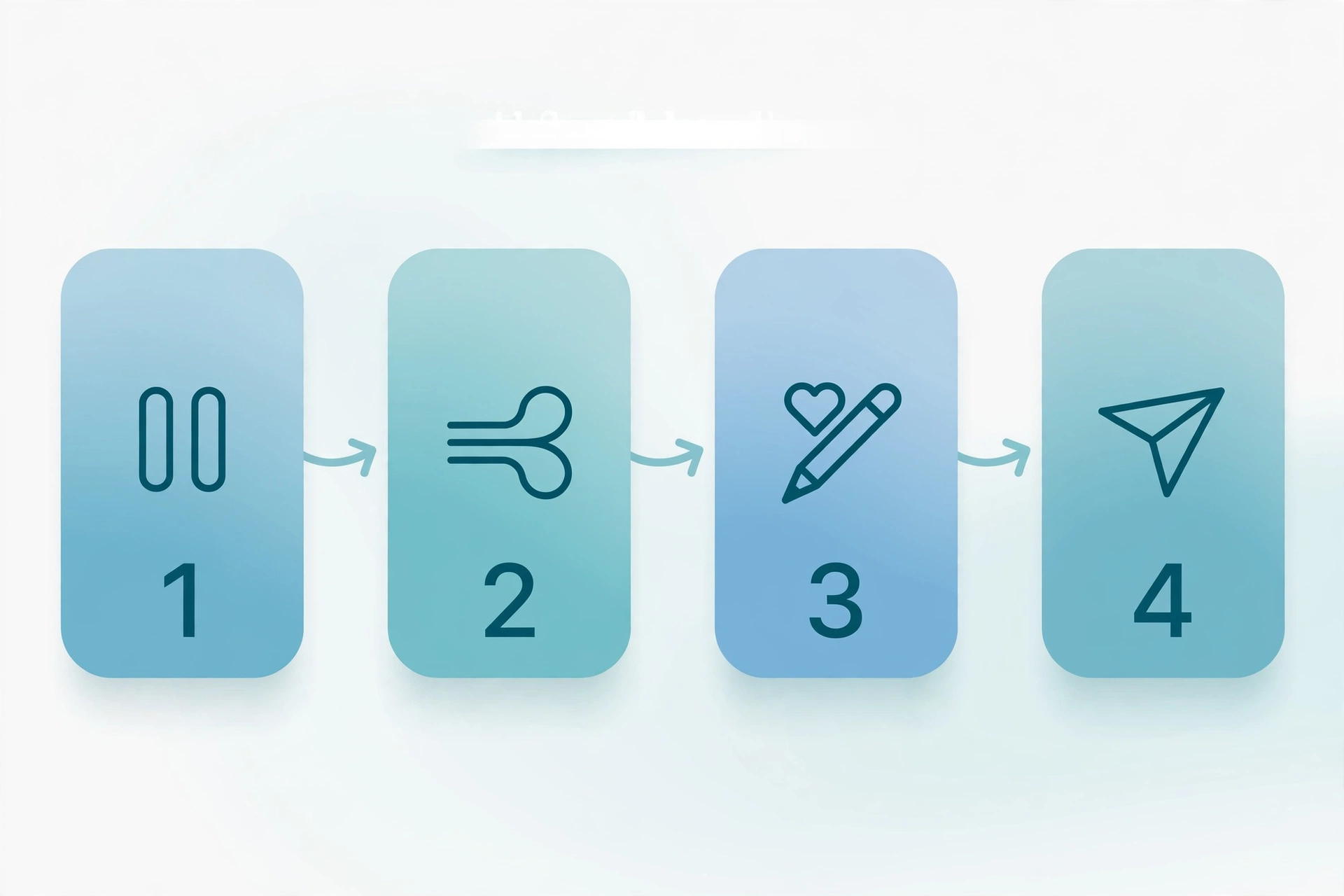
The 4-Step Empathy Rewrite Method
Use this sequence every time. The whole cycle takes about five minutes — far less than the hours a badly sent message can cost you.
Step 1: Pause and name what you feel
Before you open the AI, type one sentence for yourself only: “Right now I feel ___ because ___.” Do not skip this. If you cannot name the feeling, you are still too flooded to send anything, and the correct move is to tell your partner you need 20 minutes — Gottman’s minimum recovery window — and put the phone down.
Step 2: Paste your raw draft, unedited
Write the message exactly as you would have sent it. Honesty here matters: if you sanitize the draft first, the AI cannot show you which parts were too harsh. Think of it as the document you show your editor, not the version that ships.
Step 3: Prompt with context, not just text
A bare “make this nicer” gets a bare result. Give the AI the situation in one or two lines: who the message is for, what you actually want to achieve, and what you want to avoid. For example: “This is for my wife. I want her to understand I felt hurt, not to make her feel guilty. Keep it under 100 words. No corporate language.” The prompt templates later in this article give you ready-made versions.
Step 4: Review like the recipient, then decide
Read the AI’s version as if your partner wrote it to you. Ask three questions: Does it still say what I meant? Does any line sound unlike me? Would I be okay receiving this? Edit until the answers are yes, yes, no. You are the author; the AI is the first draft. Never paste and send untouched — recipients consistently detect generic AI phrasing, and discovering you outsourced a sensitive message can damage trust more than the original draft would have.
Before-and-After: Stressful Messages Rewritten With Empathy
These are the three scenarios where couples reach for rewriting tools most often. Note how each rewrite keeps the substance and drops the escalation.
Scenario 1: The complaint
Before: “You were on your phone the entire dinner. You clearly don’t care about spending time with me anymore.”
After: “I felt a bit lonely at dinner tonight because we barely talked. Spending real time together matters a lot to me — can we plan an evening this week with phones off?”
What changed: the global accusation (“you don’t care”) became a specific observation plus a feeling, and it ended with a concrete request instead of a verdict. Requests give a partner something to say yes to; verdicts only give them something to defend against.
Scenario 2: The apology
Before: “Sorry you got upset. I was just joking, you take everything so seriously.”
After: “I’m sorry — my joke landed badly and I can see why it hurt. I take responsibility for that. It wasn’t my intention, but impact matters more than intention here. Can I make it up to you?”
What changed: the non-apology (“sorry you got upset”) became an actual apology that names the harm, avoids defensiveness, and offers repair. If apologies are hard for you, study the structure in our guide to effective apology in a relationship — the pattern is always the same: acknowledge, take responsibility, offer repair.
Scenario 3: The boundary
Before: “Stop bringing up my mother every time we fight. It’s disgusting and you know it.”
After: “I need to ask something important: when my mother comes up during our arguments, I shut down and we stop making progress. Can we agree to keep disagreements between us? If I’m doing the same thing to you, I want to know.”
What changed: the command and insult became a stated need plus a reason plus a reciprocal offer. Boundaries set with empathy are far more likely to be honored than boundaries set with contempt.
Copy-Paste Prompt Templates for High-Stress Moments
Save these three prompts in your notes app. When you are flooded, you will not be in the mood to compose a good prompt — having them ready is the point.
Template A: Defusing a heated reply
“Here is a message I want to send to my partner, but I am upset and it probably sounds harsher than I mean. Rewrite it so it keeps my main point and my real feeling, but removes blame, sarcasm, and ultimatums. Keep my voice natural — short sentences, no greeting-card language, no phrases I would never say out loud. Under 120 words. Here is my draft: [paste draft]”
Template B: Writing an apology you keep avoiding
“Help me write an apology to my partner. Here is what happened in plain words: [describe what happened]. I genuinely want to take responsibility, not make excuses. Structure it as: what I did, why it was wrong from their perspective, and what I will do differently. Warm and direct, no groveling, no ‘sorry you felt’ language. Under 150 words.”
Template C: Setting a boundary without sounding cold
“I need to set a boundary with my partner about [the behavior]. Rewrite this draft so it states the boundary clearly, explains why it matters to me, and invites their perspective — without softening it so much that the point gets lost. Firm and kind, not aggressive and not passive. Under 120 words. Here is my draft: [paste draft]”
Notice that every template asks for specifics — length, forbidden phrases, structure. Generic prompts produce the generic “AI tone” everyone recognizes. Specific prompts produce something that sounds like you on your best day.
Where Empathy Rewriting Falls Short (and When Not to Use It)
Honesty about limits is part of the method. AI rewriting is a communication aid, not a relationship fix.
- Do not use it to avoid the conversation. If the issue needs a real talk — infidelity, a major financial decision, a recurring fight — a polished text is procrastination dressed as politeness. Use the rewrite to calm the message, then schedule the actual conversation.
- Do not use it in crisis or unsafe situations. If you are experiencing abuse, threats, or a mental health crisis, an AI rewrite is not the tool — a trusted person, a crisis line, or a professional is. Polishing a message to an abusive partner can be actively dangerous if it masks the severity of what is happening.
- Watch for over-softening. Some AI rewrites sand down the message until the actual point disappears. If your partner could not tell from the rewrite what you need, you have gone too far. The goal is empathy with clarity, not empathy instead of clarity. Tone-checking tools that flag harsh wording can help you find the line between firm and harsh.
- Protect your privacy. Do not paste identifiable details — full names, workplaces, addresses — into a third-party AI service. Strip your drafts to first names or initials. Anything you paste may be stored or reviewed according to the provider’s policy.
- Do not let it become a crutch. If you notice you cannot send your partner a difficult message without running it through AI first, that is information: the communication pattern itself may need attention. Couples therapy exists precisely for that, and rebuilding communication after a breakdown of trust often starts with admitting the pattern, not polishing individual texts.
Frequently Asked Questions
Is it dishonest to use AI to rewrite a message to my partner?
No, provided you stay the author of the meaning. A spellchecker, a dictionary, or a friend who says “maybe don’t phrase it that way” are all accepted editing help. AI is the same category: it refines your expression, it does not invent your feelings. It becomes dishonest only if the rewrite says things you do not actually feel or believe.
Will my partner be able to tell I used AI?
They may, if you send the output unedited — AI drafts have recognizable cadence and stock phrases. The four-step method’s review step exists for exactly this reason. A rewrite you have edited in your own voice, with your own specifics, reads like you. If your partner asks directly, tell the truth: most people find “I ran my draft through a tool so I wouldn’t sound harsher than I meant” reassuring, not deceptive.
Which AI tool is best for empathy rewriting?
Any capable large language model works — ChatGPT, Claude, Gemini, and similar assistants all handle tone rewriting well. What matters far more than the tool is the prompt: context, your goal, your constraints, and your draft. A specific prompt on a modest model beats a vague prompt on the best one. For couples, tools with longer context windows handle multi-message threads better when you need to summarize a whole argument.
How long should I wait before sending a high-stress message?
At minimum, the time it takes to run the four-step method — about five minutes. When you are genuinely flooded, research on physiological calming suggests waiting at least 20 minutes before continuing a difficult conversation. A practical rule: run the rewrite, and if you still feel a pounding heart or tight chest afterward, tell your partner you need a short break and revisit it later.
Can AI rewriting help with apologies specifically?
Yes — apologies are one of its strongest uses, because flooded brains default to defensiveness (“sorry, but…”), which AI reliably removes. The key is to give the model the plain facts of what happened and instruct it to take responsibility without excuses. Then personalize: add one specific detail only you would know. Generic apologies repair nothing; specific ones do.
Does rewriting work for workplace messages too, or only relationships?
The method works anywhere tone matters — emails to colleagues, messages to clients, texts to family. The relationship framing in this article uses couples because the stakes and the flooding are highest there, but the same four steps and prompt templates apply. Just adjust the template’s relationship context and drop the intimacy.
What if my partner refuses to engage no matter how I phrase things?
Rewriting fixes delivery, not willingness. If your partner consistently stonewalls — shuts down, leaves, or refuses to discuss issues — that is a relationship pattern no amount of polished phrasing can solve. The American Psychological Association notes that chronic stress degrades both physical and psychological health over time (APA’s overview of stress effects on the body). Persistent stonewalling is a recognized predictor of relationship breakdown and a strong reason to seek couples counseling.
The Bottom Line on AI Rewriting, Stressful Messages, and Empathy
stressful messages is not about outsourcing your feelings to a machine — it is about giving yourself a structured pause, an outside reader, and a calmer first draft in the moments you need them most. The feeling must be yours. The facts must be yours. The decision to send must be yours. The AI simply helps you say what you mean in a way your partner can actually hear.
Try it once, on a low-stakes message, before you need it on a high-stakes one. Save the prompt templates. Learn the four steps when you are calm so they are available when you are not. And remember: the goal was never a perfect message. It was a message that keeps the conversation — and the relationship — alive long enough to have the real talk.
Disclaimer: This article is for educational purposes only and is not a substitute for professional therapy, counseling, or medical advice. Communication tools can support healthier conversations, but they cannot diagnose or treat relationship or mental health conditions. If you are experiencing persistent conflict, emotional distress, or an unsafe situation, please consult a qualified mental health professional or contact a local support service.