
The Mental Load in Relationships: Recognizing and Rebalancing It
If you have ever lain awake at night mentally rehearsing tomorrow’s schedule — the school forms, the plumber’s visit, the birthday gift that still needs buying — while your partner sleeps soundly beside you, you already know the mental load in relationships. It is the invisible, unending work of noticing what needs to be done, remembering it, planning for it, and making sure it actually happens.
This article explains what the mental load is, why it so often lands on one partner, how it quietly damages intimacy and connection, and — most importantly — a practical, research-informed method for rebalancing it fairly.
What Is the Mental Load in Relationships?
The mental load is the cognitive and emotional labor required to run a household and a shared life. It is distinct from physical chores. Washing the dishes is a task. The mental load is the entire chain that surrounds the task: noticing the dishwasher is full, deciding when to run it, remembering to buy detergent before it runs out, and planning the meal that will fill it in the first place.
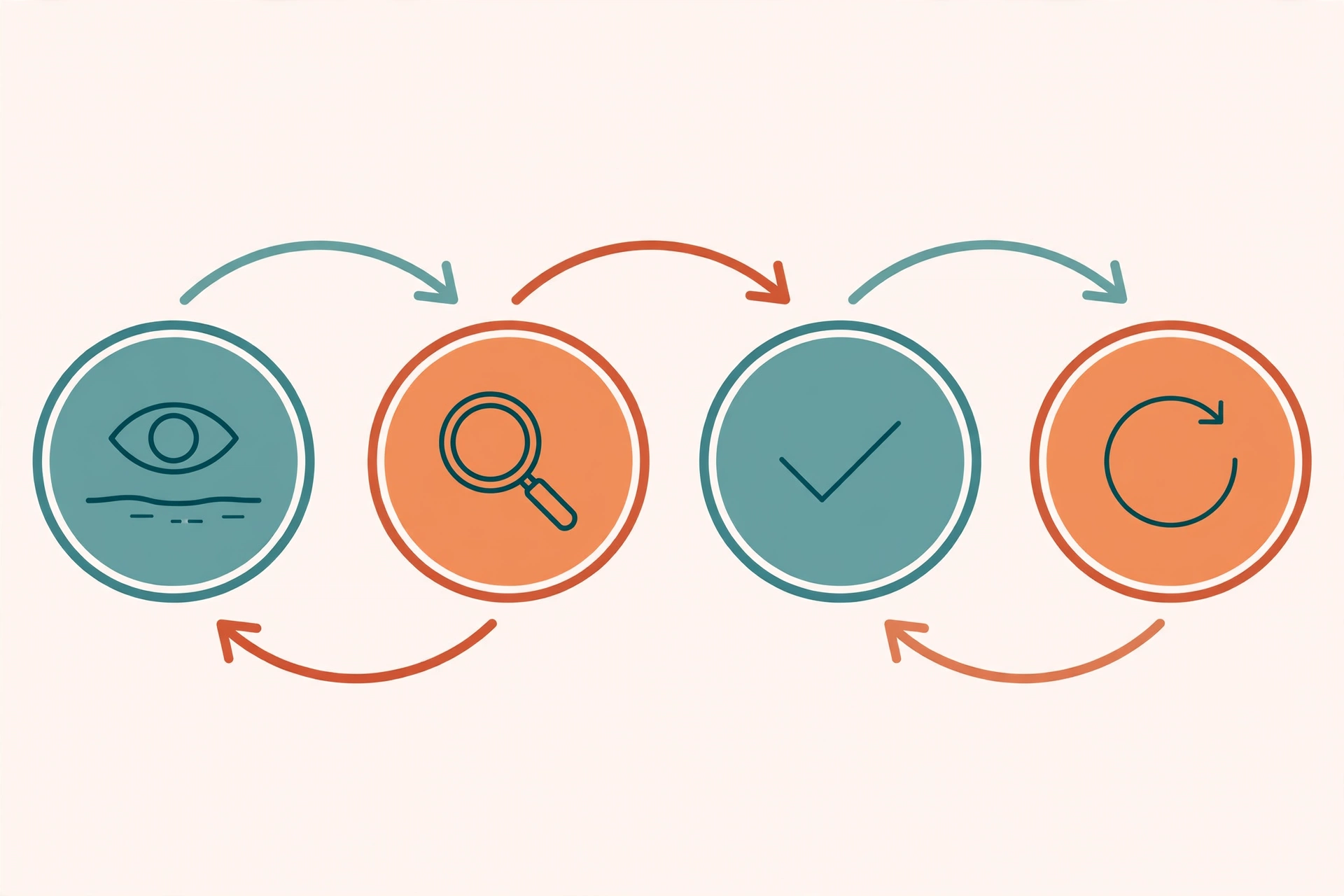
Sociologist Allison Daminger’s widely cited 2019 research in the American Sociological Review broke this invisible work into four stages:
- Anticipation — looking ahead and identifying future needs, such as realizing the children will need new school supplies next month or that a parent’s birthday is approaching.
- Identification — figuring out exactly what is needed, like researching pediatricians, comparing prices, or reading school policy emails.
- Decision-making — making the actual choice: which provider to book, which school event to prioritize, what to cook for the week.
- Monitoring — following up to confirm the task was completed correctly, such as checking that the appointment was confirmed or the bill was paid.
When one partner handles all four stages for every domain of shared life — health, finances, childcare, social obligations, household maintenance — they carry a full-time managerial job inside their head, layered on top of everything else they do. Unlike a physical chore, this work has no finish line. The moment one cycle completes, the next anticipation phase begins. This relentless cycle is why the mental load in relationships so often leaves one partner exhausted while the other remains unaware of the burden.
Signs One Partner Is Carrying Too Much Mental Load
Mental load imbalance rarely arrives with a dramatic announcement. It builds gradually, and because the work is invisible, the partner not carrying it often has no idea it exists. Watch for these signs. Naming the mental load in relationships is the first step to changing it.
| Sign | What It Looks Like in Daily Life |
|---|---|
| You are the household’s memory | You are the only one who knows when bills are due, when the car needs servicing, and when the school permission slip is due back. |
| You narrate the day in instructions | Phrases like “Don’t forget to…”, “Did you remember to…”, and “Can you please just…” dominate your conversations. |
| You cannot truly rest | Even during downtime, your brain runs a background loop of tomorrow’s logistics. |
| Small requests feel enormous | Being asked to handle one more small thing triggers disproportionate irritation — a sign the mental buffer is already full. |
| You feel like a manager, not a partner | Your relationship dynamic resembles a supervisor and employee more than two teammates. |
| You have no mental space for yourself | Hobbies, friendships, and personal goals have been crowded out by planning everyone else’s life. |
A particularly telling test: if your partner went on a week-long trip tomorrow with no phone access, would the household run smoothly? If the honest answer is no, the mental load is almost certainly concentrated in one person. If the household would fall apart, that is a clear sign the mental load in relationships needs rebalancing in your home.
Why the Mental Load Falls Unevenly: What Sociological Research Says
The mental load is not a personal failing of either partner. It is a pattern shaped by deep social forces, which is why simply “trying harder” rarely fixes it. Recognizing that the mental load in relationships is a social pattern, not a character flaw, is what makes change possible.
Gendered socialization and the “second shift”
Decades of sociological research, beginning with Arlie Hochschild’s landmark work on the “second shift,” show that in heterosexual couples, women continue to carry the majority of household cognitive labor even when both partners work full-time outside the home. Children are socialized into these roles early: girls are more often praised for noticing and managing others’ needs, while boys are more often praised for focused individual achievement. Those scripts follow people into adult relationships, where they can run on autopilot.
Family-of-origin scripts
People tend to replicate the household management patterns they grew up with. A partner raised in a home where one parent managed everything may unconsciously adopt the manager role — or, equally unconsciously, expect their partner to. Recognizing these inherited scripts is often the first step toward rewriting them.
Competence traps
The partner who is more organized, more detail-oriented, or simply faster at planning often ends up absorbing the load by default. Efficiency becomes a trap: because they do it well, nobody else learns to, and because nobody else does it, they must keep doing it. Over time, one partner’s genuine strength becomes a structural imbalance.
Perceived fairness matters more than 50/50
Relationship research suggests that partners’ perception of fairness predicts relationship satisfaction more strongly than a mathematically equal division of tasks. A couple can feel deeply unfair at a 50/50 split if one partner owns all the invisible planning, and deeply fair at a 70/30 split if both partners understand, acknowledge, and agreed to the arrangement. The goal of rebalancing is therefore not perfect symmetry — it is shared ownership, visibility, and consent. That is the standard every couple should apply when dividing the mental load in relationships.
For couples working through the practical side of dividing domestic labor in their home, the same principle applies: what counts is not the chore chart, but who carries the thinking behind it.
How an Unequal Mental Load Damages a Relationship
The effects of a lopsided mental load in relationships compound quietly over months and years:
Resentment and contempt
When one partner feels their time and mental energy are valued less than the other’s, resentment grows. Research on long-term relationships has consistently identified contempt — the sense of being morally superior to one’s partner — as one of the strongest predictors of relationship breakdown. A manager-employee dynamic is a fertile breeding ground for it: the manager begins to see the partner as a dependent, and respect erodes.
Emotional distance
The overloaded partner is often too depleted for genuine connection. Conversations become logistical briefings. Affection feels like one more item on the list. The other partner may experience this withdrawal as rejection, without understanding its source — a dynamic closely related to emotional distance in long-term relationships.
Loss of intimacy and desire
It is difficult to feel romantic desire for someone who feels like a supervisor or a dependent. Many couples discover that their physical intimacy declined not because of any single conflict, but because the mental load turned their partnership into a project to be managed. Desire thrives on playfulness and presence — both of which vanish under chronic cognitive strain.
Burnout, anxiety, and decision fatigue
Neuroscience research has found that intense, prolonged cognitive work causes measurable changes in brain chemistry associated with fatigue, making further mental effort genuinely harder. The partner carrying the load may experience chronic stress, disrupted sleep from nighttime “mental looping,” irritability, and eventually a flat, apathetic burnout. According to the American Psychological Association’s resources on stress, chronic unmanaged stress of this kind carries real health consequences, making this far more than a relationship inconvenience.
Career and identity costs
The mental load does not clock out at 9 a.m. The partner carrying it brings a taxed, divided attention to work, which can suppress career performance and advancement — a hidden cost that rarely appears in conversations about the pay gap or promotion gap. Over years, this compounds into a genuine life-trajectory difference between the two partners. These hidden costs are why naming the mental load in relationships matters for both partners, not just the one carrying it.
The “Helping” Trap: Why Asking Isn’t Sharing
One of the most persistent misunderstandings in this conversation is the word help. “Just tell me what to do and I’ll help” sounds generous. In practice, it keeps the entire mental load exactly where it was. Moving past delegation is the turning point where couples begin to genuinely share the mental load in relationships.
Consider what happens when you ask your partner to “help” with dinner. You noticed the need. You planned the meal. You decided what to buy. Now you must delegate the task, explain it, and monitor whether it was done. The cognitive labor — anticipation, identification, decision-making, monitoring — never moved. You simply added “managing your helper” to it.
Genuine sharing means transferring ownership, not delegating tasks. Ownership of a domain means one partner is responsible for the noticing, the planning, the doing, and the follow-through — without ever being asked. If your partner owns grocery shopping, they notice what is running low, plan the meals, make the list, shop, and put everything away. Your brain can release the entire category.
This distinction is at the heart of redistributing emotional labor: the goal is not a longer chore list, but a transfer of responsibility so complete that the original manager can genuinely stop thinking about that domain.
How to Rebalance the Mental Load: A 6-Step Method
Rebalancing is a process, not a single conversation. Here is a structured approach couples can work through together. These six steps offer a practical framework for rebalancing the mental load in relationships fairly and sustainably.
Step 1: Run a full load audit
Sit down together and write out every recurring piece of cognitive labor in your shared life — not just chores, but the thinking behind them. Include health appointments, school communications, bill management, social planning, holiday preparation, car maintenance, pet care, and emotional monitoring of children and extended family. Use a shared document so both partners can see the complete inventory. Most couples are stunned by the length of the list.
Step 2: Transfer whole domains, not tasks
Instead of splitting individual tasks, assign complete domains. One partner owns “meals” (planning, shopping, cooking, cleanup). The other owns “finances” (budgeting, bills, savings tracking). Each owner handles all four stages — anticipation through monitoring — for their domains. Domain ownership is what lets a brain genuinely let go.
Step 3: Agree on a minimum standard of care
Many rebalancing attempts fail because partners have different definitions of “done.” Agree explicitly on the minimum acceptable standard for each domain: how clean the bathroom needs to be, how far ahead birthdays are planned, what “on time” means for bills. Write it down. This prevents the manager partner from re-absorbing the load out of frustration with a different standard.
Step 4: Build systems that carry the reminders
Mental load thrives in one person’s head. Move it into shared systems: a joint calendar, a shared shopping-list app, automated bill payments, a weekly meal-planning template. When the system holds the reminders, neither partner has to play task manager. The technology does the remembering; the humans do the deciding.
Step 5: Hold a short weekly sync
A 15- to 20-minute weekly check-in — many couples hold it on Sunday evening — keeps the load visible and prevents silent drift back onto one partner. Review the coming week, flag anything overwhelming, and adjust domain ownership as life changes. Framing these as regular emotional check-ins, not performance reviews, keeps the tone collaborative. This short weekly habit keeps the mental load in relationships visible and shared over the long term.
Step 6: Practice letting go (the hardest step)
The partner who has been managing everything must allow the other to do it differently — and sometimes to fail. Hovering, correcting, or redoing a task signals that ownership was never really transferred, and it trains the other partner to stop trying. Building the “mental muscle” of responsibility takes time, and early mistakes are part of the process.
One warning: the work of rebalancing itself can become a new mental load. If the overloaded partner is the one researching solutions, scheduling the audit conversation, and monitoring the new system, nothing has actually changed. The meta-load of fixing the load must be shared from the very first step.

Conversation Scripts: How to Raise the Topic Without Starting a Fight
Many partners know the load is uneven but dread the conversation. The scripts below make it easier to talk about the mental load in relationships without blame or defensiveness. These scripts are built on the communication principles recommended by relationship researchers including the Gottman Institute.
- Opening the topic: “I’ve been thinking about how much planning I hold in my head for our household, and I’m feeling stretched thin. I’d like us to look at it together — not to blame anyone, but to make it more sustainable for both of us.”
- Making the invisible visible: “Let me walk you through what I thought about this week before we even left the house this morning…” Then list three or four concrete examples. Specificity turns an abstract complaint into something a partner can actually see.
- Asking for ownership, not help: “I don’t want to be the manager who delegates anymore. What I’d love is for you to fully own one area — say, everything about the car — so I can stop thinking about it completely. Would you be willing to try that?”
- When defensiveness appears: “I’m not saying you don’t do a lot — you do. This isn’t about the dishes or the laundry. It’s about the part nobody sees: the noticing and remembering. I want us to share that part too.”
- Agreeing on standards: “Can we talk about what ‘done’ looks like for each of us? I think we have different expectations, and I’d rather agree on them together than keep being frustrated silently.”
Choose a calm, neutral moment — not during an argument, not when either of you is exhausted. And if the conversation stalls or repeats the same loop, consider structured support: couples counseling can provide a neutral space to work through entrenched patterns.
The Mental Load Without Children: The Child-Free Couple’s Version
Much of the public conversation about the mental load in relationships centers on parenting, which can leave child-free couples feeling the concept does not apply to them. It does — it simply takes different forms:
- Relationship maintenance: remembering to plan date nights, tracking the health of the relationship itself, initiating difficult conversations, noticing when the partner is stressed and needs support.
- Social and family logistics: keeping in touch with both sets of parents, remembering birthdays and anniversaries, planning visits and holidays, sending thank-you notes.
- Household and financial foresight: long-term financial planning, home maintenance scheduling, insurance renewals, career-adjacent planning like professional development or moves.
- Health advocacy: scheduling checkups, tracking prescriptions, researching symptoms, noticing when the partner is unwell before they admit it.
In couples without children, the load is often even more invisible because there is no school calendar or pediatrician schedule to point at. The work of tending the relationship and the shared future is real cognitive labor, and it deserves the same visibility and the same rebalancing process.
Frequently Asked Questions
Is the mental load only a women’s issue?
No. While sociological research finds that women in heterosexual relationships carry a disproportionate share, the mental load affects anyone in a partnership where cognitive labor concentrates in one person. Same-sex couples, couples where the man is the primary manager, and single parents partnering with family members all experience versions of it. The dynamic is about concentration of invisible labor, not gender — though gendered socialization makes concentration far more common in one direction. The mental load in relationships is ultimately about how invisible labor concentrates, whoever carries it.
How is the mental load different from just doing more housework?
Housework is the visible execution of a task. The mental load is everything around it: noticing the task needs doing, remembering it, planning when and how it will happen, deciding between options, and confirming it was completed. Two partners can split physical chores evenly while one partner still carries 90 percent of the mental load — which is exactly why chore charts alone do not solve the problem.
Does sharing the mental load mean everything must be split 50/50?
Not necessarily. Seasons of life — a demanding work project, an illness, a new baby — legitimately shift capacity. What matters more than exact symmetry is that the arrangement is visible, discussed, and agreed upon by both partners, and that it is revisited regularly. Perceived fairness and shared ownership predict satisfaction far better than a perfect mathematical split.
What if my partner says “just tell me what to do”?
This is the helping trap described above. Gently explain that asking you to direct every task keeps you in the manager role. Instead, invite your partner to take full ownership of a specific domain — the noticing, planning, doing, and follow-through — so nothing about that area needs to be delegated. Offering one concrete domain to start with makes the request feel manageable rather than overwhelming.
What is weaponized incompetence, and is it real?
The term describes a pattern where one partner performs tasks so poorly that the other stops asking them to do anything — effectively dumping the load back on the manager. Whether the incompetence is deliberate or a genuine skill gap, the outcome is the same, and the fix is the same: full domain ownership with an agreed minimum standard of care, practiced over time, with patience for the learning curve. Genuine skill gaps close with practice; patterns of avoidance require an honest conversation about commitment to change.
Can the mental load exist if we don’t live together?
Yes, in a lighter form. Partners who live apart still carry cognitive labor around the relationship: planning visits, maintaining communication rhythms, remembering important dates, coordinating holidays, and thinking about the relationship’s future. The load intensifies dramatically with cohabitation, shared finances, and children, but the underlying dynamic can exist in any committed partnership.
When should a couple seek professional help for this?
Consider counseling or couples therapy when conversations about the load repeatedly turn into the same argument, when one partner feels chronically exhausted or resentful despite efforts to change, when contempt or emotional withdrawal has set in, or when either partner’s mental health — persistent anxiety, low mood, burnout — is suffering. A neutral professional can help surface the invisible patterns and build sustainable new agreements.
Conclusion
The mental load in relationships is one of the most common and least discussed strains on modern partnerships. It is invisible, unending, and — when it concentrates in one person — corrosive to fairness, intimacy, and health.
The good news is that it is also highly fixable: naming the load, transferring whole domains of ownership instead of delegating tasks, building shared systems, and checking in regularly can transform a manager-employee dynamic back into a genuine team. The couples who thrive are not the ones who split everything perfectly — they are the ones who make the invisible visible and agree, together, to carry it as one. In the end, making the invisible visible is how couples turn the mental load in relationships from a hidden burden into a shared responsibility.
Disclaimer: This article is for educational purposes only and is not a substitute for professional therapy, counseling, or medical advice. If you are experiencing persistent relationship distress, anxiety, depression, or burnout, please consult a qualified mental health professional or licensed therapist.