Does Peeing After Sex Prevent UTIs?
If you have ever been told to run to the bathroom right after sex to avoid a urinary tract infection, you are not alone. This advice is passed down like folk wisdom, but it raises a fair question: does peeing after sex prevent UTI infections, or is it just an old wives’ tale? The short answer is that peeing after sex may help reduce your risk of a UTI, although it cannot guarantee prevention. Understanding why this habit works, when it matters most, and what it cannot do will help you build a sensible post-sex routine grounded in real physiology rather than rumor.
If you landed here wondering, “does peeing after sex prevent UTI” — you are asking exactly the right question, and the sections below walk through what the evidence actually says.
Why Sex Increases UTI Risk in the First Place
A urinary tract infection happens when bacteria, most often Escherichia coli (E. coli) from the bowel or skin, enter the urethra and travel upward into the bladder. Sexual activity does not directly cause infections, but it creates ideal conditions for bacterial movement: friction can push bacteria from the genital or anal area toward the urethral opening, and the close physical contact can transfer bacteria between partners’ skin.
Anatomy explains why people with vaginas are far more vulnerable. The female urethra is short, only about 3 to 4 centimeters, and sits close to both the vaginal opening and the anus. Bacteria therefore have a short journey to reach the bladder. The male urethra, by contrast, is much longer, which is why post-sex UTIs are uncommon in men. This anatomical difference is the single most important reason the “pee after sex” advice is directed mainly at women.
Other factors raise the baseline risk further: a personal history of UTIs, use of spermicides, menopause, diabetes, and periods of more frequent sexual activity. Peeing after sex is one tool against this background, but it works best as part of a broader strategy.
Understanding these risk factors helps explain why so many people ask whether peeing after sex prevents UTI infections — the stakes feel personal when you are prone to them.
Does Peeing After Sex Prevent UTIs? What the Evidence Shows
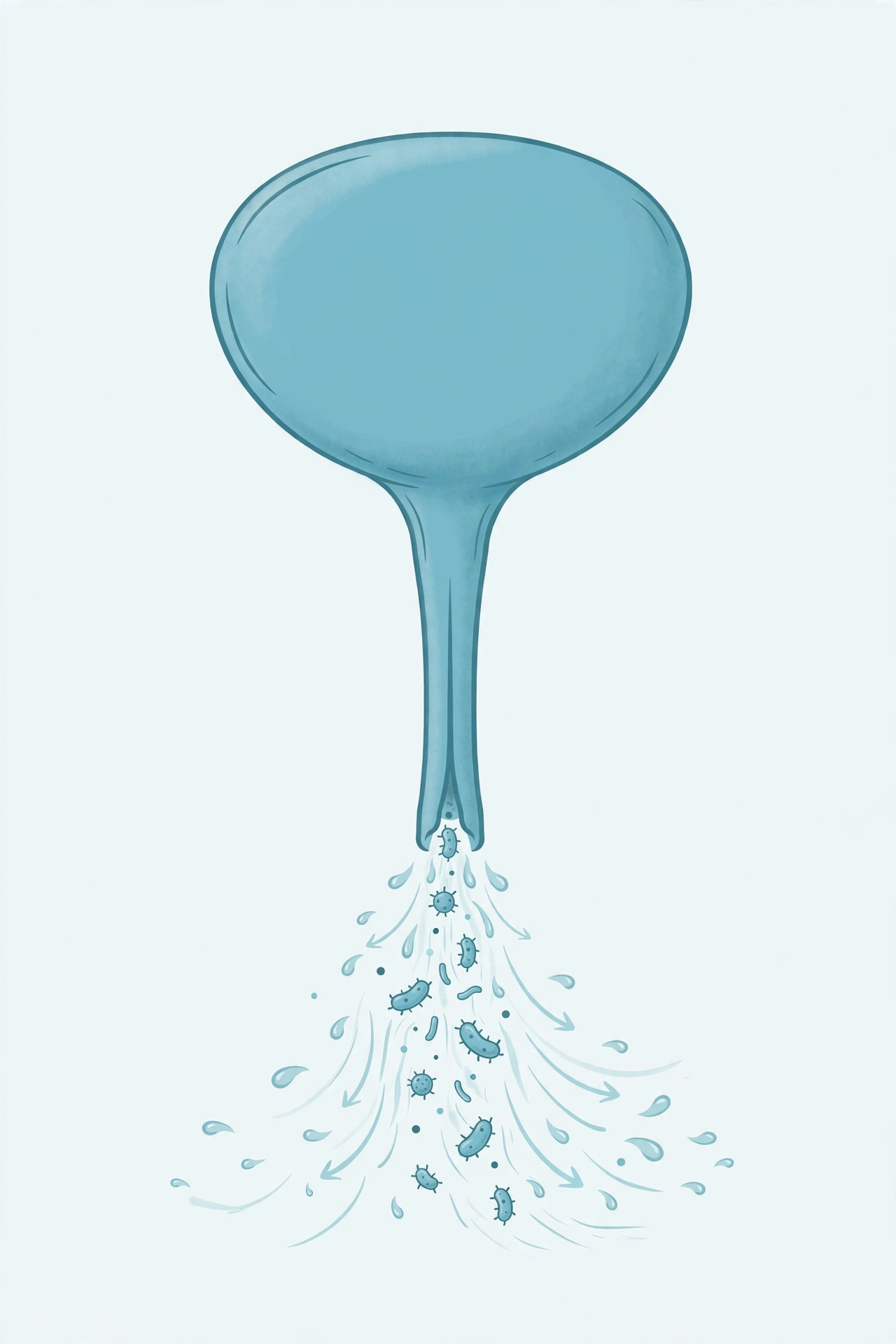
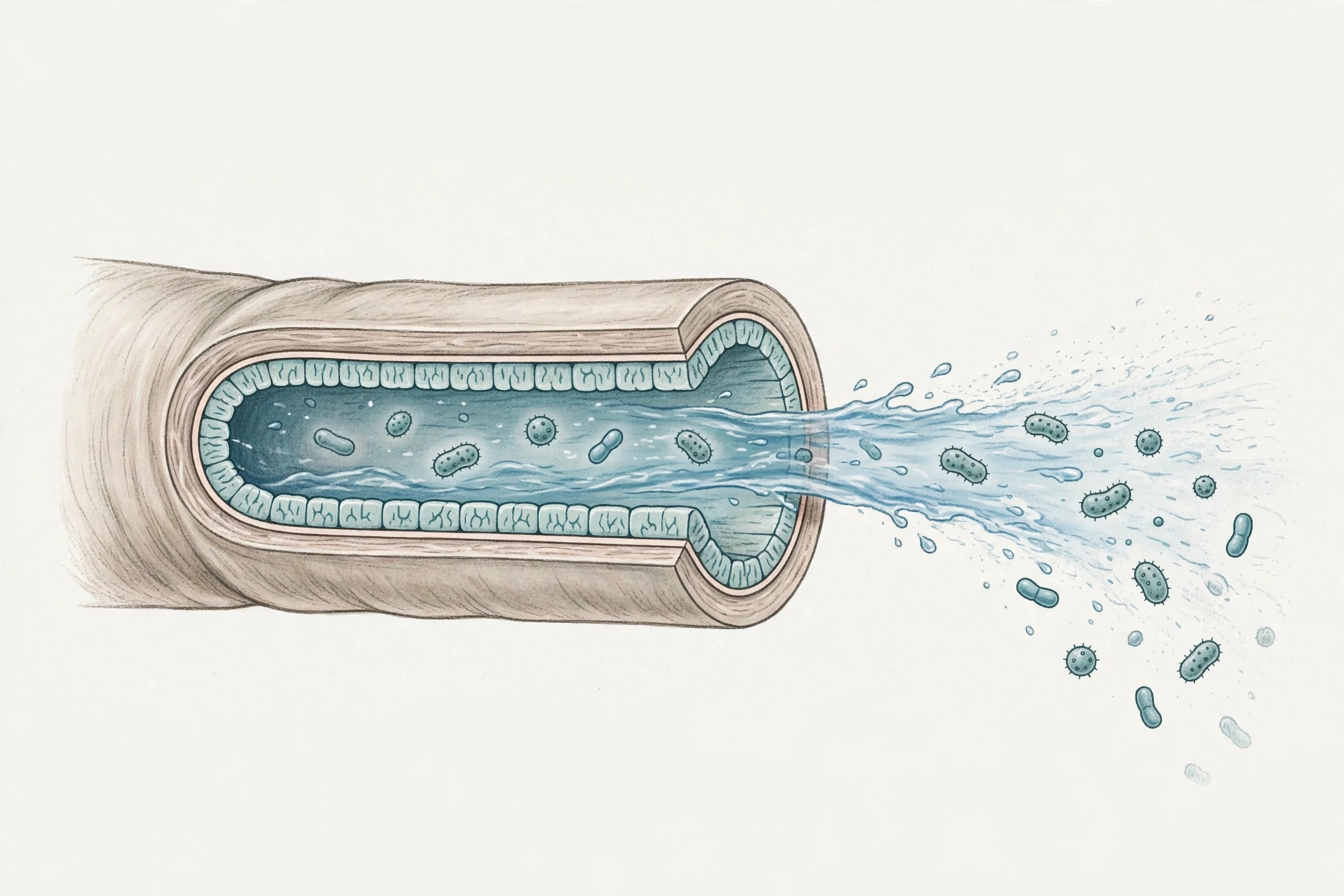
So, does peeing after sex prevent UTI episodes reliably? The honest answer is more nuanced than a simple yes or no. The logic is sound: urination flushes the urethra, sweeping out bacteria that were introduced during intercourse before they can climb toward the bladder. Clinicians often describe urine as a “power washer” for the urethra, and many health authorities, including the CDC, list urinating after sexual activity among their recommended UTI prevention measures. See the CDC’s overview of urinary tract infections for their prevention guidance.
However, the direct scientific evidence is thinner than many people assume. A review published in American Family Physician found no measurable protective effect of post-coital urination in the studies available, while noting that the habit is safe and reasonable to continue. In other words, we lack the kind of large randomized trials that would prove causation. The reason is practical: isolating one variable is difficult when hydration, personal hygiene, frequency of intercourse, and individual anatomy all influence UTI risk at the same time.
What does this mean for you? Most urologists and gynecologists still recommend the habit. It costs nothing, carries no risk, and the mechanical reasoning is strong enough that the absence of perfect proof should not discourage you. Just do not treat it as a guarantee: peeing after sex reduces risk, it does not eliminate it.
Put simply: if you are asking whether peeing after sex prevents UTI infections in every case, the answer is no — but as a low-effort habit with plausible benefit, most clinicians say it is worth doing.
Researchers still debate exactly how much protection it offers, but the question “does peeing after sex prevent uti” remains one of the most common things patients ask about intimate health.
Why Timing Matters: Aim for Within 30 Minutes
The prevailing clinical advice is to urinate within about 30 minutes after sex, and sooner is better. The reason is timing on the bacterial side: once E. coli reaches the urethral lining, it can begin adhering to the cells using tiny hair-like structures called fimbriae. The longer bacteria sit undisturbed, the more firmly they attach, and attached bacteria are much harder for a later stream of urine to dislodge.
Think of it as a race. Bacteria introduced during intercourse need time to settle in and start climbing. An early flush of urine disrupts them before adhesion gets established. Waiting several hours, by contrast, gives them a meaningful head start. If you fall asleep immediately after sex and urinate hours later, you have missed the most protective window, though late urination is still better than holding it indefinitely.
One important caveat: do not strain or force yourself to pee if your bladder is not ready. Pushing hard against a half-empty bladder can irritate the pelvic floor muscles and may worsen post-sex burning. The goal is a relaxed, natural void, ideally within that half-hour window.
This is why the question of whether peeing after sex prevents UTI problems comes down to timing as much as the act itself. In short, if you’re wondering “does peeing after sex prevent uti,” timing is half the answer — the sooner, the better.
Three Things Most Articles Don’t Tell You
Before the specifics, let’s frame the core question once more: does peeing after sex prevent uti? The three angles below are ones most articles skip.
1. Your vaginal microbiome is part of the story
Competitors usually stop at “flush the bacteria,” but the vaginal ecosystem deserves attention too. A healthy vagina is dominated by protective Lactobacillus bacteria that keep the pH acidic, which discourages E. coli growth. Semen is alkaline, so intercourse temporarily shifts vaginal pH upward. This shift is normal and short-lived, but in people already prone to infections, it can create a brief window where unwanted bacteria face less resistance. This is one reason post-sex hygiene matters beyond the bathroom trip itself: gentle warm-water cleansing of the external genital area helps restore balance without the disruption caused by douching or scented products, which strip away protective bacteria.
2. “Honeymoon cystitis” is real — frequency amplifies risk
Clinicians have long observed that UTIs spike during periods of new or more frequent sexual activity, a pattern once nicknamed “honeymoon cystitis.” The principle is simple: each episode of intercourse is another opportunity for bacterial transfer, so risk rises with frequency. If you are on vacation, in a new relationship, or simply in a phase of more frequent sex, the post-sex pee habit matters more, not less. During such stretches, add extra hydration and be especially consistent with the within-30-minutes rule. This angle is rarely mentioned in standard advice pieces, but it is one of the most practical pieces of risk awareness you can have.
3. The “pee before sex” myth — and why forcing it can backfire
Some people believe urinating before sex is the protective step. It is not. Emptying your bladder before intercourse can actually work against you, because you then have less urine available for the protective flush afterward. The protective direction is one-way: after, not before. Relatedly, if you feel an urge to pee before sex, go, but do not obsess over it. And never strain to force out a few drops afterward; incomplete, forced voiding is a poor substitute for a relaxed, full stream. If the urge is not there, drink a glass of water and try again in 15 to 20 minutes.

What Peeing After Sex Cannot Do
It is equally important to know the limits of this habit, because overconfidence can lead to skipped precautions that actually matter.
These limits matter because the question “does peeing after sex prevent uti” deserves an honest, complete answer — not just the reassuring half.
It cannot prevent pregnancy. Urine exits through the urethra; sperm travel through the vagina. These are two entirely separate openings. Urinating, even seconds after intercourse, does nothing to remove sperm that have already entered the vaginal canal. If pregnancy prevention is your goal, use proven contraception.
It cannot prevent sexually transmitted infections. STI-causing organisms enter through mucous membranes and tiny microtears in genital tissue, a process urination cannot reverse. Only barrier methods such as condoms, used consistently, reduce STI risk.
It cannot treat an infection you already have. If burning, urgency, or cloudy urine have already appeared, no amount of post-sex urination will clear an established infection. That requires clinical evaluation and, when appropriate, treatment. The CDC guidance on UTIs and antibiotic use explains when evaluation is warranted.
What to Do If You Can’t Pee After Sex
Many people simply do not feel the urge right after sex, and that is normal. Forcing it is not the answer, but a few practical steps can help:
If you are worried that missing the window means peeing after sex will not prevent a UTI at all, do not be — a later trip to the bathroom is still better than holding it until morning.
Can’t go right away? The question “does peeing after sex prevent uti” still gets the same answer — do it when you can, ideally within 30 minutes.
- Drink a glass of water. Hydration is the single most helpful lever. A full glass of water before or right after sex gives your bladder something to work with within the protective window.
- Use sound and relaxation cues. Running water, a warm bathroom, and unhurried deep breathing help the pelvic floor relax, which is what actually lets the bladder release.
- Sit for a few extra minutes. Do not rush. Giving yourself three to five unhurried minutes on the toilet often produces a stream that a hurried attempt would not.
- Do not hover. Hovering over a public-style toilet keeps the pelvic floor engaged and prevents complete emptying. Sit fully whenever possible.
- Avoid holding it “until morning.” If the urge arrives an hour later, still go. Late is better than never, and holding urine for hours lets bacteria multiply in stagnant urine.
When Peeing After Sex Isn’t Enough
Some people do everything right and still get recurrent UTIs, defined clinically as two infections in six months or three in a year. If that describes you, post-sex urination alone is not sufficient, and you deserve a proper evaluation rather than self-blame. A clinician can check for underlying contributors such as incomplete bladder emptying, kidney stones, anatomical factors, or, in postmenopausal patients, estrogen-related changes to the urinary tract.
For these readers, the question is no longer really “does peeing after sex prevent UTI” — it is which additional prevention strategies a clinician recommends.
It also helps to know that not every post-sex burning sensation is a UTI. The table below compares common look-alikes:
| Condition | Typical pattern | Key distinguishing features |
|---|---|---|
| Bacterial UTI | Burning during urination, frequent strong urges with little output, cloudy or strong-smelling urine | Symptoms persist or worsen over 1–2 days; may include blood in urine |
| Friction irritation | Burning or soreness right after sex, especially with the first post-sex urination | Fades within a day or two without treatment; no fever or persistent urgency |
| STI (e.g., chlamydia) | Burning during urination, unusual discharge, pain during sex | Often accompanied by discharge or bleeding between periods; requires testing, not just a urine flush |
| Interstitial cystitis | Chronic bladder pressure, pain, and urgency flaring after sex | Recurrent pattern with negative urine cultures; needs specialist evaluation |
If burning after sex lasts more than a couple of days, or you notice fever, back pain, nausea, or blood in the urine, seek care promptly rather than waiting it out. These can signal a kidney infection, which needs urgent treatment.
When symptoms point to something beyond a simple infection, the question of whether peeing after sex prevents UTI episodes becomes secondary to getting the right diagnosis.
A Simple Post-Sex Routine for UTI Prevention
Consistency beats intensity. Here is a practical, evidence-informed routine that folds naturally into aftercare after sex:
Followed consistently, this routine is the most practical answer current guidance offers to the question “does peeing after sex prevent UTI.”
- Within 30 minutes: urinate in a relaxed, seated position. Do not strain.
- Hydrate: drink a glass of water to support the next flush and keep urine dilute.
- Gentle external cleansing: warm water only on the external genital area. Skip douching, scented wipes, and harsh soaps, which disrupt protective bacteria.
- Change out of damp clothing: moisture traps bacteria near the urethra, so change underwear or workout-style garments after sex.
- Choose products wisely: if you are prone to UTIs, avoid spermicide-coated condoms and scented lubricants; choosing a body-safe, fragrance-free lubricant reduces irritation that can mimic or invite infection.
- Mind anal-to-vaginal sequencing: never move from anal to vaginal contact without changing condoms and cleaning up in between; review anal sex safety guidance for the full protocol.
Frequently Asked Questions
Quick recap of the top questions — including the big one, does peeing after sex prevent uti — answered below.
Does peeing after sex prevent UTI infections completely?
No. Peeing after sex may lower your risk by flushing bacteria from the urethra before they reach the bladder, but it is not a guarantee. Studies have not proven a definitive protective effect, though the habit is widely recommended because it is safe, free, and mechanically sensible. Think of it as risk reduction, not prevention.
Does peeing after sex prevent UTI if I do it every time?
Consistency is the key factor. Even done every time, does peeing after sex prevent UTI episodes with certainty? No — it reduces the odds, but people prone to infections may still need additional prevention strategies from a clinician.
How soon after sex should I pee to prevent a UTI?
Aim for within 30 minutes, and sooner is better. Bacteria begin adhering to the urethral lining relatively quickly, so an early flush disrupts them before they can settle in and climb toward the bladder. If you cannot go right away, drink water and try again within the window rather than forcing it.
Should men pee after sex too?
There is no harm in it, but the benefit is much smaller. The male urethra is far longer than the female urethra, so bacteria must travel much farther to cause an infection, and post-sex UTIs are uncommon in men. Men who do experience UTIs should discuss other causes, such as prostate issues or kidney stones, with a clinician.
For men specifically, the question “does peeing after sex prevent uti” matters less, since male UTIs are uncommon and usually have other causes worth investigating.
Does peeing after sex prevent pregnancy?
No. Urine leaves the body through the urethra, while sperm enter through the vagina — two completely separate openings. Urinating cannot flush sperm out of the vagina, even if done immediately. Use reliable contraception if you want to prevent pregnancy.
Does peeing after sex prevent STIs?
No. STI organisms enter through mucous membranes and microscopic tears in genital tissue during contact, and urination cannot reverse that process. Condoms used consistently are the effective way to reduce STI risk during vaginal, anal, and oral sex.
Why does it burn when I pee after sex? Is it always a UTI?
Not always. Friction-related irritation of the urethral opening or vaginal tissue commonly causes burning with the first post-sex urination and usually fades within a day or two. A true UTI tends to persist or worsen, with ongoing urgency, frequent small voids, and possibly cloudy or bloody urine. If burning lasts more than a couple of days, get evaluated. Note that bleeding after sex is a separate symptom with its own causes and also warrants attention if it recurs.
Does wiping front to back help peeing after sex prevent UTI?
Good hygiene habits stack. Peeing after sex prevents some UTI risk on its own, and combining it with front-to-back wiping, steady hydration, and avoiding irritating products gives you layered protection.
What if I do everything right and still get UTIs after sex?
Recurrent post-sex UTIs despite good habits warrant a clinical workup. A healthcare provider can evaluate for contributors such as incomplete bladder emptying, hormonal changes, or other urinary tract conditions, and discuss preventive strategies tailored to your situation. Do not keep self-treating repeated infections without professional input.
Bottom line: while no single habit answers “does peeing after sex prevent UTI” with a guaranteed yes, combining timely urination, hydration, and gentle hygiene gives you the best practical protection available.
Still asking “does peeing after sex prevent uti” after reading all this? The evidence-based answer: it helps, it doesn’t guarantee, and timing plus hydration matter most.
Medical disclaimer: This article is for educational purposes only and is not medical advice. It does not diagnose any condition or replace professional care. If you have symptoms of a urinary tract infection, recurrent UTIs, or any concerning post-sex symptoms, consult a qualified healthcare clinician for proper diagnosis and treatment.