Jealousy and Desire: When Possessiveness Quietly Hurts Intimacy
Jealousy in relationships hurts intimacy. Therapists hear the same story weekly: a couple who once felt electric now tiptoes around each other, one partner checking a phone while the other quietly withdraws. Nobody cheated, yet desire faded, worn down by possessiveness, suspicion, and exhausting vigilance. This guide explains how jealousy hurts intimacy biologically, emotionally, and behaviorally, how to tell a harmless twinge from a destructive pattern, and what doctors and therapists recommend for rebuilding trust and desire. The research consensus is simple: jealousy hurts intimacy; relationship studies link it to lower desire, weaker trust, and poorer communication. Every therapist interviewed for this guide agrees: jealousy hurts intimacy; relationship outcomes improve only when the jealousy itself is addressed.
How Jealousy in Relationships Hurts Intimacy: What Science Tells Us
Jealousy in relationships has been documented by researchers repeatedly. In the Journal of Sex Research, sociologists Anthony Paik and Mariana Gatzeva surveyed 681 adults and found jealousy sharply reduced emotional and physical satisfaction. Among married couples, three-quarters were extremely satisfied emotionally when jealousy was absent, but that fell below half once jealous conflict entered. The effect was strongest in marriages, where jealousy betrays the very commitment couples count on. Put plainly, jealousy hurts intimacy; relationship satisfaction drops in every study that measures both.
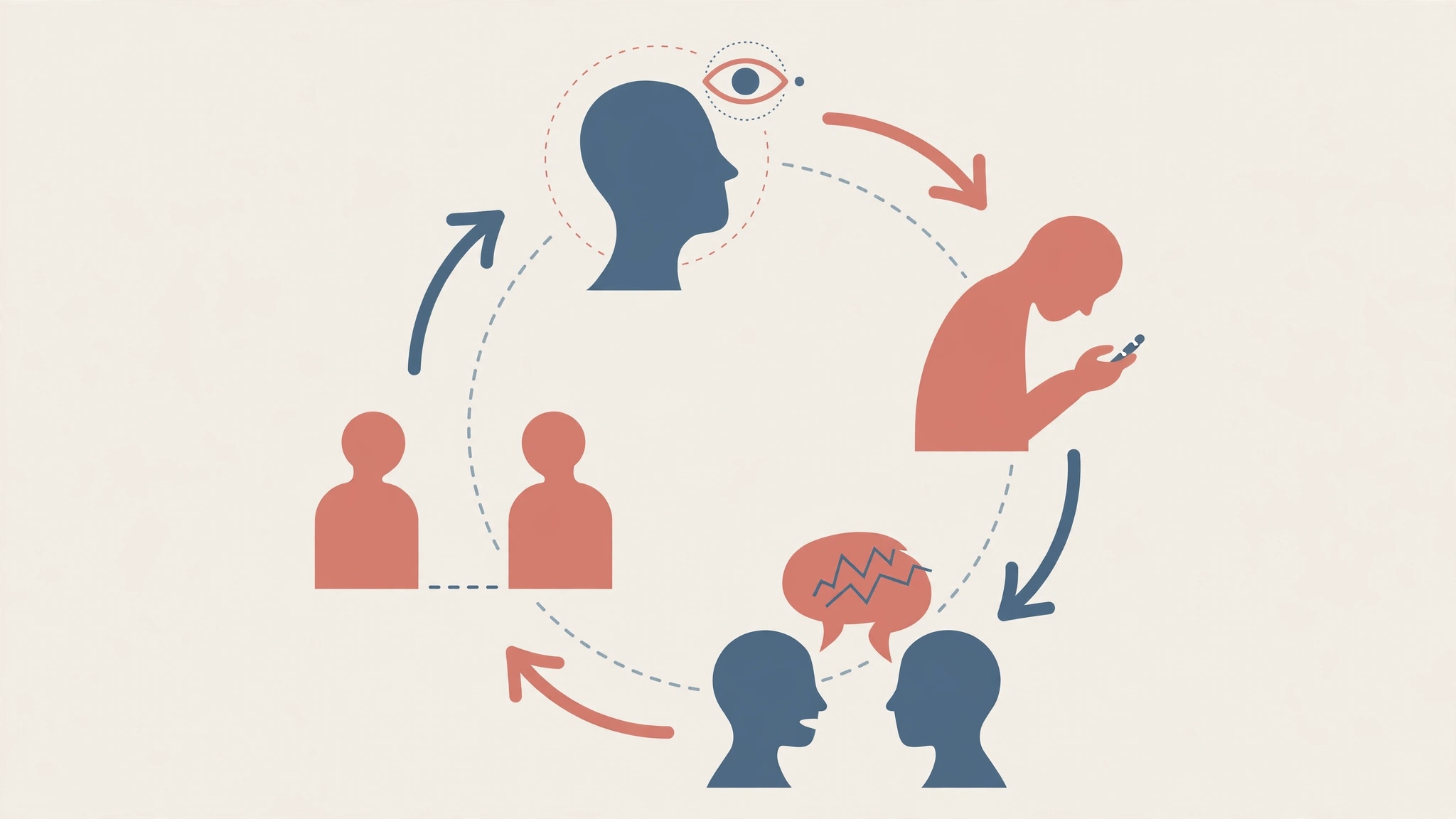
Jealousy in relationships triggers a predictable chain reaction. Suspicion narrows your attention to threats, so you notice every late text while missing the affection your partner still shows. Surveillance, even mild social-media scrolling, trains your nervous system to associate your partner with danger rather than safety. Arousal and anxiety compete for the same physiological resources, and chronic jealousy keeps the anxiety system switched on, quietly draining the energy desire needs. This chain reaction explains why jealousy hurts intimacy; relationship security is always the first casualty. Notice the sequence: jealousy hurts intimacy; relationship partners then mistake vigilance for care.
The Psychology of Jealousy: Why Your Brain Sounds the Alarm
Jealousy is an alarm system, not a character flaw. Evolutionary psychologists describe it as a mate-guarding response: your brain flags anything that might threaten the bond and floods you with the urge to act. But this ancient alarm cannot tell a genuine threat from a partner laughing with a friend. It fires either way, and modern life, social media, read receipts, location sharing, gives it endless ammunition. That misfiring alarm is a core reason jealousy hurts intimacy: relationship security gets confused with threat detection. Until the alarm is recalibrated, jealousy hurts intimacy; relationship security stays hostage to false threats.
Attachment style shapes how loudly that alarm rings. People with an anxious attachment style, often rooted in inconsistent early caregiving, scan for rejection and need frequent reassurance, a pattern linked to higher jealousy and lower satisfaction. Past betrayals add fuel: if a previous partner cheated, your brain may treat the new partner as guilty until proven innocent. Low self-esteem completes the triangle, convincing you a rival is more attractive or deserving. None of this makes you a bad partner; your alarm needs recalibrating, not obeying. Recalibrating that alarm matters, because jealousy hurts intimacy; relationship security built over years can erode in months.
A Healthy Twinge or a Destructive Pattern? How to Tell the Difference
Not all jealousy is toxic. A fleeting pang is normal and can signal the relationship matters. The line between healthy and destructive is drawn by what the feeling does next:
| Healthy jealousy | Destructive jealousy |
|---|---|
| A brief feeling that passes once you talk it through | A persistent state that returns daily, even after reassurance |
| Expressed once, calmly, using “I feel” language | Expressed as accusations, interrogations, or silent treatment |
| Respects your partner’s friendships and privacy | Demands phone access, passwords, or location tracking |
| Motivates you to invest more in the relationship | Motivates controlling rules about who your partner may see |
| Trust is the default; doubt is the exception | Doubt is the default; trust must be constantly proven |
This is the exact moment jealousy in relationships turns safety into surveillance. The behaviors on the right, monitoring, restricting, interrogating, are attempts to feel safe that achieve the opposite, making both partners feel unsafe, and safety is the soil intimacy grows in. Every monitoring habit feeds the cycle: jealousy hurts intimacy; relationship trust cannot grow under surveillance. Choose the left column daily, because jealousy hurts intimacy; relationship safety is built by trust, not tracking.
The Quiet Ways Possessiveness Erodes Desire
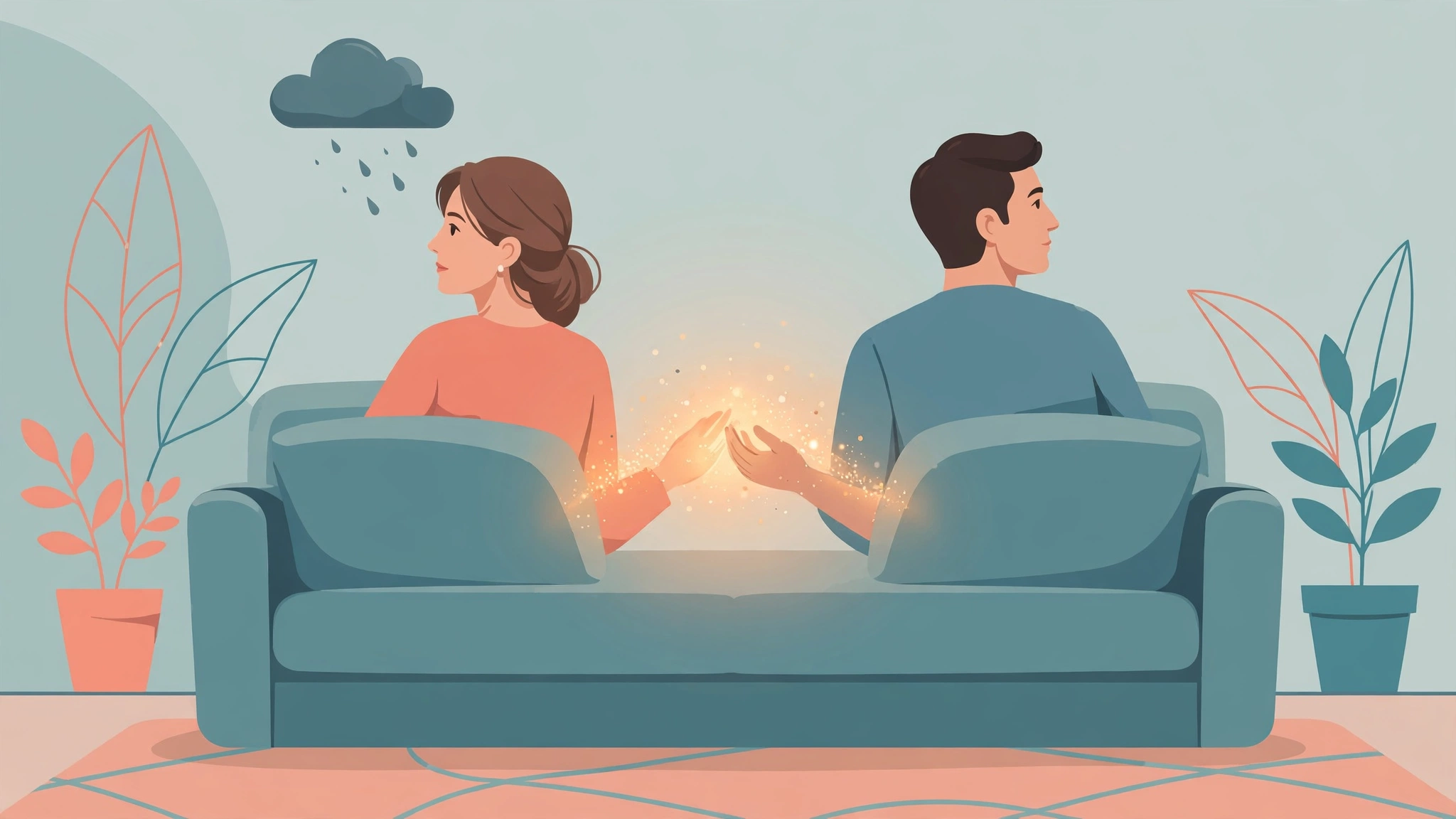
Possessiveness rarely announces itself. It arrives disguised as love: “I only worry because you mean everything to me.” But desire and control are opposites. Erotic energy depends on freedom and the voluntary choice to be close, and when one partner starts managing the other’s social life, desire finds two exits, both bad.
First, the monitored partner self-censors: skipping mentions of the funny coworker, declining invitations, not from agreed boundaries but because honesty now costs a fight. Self-censorship kills spontaneity, desire’s best friend. Second, the jealous partner becomes a warden rather than a lover. It is hard to feel tender toward someone you just interrogated. Often the jealous partner then initiates sex seeking reassurance, the other experiences it as pressure, and physical intimacy becomes another arena for anxiety. Both exits lead the same place: jealousy hurts intimacy; relationship freedom is what keeps desire alive.
Jealousy hurts intimacy; relationship counselors see it most clearly in the bedroom. Chronic suspicion keeps cortisol elevated and dampens the relaxation response arousal requires. If desire faded as jealousy rose, the two are probably connected, and treating the jealousy often restores desire better than chasing libido directly. Treat the suspicion and desire often returns, further proof that jealousy hurts intimacy; relationship counselors witness this reversal weekly.
Retroactive Jealousy: When the Past Becomes the Rival
Sometimes the rival is not a coworker or a texting ex but someone your partner knew years before you met, a person who poses zero actual threat, yet thoughts of them hijack your mind for hours. Clinicians call this retroactive jealousy, jealousy directed at a partner’s romantic or sexual past, and it is one of the most quietly destructive forms jealousy takes.
Retroactive jealousy hurts intimacy in a distinctive way. The jealous partner asks detailed questions about the past, replays imagined scenes, and seeks reassurance that never sticks, because the “threat” lives in memory and imagination, where present-day evidence cannot reach it. Partners describe a no-win trap: answering feeds the obsession, while refusing looks like hiding something. The past cannot be audited into safety, which is why jealousy hurts intimacy; relationship history is the wrong place to look for reassurance.
The goal is not better answers about the past but to stop treating the past as a problem to solve. Helpful techniques include scheduled “worry time” (containing rumination to fifteen minutes a day), challenging comparison thoughts, and building present-focused intimacy rituals. If thoughts about your partner’s past consume more than an hour a day or drive compulsive checking, seek professional support rather than white-knuckling it alone. Presence beats archaeology: jealousy hurts intimacy; relationship rituals rooted in today work better than interrogations about yesterday.
The Digital Amplifier: Social Media and Modern Jealousy
Jealousy is ancient, but the smartphone gave it a laboratory: read receipts, “last active” timestamps, and location sharing turn vague unease into a forensic hobby. Research finds phone and social-media surveillance strongly linked to jealousy, conflict, and lower satisfaction, and that surveillance follows jealousy rather than resolving it. This is precisely how jealousy hurts intimacy: relationship trust is replaced by an audit that never clears anyone. Put the phone down: jealousy hurts intimacy; relationship audits never produce the certainty they promise.
The cruelest feature of digital snooping is that it never delivers the certainty it promises. Finding nothing brings relief until the next anxious spike, when absence of evidence becomes evidence of better hiding. Finding something ambiguous detonates a conflict over material that would have been meaningless without the jealous frame. Thriving couples make explicit agreements instead: no secret phone-checking, boundaries discussed openly, and the shared understanding that privacy is not secrecy. Privacy is a boundary; secrecy is a behavior.
The Reassurance Loop: Why “Prove You Love Me” Never Works
One overlooked mechanism is the reassurance loop. The jealous partner feels anxiety and asks for reassurance; the partner provides it; anxiety drops, for now. But reassurance treated the symptom, not the insecurity, so the anxiety returns stronger and the next request comes sooner. Over months, the reassuring partner feels nothing is ever enough, breeding resentment, while the jealous partner takes the need for constant proof as evidence something is wrong. The loop is the trap: jealousy hurts intimacy; relationship reassurance on demand only feeds the anxiety.
Breaking the loop requires both partners to change roles. The jealous partner practices sitting with uncertainty instead of outsourcing it, using self-soothing and scheduled check-ins rather than on-demand interrogations. The other partner responds with empathy but not infinite accommodation: “I love you, and I’m not re-litigating this a third time tonight. Let’s talk about what’s underneath it tomorrow.” It sounds harsh, but therapists call it kindness: endless reassurance is the fuel anxiety runs on. Starve the loop, and the anxiety finds healthier exits.

Jealousy in Relationships: A First-Aid Protocol for the Moment
Jealousy strikes in real time: at a party, over a text, in bed at midnight. Therapists recommend a structured pause protocol you can run in under five minutes:
- Name it precisely. Say silently: “I am feeling jealous right now.” Labeling the emotion calms the brain’s threat center, a finding replicated across affect-labeling research.
- Rate the evidence, not the feeling. Ask: “What did I observe, and what did I infer?” Observed: she laughed at his joke. Inferred: she prefers him. Feelings are real; inferences are hypotheses.
- Check your state. Tired, hungry, or stressed? Jealousy spikes when reserves are low. A feeling at 11 p.m. after a hard day deserves less authority than one at noon.
- Choose a response, not a reaction. Say nothing and revisit it tomorrow, ask one calm question, or say, “I’m feeling insecure tonight; I don’t need you to fix it.” All three beat an accusation.
- Do one trust-building act. Thank your partner for something real or simply hold their hand. Action rewires the association faster than analysis.
Couples who practice this protocol find most jealous episodes dissolve within an hour, because vulnerability shared calmly builds the trust jealousy was trying to manufacture by force. When jealousy hurts intimacy, relationship repair happens in these small honest moments. Small honest moments compound, reversing the damage, living proof that jealousy hurts intimacy; relationship repair happens one conversation at a time. For more structured guidance, see our guide to couples therapy questions that rebuild intimacy.
If Your Partner Is the Jealous One: A Partner-Side Guide
But what if you are the one being monitored and questioned? First: you cannot cure someone else’s jealousy with perfect behavior. If total transparency has not worked, more of the same will not work either, because the anxiety is not about your behavior. Understanding why jealousy hurts intimacy in a relationship can help you stop blaming yourself.
What helps is compassion plus firm boundaries. Compassion: “I can see you’re hurting, and I want to understand what you’re afraid of.” Boundaries: “I will not share my passwords, because privacy matters to me, but I will tell you honestly about my friendships.” Boundaries are not punishments; they are the structure trust grows in. Agree on finite reassurances, like a weekly check-in, instead of open-ended surveillance. Hold the line kindly: jealousy hurts intimacy; relationship boundaries protect love instead of punishing it.
Watch for the escalation line. Jealousy becomes a safety issue with threats, intimidation, isolating you from friends and family, or any physical aggression. Research by Papp and colleagues found that people who romanticize jealousy as proof of love tolerate controlling behaviors linked to intimate partner violence more readily. Loving someone never obligates you to accept being controlled. If you feel afraid, contact a domestic violence helpline; the CDC’s intimate partner violence resources page lists warning signs and where to get help.
When Jealousy in Relationships Needs Professional Support
Jealousy in relationships improves when couples get help before resentment hardens. Consider professional support if jealousy causes daily conflict, either partner has withdrawn, surveillance or controlling rules are in place, retroactive jealousy consumes hours daily, or talks about jealousy always end in fights. These are not signs of failure; the pattern is simply bigger than willpower. Asking for help is strength: jealousy hurts intimacy; relationship therapy gives couples tools willpower alone cannot.
What do doctors and therapists recommend? For individuals, cognitive behavioral therapy (CBT) is the best-supported approach: it targets catastrophic interpretations (“she’s laughing, so she’s leaving”) and builds tolerance for uncertainty. The Mayo Clinic’s overview of cognitive behavioral therapy explains how it works. For couples, Emotionally Focused Therapy (EFT) has strong evidence for rebuilding the secure bond jealousy erodes. If anxiety or depression drives the jealousy, a doctor can evaluate whether treating the underlying condition is appropriate.
Rebuilding takes months, not days: trust is restored through hundreds of small kept promises, not one grand gesture. If emotional distance has already set in, our article on how emotional distance affects physical intimacy offers complementary strategies for closing the gap.
FAQs
Is a little jealousy healthy in a relationship?
Yes, a fleeting pang is normal and can signal the relationship matters to you. It stays healthy when brief, expressed calmly without accusations, and fading after an honest talk. It turns unhealthy when persistent, driving monitoring or control, or repeatedly damaging trust despite reassurance.
Why do I feel jealous even though I trust my partner?
Jealousy often comes from inside you rather than your partner’s actions. Anxious attachment, low self-esteem, or wounds from past betrayals can keep your threat alarm on even in a trustworthy relationship. This mismatch is common and does not make you a bad partner; therapy can help untangle it.
Can jealousy really cause a loss of sexual desire?
Yes. Chronic jealousy keeps your stress response activated, and anxiety competes with the relaxation arousal requires. Suspicion also erodes the safety and freedom desire depends on, and jealousy conflicts make closeness feel like pressure. Addressing the jealousy often restores desire better than focusing on libido alone.
How do I stop being jealous of my partner’s past?
Treat the rumination, not the past. Stop researching exes, contain worry to a short daily window, challenge comparison thoughts, and build present-focused rituals with your partner. Reassurance about history never sticks, so stop seeking detailed answers. If the thoughts consume over an hour daily, see a therapist experienced in obsessive thought patterns.
How should I respond to a jealous partner without constant fighting?
Lead with empathy, then hold boundaries: acknowledge their fear without accepting blame. Offer finite, scheduled reassurance like a weekly check-in instead of unlimited on-demand proof. Refuse surveillance calmly; privacy is a boundary, not secrecy. If accusations continue despite your consistency, suggest couples counseling rather than more transparency.
When does jealousy become a sign I need professional help?
Seek help if jealousy causes daily conflict, drives phone-checking or control, consumes hours of rumination, has caused emotional or physical withdrawal, or involves threats. A therapist trained in CBT or Emotionally Focused Therapy can address the thought patterns and the dynamic. If you ever feel unsafe, contact a domestic violence helpline immediately.
Jealousy does not have to be the end of desire. Once you understand how jealousy hurts intimacy, relationship healing becomes a shared project: couples who name it, trace its roots, and respond with honesty instead of surveillance often find that working through jealousy becomes one of the most trust-building chapters of their story. Talk to your partner about what you have read here, consider speaking with a counselor or your doctor if the pattern feels bigger than the two of you, and explore our related guides to keep rebuilding closeness one honest conversation at a time. The science is hopeful: once jealousy stops hurting intimacy, relationship satisfaction, trust, and desire can all rebound together.
Medical disclaimer: This article is for educational purposes only and is not medical advice. Jealousy, anxiety, and relationship difficulties can have complex psychological and medical causes. If you are struggling, please consult a qualified healthcare professional, licensed therapist, or counselor for personalized guidance. If you are experiencing threats, coercion, or violence in a relationship, contact local emergency services or a domestic violence helpline right away.