
How to Keep the Spark Alive After Kids: Doctor Tips
Learning how to keep the spark alive after kids is one of the most common challenges new and seasoned parents face. Research on couples consistently shows that relationship satisfaction dips after children arrive, and doctors say this is almost never a sign that the love is gone. It is usually a sign that two exhausted people are running on empty. The good news is that the spark does not require grand romantic gestures or a babysitter every weekend. Clinical psychologists and relationship researchers agree that small, intentional habits protect and rebuild connection far better than occasional big dates. This guide brings together doctor-backed strategies to help busy parents reconnect.
Why the Spark Fades After Kids: A Doctor’s View
Before fixing the problem, it helps to understand it. Doctors and relationship therapists point to four overlapping biological and psychological reasons why couples struggle to keep spark alive after kids:
- Sleep deprivation raises cortisol. Chronic sleep loss increases the stress hormone cortisol, which suppresses libido and makes partners more reactive and less patient. The Mayo Clinic notes that postpartum exhaustion is a major reason intimacy declines in new parents.
- Hormonal shifts change desire. After childbirth, estrogen drops (especially while breastfeeding) and prolactin rises, which commonly lowers sexual desire for months. Fathers are not immune either: studies show new fathers experience a measurable drop in testosterone.
- The mental load is uneven. One partner often carries the invisible planning of family life — appointments, school forms, meal planning. Clinicians call this “mental load,” and resentment about unfairness is one of the most common spark-killers therapists report.
- Identity shift. Both partners move from “lover” to “parent” as their dominant identity. Without conscious effort, the couple’s friendship and romance get crowded out by the logistics of co-parenting.
Understanding these mechanisms matters because it removes blame. You are not falling out of love. You are two tired people whose biology and circumstances are working against romance. Once you name the problem, you can treat it — just like any other health issue.
How to Keep the Spark Alive After Kids: 9 Doctor-Backed Strategies
Therapists who work with parents recommend the strategies below to keep the spark alive because they are realistic for people with limited time and energy. Start with two or three that feel doable rather than attempting everything at once.
1. Create Micro-Moments of Connection
You do not need a weekend getaway. Research consistently finds that frequent small moments of positive connection predict relationship satisfaction better than rare grand gestures. Try a five-minute coffee together before the kids wake up, holding hands while watching TV, a genuine “I appreciate you” spoken out loud, or a quick affectionate text in the middle of a hectic day. Done daily, these micro-moments prevent emotional distance from creeping in and make it far easier to keep the spark alive after kids.
2. Hold a Weekly Fairness Check-In
This is the strategy most articles miss, and therapists say it may be the most powerful. Schedule a calm 20-minute weekly conversation where you review the division of labor — including invisible tasks like planning, remembering, and coordinating. Ask: “What felt unfair this week? What can we rebalance?” Resentment thrives in silence, and nothing kills desire faster than feeling like an unpaid employee in your own home. When both partners feel the load is fair, emotional closeness — and physical interest — return far more naturally.
3. Protect Non-Sexual Physical Touch
Affectionate touch releases oxytocin, the bonding hormone that builds feelings of warmth and attachment. Doctors recommend deliberate, non-sexual touch throughout the day: a 30-second hug when you reunite after work, a hand resting on your partner’s back as you pass in the kitchen, snuggling while falling asleep, or a shoulder rub while they unwind. This kind of touch keeps your bodies in the habit of closeness, which is essential to keep spark alive after kids. Physical connection that carries no pressure or expectation often reawakens desire on its own.

4. Date at Home After the Kids Sleep
If a babysitter is not available or you are simply not ready to leave the kids, bring the date to your living room. Put the kids to bed early, order your favorite takeout, and watch a movie or share a dessert with phones in another room. The key rule therapists recommend: once the kids are asleep, you are off the clock — talk about dreams, news, or something funny, not bedtime logistics and school fees. Connection does not require leaving the house; it requires protected, uninterrupted time together — a simple, realistic way to keep spark alive after kids.
5. Schedule Intimacy (Yes, Really)
Many parents resist scheduling intimacy because it feels unromantic. Clinicians strongly disagree. When you are exhausted, spontaneity is largely a myth — desire often follows willingness, not the other way around. Putting a weekly “us” evening on the calendar is not unromantic; it is intentional — and many couples find that this rhythm helps them keep spark alive after kids. Anticipation builds throughout the week, and protecting the time makes both partners feel prioritized. If you feel too tired when the time comes, that itself is useful information — talk about whether sleep, stress, or something medical needs attention first.
6. Create a Phone-Free Reconnection Ritual
Screen time is a silent spark-killer that most advice articles overlook. When one or both partners scroll through the few free evening hours, the couple’s only window for connection closes. Doctors suggest a simple ritual: both phones go in a drawer or on a charger in another room for the last 45–60 minutes before bed. Replace scrolling with conversation, a shared show, a board game, or simply sitting together. Couples who try this consistently report that it is one of the fastest ways to feel close again and keep spark alive after kids.
7. Flirt Like You Used To
Flirting is not just for the dating phase. Eye contact across the dinner table, a subtle compliment, a playful text during the workday, or noticing out loud what you find attractive about your partner all rebuild the sense of being desired. Therapists note that many parents stop “seeing” each other as romantic partners and start seeing only the co-parent. Flirting signals that you still choose your partner as a lover, not just as a teammate — and that signal is central to any plan to keep spark alive after kids.
8. Keep Your Individual Identities Alive
You cannot bring good energy to your marriage if your own cup is completely empty. Supporting each other’s individual time — a hobby, exercise, time with friends — prevents the slow loss of self that so often accompanies parenthood. When you feel like yourself again, your partner gets to rediscover the person they fell for. Many therapists recommend that each partner gets at least a few hours of personal time per week, protected like any other appointment. For more ideas on rebuilding closeness, see our guide on rebuilding intimacy in long-term relationships.
9. Remember Your Roots Together
When you are drowning in responsibilities, it is easy to lose sight of what brought you together. Set aside time to revisit your shared history: look through old photos, talk about your first date, or ask each other what memory of your relationship still makes you smile. Having these conversations reconnects you with your emotional foundation, which is where true intimacy grows. Romance after kids does not mean recreating the past — it means building on it, which is one of the most meaningful ways to keep spark alive after kids.
When Exhaustion Is More Than Tiredness
Sometimes the problem is not just a busy schedule. If you feel too exhausted for any connection most days, fatigue itself may be the issue to address first on your journey to keep spark alive after kids. Read our guide on being too tired for sex and how fatigue affects libido for practical steps.
Doctors also advise parents to watch for signs that the issue may be medical or psychological rather than purely relational. The Cleveland Clinic notes that postpartum depression and anxiety can significantly affect bonding, desire, and mood — and they are treatable conditions, not character flaws.
When to See a Doctor or Therapist
Seeking professional help is a strength, not a failure. Consider talking to your doctor or a licensed couples therapist if you notice any of the following:
- Conversations about your relationship routinely turn into contempt, name-calling, or the silent treatment.
- One or both partners feel persistently sad, anxious, or hopeless — possible signs of postpartum depression or anxiety that warrant medical evaluation.
- Physical pain, hormonal concerns, or other medical symptoms are affecting desire or comfort, and have not been checked by a clinician.
- You have tried reconnecting strategies for several months and feel more distant, not less.
- You are staying together mainly for the children but feel like strangers — a therapist can help you assess the relationship honestly.
A primary care doctor can screen for depression, thyroid issues, hormonal changes, and sleep disorders that affect libido. A couples therapist can teach structured communication tools in a few sessions to help you keep spark alive after kids. There is no requirement to be “in crisis” before asking for help — earlier is always better. For authoritative guidance on postpartum recovery and resuming physical intimacy, the Mayo Clinic’s guide to sex after pregnancy is an excellent starting point.
FAQs
Is it normal to lose the spark after having kids?
Yes. Relationship researchers consistently find that satisfaction dips after children arrive, largely due to sleep deprivation, hormonal changes, and the mental load of parenting. This is a well-documented stage, not a verdict on your relationship. Most couples recover their connection with intentional effort, and many report that their bond eventually becomes deeper and more resilient than before.
How can we stay romantic when we are exhausted?
Lower the bar. Romance during the exhausting seasons means simple, low-energy acts: holding hands, a long hug before bed, an encouraging text, or a genuine compliment. Address the exhaustion itself too — trade sleep shifts with your partner and talk to your doctor if fatigue feels extreme. Even ten minutes of undivided, phone-free attention can be more powerful than an elaborate date — and a realistic way to keep spark alive after kids.
How often should parents have a date night?
There is no magic number, but many marriage experts recommend a dedicated date — at home or out — at least once or twice a month. What matters more is consistency. A protected weekly evening together, even if it is takeout and a show after the kids sleep, helps you keep spark alive after kids far better than occasional big outings with long gaps between them.
What if one partner wants more intimacy than the other?
Mismatched desire is extremely common after kids and is rarely about love. Start with an honest, blame-free conversation about what each of you is feeling — fatigue, stress, body changes, and hormonal shifts all play a role. Focus on non-sexual closeness first, since pressure usually reduces desire further. If the mismatch persists and causes distress, a doctor or couples therapist can help identify the cause so you can keep spark alive after kids.
How do we reconnect when we never get time alone?
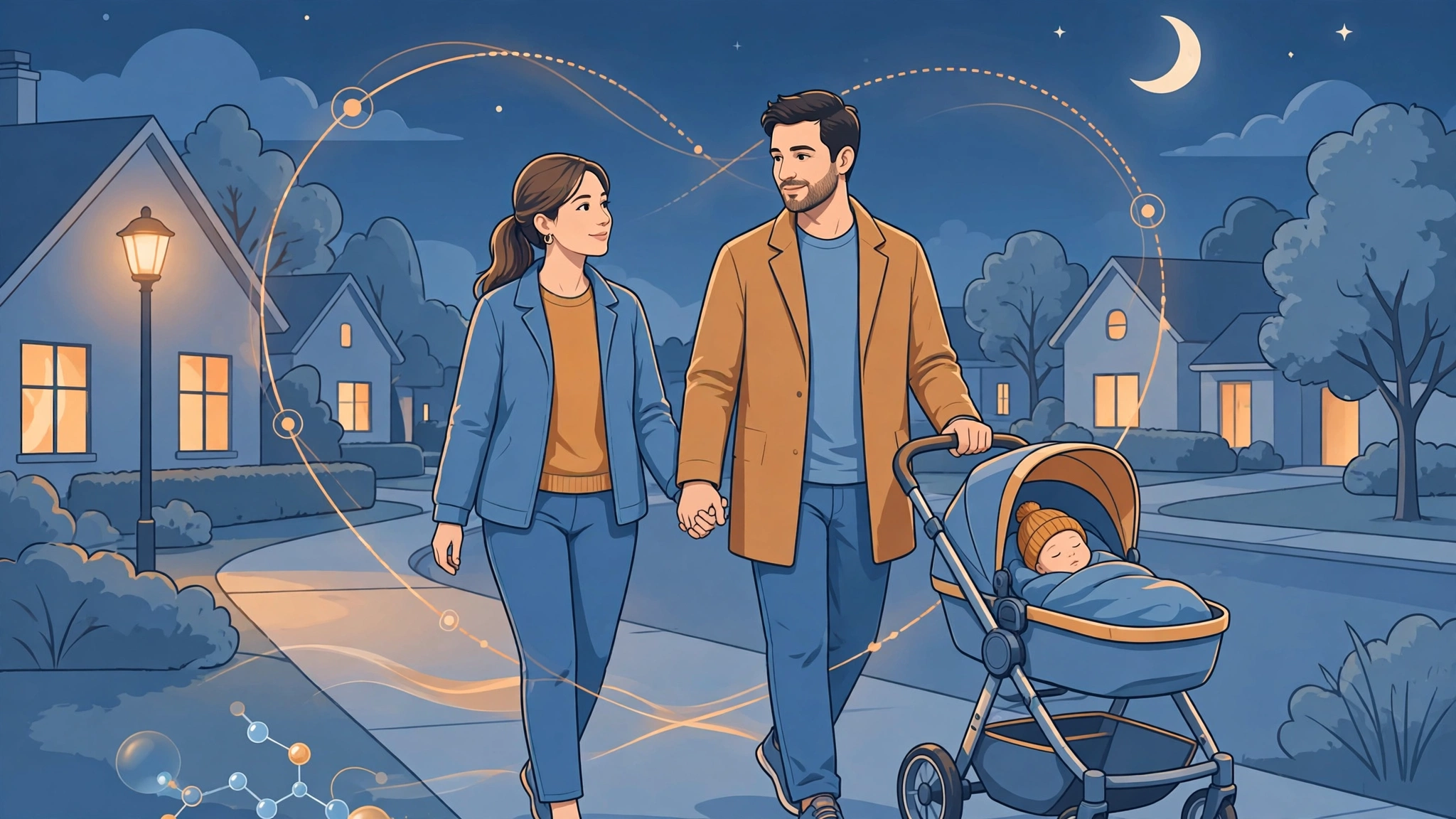
You probably have more windows than you think — they are just small. Protect micro-moments: morning coffee before the kids wake, a walk with the stroller together, or 20 phone-free minutes after bedtime. Audit where your free minutes go; many couples reclaim hours simply by putting phones away. Intentional tiny rituals, repeated daily, rebuild closeness faster than waiting for a perfect free evening — the surest way to keep spark alive after kids.
How long does it take to feel like a couple again after a baby?
There is no fixed timeline. Physically, doctors generally clear mothers for intimacy around 4–6 weeks postpartum, but emotional readiness varies widely and often takes months. Hormonal shifts during breastfeeding can affect desire for a year or more. Be patient with each other, communicate openly about readiness, and talk to your doctor if you have concerns about pain, mood, or persistent low desire.
If you are ready to keep the spark alive after kids, start small this week: pick one micro-moment, one phone-free evening, and one honest conversation. Consistency beats intensity every time. And if something feels medically off — persistent pain, crushing fatigue, or low mood — talk to your doctor rather than pushing through. A strong relationship and good health support each other.
Medical Disclaimer: This article is for educational purposes only and is not medical advice. It does not diagnose or treat any condition. If you have concerns about your sexual health, mood, or relationship, please consult a qualified healthcare professional.