When Sex Feels Like a Chore: How Couples Rekindle Desire
It often starts quietly. The invitations get shorter. The excuses get easier. What used to feel like connection starts feeling like another item on an endless to-do list, and then comes the thought that stings: sex feels like a chore. If that phrase has crossed your mind, you are far from alone. Studies on long-term relationships consistently show that desire ebbs and flows over time, and a large share of committed couples report stretches where intimacy feels obligatory rather than wanted.
The good news: a “chore phase” is rarely the end of desire — it is usually desire stuck behind obstacles. Understanding why sex feels like a chore for so many couples, and using strategies grounded in relationship research, can help you move from duty back to genuine want. This guide explains why intimacy starts feeling like an obligation, the hidden factors most advice overlooks, and practical, step-by-step ways couples rekindle desire.

Why Sex Feels Like a Chore: Understanding the Shift
To fix the problem, it helps to understand what turned a pleasurable experience into something that feels like a task. When sex feels like a chore, it is rarely because of one bad night — more often, it is the end result of several slow-moving changes that combine over months or years.
The novelty fade. In the early months of a relationship, the brain rewards new romantic and sexual experiences with a strong cocktail of dopamine and excitement. This neurochemical response naturally quiets as a relationship stabilizes — not because the relationship is failing, but because the brain stops flagging your partner as “new.” Many couples mistake this completely normal shift for a loss of love or attraction, when it is simply biology moving from the “discovery” phase to the “bonding” phase.
The obligation loop. Once desire becomes uneven between partners, sex can start to feel transactional. One partner initiates out of need or expectation; the other agrees out of guilt or a sense of duty. Over time, both partners associate sex with pressure instead of pleasure — and once that association sets in, sex feels like a chore no matter who initiates. If you want a deeper look at how attraction shifts over the years, read our guide on whether losing attraction in a long relationship is normal.
The roommate drift. Many long-term couples gradually reorganize their lives around logistics: work schedules, bills, childcare, home maintenance. Conversations narrow to logistics; touch becomes functional rather than affectionate. When the emotional friendship cools into a management partnership, the bedroom often follows — and for many couples, that is exactly when sex feels like a chore.
The script problem. Couples frequently fall into one rigid sexual routine: the same time, the same place, the same sequence. Predictability is efficient for scheduling, but it is the enemy of arousal. When sex runs like a meeting agenda, it starts to feel like one.
The Hidden Desire Killers Couples Overlook
Most advice focuses on the bedroom. But clinicians and researchers find that the biggest threats to desire usually live outside it. When sex feels like a chore, these hidden factors are the ones couples most often miss.
Mental load and emotional labor. In many households, one partner carries the invisible management of family life: remembering birthdays, scheduling doctor visits, tracking school events, planning meals, noticing when supplies run low. Psychologists call this the “mental load” or “third shift,” and its effect on desire is well documented. It is very difficult to feel relaxed and receptive when your mind is running a household logistics center at midnight. The partner carrying the load often experiences lower desire simply as exhaustion. If your relationship has a lopsided division of invisible work, desire may not recover until it is addressed: list every household task, including the remembering and planning parts, and rebalance them visibly.
Sleep debt. Chronic poor sleep is one of the most reliable predictors of low libido for both men and women. Fatigue suppresses testosterone and increases cortisol, a stress hormone that directly dampens sexual interest. Research has found that even one additional hour of sleep is associated with greater next-day sexual desire in women. On five or six hours of sleep, desire may be a casualty of biology rather than the relationship — and for couples where sex feels like a chore, protecting sleep is one of the most effective libido interventions available. Learn more about the link in our article on how sleep affects sex drive.
Medications. A wide range of commonly prescribed medicines can quietly reduce desire or interfere with arousal, including certain antidepressants (particularly SSRIs), some blood pressure drugs, and certain hormonal treatments. Because the effect builds gradually, couples often blame the relationship instead of the prescription. If desire dropped after starting a new medication, do not stop it on your own — but do raise it with your prescribing clinician, who may adjust the dose or explore alternatives. The Mayo Clinic’s overview of low sex drive lists medication side effects among the first causes clinicians investigate.
Unresolved resentment. Small unaddressed grievances accumulate into a kind of emotional static. A partner who feels unappreciated, criticized, or unseen often experiences a corresponding drop in desire — and may not even connect the two. Desire, especially for many women, depends on feeling emotionally safe and valued. The body follows the emotional ledger.
Stress and anxiety. Chronic stress keeps the nervous system in “survival mode,” physiologically incompatible with the relaxed state desire requires. Financial pressure, work overload, and caregiving strain all compete with intimacy for the same limited nervous-system bandwidth. Our guide on how stress and anxiety affect intimacy between partners breaks down the biology in more detail.
Rethink Desire: Spontaneous vs. Responsive Desire
One of the most liberating insights from modern sex therapy is that desire comes in two flavors — and most couples only recognize one of them.
Spontaneous desire is what movies show: desire that appears out of nowhere, urgent and unprompted. In long-term relationships, this type naturally becomes rare. Responsive desire, described in researcher Rosemary Basson’s influential model, is desire that emerges in response to intimacy — after physical closeness, affection, and erotic stimulation begin. Many people in established relationships primarily experience responsive desire: nothing is wrong with them, they simply need the warm-up before the want arrives.
This reframes the entire problem. If you wait for spontaneous desire to return before becoming intimate, you may wait forever — and the waiting itself becomes proof that “the spark is gone.” Couples who recover from the chore phase typically do so by accepting responsive desire as normal: they begin with willingness and connection, and let desire catch up. A sex therapist quoted by Harvard Health makes a related point — sometimes couples need to intentionally create opportunities for intimacy rather than waiting for the mood to strike, because the mood often follows the opportunity.
One critical boundary: responsive desire is not the same as consenting when you do not want to. Willingness means a genuine openness to the experience — “I would like to see where this goes” — not a reluctant “fine, let’s get it over with.” Consent remains the foundation, in marriage as much as anywhere. For a refresher on what healthy consent looks like in a committed relationship, see our doctor-approved guide to consent for couples.
How to Talk About It Without Starting a Fight
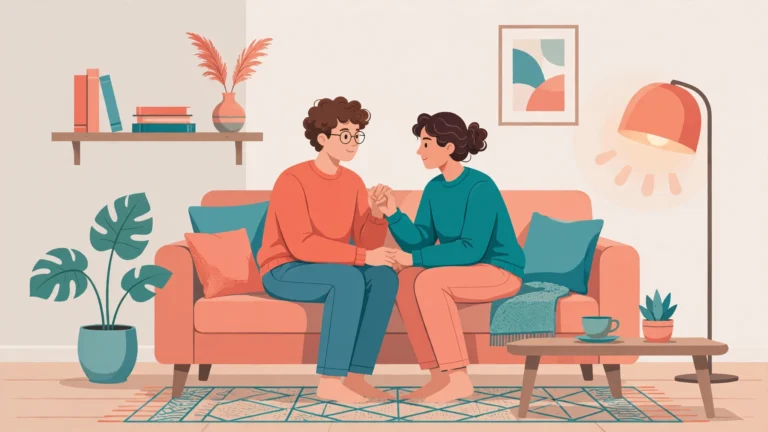
Couples who recover from the feeling that sex feels like a chore almost always describe one turning point: an honest conversation. But the way that conversation happens determines whether it opens a door or starts a war. These ground rules come from couples therapy practice:
- Choose a neutral moment. Never raise it in the bedroom, right after a rejection, or during conflict. A calm weekend morning or a quiet walk works far better.
- Lead with “I” statements. Compare “You never want me anymore” with “I miss feeling close to you.” The first invites defensiveness; the second invites empathy. Explain that a dip in desire is not a rejection of them as a person.
- Name the team. Frame it as a shared project: “We’re on the same side of this, and I want us to figure it out together.”
- Ask before you tell. Try questions like: “How have you been feeling about our physical connection lately?” or “Is there anything that would make intimacy feel better for you right now?” Listening first lowers defenses dramatically.
- Share specifics, not complaints. Instead of “our sex life is boring,” try “I really loved it when we used to linger over slow mornings together.” Concrete, positive memories give your partner something to move toward.
- Agree on a next step. End the conversation with one small, shared action — a date night, a tech-free evening, an appointment with a counselor — so the talk leads somewhere.

The Two-Week No-Pressure Touch Agreement
Sex therapists have long used a structured exercise called sensate focus to break the pressure cycle, and couples can adapt the core idea at home: a short-term agreement that removes all performance expectations.
How it works: For two weeks, you and your partner agree that physical intimacy will not progress to intercourse or orgasm. Instead, you schedule two or three relaxed sessions of non-sexual touch — massage, cuddling, slow hand-holding, exploring what touch feels pleasant without any destination.
The rules matter:
- No goal, no scorekeeping, no “did it work” debriefing afterward.
- Either partner can pause or adjust the touch at any time — comfort first.
- Keep sessions short (20–30 minutes) and separate from bedtime, so exhaustion does not sabotage them.
- Talk about what you notice — “that feels relaxing” — rather than performing.
Couples often report that within days, touch starts to feel pleasurable again instead of loaded, retraining the nervous system to associate closeness with safety rather than pressure. Many find that desire returns on its own once the “chore” framing dissolves. For structured exercises in this spirit, see our couples intimacy exercises guide.
Break the Bedroom Script
Once pressure is off, the next step is rebuilding novelty. For couples where sex feels like a chore, research on long-term desire consistently finds that those who maintain satisfying sex lives share one habit: they keep introducing small amounts of newness. You do not need dramatic changes — small breaks from routine compound.
- Change the time. If intimacy always happens at 11 p.m. when you are both exhausted, it will always feel like overtime. Experiment with mornings, afternoons, or weekend “day dates” — a compromise on timing can matter more than any technique.
- Change the setting. A different room, a weekend away, even a living-room picnic with the phones off. Environment cues the brain that “this is different,” which is exactly the signal desire needs.
- Build anticipation. Scheduling intimacy does not have to feel clinical. A planned date creates anticipation — a message during the day, a compliment in the morning — and anticipation is itself a form of arousal. Think of scheduling not as an appointment but as a reservation you both look forward to.
- Expand the definition of intimacy. Therapists often recommend “outercourse” — kissing, massage, mutual exploration without intercourse as the goal — as a way to keep physical connection alive while reducing performance pressure. Some of the most satisfying sessions couples report involve no intercourse at all.
- Add one sensory element. Music, scent, candlelight, a warm bath together. A single new sensory input can shift the entire emotional register of an evening.
- Return to dating. Regular date nights, new shared hobbies, even an overnight trip can recreate the sense of discovery that fueled early desire. As Harvard’s sexual health experts note, doing something different and spontaneous together can generate excitement that carries back into the bedroom.
When It’s Time to See a Doctor or Therapist
Most desire slumps respond to the strategies above — even ones where sex feels like a chore. But some situations call for professional help, and recognizing them early matters.
See your doctor if:
- Desire dropped suddenly or severely, which can signal hormonal, neurological, or cardiovascular issues.
- Low desire persists for six months or more and causes personal distress — clinicians may assess for hypoactive sexual desire disorder (HSDD) or female sexual interest/arousal disorder.
- Sex is painful, which is always worth investigating and often treatable.
- You suspect a medication is affecting desire — your prescriber can review options.
- Depression or anxiety is present, since both suppress desire directly and can also be affected by treatment.
Consider a sex therapist or couples counselor if: communication keeps breaking down, desire differences are causing conflict, past experiences or trauma are involved, or you have tried self-help strategies for a few months without progress. Therapy is not a last resort; couples who go earlier tend to resolve things faster. If you are unsure which professional fits, our comparison of sex therapy vs. couples therapy can help you decide.
Frequently Asked Questions
Is it normal when sex feels like a chore?
Yes — when sex feels like a chore, it is one of the most common complaints in long-term relationships. Desire naturally fluctuates with stress, sleep, health, life stage, and relationship dynamics. A chore phase is common and usually reversible. It becomes a clinical concern when low desire persists for six months or more, causes significant distress, or comes with pain, depression, or sudden change.
What if my partner wants sex more often than I do?
Desire discrepancy — partners wanting different frequencies — is the single most common sexual complaint couples bring to therapy. The goal is not to make your drives identical but to find a rhythm both partners can feel good about. Open, blame-free conversation is the starting point; compromises might include non-intercourse intimacy, scheduled connection time, or addressing hidden factors like stress, sleep, and mental load.
Does scheduling sex make it feel like more of a chore?
For couples where sex feels like a chore, scheduling intimacy can make it feel like more of a chore if you frame it as an obligation — but most therapists report the opposite when couples do it well. A scheduled date creates anticipation, removes the awkwardness of initiation, and signals intimacy is a priority rather than a leftover — treat it like a date you look forward to, not a meeting you attend. If scheduling feels clinical, start with scheduling non-sexual connection time instead.
Can low desire be caused by medication?
Absolutely. Certain antidepressants, blood pressure medications, hormonal treatments, and other drugs are known to reduce libido or interfere with arousal. Because the change is gradual, couples often blame the relationship first. Never change a medication on your own, but do raise it with your clinician — adjustments or alternatives often exist.
What is responsive desire?
Responsive desire is a model from sex research describing desire that emerges after intimate or erotic stimulation begins, rather than appearing spontaneously beforehand. Many people — particularly in long-term relationships — primarily experience responsive desire. It reframes the “waiting for the mood” trap: instead of waiting to feel desire before being intimate, couples begin with willingness and warmth, and desire develops during the experience.
How long should we try on our own before seeing a therapist?
There is no fixed deadline, but a reasonable guide is: if you have had honest conversations and tried consistent strategies for two to three months without improvement, or if the issue is causing recurring conflict, professional help is worthwhile. You do not need to be in crisis to benefit — couples therapists and sex therapists routinely help couples who simply feel stuck.
Can couples recover desire after years of disconnection?
Yes. Even when sex feels like a chore after years of disconnection, therapists regularly work with couples who have gone years with little intimacy and help them rebuild it. The process usually starts with restoring emotional safety and non-sexual affection, then gradually reintroducing physical intimacy without pressure. Long disconnection does not mean permanent disconnection — but it does mean patience and, often, professional guidance help.
This article is for educational purposes only and is not medical advice. It does not replace evaluation by a qualified healthcare professional. If you are concerned about your sexual health, a sudden change in desire, or symptoms such as pain, depression, or medication side effects, please consult your doctor or a licensed therapist.