Vaginal pH Balance: What It Means and Why It Matters
Vaginal pH balance explained in plain terms: your vagina maintains a slightly acidic environment, normally between 3.8 and 4.5 on the pH scale. That acidity is not a flaw — it is your body’s built-in defense system. A balanced pH keeps protective bacteria thriving while making it harder for yeast, bacterial vaginosis (BV), and other infections to take hold. When pH drifts too far in either direction, symptoms like unusual odor, itching, or changed discharge often follow.
Below: what vaginal pH is, why it shifts with your cycle and age, what disrupts it, how to test it at home, and when symptoms mean seeing a doctor.
Think of this guide as vaginal pH balance explained from the ground up: the science behind the acidity, how it moves with your cycle, what knocks it off course, and how to test it.
Vaginal pH Balance Explained: The Acidic Shield
The pH scale runs from 0 to 14: below 7 is acidic, 7 is neutral (pure water), above 7 is alkaline. During the reproductive years — roughly ages 15 to 49 — a healthy vaginal pH sits at or below 4.5, most often 3.8 to 4.2, about as acidic as orange juice.
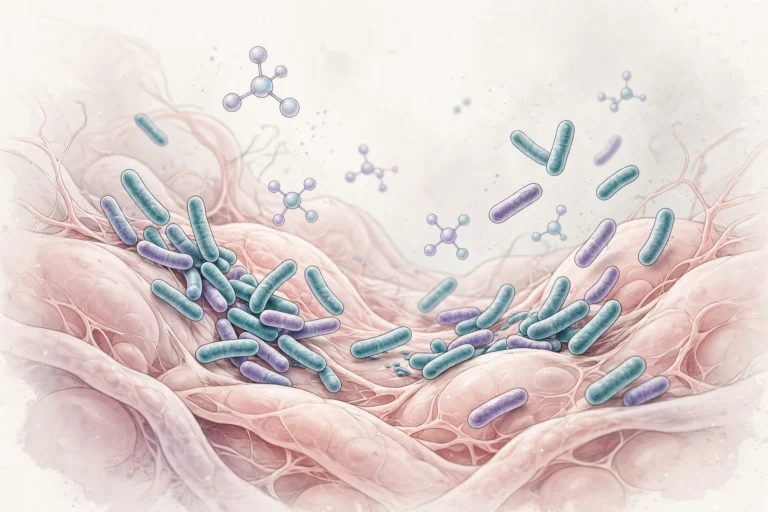
This acidity is not accidental. It is produced by lactobacilli, the dominant “good” bacteria in the vagina, through a mechanism doctors describe simply: estrogen encourages vaginal cells to store glycogen (a carbohydrate); lactobacilli feed on that glycogen and release lactic acid, which keeps the environment acidic. That acid inhibits harmful bacteria, yeast like Candida, and organisms such as Gardnerella vaginalis that drive BV.
That feedback loop — estrogen, glycogen, lactobacilli, acid — is vaginal pH balance explained at its most fundamental.
In short, that is vaginal pH balance explained at the cellular level: estrogen feeds glycogen, glycogen feeds lactobacilli, and lactobacilli make the acid that protects you. When estrogen drops — before puberty, after menopause, or during breastfeeding — lactobacilli decline, glycogen shrinks, and pH naturally rises above 4.5. That is why postmenopausal women are more prone to BV and urinary tract infections, and why vaginal dryness and irritation often accompany the change. For more on how discharge itself reflects this chemistry, see our guide to vaginal discharge: what’s normal and what isn’t.
How pH Shifts Across Your Menstrual Cycle
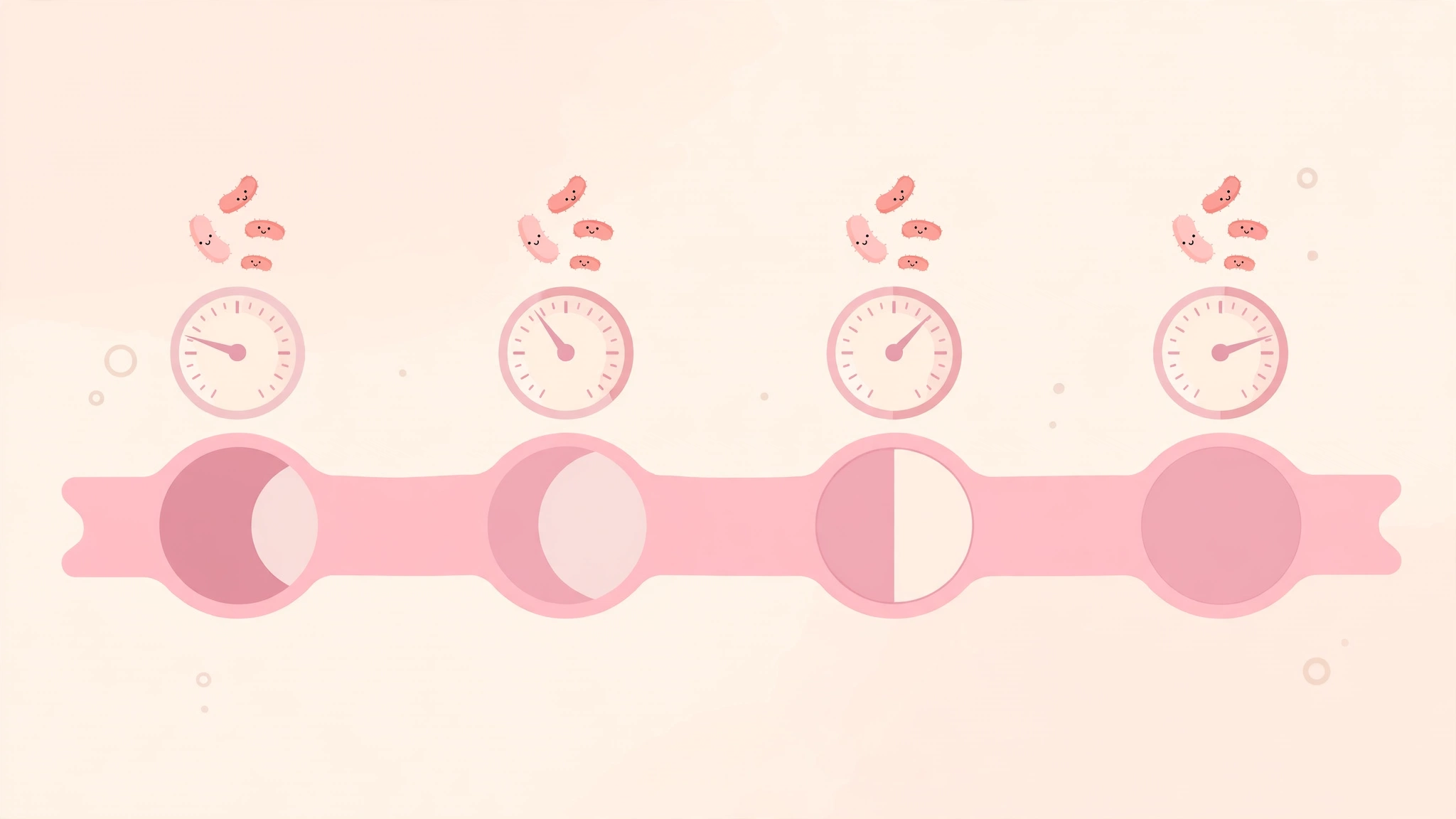
Most articles quote a single “normal” range, but your pH is not a fixed number. It moves through your cycle in a predictable rhythm:
Seeing vaginal pH balance explained across the menstrual cycle helps you tell normal fluctuations from warning signs.
- Menstruation (days 1–5): pH rises toward 5–7. Menstrual blood (pH ~7.4) temporarily neutralizes acidity as it flows through the vaginal canal. The stronger, metallic scent many notice during their period reflects this shift, not poor hygiene.
- Follicular phase (days 6–13): pH settles back toward 4.0–4.5 as estrogen climbs and lactobacilli rebuild the acidic environment.
- Ovulation (around day 14): pH may dip slightly lower. Estrogen peaks, glycogen production is at its highest, and lactobacilli are most active — the acidic shield is strongest just when fertility peaks.
- Luteal phase (days 15–28): pH creeps up mildly as progesterone rises. Some women notice they are more susceptible to yeast infections in this phase, particularly if they get recurrent yeast infections.
Beyond the monthly cycle, pH shifts across a lifetime. Before puberty, pH is closer to neutral (around 6–7) because estrogen is low. In pregnancy, pH typically becomes more acidic as estrogen surges, which helps protect against ascending infections. After menopause, it climbs toward 5 or higher as estrogen falls, a change tied to genitourinary syndrome of menopause (GSM): dryness, burning, and more frequent UTIs. Understanding these rhythms is a core part of vaginal pH balance explained properly — pH is a moving target, not a fixed number.
What Raises Vaginal pH: The Common Disruptors
Once you have vaginal pH balance explained, the next question is always: what throws it off? Temporary fluctuations are normal and self-correcting. But some habits and exposures push pH upward repeatedly, giving harmful microbes repeated chances to overgrow:
In short, vaginal pH balance explained through everyday habits comes down to one rule: fewer alkaline exposures, steadier protection.
- Douching: the most studied disruptor. Rinsing the vagina washes away lactobacilli along with everything else, and research consistently links douching with higher BV rates. Clinicians advise never doing it.
- Semen: semen is alkaline (pH 7.2–8.0), so after unprotected sex, vaginal pH can stay elevated for hours. This normally self-corrects, but frequent exposure plus other disruptors can tip the balance.
- Antibiotics: they kill bacteria indiscriminately — including lactobacilli. This is why yeast infections often follow a course of antibiotics. Lactobacillus probiotics may help repopulate the flora afterward; ask your doctor.
- Hormonal contraceptives: birth control pills alter estrogen and progesterone, and some people notice more frequent yeast infections or BV after starting them. Report the pattern to your doctor — it does not mean the pill is unsafe.
- Harsh soaps, scented washes, and “feminine” sprays: regular soap sits around pH 9–10 and strips protective bacteria. The vagina is self-cleaning; warm water and an unscented cleanser on the external vulva only is what the NHS recommends.
- Some lubricants: several commercial lubricants have a pH well above 4.5, which can briefly suppress lactobacilli. If you use lubricants regularly, choose water- or silicone-based products marketed as pH-balanced for vaginal use.
- Prolonged moisture: damp underwear, wet swimsuits, and tight synthetics trap warmth and moisture that favor yeast overgrowth. Change promptly and choose cotton underwear.
What an Unbalanced pH Feels Like
pH imbalance itself has no unique symptom — what you notice are the infections it invites. Signs that your pH may be off include:
This is vaginal pH balance explained through symptoms rather than numbers.
- A fishy or otherwise unpleasant odor, especially after sex (a classic BV marker)
- More discharge than usual, or discharge that looks gray, green, yellow, or cottage-cheese-like
- Itching, burning, or irritation in or around the vagina
- Pain during or after sex
- Burning when you urinate
Here is vaginal pH balance explained in the diagnostic terms clinicians actually use: yeast infections typically occur at a normal or low pH (below 4.5), while BV and trichomoniasis show up with elevated pH (above 4.5). Measuring pH can therefore narrow down which infection you might have — but it cannot diagnose anything on its own. A high pH reading is a reason to get evaluated, not to self-treat.
How to Check Your Vaginal pH at Home
Over-the-counter vaginal pH test kits are widely available at pharmacies. Here is how they work and how to read the results:
For vaginal pH balance explained in practical home-testing terms, the three rules are simple: the right kit, the right day, and the right technique.
- Buy a proper vaginal pH kit (not pool or aquarium strips — the range and accuracy differ). Kits typically include sterile swabs or paper strips plus a color comparison chart.
- Test at a neutral time. Avoid testing during your period, within 24 hours of sex, or right after douching or using vaginal products — all of these skew the reading.
- Follow the kit instructions. Usually you briefly press the strip against the vaginal wall, then compare the color change to the chart within the stated time window.
- Interpret the result. A reading of 3.8–4.5 suggests a normally acidic environment. A reading above 4.5 is elevated and, combined with symptoms, points toward BV or trichomoniasis. A reading below 3.8 with symptoms is more consistent with a yeast infection — though only a clinician can confirm.
- Do not over-interpret a single reading. pH naturally fluctuates — one high reading on the day your period starts is not a diagnosis. Track the pattern alongside symptoms and bring both to your appointment.
Mayo Clinic notes that pH testing alone is not a reliable diagnostic test — it is one data point among several. Still, for vaginal pH balance explained in practical terms, a home test tells you which direction to investigate and can prompt earlier care. You can review how Mayo Clinic approaches vaginitis diagnosis and treatment to see where pH testing fits into a full workup.

How Doctors Test pH in the Clinic
With vaginal pH balance explained from the patient’s side, here is the clinical version. When you see a clinician for suspected pH-related problems, the workup goes well beyond a strip:
- Clinical pH measurement: the doctor applies pH paper directly to the vaginal wall — the same principle as home kits, but timed and interpreted with the full clinical picture.
- Amsel criteria for BV: BV is diagnosed when at least three of four findings are present — thin gray discharge, pH above 4.5, a fishy odor when potassium hydroxide solution is added (“whiff test”), and clue cells under the microscope.
- Wet mount / saline microscopy: a drop of vaginal fluid is examined under a microscope for clue cells (BV), budding yeast (yeast infection), or motile trichomonads (trichomoniasis).
- Lab cultures and DNA-based testing: when microscopy is inconclusive, or infections keep returning, samples go to the lab for culture or molecular testing, which identifies the exact organisms and guides targeted treatment.
That is vaginal pH balance explained from the doctor’s chair: the number informs the diagnosis but never replaces it.
What doctors generally do not is treat a number. Treatment targets the diagnosed condition — prescription medications for BV or trichomoniasis, antifungals for yeast infections — not the pH reading itself. Your clinician chooses therapy based on the diagnosis, your history, and whether infections recur.
Can You “Fix” Your pH? What Actually Helps
With vaginal pH balance explained, the next question is whether you can “fix” it. The good news: the vagina usually restores its own balance once the disruptor is removed. These evidence-supported habits give it the best chance:
As a self-care plan, vaginal pH balance explained starts with removing the disruptor and letting the flora recover on its own.
- Never douche, and skip scented sprays, deodorants, and wipes on the vulva
- Wash the external vulva only, with warm water or an unscented cleanser — the NHS guidance on vulva and vagina care emphasizes this clearly
- Change tampons, pads, and menstrual cups on schedule; menstrual cups may disturb pH less than tampons
- Wear breathable cotton underwear and change out of damp clothes promptly
- Consider lactobacillus-containing probiotics after antibiotics, with your doctor’s input
- Use condoms during sex, which reduce both alkaline semen exposure and STI risk
What you should skip: home remedies that promise to “rebalance” pH overnight. The vagina does not reset in a night, and some popular fixes create more harm than the imbalance itself.
5 Common Myths About pH Products
Walk down any pharmacy aisle and you will find products promising a “perfect pH.” Much of the confusion around vaginal pH balance explained online comes from product marketing. Here is what the evidence actually says:
Getting vaginal pH balance explained through product marketing is how most of these myths spread — here is what the evidence says instead.
- Myth 1: “pH-balanced” washes make your vagina healthier. Products labeled “pH-balanced” usually mean pH ~4.5, which matches vaginal acidity — but they are only for external vulvar use. Nothing you wash with changes the pH inside the vagina, and internal use of any wash is discouraged.
- Myth 2: Apple cider vinegar “resets” vaginal pH. No clinical evidence supports apple cider vinegar — orally or as a douche — for correcting vaginal pH. Used internally, it irritates delicate tissue and can worsen infections. Doctors advise against it.
- Myth 3: Boric acid suppositories cure every imbalance. Boric acid has legitimate evidence for recurrent BV and yeast infections under medical supervision, but it is toxic if swallowed, unsafe in pregnancy, and not a DIY first step. Never use it without a clinician’s guidance.
- Myth 4: Eating yogurt or taking probiotics instantly lowers pH. Probiotics with specific Lactobacillus strains show promise for preventing recurrent BV in studies, but effects take time, strains matter, and probiotics cannot replace diagnosis or treatment of an active infection.
- Myth 5: Vaginal steaming balances pH naturally. Steaming (yoni steaming) has no proven benefit for pH or vaginal health, and case reports document burns and infections. Clinicians recommend against it.
When to See a Doctor
No guide to vaginal pH balance explained is complete without clear red flags. Make an appointment promptly if you notice any of the following — these patterns need diagnosis, not home remedies:
Consider this the safety chapter of vaginal pH balance explained: persistent symptoms always deserve professional evaluation.
- A strong fishy odor that persists after bathing
- Gray, green, or yellow discharge, or discharge that is frothy or foamy
- Burning, itching, or pain that does not resolve in a couple of days
- Pain during sex or burning with urination
- Symptoms that keep returning after treatment (recurrent infections need a different plan)
- Any symptoms during pregnancy — do not self-treat while pregnant
At the visit, your doctor will ask about symptoms, recent sexual activity, medications, and hygiene habits, then perform a pelvic exam and take samples for testing. An accurate diagnosis saves you time, money, and discomfort — treatment always depends on the cause.
FAQs
Below is vaginal pH balance explained in quick answers to the questions readers ask most often.
What is the normal vaginal pH range?
During the reproductive years (roughly ages 15–49), a healthy vaginal pH is between 3.8 and 4.5 — moderately acidic. Before puberty and after menopause, a healthy pH is naturally higher, often above 4.5, because estrogen levels are lower. These ranges are vaginal pH balance explained through hormones: estrogen sets the stage, and lactobacilli do the rest.
Can vaginal pH change during my period?
Yes — menstrual blood has a pH of about 7.4, so pH rises during your period and usually returns to its acidic baseline within a day or two after bleeding stops. That is why some people notice a stronger, metallic odor while menstruating. It is a normal, temporary shift, not a sign of infection.
Does semen affect vaginal pH balance?
Yes, temporarily. Semen is alkaline (around pH 7.2–8.0), so after unprotected sex, vaginal pH can stay elevated for several hours before the vagina restores its acidity on its own. If you also notice odor or symptoms afterward, get checked — BV flares are common after pH is repeatedly disrupted.
Can I test my vaginal pH at home?
Yes. Over-the-counter vaginal pH kits use a strip and color chart to estimate your pH. They cannot diagnose infections — Mayo Clinic notes pH testing alone is not a reliable diagnostic — but they help narrow down the likely cause and can prompt earlier care. Test outside your period and at least 24 hours after sex for accuracy.
What happens if vaginal pH is too high?
An elevated pH (above 4.5) makes it easier for harmful bacteria to overgrow. The most common consequence is bacterial vaginosis — thin gray discharge with a fishy odor. A high pH also increases susceptibility to trichomoniasis and, indirectly, to STIs. Persistent elevation with symptoms warrants a doctor’s visit, not self-treatment.
Can diet or probiotics restore vaginal pH?
They may support the process but cannot fix an active infection. Fermented foods and lactobacillus-containing probiotics can help maintain healthy flora, especially after antibiotics, and studies suggest specific strains help prevent recurrent BV. For treating an existing infection, doctors prescribe targeted medication — probiotics are a supporting measure, not a substitute.
Medical disclaimer: This article is for educational purposes only and is not a substitute for professional medical advice, diagnosis, or treatment. Vaginal pH and related conditions vary from person to person. Always consult a qualified healthcare professional — such as your OB-GYN or primary care doctor — about symptoms, testing, or treatment. If you are experiencing persistent or worsening symptoms, seek medical care promptly.