How Stress and Anxiety Affect Intimacy Between Partners
Few couples ever sit down and decide to let their intimate life fade. Yet for millions of partners, that is exactly what happens — not because of a lack of love, but because of pressure, worry, and exhaustion. Understanding how stress and intimacy interact in relationships is the first step toward reversing the pattern. When chronic pressure keeps the body in a state of alert, the biological systems that support desire, arousal, and emotional closeness are quietly pushed aside. This guide explains the science behind the connection, the warning signs to watch for, and what doctors recommend for couples who want to reconnect.
The Biology of Stress and Intimacy at a Physical Level
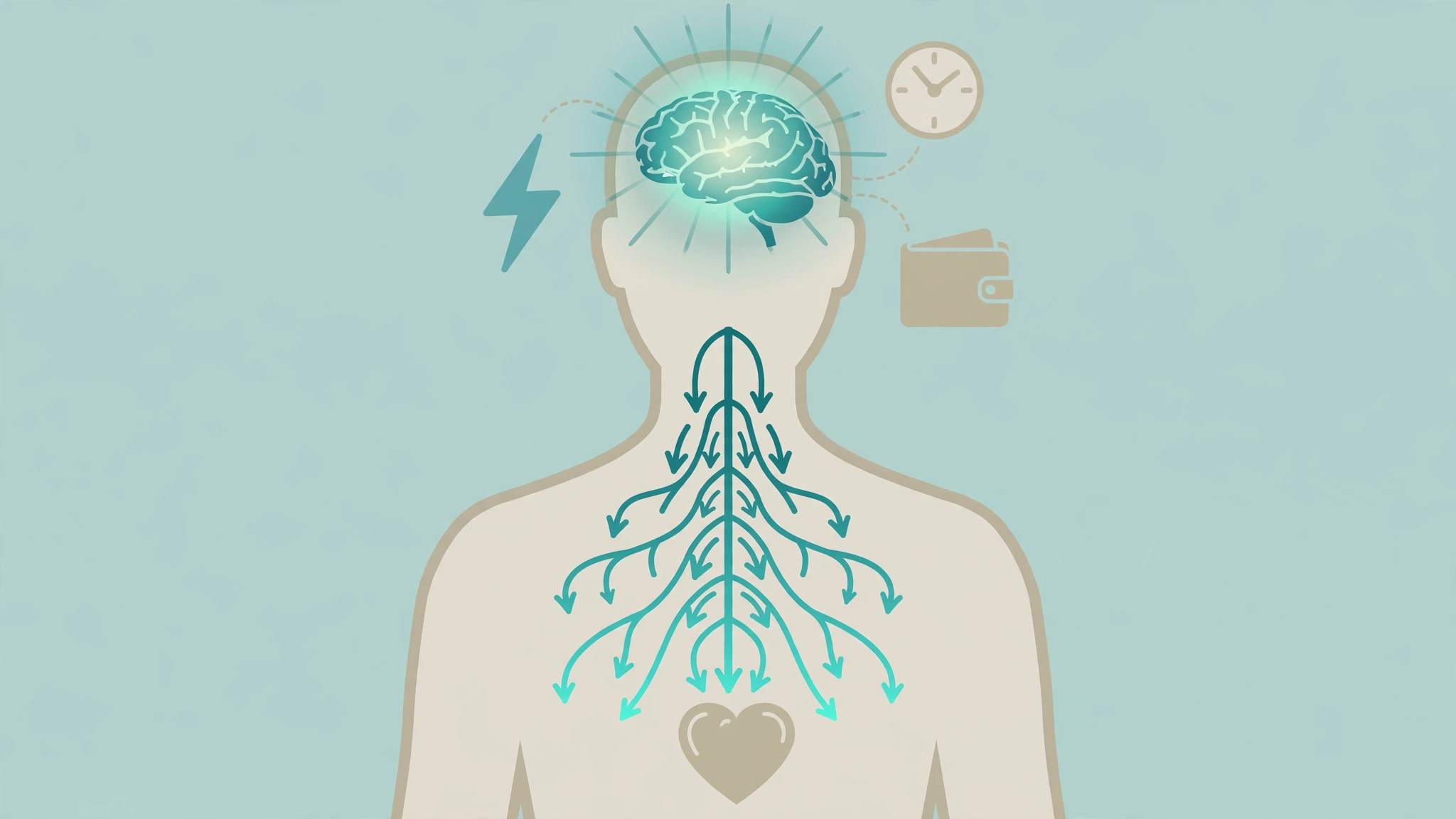
Intimacy is not just an emotional choice; it is a biological event that requires the body to be in a state of safety and relaxation. The way stress and intimacy interact begins in the nervous system, where two opposing branches compete for control of the body’s resources.
The sympathetic versus parasympathetic conflict
Sexual arousal depends on the parasympathetic nervous system — the “rest and digest” state that allows blood flow to increase, muscles to relax, and attention to settle into the present moment. Stress and anxiety activate the sympathetic nervous system — the “fight or flight” response — which diverts blood flow away from non-essential functions toward large muscle groups and floods the body with cortisol and adrenaline. These two states are physiologically opposed: the body cannot fully relax into arousal while it is simultaneously preparing for a threat. This is one of the core reasons stress and intimacy collide so reliably, and it has nothing to do with attraction or commitment.
Cortisol, the HPA axis, and sex hormones
When a stressor appears, the hypothalamic-pituitary-adrenal (HPA) axis releases cortisol. In short bursts, this is healthy. But when stress becomes chronic, persistently elevated cortisol suppresses the production of sex hormones — including testosterone, estrogen, and progesterone — in both men and women. The Cleveland Clinic and other medical authorities note that prolonged stress disrupts hormonal balance, which directly lowers desire and physical responsiveness. Over months or years, this hormonal shift creates an internal environment in which sexual interest simply cannot thrive, which is another pathway through which stress and intimacy interfere with each other.
Acute stress versus chronic stress: a crucial distinction
Here is a nuance most articles miss. Short-term, acute stress can actually heighten arousal in some people — the body mistakes the adrenaline rush for excitement, which is why “make-up” intimacy after an argument sometimes feels intense. Chronic stress is a different story entirely. Research on allostatic load — the cumulative wear of prolonged stress — shows that sustained activation of the stress response eventually exhausts the body’s coping resources, flattening desire and dulling physical sensation. If stress and intimacy clash even during calm, ordinary weeks with no obvious crisis, chronic background pressure is usually the culprit, not a single stressful event.
How Stress and Intimacy Collide in Couples: 6 Common Patterns
When clinicians talk about how stress and intimacy interact, they describe recognizable patterns rather than a single symptom. Most couples experience several of these at once:
- Fading desire. The most common effect. Chronic stress drains mental and emotional energy, leaving little interest in physical closeness. This is not rejection of the partner — it is the body’s survival mode overriding its bonding systems.
- Arousal difficulties. In men, stress-related arousal problems may include difficulty achieving or maintaining an erection. In women, stress can reduce natural lubrication and physical responsiveness. For a deeper look at the male-specific pathway, see our guide on how stress affects erectile function.
- Mental distraction during closeness. Anxiety pulls attention toward worries — work deadlines, finances, parenting — and away from physical sensation. Clinicians call the anxious self-monitoring pattern “spectatoring”: mentally watching and judging oneself instead of experiencing the moment.
- Emotional distance. Preoccupation with obligations leaves partners feeling like roommates or co-managers rather than lovers. Emotional intimacy usually fades first; physical intimacy follows.
- Avoidance and irritability. Some partners withdraw or become short-tempered when stressed, which their partner misreads as disinterest. The result is a cycle: less closeness, more tension, even less closeness.
- Performance anxiety. After one or two difficult experiences, worry about “what will happen this time” can itself block arousal — a self-fulfilling cycle that is physiological, not a character flaw.
The table below summarizes the main ways stress and intimacy interact across different stress sources:
| Stress source | Typical effect on intimacy |
|---|---|
| Work pressure and long hours | Exhaustion, mental distraction, less time for connection |
| Financial worries | Emotional distance, irritability, reduced desire |
| Parenting and caregiving | Fatigue, feeling “touched out,” loss of couple identity |
| Health anxiety or chronic illness | Fear around the body, avoidance of physical closeness |
| Unresolved relationship conflict | Resentment that blocks both emotional and physical warmth |
| Generalized anxiety disorder | Persistent arousal difficulties, spectatoring, avoidance |
When One Partner’s Stress Becomes the Couple’s Problem
Most guides treat stress as an individual issue, but relationship research reveals something more complex: stress crossover. Studies of couples show that one partner’s work stress measurably affects the other partner’s mood, sleep, and even cortisol levels — the stress is literally contagious. This is why stress and intimacy suffer even when only one partner is under pressure. A partner who comes home depleted may be physically present but emotionally unavailable, and the other partner often interprets the withdrawal as rejection.
Stress also tends to travel through different pathways for men and women. Research in sexual medicine consistently finds that men’s stress-related intimacy problems center more on performance — worry about physical response — while women’s center more on emotional disconnection — difficulty feeling mentally present and safe enough to engage. Neither pattern is a rule, but recognizing the difference helps couples avoid the most common misunderstanding: she feels unheard, he feels pressured, and both feel blamed. Naming these patterns out loud, without judgment, is often the turning point. Couples who understand how stress and intimacy differ for each partner argue less and reconnect faster.
Stress and Intimacy: Warning Signs to Take Seriously
Occasional dips in desire during a hard week are normal and not a medical concern. The way stress and intimacy interact becomes a problem worth addressing when the pattern persists. Doctors suggest paying attention when:
- Reduced interest or physical difficulty continues for several months rather than days or weeks
- Intimacy has become a source of distress, arguments, or avoidance in the relationship
- You notice physical symptoms such as persistent pain, erectile difficulties, or inability to reach orgasm alongside the emotional strain
- Stress or anxiety is clearly the trigger — symptoms worsen during high-pressure periods and ease during restful ones
- Either partner has started avoiding all physical affection, not just sex — a sign the emotional bond needs attention
- Low mood, panic, or hopelessness accompany the changes, which may point to depression or an anxiety disorder
If exhaustion is the dominant feeling rather than worry, the cause may overlap with fatigue-related desire loss — our article on being too tired for sex and what it does to libido explores that connection in depth.
What Doctors Recommend: Evidence-Based Ways to Reconnect
Generic advice like “just relax” rarely helps. The following approaches are the ones clinicians actually recommend when stress and intimacy collide, because they target the nervous-system conflict directly rather than fighting it. Each of these approaches targets a different pathway through which stress and intimacy affect each other.
1. The stress-reducing conversation
Relationship researchers recommend a structured daily ritual: each partner gets 15 to 20 minutes to talk about stress outside the relationship — work, family, worries — while the other listens without problem-solving. Ending with a small gesture of affection (a hug, holding hands) signals that you are a team facing the stress together, not two people competing for energy. Couples who practice this consistently report lower stress and warmer connection.
2. Sensate focus exercises
Sensate focus is a structured technique used in sex therapy that removes performance pressure entirely. Partners take turns touching each other in non-demand ways, focusing only on the sensations they feel rather than on any outcome. Over several sessions, comfort with touch is rebuilt gradually. Because it trains the nervous system to stay present instead of spiraling into anxious self-evaluation, it is particularly effective when stress and intimacy collide through spectatoring and performance worry.
3. Protect sleep as a couple
Poor sleep and chronic stress amplify each other, and fatigue is one of the strongest immediate suppressors of desire. Doctors routinely advise couples to treat sleep as part of their intimate life: consistent bedtimes, screens off before bed, and addressing snoring or insomnia. When rest improves, emotional bandwidth and physical energy for closeness often return on their own.
4. Move the body, calm the mind
Regular aerobic exercise is one of the most evidence-backed interventions for both stress and low desire: it lowers cortisol, improves mood, lifts body image, and enhances blood flow. Mindfulness practices — even ten minutes of daily breathing exercises or meditation — train the nervous system to shift out of fight-or-flight mode. The Mayo Clinic’s guidance on low libido highlights exercise, stress management, and open communication as first-line lifestyle steps, a position echoed across major medical institutions. Read more at Mayo Clinic News Network: Let’s Talk Low Libido.
5. Schedule connection, not just sex
When life is overloaded, waiting to “feel in the mood” means intimacy never happens. Clinicians suggest scheduling protected couple time — a weekly date, a nightly wind-down ritual — with no expectation that it must lead anywhere physical. Paradoxically, removing the pressure often restores desire, because the nervous system finally gets the signal that closeness is safe. Over time, this consistent safety signal reverses the pattern in which stress and intimacy suffer.
When Stress-Related Intimacy Problems Need Professional Help
There is an important line between stress-related dips that respond to lifestyle changes and clinical conditions that need professional care. Consider seeing a doctor or therapist when stress and intimacy suffer persistently despite genuine efforts to reduce stress. A proper evaluation typically covers three areas: medical history (including chronic conditions like diabetes or thyroid disorders that affect desire), medication review (some antidepressants, blood pressure drugs, and hormonal contraceptives can lower libido — never stop a medication without medical guidance), and mental health screening for depression or anxiety disorders. A professional can also clarify exactly how stress and intimacy interact in your situation, ruling out other medical causes.
Depending on the findings, doctors may recommend counseling such as cognitive-behavioral therapy (CBT), which research shows significantly improves both sexual symptoms and relationship satisfaction; referral to a certified sex therapist for structured exercises like sensate focus; or couples therapy when communication patterns are part of the problem. For persistent low desire that meets clinical criteria, physicians can also discuss whether further medical evaluation, such as hormone testing, is appropriate. What matters most is treating the underlying driver — psychological, physical, or both — rather than guessing at a single cause.
FAQs
Can stress make you lose interest in your partner?
Stress rarely kills love, but it can temporarily suppress the feelings of desire and warmth toward a partner. Chronic pressure keeps the nervous system in survival mode, which dampens attraction signals and emotional availability. Most couples find that interest returns once the underlying stress is addressed, which is why treating the stress itself matters more than forcing intimacy.
Is it normal to not want sex during stressful times?
Yes, it is completely normal — one of the most common ways stress and intimacy interact. Desire naturally dips during demanding periods — illness, job pressure, grief, or major life changes — because the body prioritizes coping over bonding. Doctors consider it a concern only when the loss of interest persists for months, causes personal distress, or creates ongoing tension in the relationship.
How do I stop overthinking during intimacy?
Anxious self-monitoring, sometimes called spectatoring, is best addressed by redirecting attention to physical sensation rather than fighting the thoughts. Slow breathing, focusing on touch and warmth, and sensate focus exercises used in sex therapy can retrain the mind to stay present. If overthinking is persistent, cognitive-behavioral therapy is an effective, evidence-based option. It directly targets the mental loop through which stress and intimacy collide for overthinkers.
Can anxiety make it harder for a woman to climax?
Yes. Anxiety activates the sympathetic nervous system, which interferes with the relaxation and blood flow needed for arousal and orgasm in women — a direct example of how stress and intimacy collide. Mental distraction and muscular tension compound the effect. Because this is a physiological response rather than a lack of attraction, addressing the anxiety — through stress management, therapy, or medical evaluation — often resolves the difficulty.
Should couples avoid sex during stressful periods?
Not necessarily, but pressure should be removed. Gentle, non-demanding physical affection — cuddling, massage, holding each other — maintains the emotional bond without performance expectations. Many therapists advise couples to focus on closeness without goals during high-stress weeks, which paradoxically makes desire more likely to return on its own. This low-pressure approach works precisely because it interrupts the cycle by which stress and intimacy suffer.
How long does it take for desire to return after stress eases?
There is no fixed timeline; it varies from weeks to several months depending on how long the stress lasted and whether hormonal or relationship patterns were affected. Couples who actively rebuild connection through communication, rest, and affectionate touch typically recover faster. If desire has not returned after a few months of reduced stress, a medical evaluation is a sensible next step.
If the way stress and intimacy have been strained in your relationship, consider this your invitation to act: talk openly with your partner about what you are both carrying, protect time for each other the way you protect work deadlines, and do not hesitate to talk to your doctor or a qualified therapist. Rebuilding closeness is a process, and every step — a calmer evening, an honest conversation, a better night’s sleep — moves you closer. Explore our related guides on stress, fatigue, and desire to keep learning together.
Medical disclaimer: This article is for educational purposes only and is not medical advice. It does not replace evaluation by a qualified healthcare professional. If you are experiencing persistent changes in sexual health, anxiety, or depression, please consult your doctor or a licensed mental health professional. Never start, stop, or change any medication without medical guidance.