Early Signs of Pregnancy Before Your Missed Period: 12 to Watch
Early Signs of Pregnancy Before Your Missed Period: 12 to Watch
That stretch of days between ovulation and your expected period can feel endless. You notice every twinge, every wave of tiredness, and wonder: is this it? The earliest signs of pregnancy can be surprisingly subtle — and they don't always show up where you'd expect. Some women notice a change within days of implantation, while others feel absolutely nothing until well after a missed period.
This guide walks you through the 12 most common early clues, when each one realistically appears, and how to tell real pregnancy signs apart from the almost-identical symptoms of PMS. And remember the golden rule: no matter how convincing your symptoms feel, only a test can confirm a pregnancy.
How Soon Can Early Signs of Pregnancy Appear?
It helps to understand the timeline your body is following:
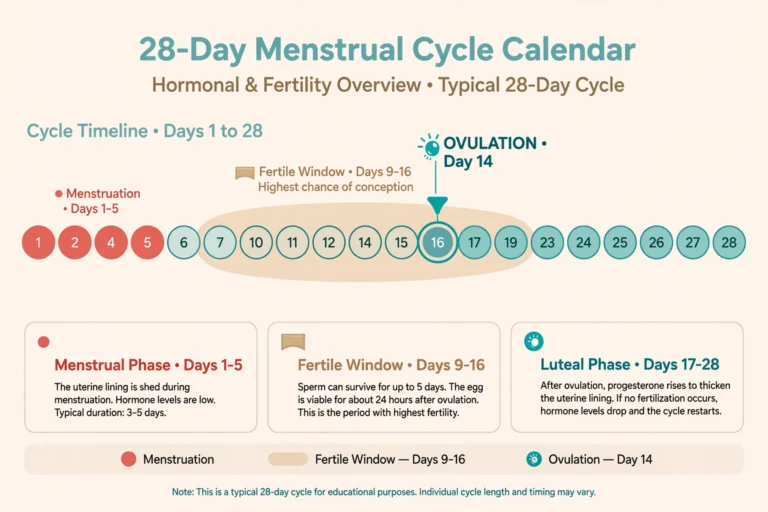
- Fertilization happens in the fallopian tube, usually within 24 hours of ovulation.
- Implantation — when the tiny embryo nestles into the uterine lining — occurs roughly 6 to 12 days later.
- Only after implantation does your body begin producing the pregnancy hormone hCG in measurable amounts.
That means nothing you feel in the first few days after sex can be a pregnancy symptom — there simply isn't enough hormone activity yet. The earliest realistic hints appear around the time of implantation, about a week to ten days after ovulation. The classic, hard-to-miss signs (the missed period itself, morning sickness, constant bathroom trips) usually arrive around week 4 to 6, counted from your last menstrual period.
If you're actively trying to conceive, learning this timeline takes some of the guesswork — and the stress — out of the two-week wait. Our guide on trying to conceive covers the habits that give you the best shot each cycle.
The 12 Early Signs of Pregnancy to Watch
Every pregnancy is different, and no one experiences all of these. Think of this list as a field guide, not a checklist you must complete.
1. Light Spotting (Implantation Bleeding)
One of the very first physical clues is a few drops of pink or brown spotting, typically 6 to 12 days after ovulation. It happens when the embryo burrows into the uterine lining. Unlike a period, implantation bleeding is light, doesn't get heavier, and usually fades within a day or two.
2. Mild Cramping
A dull, period-like cramp that shows up a week or so before your period is due can be a sign of implantation. It's usually gentler than menstrual cramps and doesn't build into a full flow.
3. Tender, Swollen Breasts
Rising estrogen and progesterone make breast tissue swell and become sensitive, sometimes within a week or two of conception. Your breasts may feel heavy, tingly, or sore to the touch. The nipples — and the darker area around them — may also darken slightly.
4. Unusual Fatigue
Needing a nap at 3 p.m. when you normally don't? A sudden surge of progesterone in early pregnancy can leave you deeply sleepy, even after a full night's rest. Many women describe it as a heaviness that coffee barely touches.
5. Nausea (With or Without Vomiting)
Despite the nickname "morning sickness," pregnancy nausea can strike at any hour. It often begins around week 6 but can start earlier. Rising hCG is the likely culprit. Some women feel queasy all day; others never feel a thing.
6. Needing to Pee More Often
Frequent trips to the bathroom can begin surprisingly early. Increased blood volume sends extra fluid through your kidneys, and rising hCG also plays a role. If you're suddenly up at night to urinate when that never used to happen, take note.
7. Bloating
Feeling puffy and gassy before your period is due? The same hormonal shifts that slow digestion in early pregnancy can make you feel bloated, similar to pre-period bloat — which is exactly why this sign is so easy to misread.
8. Food Cravings or Sudden Aversions
A food you normally love suddenly turning your stomach — or an intense, specific craving — is a classic early clue. Shifting hormones can reshape your sense of taste and smell almost overnight.
9. Heightened Sense of Smell
Many newly pregnant women report that everyday odors — cooking, coffee, perfume — suddenly smell overwhelming or unpleasant. This sensitivity is tied to the same hormonal surge behind food aversions.
10. Mood Swings
Feeling tearful one minute and irritable the next? A flood of early-pregnancy hormones affects the brain's chemical messengers, which can make emotions swing more sharply than usual — even before your period is due.
11. Slightly Raised Body Temperature
If you track your basal body temperature, you may notice it stays elevated instead of dropping before your period. A temperature that remains high for more than 18 days after ovulation is one of the more reliable early clues — though it works only if you've been charting consistently.
12. Nasal Congestion or Headaches
Stuffy nose with no cold? Increased blood volume and hormone levels can make the mucous membranes in your nose swell, causing congestion, dryness, or even light nosebleeds. Hormonal headaches can also appear in the first weeks.
One important note: some women experience many of these signs and aren't pregnant, while others are pregnant and feel none of them. A total absence of symptoms means nothing — the test is the only thing that counts.
Pregnancy or PMS? How to Tell the Difference
This is the cruelest part of the two-week wait: early pregnancy signs and premenstrual symptoms overlap heavily. Cramping, sore breasts, bloating, moodiness, and fatigue can all belong to either one. A few patterns can help you tell them apart:
- Bleeding: Implantation spotting is pink or brown, very light, and lasts 1–2 days. A period starts light and gets heavier.
- Cramping: Implantation cramps are brief and mild; period cramps usually intensify as the flow begins.
- Breast tenderness: In PMS it typically eases once bleeding starts; in pregnancy it tends to persist or intensify.
- Fatigue: Feeling wiped out despite good sleep is more characteristic of early pregnancy than of PMS.
- Timing: Symptoms that show up after your period was due are far more meaningful than symptoms during the waiting window.
When in doubt, wait it out and test — symptom analysis alone can't give you an answer.
What to Do During the Two-Week Wait
The waiting days are stressful enough without adding bad habits. Treat your body as though you might be pregnant from ovulation onward:
- Start (or keep taking) folic acid. It's most important in the very first weeks, often before you even know.
- Skip alcohol and limit caffeine. The first weeks are when the embryo's foundation is laid.
- Eat well and rest. Your body may be doing more work than you realize.
- Track your cycle dates. Knowing your ovulation day makes timing a test far more accurate — see our fertile window guide if you're unsure how to pinpoint it.
- Resist testing too early. Testing before your period is due invites false negatives and emotional whiplash. One well-timed test beats five anxious ones.
For broader guidance on preparing your body and your relationship for this journey, the Mayo Clinic's overview of early pregnancy symptoms explains why these changes occur and when a test or doctor visit makes sense.
When to Take a Pregnancy Test — and When to See a Doctor
When to test: Home pregnancy tests are most reliable on or after the first day of your missed period. Testing with your first-morning urine gives the most concentrated hCG and the most accurate result. If the result is negative but your period still hasn't arrived, wait two or three days and test again — hCG roughly doubles every 48 hours in early pregnancy, so a retest often clears things up.
If you're testing early (before your missed period), understand the trade-off: a positive is almost certainly real, but a negative may simply be too early.
When to call your doctor:
- You get a positive test — schedule your first prenatal visit (usually around week 8–10) and start prenatal vitamins if you haven't.
- You have heavy bleeding, severe abdominal pain, or sharp one-sided pelvic pain — these need prompt medical attention, as they can signal a complication such as an ectopic pregnancy.
- You feel dizzy, faint, or experience shoulder pain with spotting — seek care the same day.
- You've been trying for 12 months without success (or 6 months if you're over 35) — it may be time for a fertility evaluation.
Frequently Asked Questions
Can you feel pregnancy symptoms a week after ovulation?
Some women notice very subtle changes — mild cramping or light spotting — around implantation, roughly 6 to 12 days after ovulation. But most classic symptoms (missed period, nausea, strong fatigue) don't appear until week 4 to 6.
Is it possible to be pregnant with no symptoms at all?
Absolutely. Many women feel completely normal through the first weeks. A lack of symptoms says nothing about whether you're pregnant or about how healthy the pregnancy is.
Why is my pregnancy test negative if I have all the symptoms?
The most common reason is testing too early — hCG may not yet be detectable in urine. The second most common reason is that the symptoms are actually PMS. Retest in two to three days with first-morning urine.
How early can a blood test detect pregnancy?
A quantitative hCG blood test can detect pregnancy as early as 6 to 8 days after ovulation — earlier than any home urine test. Your doctor can order one if you need an answer sooner.
The Bottom Line
Early signs of pregnancy — from implantation spotting and breast tenderness to fatigue, nausea, and a missed period — are your body's first whisper that something has changed. They vary enormously from woman to woman and even from pregnancy to pregnancy, so treat them as hints, not answers.
Watch, note what's different for you, take care of yourself during the wait — and let a well-timed test give you the real answer. Whatever the result, you deserve clarity over guesswork, and support whatever comes next.