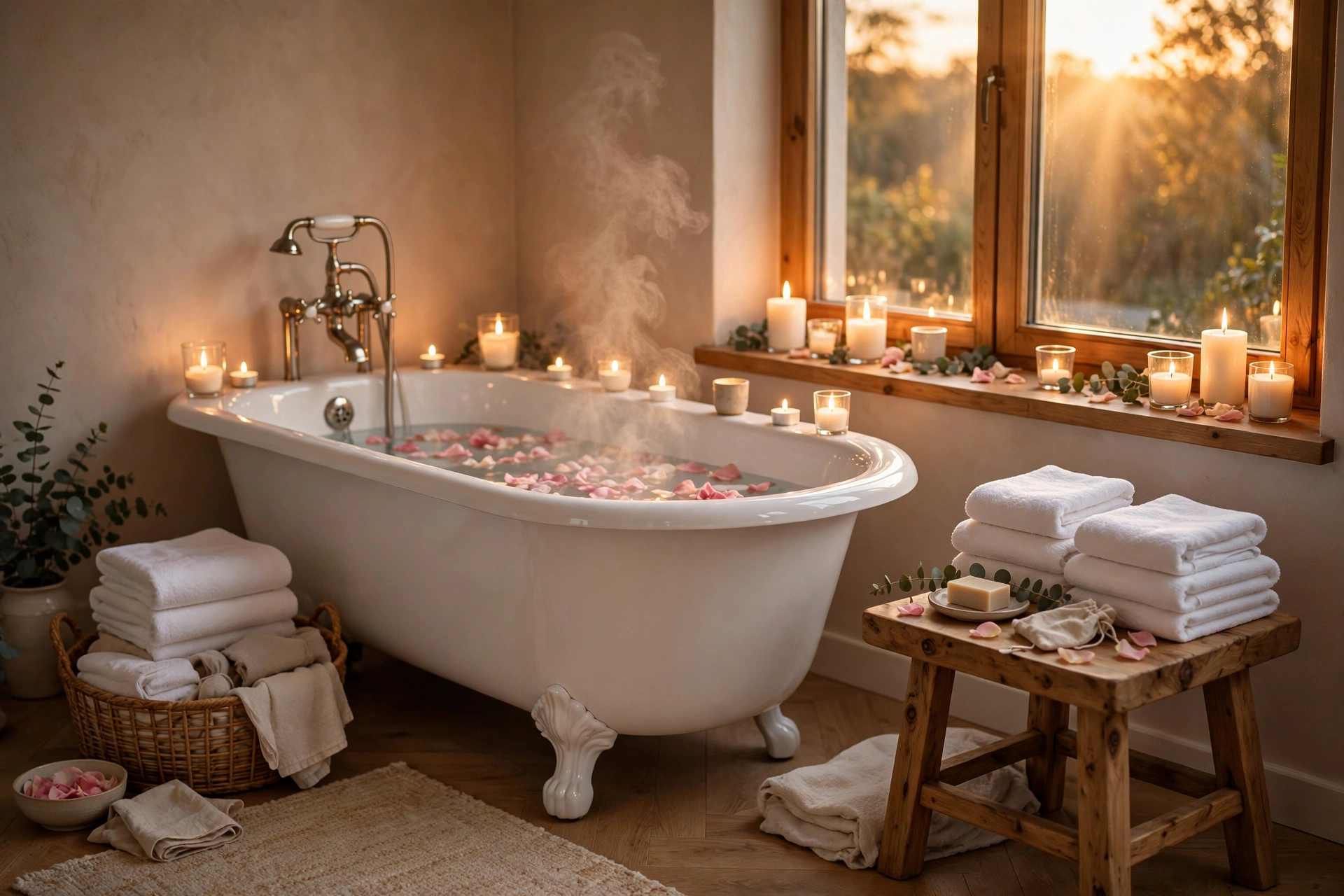
[Intimacy] Bath Rituals: A Simple Closeness Exercise
A couples bath intimacy ritual is a structured closeness exercise in which two partners share warm water, gentle touch, and unhurried conversation with phones off and expectations set aside. It is not about spectacle or performance. It is about creating a predictable, low-pressure container where your bodies can relax, your nervous systems can settle, and the two of you can simply be present with one another. In this guide, you will learn exactly how to prepare the room, run a timed step-by-step protocol, adapt the ritual to small tubs and busy schedules, and keep it safe for both partners.
Many couples know the feeling: the day ends, both of you are tired, and screens absorb the last hour before sleep. A couples bath intimacy ritual interrupts that pattern. The combination of warm immersion, skin-to-skin contact, and deliberate quiet gives your relationship something rare in modern life — a shared experience with nothing to accomplish. Research summarized by major medical centers notes that warm baths can ease stress, relax tense muscles, and support better sleep, which are the same conditions that make emotional closeness easier to reach. This article turns those general benefits into a repeatable practice designed for couples.
What Is a Couples Bath Intimacy Ritual?
A couples bath intimacy ritual is a planned, recurring experience in which partners bathe together with a clear intention of connection rather than routine hygiene. The word “ritual” matters: unlike a spontaneous shared shower, a ritual has structure — an agreed start, a sequence of steps, and a calm ending. That predictability lowers the awkwardness that can surround nonsexual touch and gives both partners permission to relax without wondering what is supposed to happen next.
Think of it as one of several guided couples intimacy exercises you can keep in your relationship toolkit. Of all of them, a couples bath intimacy ritual asks the least of you — just warm water and unhurried time together. Some couples use it weekly as a standing date; others use it as a repair ritual after a hard week. The shared element is intentional presence: phones away, water warm, conversation slow, and touch affectionate but pressure-free.
The Science of Warm Water, Touch, and Closeness
You do not need a medical degree to benefit from a bath ritual, but understanding what warm water does to the body helps explain why the exercise works so well.
Stress hormones ease. Immersion in warm water activates the parasympathetic nervous system — the body’s “rest and digest” mode. Muscle tension releases, breathing slows, and levels of cortisol, the primary stress hormone, tend to fall. Cleveland Clinic physicians note that warm baths are linked with reduced stress, calmer mood, and better sleep, in part because warming the body before bed helps core temperature drop afterward, signaling the brain that it is time to rest. You can read more about those effects in this overview of bath benefits from Cleveland Clinic.
Gentle touch bonds. Nonsexual touch — holding hands, resting against a partner’s chest, slow stroking of a forearm — is associated with the release of oxytocin, a hormone linked to bonding and trust. Couples therapists frequently prescribe brief daily touch (a twenty-second hug, a hand squeeze) because the body learns that closeness is safe. A bath multiplies those micro-moments into twenty uninterrupted minutes.
Warmth lowers defenses. When the body is cold, tense, or rushed, emotional conversations feel harder. Physical comfort creates psychological safety: partners who are warm, relaxed, and eye-level with each other tend to listen more patiently and react less defensively. That is why many couples report their best talks happen in the bath — the environment does half the work of emotional regulation for them.
Before You Begin: The No-Pressure Agreement
The single most important ingredient of a couples bath intimacy ritual is a shared agreement, spoken out loud, that the ritual carries no expectations. Baths can carry romantic or sexual connotations, and if one partner secretly hopes the bath will lead somewhere and the other does not, the whole exercise becomes anxious instead of relaxing.
Have a short conversation before your first ritual — over coffee, not at the tub’s edge — and cover these three points:
- Scope: “This is about closeness and relaxation, not about anything else happening afterward.”
- Consent to touch: Agree on what touch is welcome (for example, hand-holding, shoulder massage, foot rubs) and what is off the table tonight.
- Exit words: Either partner can pause or end the ritual at any time, no explanation required, no disappointment allowed. A simple “I’d like to pause” is enough.
This conversation is not unromantic — it is the foundation of trust. Partners who know nothing is expected are paradoxically more able to feel close, because the nervous system relaxes when it is not scanning for demands. That sense of safety is what makes every couples bath intimacy ritual work.
The Couples Bath Intimacy Ritual: A Step-by-Step Closeness Exercise
Set aside 30 to 45 minutes total for your couples bath intimacy ritual, including preparation. The soak itself should last 15 to 20 minutes — long enough to unwind, short enough to stay comfortable and hydrated.
Step 1 — Prepare the room (10 minutes)
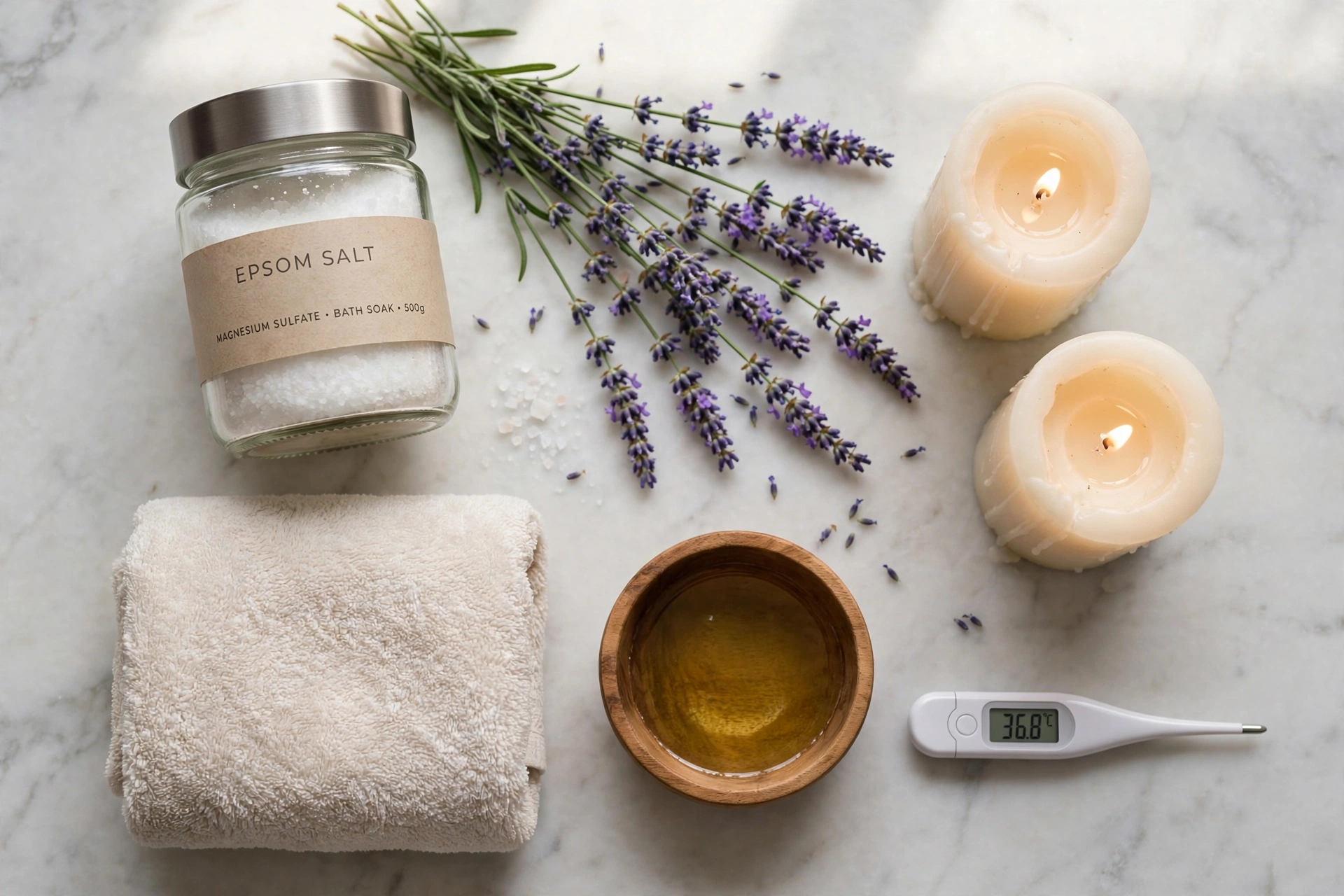
Clean the tub first, then fill it with comfortably warm water — warm enough to feel relaxing on your inner wrist, never hot enough to make your skin turn red. Clinicians generally recommend keeping bath water below 104°F (40°C) and soaks to about 15 to 20 minutes, and anyone who is pregnant, has a heart condition, or manages high blood pressure should check with their clinician before regular hot soaks. Dim the lights or switch to candles (placed safely away from the tub edge and anything flammable), put a clean bath mat and two dry towels within reach, and bring water or herbal tea — warm soaks are dehydrating, and a glass of water each prevents lightheadedness.
Step 2 — Phones off, attention on (2 minutes)
Silence both phones and leave them in another room. This single act signals that the next half hour of your couples bath intimacy ritual belongs to the two of you. Sit near the tub together while it fills and take five slow breaths in sync: inhale for four counts, exhale for six. Synchronized breathing is a simple way to settle two nervous systems at once.
Step 3 — Enter together (2 minutes)
Get in carefully — wet tubs are slippery, so use a grab rail or lean on each other. Choose a position where both partners are comfortable: one partner seated with back support while the other rests against their chest is a classic, or sit side by side if your tub allows. Adjust the water level so it covers shoulders without splashing the floor.
Step 4 — Warm-up touch (5 minutes)
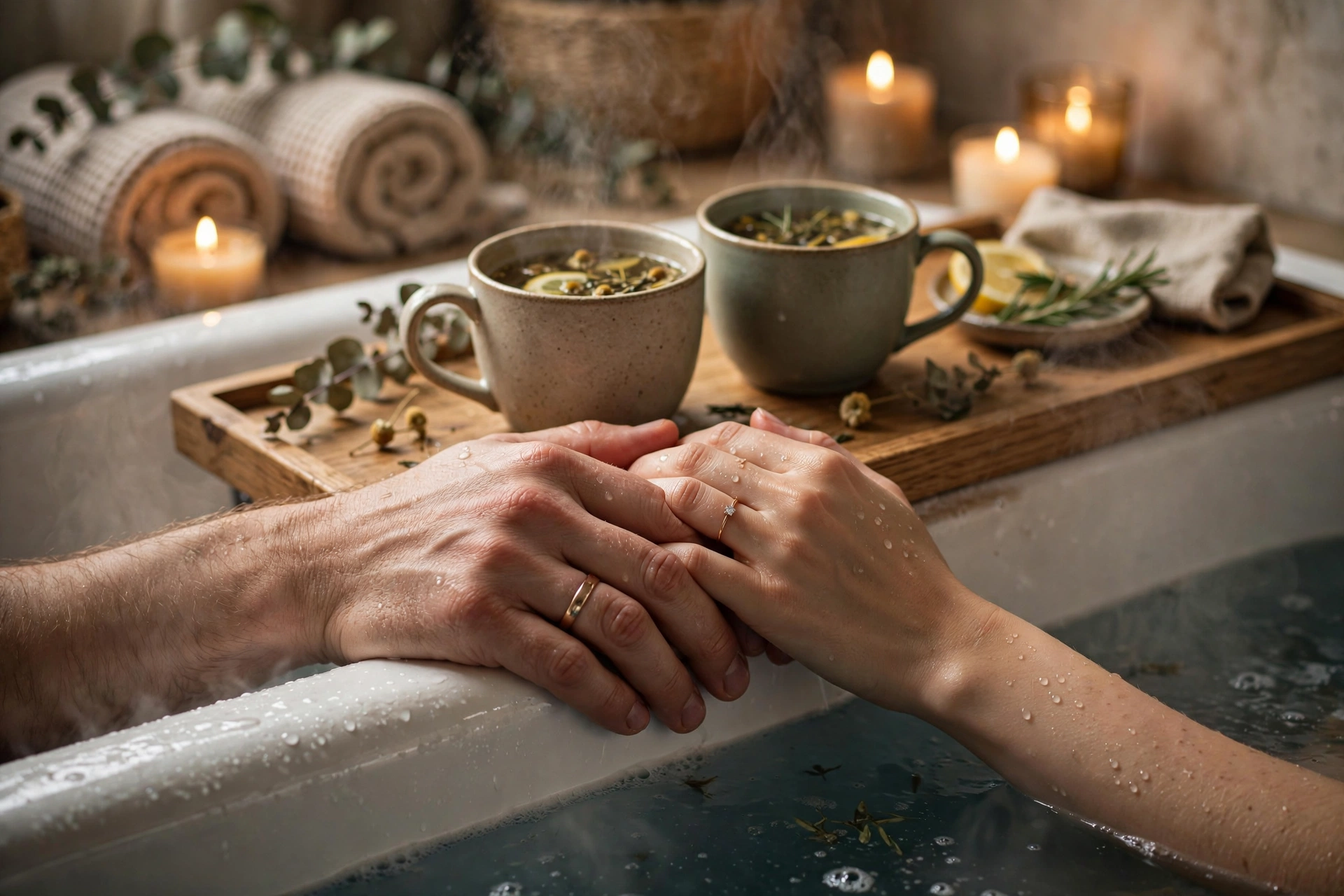
Without any talking agenda, trade gentle touch. Try this sequence: hold each other’s hands under the water; trace slow circles on your partner’s forearm; rest a palm on their chest and feel their breathing. The goal is sensory awareness, not technique. Notice warmth, weight, and texture. If you enjoy guided touch practices, this pairs naturally with an eye-gazing intimacy exercise — lock eyes softly for a minute or two and simply breathe together.
Step 5 — Connection conversation (7–10 minutes)
Now talk — but not about logistics, bills, or scheduling. Use the conversation prompts in the section below. A good rhythm is one partner sharing for three minutes while the other only listens, then switching. Listening without fixing is itself an act of intimacy.
Step 6 — Mutual care (3–5 minutes)
Take turns with one small act of care: wash your partner’s back slowly, massage their shoulders, or pour a warm cup of water over their shoulders. Acts of care register strongly in the brain as signals of safety and love. Keep the touch gentle and unhurried.
Step 7 — Cool, calm ending (5 minutes)
End the soak while the water is still pleasant. Towel each other off slowly — the after-bath moments matter as much as the soak. Change into something comfortable, and share one sentence of appreciation: “Tonight I felt closest to you when…” Then head to bed, or continue the evening on the couch with tea. Many couples find that the relaxed state after a bath makes them especially receptive to the benefits of cuddling before sleep.
Safety and Hygiene Guidelines
A relaxing ritual should never create a health problem. Keep these practical safeguards in mind:
- Water temperature: Comfortably warm, not hot. As a rule of thumb, keep bath water below 104°F (40°C) and limit soaks to 15–20 minutes. If you feel dizzy, nauseated, or excessively sweaty, get out and cool down.
- Slip prevention: Place a nonslip bath mat inside and outside the tub. Enter and exit slowly, using grab rails or the tub edge.
- Heart and blood pressure conditions: Hot water causes blood vessels to dilate, which can drop blood pressure. If either partner has cardiovascular disease, consult a clinician before making hot soaks a habit.
- Pregnancy: Warm baths are generally fine, but avoid water hot enough to raise core body temperature and keep soaks short. Discuss specifics with your obstetric provider.
- Skin and vaginal health: Rinse the tub before filling. Avoid heavily fragranced bubble baths, oils, or harsh detergents in shared bathwater — fragranced products can irritate sensitive skin and the vulvovaginal area. Plain Epsom salt (1–2 cups) or a few drops of a skin-safe essential oil diluted in a carrier are gentler options. Skip Epsom salt and discuss with your clinician first if you are pregnant.
- Candles and alcohol: Keep candles off the tub edge and extinguish them before you get out. Alcohol lowers inhibition but also judgment and balance around water — save the wine for after the bath, or skip it.
| Safety Check | Guideline |
|---|---|
| Water temperature | Comfortably warm, below 104°F (40°C) |
| Soak duration | 15–20 minutes |
| Hydration | One glass of water or tea per person |
| Tub entry | Use grab rails, nonslip mat, slow movements |
| Candles | Stable surface, away from tub edge, never unattended |
Conversation Prompts for Deeper Connection
What you talk about shapes how your couples bath intimacy ritual feels. Avoid problem-solving and logistics; instead, choose prompts that invite reflection and appreciation. Try one category per session and rotate weekly:
- Appreciation: “What is one small thing I did this week that made you feel loved?”
- Memory: “What is your favorite memory of us from the last year, and why?”
- Longing: “What kind of closeness are you craving most right now — physical, emotional, or playful?”
- Gratitude: “Name three things about our life together that you are thankful for today.”
- Curiosity: “What is something about me you have never asked but have always wondered?”
- Dreams: “If we could plan one perfect weekend together, what would it look like?”
Keep answers unhurried. Silence between answers is fine — you are in warm water holding each other, and quiet counts as connection.
Adapting the Ritual to Your Life
A ritual only works if you can actually repeat it. Here is how to keep the practice going when conditions are not ideal:
The 15-minute express version
On busy nights, skip the candles and prompts. Fill the tub, soak for 10–12 minutes with phones off, hold each other, and share one sentence of appreciation each. Done consistently, this short couples bath intimacy ritual is more powerful than an elaborate ritual done once.
Small tub or single-person tub
If two adults cannot comfortably share the tub, do a foot-bath version: fill a large basin or the tub ankle-deep with warm water, sit on the tub edge facing each other, and soak your feet while holding hands. The ingredients of the ritual — warmth, touch, attention, talk — survive without full immersion.
No bathtub at all
A shared shower can host a shortened version: alternate warm water, trade shoulder rubs, and end with two minutes of slow breathing with foreheads together. The principle is the setting, not the fixture.
Limited mobility or pain
Use a bath seat, keep water shallower, and let the partner with more mobility handle entry and exit support. Warm water can ease stiff joints, but very hot water and slippery transfers are the main risks — prioritize stability over aesthetics.
Building a rotation
To keep your couples bath intimacy ritual fresh, rotate a theme each week: appreciation week, memory week, silent week (no talking, only touch), and candlelit music week. Couples who build small traditions like this often pair them with morning rituals for couples, creating bookends of connection at the start and end of the day.
Frequently Asked Questions
How often should we do a couples bath intimacy ritual?
Once a week is a sustainable target for most couples — frequent enough to become a ritual, infrequent enough to stay special. Some couples do a short version twice weekly during stressful seasons and scale back when life is calmer. Consistency matters more than frequency: a 15-minute weekly ritual outperforms an elaborate monthly one.
Is it safe to take baths together every week?
For generally healthy adults, weekly warm baths are considered safe. Keep the water comfortably warm rather than hot, limit soaks to 15–20 minutes, stay hydrated, and rinse the tub before each use. If either partner is pregnant, has cardiovascular disease, or manages low or high blood pressure, check with a clinician first.
What if one of us feels awkward or self-conscious?
Awkwardness is normal the first few times — most adults are not used to unhurried nonsexual touch. Dimmer lighting helps, and the step-by-step structure of this couples bath intimacy ritual removes the pressure to improvise. Tell each other honestly how you feel (“I felt a little shy at first”) and give the ritual three or four sessions before judging it. If discomfort persists, talk about what specifically feels awkward and adjust that element.
Do we need special products, salts, or oils?
No. The essential ingredients of a couples bath intimacy ritual are warm water, privacy, and attention. If you want to add something, plain Epsom salt (1–2 cups) is inexpensive and gentle on skin, and a candle or two sets the mood. Avoid heavily fragranced products in shared bathwater, as they can irritate sensitive skin. Consult your clinician before using Epsom salt during pregnancy.
Can this ritual help after an argument or a distant period?
It can, but timing matters. Do not use the bath as a way to skip the conversation you actually need to have — unresolved conflict does not dissolve in warm water. Resolve the disagreement first, even briefly, and then use your couples bath intimacy ritual as a repair gesture: a physical way of saying “we are on the same team.” Many couples find that touch-first reconnection makes the follow-up conversation easier.
What if we only have a shower, not a bathtub?
Use the adapted shower version described above: warm water, traded shoulder rubs, phones off, and a two-minute breathing close with foreheads together. You can also do the foot-bath variant with a basin. The ritual’s active ingredients — warmth, touch, undivided attention, and kind conversation — work in any format.
Is a couples bath ritual the same as foreplay?
Not necessarily, and that distinction is deliberate. This ritual is designed as a pressure-free closeness exercise: the no-pressure agreement explicitly takes performance off the table. Some couples find that deep relaxation naturally leads to desire later — and that is fine — but the ritual succeeds on its own terms when both partners feel calm, cared for, and connected, whatever happens afterward.
Medical Disclaimer
This article is for educational purposes only and is not medical advice. It does not diagnose, treat, or prevent any condition, and nothing here replaces guidance from a qualified clinician. If you are pregnant, have a cardiovascular condition, manage blood pressure or neurological conditions, or take medications affected by heat or blood-pressure changes, consult your doctor or obstetric provider before beginning regular warm-water soaks. Discontinue any practice that causes dizziness, pain, or discomfort, and seek care if symptoms persist.