Phones in the Bedroom: How Screens Kill Intimacy (and Fixes)
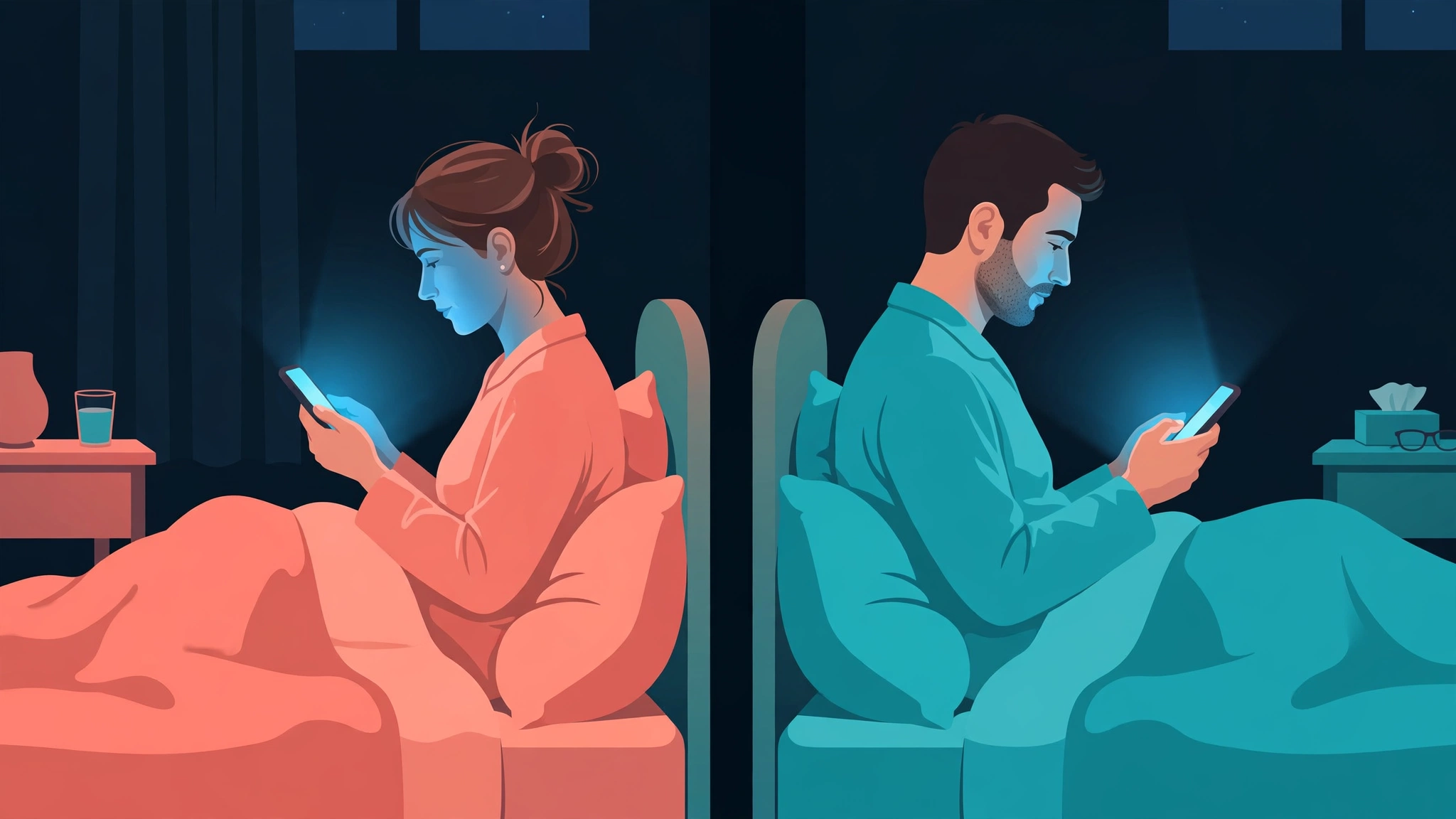
Screen time and relationships collide in the modern bedroom. Phones screens intimacy damage is one of the most common — and least discussed — reasons couples feel like roommates. It arrives quietly: two people in the same bed, backs turned, faces lit blue. Research on “phubbing” links it to lower satisfaction, higher conflict, and fading desire. The good news: it is reversible, with practical, doctor-informed steps you can start tonight.
Screen Time and Relationships: What the Research Shows
When researchers describe phones screens intimacy damage, they are not only talking about pornography or online affairs. The far more common pattern is parallel scrolling: both partners in bed, each absorbed in a separate feed, surrendering the last hour of the day — once used for talking, laughing, and physical closeness — to a screen. A 2024 survey by SellCell found that 54% of people would rather spend time with their smartphone than their partner, and 12% admitted they would interrupt sex to check their phone. Weekly sexual frequency among U.S. adults fell from 55% in 1990 to 37% in recent surveys; phones did not cause that alone, but relationship researchers consistently name screen habits a major contributor.
Two mechanisms explain most of the harm. The first is displacement: every scrolled minute is a minute not spent on the eye contact, touch, and pillow talk that keep desire alive. The second is attentional fragmentation: even brief interruptions keep the brain stimulated and alert. One review found a single notification can hijack attention for around seven seconds, and those micro-interruptions accumulate across an evening, keeping partners wired instead of warmed up.
7 Phone Habits That Damage Intimacy in the Bedroom
Below are the seven patterns researchers flag most often when studying phones screens intimacy damage — and why each one matters more than it seems.
1. Phubbing: the micro-rejection that erodes satisfaction
“Phubbing” (phone + snubbing) means choosing your screen over the person in front of you — glancing at notifications mid-conversation, scrolling while your partner talks. Research links phubbing to lower marital satisfaction, greater loneliness, and more conflict. A 2025 study found that on phubbed days, people reported lower satisfaction and stronger anger and resentment. Why does it sting? The rejected partner reads it as “you are less important than my feed,” and divided attention destroys the feeling of being truly heard.
2. The attention economy is the enemy of arousal
Healthy sexual response requires sustained, relaxed attention on your partner and your own body’s sensations. The modern phone is engineered to do the opposite: keep attention hopping between novel stimuli. Clinicians describe a “stimulated and stressed” mental state as incompatible with the calm presence in which arousal builds. Over 45% of Americans in one survey said their phone affects their libido. This is a core driver of phones screens intimacy damage: not explicit content, just relentless distraction.
3. Blue light, broken sleep, and the hormonal chain to lower desire
Blue-tinted light from phones suppresses melatonin, delays sleep onset, and fragments sleep. Poor sleep lowers testosterone in both men and women — and testosterone is a key driver of sexual desire. Chronic sleep restriction also raises daytime fatigue and irritability, further suppressing interest in sex. Mayo Clinic sleep specialists advise unplugging from all screens 30 to 60 minutes before bed, and NHS guidance similarly recommends avoiding blue-tinted screen light in the hour before sleep.
4. The comparison trap: social media and body confidence
Endless curated feeds set standards no real body or real relationship can meet. Research links frequent social comparison to lower self-esteem, higher anxiety, and more body-image concerns — one study found 37% of users said idealized images lowered their self-esteem. In the bedroom, this becomes self-consciousness during sex and avoidance of initiation. When one partner feels less desirable than the influencers on their screen, they withdraw — and the other reads it as rejection.
5. The “mere presence” effect: the phone on the nightstand
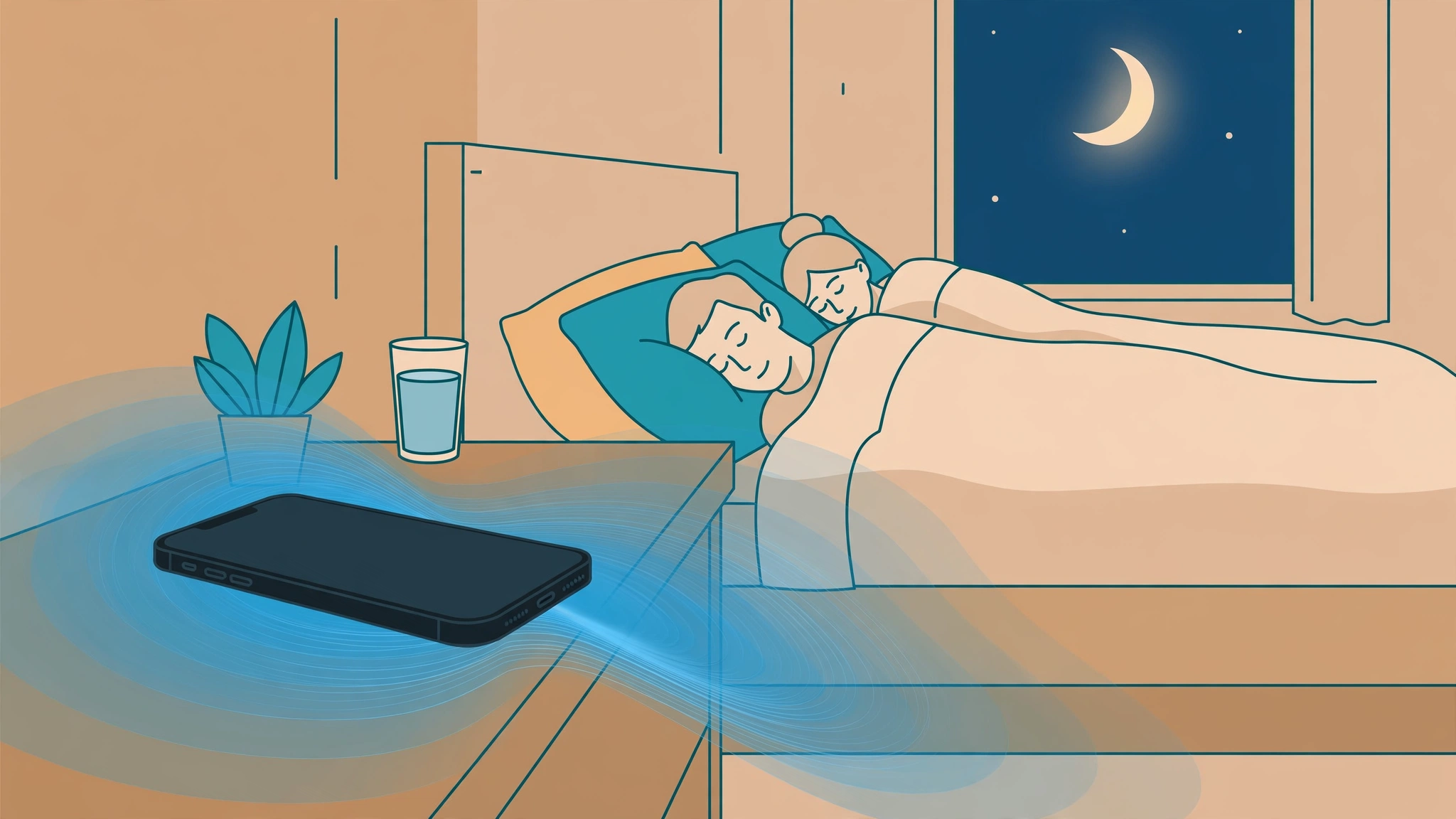
You do not even have to be using the phone for it to hurt. A landmark 2016 study by Misra and colleagues found that simply having a mobile device visible during a conversation reduced interaction quality and perceived empathy — the phone acts as a “third participant,” keeping part of the brain on alert for the next buzz. The same effect operates in bed: even a face-up phone on the nightstand signals that interruption is possible. One zero-effort change tonight: charge the phone outside the bedroom or put it face-down with Do Not Disturb on.
6. Parallel scrolling: alone together in bed
Relationship therapists describe parallel scrolling — both partners in bed, each in their own feed — as one of the fastest-growing complaints in couples counseling. It feels like togetherness while functioning as isolation. The danger is how painless it feels: nobody is fighting, and both people are “relaxing.” But intimacy requires mutual attention, and two screens create two separate worlds. Over time, couples lose the rituals that filled that hour — the day’s debrief, physical affection, spontaneous initiation — and sexual frequency quietly declines.
7. Information overload, cortisol, and a exhausted libido
Endless news, comment-section arguments, and midnight work messages keep the stress system activated. Elevated evening cortisol suppresses sex hormones and leaves the nervous system too keyed up for intimacy. Mental exhaustion from digital multitasking depletes the energy intimacy requires, and clinicians note this exhaustion is often misread as low libido itself. Doctors generally recommend addressing stress and anxiety’s effect on intimacy as a first step, because desire cannot thrive in a chronically activated stress response.
What Competitors Miss: The Neuroscience of Arousal and the 30-Minute Window
Most articles about screen time and relationships stop at attention and sleep. They miss the decisive physiology: sexual arousal is a parasympathetic nervous system event — it belongs to the “rest and digest” branch, the same system that governs relaxation and sleep. Doomscrolling is sympathetic nervous system fuel: novelty, outrage, and urgency keep the body in a mild fight-or-flight state. The nervous system needs roughly 20 to 30 minutes of genuinely calming activity to downshift from alert to receptive.
This is the hidden cost behind phones screens intimacy damage that “just put the phone down” advice misses: a partner who closes an app at 11:00 p.m. and expects to feel amorous at 11:02 is fighting their own physiology. Understanding this physiology is the missing piece in most advice about phones screens intimacy damage: willpower alone cannot override a wired nervous system. The 30-minute transition window is why clinicians recommend a structured wind-down — dim lights, a warm shower, slow conversation, affection with no goal — that tells the nervous system the day is over.
When Phones Are the Symptom, Not the Cause: Red Flags Doctors Watch For
Sometimes heavy phone use is not the disease but a symptom. To assess phones screens intimacy damage correctly, clinicians look past the screen when couples report vanishing intimacy, because several medical and mental-health conditions hide behind “we just scroll all night.”
- Depression: loss of interest in sex is a core symptom of depression, and depressed partners often retreat into passive scrolling because it demands less energy than connection. If low mood accompanies the scrolling, the phone is the coping mechanism, not the cause.
- Sleep apnea and sleep disorders: someone who snores heavily or wakes unrefreshed may scroll because they cannot sleep — and the exhaustion crushes libido. Treating the sleep disorder often restores desire faster than any digital detox.
- Erectile dysfunction or painful sex: partners sometimes avoid initiation by staying glued to their phones — avoidance disguised as distraction. If a partner has quietly stopped initiating, a kind conversation or a doctor’s visit matters more than a phone ban.
- Medication side effects: many antidepressants, blood pressure drugs, and hormonal contraceptives lower libido — worth discussing with the prescriber before blaming the phone.
- Relationship distress: chronic unresolved conflict makes the phone a refuge. When scrolling is “the only peaceful part of the day,” the underlying conflict needs attention, possibly with couples counseling.
Doctors generally recommend ruling out the common medical causes of low libido first. The practical rule: when phones screens intimacy damage persists after two screen-free weeks, book a medical checkup covering mood, sleep, medications, hormones, and cardiovascular health.
Attachment Styles: Why Phubbing Hurts Some Partners More
Another gap in most coverage is who gets hurt by phubbing and how they react. Partners with an anxious attachment style experience a partner’s phone use as threatening: they feel hurt more intensely, ruminate about what the partner might be hiding, and may retaliate by withdrawing affection. Partners with an avoidant attachment style react the opposite way: they retreat into their own phone, and the couple settles into mutual disconnection.
Both reactions deepen phones screens intimacy damage through different doors. An anxiously attached partner needs reassurance (“you matter more than my phone”); an avoidantly attached partner needs low-pressure invitations rather than criticism. Frame the talk around shared values: “I want our bedtime to feel close again” lands very differently from “you are always on that phone.”
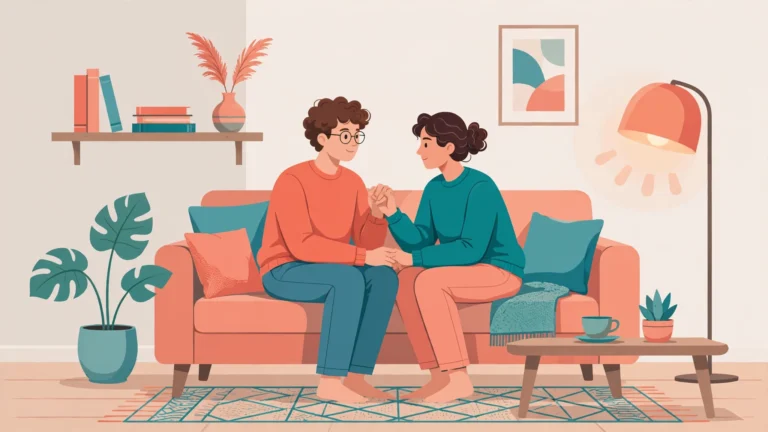
To repair phones screens intimacy damage, the conversation must fit both attachment styles. A script that works for most couples: pick a calm moment (not in bed, not mid-scroll), use “I” statements, and propose a concrete, mutual experiment. For example: “I miss how we used to talk in bed. Would you try a two-week experiment — phones charge in the kitchen, and we get thirty minutes of just us before sleep?” Temporary, mutual, and reviewable: that lowers defensiveness dramatically.
The 7-Day Bedroom Reset: A Doctor-Informed Plan That Works
Generic advice — “put the phone away” — fails because it ignores habit mechanics. A structured reset beats willpower once phones screens intimacy damage has become a nightly habit. Below is a gradual plan drawn from sleep hygiene guidelines and behavioral couples work.
- Day 1 — Audit without judgment. Both partners check screen-time reports and note in-bed phone time. No blame, just data — most couples find 60 to 90 minutes of nightly in-bed scrolling.
- Day 2 — Move the chargers. Charging station goes outside the bedroom; buy a simple alarm clock if the phone was the alarm. Enable Do Not Disturb with emergency contacts whitelisted.
- Day 3 — Create the 30-minute transition window. Screens off 30 minutes before sleep. Fill the window deliberately: dim lights, talk about the day, stretch together, or read.
- Day 4 — Rebuild touch without pressure. Physical affection during the window has no goal and no expectations. Desire often returns once touch stops feeling transactional.
- Day 5 — Protect one screen-free meal and one outing. Phones stay in pockets during dinner and a walk or coffee date.
- Day 6 — Handle the objections honestly. “I need my phone for work” (DND with a bypass list). “I fall asleep to videos” (audio-only podcasts, screen dark). “My partner is boring without their phone” — worth unpacking in couples counseling.
- Day 7 — Review and renew. Did we feel closer this week? Extend the experiment two more weeks, adjusting the rules together.
The plan works because it replaces the phone with something — connection rituals, the transition window, and touch — rather than just removing it and leaving a vacuum. That replacement is what finally reverses phones screens intimacy damage for good. Mayo Clinic’s sleep specialists offer further practical sleep hygiene guidance, and the NHS provides a detailed self-help guide for sleep problems and insomnia that reinforces the screen-free wind-down advice.
What the Research Shows: A Snapshot
The studies below quantify how screen time and relationships interact across attention, sleep, and relationship satisfaction.
| Finding | Source |
|---|---|
| 40% of partnered adults are bothered by the time their partner spends on their phone | Pew Research Center, 2019 |
| 54% would rather spend time with their smartphone than their partner; 12% would interrupt sex to check their phone | SellCell survey, 2024 |
| On days people feel “phubbed,” relationship satisfaction drops and anger and resentment rise | Relationship study, 2025 |
| A single notification hijacks attention for about 7 seconds; 45% say their phone affects their libido | Survey reported by sex educators, 2025 |
| 34% of adults have looked through a partner’s phone without their knowledge | Pew Research Center |
| Weekly sexual frequency fell from 55% (1990) to 37% of U.S. adults | National survey trends |
| Simply having a phone visible during conversation reduced interaction quality and perceived empathy | Misra et al., 2016 |

FAQs
Can phones really lower my sex drive, or is that an exaggeration?
The effect is real but indirect: phones damage the preconditions of desire by fragmenting attention, displacing couple time, disrupting sleep (lowering testosterone in both sexes), and keeping the stress system activated. Surveys find 45% of Americans say their phone affects their libido.
What exactly is phubbing, and why does it hurt so much?
Phubbing means snubbing your partner by looking at your phone — mid-conversation glances, scrolling while they talk, reaching for it at every pause. It hurts because the ignored partner reads it as “you matter less than my feed,” and divided attention destroys the feeling of being heard.
How much screen time in bed is too much?
There is no official medical cutoff, but researchers converge on a practical line: zero screens in the 30 to 60 minutes before sleep, and no phone visible on the nightstand during intimate time. If either partner feels second place to a screen, it is already too much. This simple rule protects screen time and relationships before the damage starts.
Should couples ban phones from the bedroom completely?
A full ban works for many couples, but a gradual approach succeeds more often. Start with chargers outside the bedroom, Do Not Disturb with emergency bypasses, and a 30-minute screen-free transition window. Rules you both design and can sustain beat strict rules that collapse in a week. Whatever rules you choose, reviewing them together each month keeps phones screens intimacy damage from creeping back.
My partner gets defensive whenever I mention their phone use. What should I say?
Choose a calm, non-bedroom moment and use “I” statements: “I miss our bedtime talks — would you try two weeks of phones charging in the kitchen with me?” Framing it as temporary and mutual lowers defensiveness. Persistent refusal is worth exploring with a couples counselor.
Can phone habits actually cause erectile dysfunction or low libido?
Phones do not directly cause erectile dysfunction, but the pathways behind phones screens intimacy damage are real: chronic sleep loss lowers testosterone, sedentary scrolling worsens circulation, and comparing yourself to idealized online content fuels performance anxiety. If problems persist after two screen-free weeks, see a doctor to check hormones, sleep, mood, and medications.
Ready to start? Tonight, try the smallest step: charge both phones outside the bedroom and give each other thirty uninterrupted minutes. Small, consistent changes reverse phones screens intimacy damage and protect the most important connection in the room.
Medical disclaimer: This article is for educational purposes only and is not medical advice. It does not diagnose or treat any condition. If you experience persistent low libido, erectile dysfunction, painful sex, depression, or sleep problems, please consult a qualified healthcare professional for individualized evaluation and care.